















B2B eCommerce Platform

Let your dealers place their own orders — at their price, within their credit limit, from only the catalogue you allow them to see. Behind the store, your ERP or warehouse system feeds in stock and prices, and confirmed orders flow straight back out for dispatch. No re-typing, no WhatsApp screenshots, no order lost between three people.

Who this is for

Ecommerce software for distributors,
wholesalers and manufacturers

If you sell to businesses rather than to the public, your requirements are different in ways most ecommerce platforms simply do not handle. See whether one of these is you.

Wholesalers and stockists

Wholesalers and stockists

You sell to retailers who order in cartons, on terms, at rates you negotiated individually. Your price list is confidential and your buyers reorder the same lines every month.

Distributors with a dealer network

Distributors with a dealer network

You supply a tiered channel — national distributors, regional stockists, city dealers — from several warehouses, and each tier gets its own pricing and its own catalogue.

Manufacturers selling direct

Manufacturers selling direct

You want your dealers ordering from you online instead of through your sales team, without giving away designs or pricing to competitors browsing your site.

Suppliers to corporates

Suppliers to corporates

You supply companies on contract rates, and their staff can only order what the contract covers — with a manager approving the spend before anything ships.

Also on this platform: exporters selling to overseas trade buyers in their own currency, and brands running a retail store and a wholesale channel from one catalogue.

Problem

Most wholesale business still runs on WhatsApp, Excel and somebody's memory

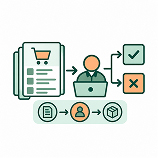
A buyer sends a screenshot of last month's order. A salesperson checks whether that party is still inside its credit limit. Someone types the order into Tally or SAP. Someone else decides which godown should ship it. Three people touch one order before a single box moves, and not one of them has added any value.

Retail ecommerce software does not fix this, because retail software is built on three assumptions that are all wrong for wholesale: one price for everybody, payment before dispatch, and a catalogue open to the world. Your business needs the opposite of all three — a negotiated rate per party, dispatch against approved credit, and a catalogue your competitors must never see.

That is why a B2B ecommerce platform is a different category of software, and why it has to include distribution management rather than stop at the shopping cart.

Suppliers to corporates
Taking orders Taking orders
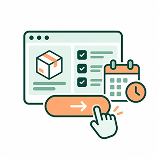
Today : WhatsApp messages, phone calls, PDF price lists
With Shopaccino : Dealers order themselves — web, mobile app or WhatsApp — into one queue
Orders arriving from web, mobile app and WhatsApp into a single order queue
pricing Pricing
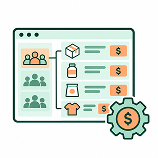
Today : Rate lists in Excel, renegotiated on every call
With Shopaccino : Group, party and contract prices applied automatically at login
Group, party and contract pricing applied automatically at login
Authorisation Authorisation
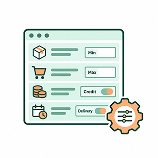
Today : Ledger checked by hand; the customer's purchase policy ignored
With Shopaccino : Credit limits and approval chains enforced in the checkout
Credit limit and approval workflow enforced automatically in the checkout
Fulfilment Fulfilment
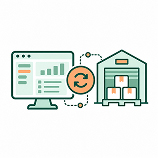
Today : Warehouse chosen manually, order re-typed into the ERP
With Shopaccino : Warehouse assigned automatically, order synced straight to ERP or WMS
Warehouse assigned automatically and order synced to ERP or WMS

What you get

What a B2B online store on Shopaccino actually is

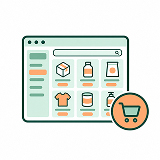
Three things, joined together. A store your business customers log into. A set of rules that decides what each of them sees and what they are allowed to do. And a live connection to the system where your stock and prices already live.

Most B2B ecommerce solutions give you the first. Some give you the second as paid add-ons. The third is where projects usually fail — because if your ERP and your store disagree about stock, your dealers stop trusting the store and go back to phoning your office.

For your buyers

For your buyers

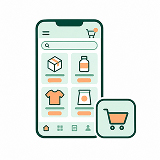
A branded B2B online platform, open around the clock, on web and on a native mobile app. Each buyer logs in to their own catalogue at their own prices, reorders a past order in one tap, sees their credit balance, and tracks dispatch without phoning anyone. Your sales representatives can place orders for them, and WhatsApp orders land in the same place.

Your rules, enforced

Your rules, enforced

Who is approved to buy. What each customer group may see. What each of them pays. Minimum quantities and whole-box quantities. Credit limits and payment terms. Which orders need a manager's approval before they are confirmed. All of it applied by the software, every time, without anyone remembering to check.

Your back office, connected

Your back office, connected

Products, stock and prices flow in from SAP, Tally, Zoho Inventory, Unicommerce or your own warehouse management system. Confirmed orders flow back out for fulfilment. Warehouses are assigned automatically, GST invoices are issued with the right GSTIN, and nobody re-types anything.

Core B2B features

The rules a retail shopping cart cannot enforce

These eight are the difference between a website that takes orders and a system your dealers actually use instead of calling your office. Each one exists because a business buyer behaves nothing like a consumer.

Apply for access, you approve

Apply for access, you approve

A new business applies with its firm details, GSTIN or tax ID. Nothing — no price, no catalogue, no ordering — is available until an administrator approves the account and puts it in a customer group. Approval is never automatic.

Private & restricted catalogues

Private & restricted catalogues

Set the whole catalogue behind login so guests see a registration page instead of products. Or leave products visible for search and show prices only after login. Or restrict a range to chosen customer groups, so a new collection reaches your top accounts weeks before anyone else.

Customer group & party-wise pricing

Customer group & party-wise pricing

Price by group — distributor, dealer, retailer, corporate — and override for an individual party where you have negotiated something specific. Wholesale rates never appear to anyone who is not logged in and approved.

Contract pricing for corporate accounts

Contract pricing for corporate accounts

A named company sees the rate fixed in its agreement, on a product list limited to what it actually contracted for. Nobody re-quotes, and no client sees another client's terms — which is what makes a B2B shop online usable for tendered business.

Minimum order quantity & box ordering

Minimum order quantity & box ordering

Set an MOQ per product or variant, and define how many pieces make a box so buyers order whole cartons rather than loose units. This is what keeps your packing and freight economics intact instead of losing money on a two-piece order.

Sell on credit, with the limit enforced

Sell on credit, with the limit enforced

Approve selected parties to order on account, and set a credit limit and payment terms for each. The checkout enforces the limit, so nobody dispatches against an exhausted ledger and then discovers it at month end.

Bulk grid ordering & one-tap reorder

Bulk grid ordering & one-tap reorder

Twelve in S, twenty-four in M, twenty-four in L, eight in XXL — entered in one row from the product list rather than through four separate product pages. And a previous order repeated in a single tap, which is the most-used feature on any mature B2B store.

Order approval workflow

Order approval workflow

Several users under one company account, each with a role. When a junior places an order it is held, not confirmed, until their senior approves it. Your customer's purchase policy stops being a document nobody follows and becomes a step in the checkout.

volume and slab pricing, minimum order value, customer-specific discounts, sales territories, and quotation requests.

Integration and Automation

Your ERP stays in charge, the store keeps up

Nobody moves off SAP or Tally because they launched a B2B channel, and nobody should have to. The question that decides whether this project succeeds is narrower than that: can the store and the system of record stay in agreement without a person in the middle?

On Shopaccino the integration runs both ways. Catalogue, stock and prices flow in from the system your team already works in. Confirmed orders flow back out for fulfilment. In between, the platform applies your rules and assigns the warehouse. When it is set up properly, nobody re-types anything, and the quantity your dealer sees on screen is the quantity on the rack.

Your ERP stays in charge, the store keeps up

Two-way sync with your ERP or warehouse system

Product data, inventory and pricing are pulled continuously from your system of record, so the store never shows a price or a quantity your back office has not confirmed. Orders travel in the opposite direction the moment they are confirmed, which is what turns a placed order into a picked carton the same day rather than the next one.

Orientique in Australia runs exactly this pattern with its own warehouse management software. Product, inventory and price come into the store from the WMS; confirmed orders go straight back into the WMS for fulfilment. The same two-way pattern is available for any in-house or third-party system through the Product and Order APIs.

The systems already connected

Every system in this table has a business live on it today. That matters more than a long logo wall, because an integration that has never carried real order volume is a promise, not a feature.

SystemWhat it syncsLive example
spa
Orders and inventory across 40+ warehousesKedia Pavitra
Tally
Product inventory into the B2B storeStar Tech
Zoho Inventory
Products, inventory and ordersOffice Stag, bonamic
Unicommerce
Inventory and ordersProcraft India
In-house WMS
Product, inventory and price in; orders outOrientique
Microsoft Dynamics 365 Business Central
Products, stock, ordersAvailable
Inventory and catalogue
Inventory and catalogueAvailable
Product & Order APIsAnything custom — your own OMS or WMSAvailable from the Scale plan

What happens automatically when an order arrives

Seven steps, no keyboard. This is the sequence that runs whether the order came from the web store, the mobile app, WhatsApp or a sales representative in the field.

01

Order placed

from any channel, into one queue.

02

Rules checked

group or contract price, MOQ, box quantity, minimum order value.

03

Credit or payment cleared

captured through your own gateway, or checked against the party's approved credit limit.

04

Approval routed

if the customer requires a manager's sign-off, the order is held until it is given.

05

Warehouse assigned

Automatically, from the customer's delivery address.

06

Invoice and waybill issued

GST invoice carrying the fulfilling warehouse's GSTIN, waybill raised on your own courier account.

07

ERP and stock synced

the order lands in SAP, Tally, Zoho, Unicommerce or your WMS, and the ledger updates.

Distribution management software : warehouses that assign themselves

Taking the order online is half the job. The other half is deciding which of your godowns ships it, and getting the invoice right for that location. That is distribution management, and it is built into the same platform rather than licensed as separate distribution management system software.

Every order is auto-assigned to a warehouse based on the customer's delivery address — by pincode, town or district — so stock ships from the nearest location that actually holds it, not from whichever one somebody remembered. Each invoice carries the GSTIN of the warehouse that fulfilled it, with HSN codes and the correct intra-state or inter-state treatment. Orders split across warehouses when no single location can fill them.

Kedia Pavitra runs this at a scale most distributors will never need: inventory synced across more than forty warehouses on one catalogue, with every order routed automatically. The ProCommerce plan covers up to five warehouses and TailorMade covers custom counts.

Distribution management software

Four ways in, one order queue

Some dealers will log into a portal. Some will only ever use a phone. Some will message your representative at nine in the evening, and no policy document is going to change that. A B2B online platform that only accepts one of those is a platform half your channel will ignore.

B2B web store

B2B web store

Self-service, entered directly or by single sign-on from your existing dealer portal

Branded mobile app

Branded mobile app

Native iOS and Android, one-tap reorder, dispatch tracking, push notifications

Sales representative ordering

Sales representative ordering

Your team builds the cart for a named customer, at that customer's prices and terms

WhatsApp

WhatsApp

The order syncs into the platform and onward into your ERP, so a chat ends as a recorded transaction

All four land in the same queue, under the same pricing and credit rules, and sync to the same back office. And because B2B and B2C run from one catalogue, a retail order and a dealer order draw down the same stock — so there is no second stock count to reconcile and no oversell on the day it hurts most.

Client stories

Six B2B businesses, five back-office systems, three continents

Every capability described above is in production somewhere. These are the six, in order of how much of the platform they use. Read the one closest to your business — it will tell you more than any feature list.

ClientWhereWhat they sellIntegrated withStandout capability
OrientiqueAustraliaFashion & apparel, wholesale
Own WMS
Two-way WMS sync; approved buyers only
Office StagDelhi, IndiaOffice supplies to corporates
Zoho Inventory
Manager approval before an order confirms
bonamicGermanyIT solutions & products, B2B
Zoho Inventory
Single sign-on from their own portal
Star TechIndiaSecurity surveillance & networking
Tally
Mobile app ordering; prices only after login
Kedia PavitraRajasthan, IndiaFood & kitchen essentials
sap
40+ warehouses; WhatsApp orders into SAP
Procraft IndiaIndiaMusical instruments & audio
unicommerce
B2B and B2C with separate stock and pricing

Swipe the table horizontally on mobile. Competitor details are drawn from each vendor's published pricing and documentation as of July 2026 and change frequently — verify before you decide. Deeper breakdowns: vs Shopify, vs WooCommerce, vs Wix, vs Magento, vs BigCommerce.

Orientique — Australia — fashion
Case Study
Orientique

Orientique — Australia — fashion & apparel wholesale

Their warehouse system runs the catalogue.
The store just sells it.

Orientique's product data, stock and pricing live in its warehouse management software, and that stays the single source of truth. Shopaccino pulls all three in continuously, so the B2B store never shows a price or a quantity the warehouse has not confirmed — and confirmed orders travel straight back into the WMS for fulfilment.

What they run:

  • Product, inventory and price synced in from their warehouse management software
  • Orders synced back out to the WMS for faster fulfilment
  • Customers apply for access; an administrator approves each one
  • Selected customers order on account, against an approved credit limit
  • The latest collection is visible only after an approved customer logs in
  • A separate B2B price list, distinct from retail

Integration highlight : two-way warehouse management system sync — the pattern to point at when a prospect says "our stock lives somewhere else".


Office Stag — Delhi, India — B2B office supplies to corporates
Case Study
Office Stag

Office Stag — Delhi, India — B2B office supplies to corporates

Corporate procurement rules, enforced by the cart.

Office Stag supplies office products to companies, and companies do not let any employee buy anything at any price. Each corporate client is onboarded with its own contracted product list and its own contract pricing. Their staff get individual logins under one company account, each with a role. When a junior places an order it does not confirm — it routes to their senior for approval first.

What they run:

  • Corporate customer onboarding with a limited product list and contract pricing
  • Multiple user accounts under one customer group (the company), each with a defined role
  • Any order placed by a user is routed to their senior for approval before it is confirmed
  • Zoho Inventory sync — products, inventory and orders

Integration highlight : Zoho Inventory sync, plus the order approval workflow — the answer to "our customers have a purchase policy we have to respect".

Bonamic — Germany — IT solutions and products for B2B companies
Case Study
Bonamic

Bonamic — Germany — IT solutions and products for B2B companies

Their portal is the front door. The store is invisible plumbing.

bonamic's customers never see a second login screen. They sign in to bonamic's own B2B portal and pass straight through by single sign-on into a store that already knows who they are — which products they may buy and what they pay. Behind it, customers, groups, sub-groups, products, prices and orders are managed automatically rather than maintained by hand.

What they run:

  • A fully automated setup for customers, customer groups and sub-groups, orders, products and prices
  • Direct single sign-on from their own B2B portal
  • Each user gets limited product access at their own price level
  • Zoho Inventory sync

Integration highlight : Single sign-on and full automation — the answer to "we already have a customer portal, we do not want a second one"

Star Tech — India — security surveillance and networking products
Case Study
star-tech

Star Tech — India — security surveillance and networking products

Dealers reorder from a phone, standing on a job site.

Star Tech distributes surveillance and networking hardware to installers and integrators — people who are in a server room or up a ladder when they realise they need four more cameras. So the main ordering surface is a native mobile app, not a desktop store. Prices appear only after login, because a public rate card in this trade is a gift to the competition.

What they run:

  • A B2B portal to manage products and orders, with a mobile app as the primary ordering channel
  • A mobile app for their B2B customers, built for quick repeat ordering
  • Product prices visible only after login
  • Product inventory synced from Tally

Integration highlight : Tally inventory sync plus mobile-first ordering — the answer to "our buyers are never at a computer".

Kedia Pavitra — Rajasthan, India — food and kitchen essentials
Case Study
Kedia Pavitra

Kedia Pavitra — Rajasthan, India — food and kitchen essentials

The most integrated deployment on this page — SAP, forty-plus warehouses, WhatsApp.

Kedia Pavitra sells flours, grains, spices, pulses and oils to consumers and to the trade, from one platform, synced to SAP. Inventory sits across more than forty warehouses, and every order is auto-assigned to a warehouse based on the customer's delivery address. Their trade buyers order in whole boxes, never loose pieces. And when a dealer would rather just message, the WhatsApp order syncs into Shopaccino and onward into SAP.

What they run:

  • B2B and B2C from a single platform, plus a native mobile app
  • SAP sync for orders and inventory
  • 40+ warehouses synced, with orders auto-assigned by the customer's delivery address for faster fulfilment
  • Orders placed on WhatsApp sync directly into Shopaccino and then into SAP
  • Sales representatives place orders for B2B customers from the mobile app
  • B2B buyers can only order at MOQ and in boxes, based on the pieces-per-box defined for each product

Integration highlight : A fully automated and integrated operation across B2C, B2B, WhatsApp commerce and a mobile app — the reference to use when a prospect asks whether the platform holds at scale.

Procraft India — India — musical instruments and audio equipment
Case Study
Procraft India

Procraft India — India — musical instruments and audio equipment

Same guitars, two completely different businesses.

Procraft India sells to musicians and to the shops that sell to musicians — and those two channels need different stock and different prices from the same catalogue. Retail buyers see retail; trade buyers log in to trade inventory at trade rates. Multiple warehouses sit behind both, and Unicommerce handles inventory and order flow, so the fulfilment engine does not care which channel an order arrived from.

What they run:

  • Unicommerce sync for inventory and orders
  • B2B and B2C from one platform — website plus mobile app
  • Multiple warehouses
  • Separate B2B inventory and B2B pricing

Integration highlight : Unicommerce sync with split B2B and B2C stock and pricing — the answer to "we sell both ways and cannot risk overselling".

Why this is rated among the
best B2B eCommerce software — and what it includes

Most platforms take a percentage of every order you win. A 1–2% platform fee is survivable on a ₹1,200 retail basket. On a ₹3,00,000 dealer order placed twice a week by the same party, it is a second rent. Shopaccino charges 0% platform transaction fees on every plan — you connect your own payment gateway, negotiate your own rate, and keep the difference.

The second cost that comparisons hide is apps. On most platforms "B2B" is a bundle of paid add-ons: one for customer pricing, one for MOQ, one for credit terms, one for restricted catalogues. Four subscriptions, four vendors, four things that break independently. Here the B2B suite is part of the platform.

And it is not self-declared. NASSCOM named Shopaccino a Transformation Catalyst for SMEs in 2025. It holds 4.7 out of 5 across 34 verified merchant reviews on G2. The Economic Times has recognised it twice, and Crozdesk made it a category leader four years running. That is the shortlist of independent bodies saying it is among the best B2B ecommerce software in India — rather than us saying so.

Every planProCommerce (the B2B tier)TailorMade
0% platform transaction fees B2B suite — business pricing, MOQ, sell on credit Multi-vendor marketplace with vendor portals
Cloud hosting, image CDN and SSL Volume discounts, B2B/B2C segmentation Account managers and sales reps for B2B customers
Unlimited orders Multi-warehouse (up to 5) with auto routing and per-warehouse GST Sales territories with automatic customer assignment
Inventory and tax management Advanced B2B accounts — group pricing, restricted catalogues Localised storefronts — languages, domains, regions
GEO / SEO toolkit — schema, sitemap, meta tags ERP integration Custom limits and custom warehouse counts
Automated backups and recovery Location-based pricing and delivery selection Custom development and dedicated support
2026 comparison

Ecommerce platform for B2B, distribution management system, or ERP portal?

Most distributors evaluating this are actually choosing between three different shapes of software. They overlap, and it is worth being clear about which one you are buying before you compare prices.

What you are comparingShopaccinoOrder/inventory toolsERP with a B2B portal
What it isBuyer-facing B2B store plus the distribution engine behind itBack-office fulfilment and stock engineFinance backbone with a commerce module
Buyer-facing storefrontYes — web store and native appNo buyer front endBolt-on module or custom build
Customer and contract pricingBuilt inNot the tool's jobVia configuration
MOQ and box orderingBuilt inPartialVia configuration
Order approval workflowBuilt inNoYes, heavy to configure
Sell on credit with limitsBuilt inNoYes
Private catalogueBuilt inNot applicableCustom development
SSO from your own portalSupportedNot applicableYes, with integration work
Multi-warehouse auto-assignment Built in — live at 40+ warehousesYes — core strengthYes
Two-way ERP / WMS syncSAP, Tally, Zoho, Unicommerce, Dynamics 365 + APIsYesIt is the ERP
WhatsApp ordering into the ERPSupportedNoCustom build
Implementation timeDays to weeksWeeksMonths to quarters
Best forWholesalers and distributors who want buyers ordering online and operations automated behind itBusinesses whose bottleneck is warehouse throughputEnterprises standardising finance first

If your problem is purely warehouse throughput across dozens of marketplaces, a dedicated order management system is the right buy — and Shopaccino connects to several of them, including Unicommerce and EasyEcom. If your problem is that your dealers still cannot place their own orders, that is what this platform is for.

How to set up your B2B online store in seven steps

Most B2B stores go live within days of the catalogue being ready. Connecting the ERP is the step worth planning first, not last.

Start the free trial

Start the free trial

14 days of full access, no credit card.

Connect your ERP or warehouse system

Connect your ERP or warehouse system

stock, prices and catalogue in; confirmed orders back out.

Set up customer groups and pricing

Set up customer groups and pricing

distributor, dealer, retailer or named corporate tiers, with contract rates where you need them.

Define your ordering rules

Define your ordering rules

MOQ, pieces per box, minimum order value, credit limits and payment terms.

Configure approvals

Configure approvals

apply-for-access registration for new buyers, and the order approval chain if your corporate customers need it.

Set catalogue visibility

Set catalogue visibility

private, group-restricted, or public with pricing hidden until login.

Open your channels

Open your channels

web store, branded mobile app, sales representative ordering and WhatsApp.

Migrating from another platform? Migration assistance is available, and there is no setup fee for a DIY setup.

Straight answers

Frequently asked questions about B2B ecommerce software

A B2B ecommerce platform is software that lets a wholesaler, distributor or manufacturer sell to other businesses online. Unlike a retail store, it supports customer-specific pricing, minimum order quantities, credit-based purchasing, restricted catalogue access, approval workflows and bulk ordering — because business buyers order differently from consumers. On Shopaccino these capabilities are part of the platform on the ProCommerce plan rather than paid add-on apps.

A normal ecommerce website shows one price to everyone, takes payment before dispatch and keeps its catalogue public. A B2B online store does the opposite on every count: each buyer sees their negotiated or contracted rate after login, approved parties can be dispatched against credit rather than prepayment, minimum order quantities and box quantities are enforced in the cart, an order can route to a manager for approval before it is confirmed, and the catalogue can be hidden entirely from anyone who is not an approved buyer.

Yes, and businesses are live on each of them today. Kedia Pavitra syncs with SAP across 40+ warehouses. Star Tech syncs product inventory from Tally. Office Stag and bonamic both sync products, inventory and orders with Zoho Inventory. Procraft India syncs inventory and orders with Unicommerce. Shopaccino also connects to Microsoft Dynamics 365 Business Central, EasyEcom, Gofrugal and Google Sheets, and exposes Product and Order APIs for anything custom, including in-house warehouse management systems.

Yes. Orientique in Australia runs exactly this pattern: product, inventory and price flow from its warehouse management system into the B2B store, and confirmed orders flow back into the WMS for faster fulfilment. The Product and Order APIs make the same two-way pattern available for any in-house or third-party WMS.

Yes. Office Stag supplies office products to corporates and uses this daily: several users sit under one company account, each with a defined role, and when a junior user places an order it routes to their senior for approval before it is confirmed. Nothing reaches dispatch until the approver signs off, which is what corporate procurement policies usually require.

Yes. Prospective buyers submit a business application, and no pricing, no catalogue and no ordering is available until an administrator approves the account and assigns it to a customer group. Orientique uses this so that its latest collection and its B2B price list are visible only after an approved customer logs in.

Yes. bonamic in Germany runs direct single sign-on: its B2B customers move from bonamic's own portal into the store without a second login, and each user then sees only the products they are entitled to, at their own price level.

Yes. You can set a minimum order quantity per product or variant, and you can define how many pieces make a box so buyers order in whole boxes rather than loose units. Kedia Pavitra's B2B buyers order only at MOQ and in box quantities based on the pieces-per-box defined for each product, which is what keeps packing and freight economics intact.

The ProCommerce plan covers up to 5 warehouses and TailorMade covers custom counts. In practice Kedia Pavitra runs inventory sync across more than 40 warehouses on one catalogue, with each order auto-assigned to a warehouse based on the customer's delivery address for faster fulfilment.

Yes. Kedia Pavitra takes orders over WhatsApp that sync directly into Shopaccino and then onward into SAP, so a WhatsApp conversation ends as a recorded order in the ERP with no re-typing. WhatsApp sits alongside its website, B2B store and mobile app as one more channel into the same order queue.

Yes, and Kedia Pavitra and Procraft India both do. One catalogue serves both channels, with separate B2B inventory and B2B pricing where you need them. A retail visitor sees retail pricing; a logged-in dealer sees their wholesale rate, their MOQ and box rules and their credit balance. You can also hide the B2B side completely from retail visitors.

Yes. Sales representatives and account managers can log in, build the cart for a specific customer and place the order carrying that customer's pricing and credit terms. Kedia Pavitra's sales representatives do this from the mobile app while with the buyer, so a field visit ends in a placed order rather than a note to type up later.

Yes, a native iOS and Android app under your own brand. Star Tech uses it so dealers can reorder security surveillance and networking products quickly; Kedia Pavitra and Procraft India run it alongside their websites. Buyers see their own catalogue and prices, reorder in one tap and track dispatch. The mobile app is a paid add-on rather than part of the base plan.

Yes. Catalogues can be private so nothing is visible without an approved login, restricted to specific customer groups so only chosen dealers see a given range, or public with pricing hidden until login. Star Tech shows product prices only after login; Orientique releases its latest collection only to approved accounts.

No. Shopaccino charges 0% platform transaction fees on every plan. You connect your own payment gateway and pay only that gateway's processing rate. This matters more in wholesale than in retail: a percentage fee that is tolerable on a small retail basket becomes a significant recurring cost on large, repeated distributor orders.

Yes. Shopaccino combines the B2B ordering front end with a distribution management system behind it: multi-warehouse stock with automatic order assignment by delivery address, dealer and distributor network management by customer group, sales territories, credit control, GST invoicing with per-warehouse GSTIN, and two-way sync to SAP, Tally, Zoho Inventory, Unicommerce and in-house warehouse management systems. You do not need a separate distribution management system software licence alongside the store.

There is a 14-day free trial with no credit card required. Most B2B stores go live within days of the catalogue being ready; the ERP or warehouse integration is usually the step that sets the timeline, so plan it first. Migration assistance from an existing platform is available and there is no setup fee for a DIY setup.

What better day to start than today?

Book a live, personalised demo with a product expert — or just start the free trial and judge it yourself. Both take under two minutes to begin.

  • A walkthrough mapped to your category and order volume
  • One-on-one with a product expert, not a scripted deck
  • A realistic answer on how fast you can go live and what it costs

Or talk to us now: +91-99502 44448