Why Every Food Brand Needs a D2C Food Online Store
Picture this: you spend years perfecting your grandmother's mango pickle recipe. You finally get it to shelf in three local grocery stores. Sales trickle in — but you have no idea who is buying it, why they love it, or how to reach them again. Sound familiar?
That is the reality for thousands of food entrepreneurs stuck in the traditional retail trap. You work hard, the retailer profits, and you are left guessing.
That story is changing fast — and a D2C food online store is how food brands are rewriting it.
What Is a D2C Food Online Store — and Why Does It Matter?
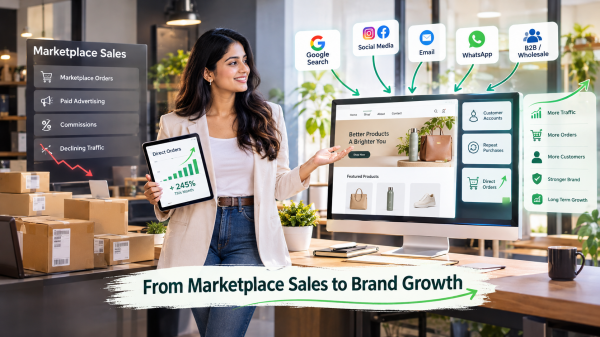
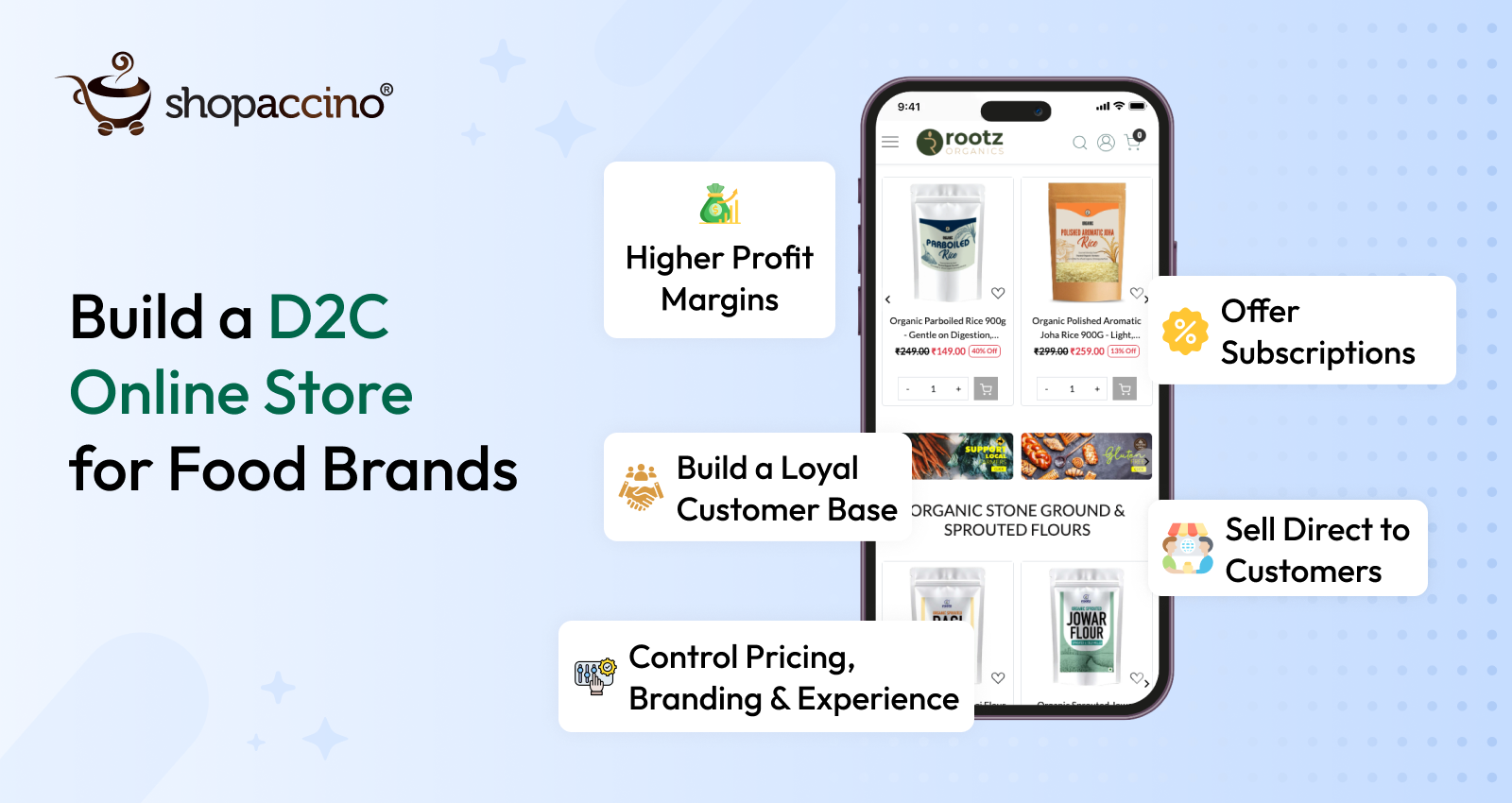
Direct-to-consumer (D2C) means selling your products directly to the end buyer through your own website or app — no middlemen, no retailer markups, no platform dependency.
For food brands, this is transformational. You get:
Full margin control — keep the revenue that marketplaces take as commission
First-party customer data — names, emails, purchase history, preferences
Brand storytelling — your packaging, your voice, your experience
Repeat business — loyalty programs, subscriptions, personalised offers
According to a 2023 report by Statista, the global D2C e-commerce market was valued at over $150 billion and is growing at double digits annually. Food is one of its fastest-growing verticals.
The shift is undeniable. Brands like Epigamia, The Whole Truth, and Rage Coffee in India — and KIND Snacks and Magic Spoon globally — built passionate customer bases by owning their online channels first.
Why Are Food Brands Leaving Traditional Retail Behind?
Retail shelves are expensive, crowded, and unforgiving. You pay for placement, comply with packaging mandates, and still compete with 50 similar products. Worse — you hand over your customer relationship to the retailer.
Here is what traditional distribution looks like in practice:
Retailers take 25–50% margin on every unit
You have zero visibility into who bought your product
Reorders depend on the retailer's mood, not your brand's performance
Returns, shelf life, and wastage eat into your margins further
With a D2C food online store, you flip the equation. You speak directly to your buyer. You know their postcode, their last order, their favourite flavour. That is a business asset — not just a transaction.
How Does a D2C Food Online Store Actually Work?
Setting up a D2C channel is simpler than most food brands think — especially with the right platform. Here is the typical flow:
1.Build Your Online Storefront
Use a dedicated ecommerce platform for food brands like Shopaccino to launch your store. Unlike generic builders, platforms purpose-built for D2C give you product catalogues, inventory management, and payment integrations out of the box.
Your storefront becomes your brand's home — with your colours, your story, your tone.
2.Set Up Ordering and Delivery
Integrate food delivery app software to manage orders and last-mile logistics. Whether you are delivering fresh produce, packaged snacks, or frozen meals, real-time order tracking and fulfilment management are non-negotiable.
Good delivery tech reduces cancellations, builds trust, and keeps customers coming back.
3.Launch Subscriptions and Repeat Orders
This is where D2C food brands really pull ahead. Food subscription box software lets you offer weekly, monthly, or custom delivery plans — turning one-time buyers into loyal regulars.
Subscription revenue is predictable, reduces cart abandonment, and increases lifetime customer value significantly.
4.Run Targeted Marketing
With your own store, you own your customer data. Use email campaigns, WhatsApp marketing, push notifications, and retargeting ads — things you simply cannot do when selling through a third-party marketplace.
What Are the Real Revenue Benefits for Food Brands?
Let us talk numbers — because the financial case for D2C is hard to ignore.
Higher Margins
When you sell through Amazon or a supermarket chain, you give away 30–50% of revenue. When you sell direct, that margin stays with you. For a brand doing ₹10 lakh/month in sales, that is ₹3–5 lakh in additional revenue — every month.
Lower Customer Acquisition Costs Over Time
Yes, there is upfront investment in building your D2C food online store and driving traffic. But once customers are in your system, re-engaging them via email or SMS costs almost nothing compared to acquiring a new one.
Studies consistently show it costs 5x more to acquire a new customer than to retain an existing one (Harvard Business Review). D2C lets you maximise retention.
Upsell and Bundle Opportunities
On your own platform, you control the shopping experience. Suggest a chutney with that pickle. Bundle a snack hamper for Diwali. Offer a free shipping threshold that nudges people to add one more item.
These are tactics impossible on a third-party marketplace, but natural and effective on your own online food store platform.
Why Is Owning Customer Data a Game-Changer for Food Brands?
Here is the part most food brand owners underestimate: data.
When someone orders from you on Swiggy Instamart or BigBasket — you get the money, but they keep the customer. Next time that customer wants your product, they open Swiggy. Not your app. Not your website. Swiggy.
A D2C food online store reverses this completely:
You know your top 100 customers by name
You know which products have the highest repeat purchase rate
You can send a personalised message when someone has not ordered in 30 days
You can survey customers before launching a new flavour
You can reward your most loyal buyers with early access or exclusive offers
This is not just good marketing — it is a competitive moat that gets stronger over time. No marketplace can replicate it.
How Does Food Subscription Box Software Unlock Recurring Revenue?
If you sell consumables — which most food brands do — subscriptions are the single most powerful tool in your arsenal.
Think about it: a customer who orders a jar of peanut butter every month is worth 12x a one-time buyer. Multiply that across 200 subscribers and you have a predictable ₹2–3 lakh floor of monthly revenue — before you even market to anyone new.
Food subscription box software lets you:
Offer flexible subscription plans (weekly, bi-weekly, monthly)
Allow customers to pause, skip, or swap products easily
Auto-charge and auto-fulfil without manual intervention
Send reminders, renewal notices, and personalised recommendations
Track churn rates and intervene before a subscriber cancels
Platforms like Shopaccino support subscription commerce natively, making it easy for even small food brands to run a professional subscription programme without complex integrations.
What Role Does Food Delivery App Software Play in D2C Success?
A great online store means nothing if orders do not reach customers on time. That is where food delivery app software becomes critical infrastructure.
Modern delivery management tools let you:
Assign orders to delivery partners automatically based on zone and load
Give customers real-time tracking links via SMS or WhatsApp
Set delivery windows (same-day, next-day, scheduled)
Handle failed deliveries, partial fulfillment, and refunds gracefully
Track delivery performance with analytics dashboards
For perishable or temperature-sensitive food products, this level of delivery control is not a luxury — it is essential for customer satisfaction and brand reputation.
Is D2C Right for Small Food Businesses and Startups?
Absolutely — and in many ways, smaller brands benefit more than large ones.
A boutique jam-maker, a home baker scaling up, a regional snack brand with cult following — all of them can build a profitable D2C food online store without the overheads of traditional retail.
Here is why the timing has never been better:
Ecommerce platforms are affordable and easy to use — no coding needed
Digital payment infrastructure is mature (UPI, cards, wallets)
Indian consumers are increasingly comfortable ordering food online (FMCG e-commerce grew 35% YoY per NielsenIQ 2024)
Logistics aggregators like Delhivery and Shiprocket have reduced shipping costs significantly
The playing field has levelled. A 10-person artisanal food startup can have a better online shopping experience than a legacy FMCG brand — if they choose the right platform and strategy.
How to Choose the Right Platform for Your D2C Food Online Store
Not every ecommerce platform is built for food. Here is what to look for:
Food-specific features: expiry date management, weight-based pricing, portion options
Subscription commerce: native food subscription box software integration
Delivery management: built-in or easily integrated food delivery app software
Mobile-first experience: most food orders in India happen on mobile
SEO and marketing tools: blog, email, discount engines, abandoned cart recovery
Analytics: customer lifetime value, top products, churn tracking
Shopaccino is purpose-built for D2C brands in India — with features tailored for food businesses, from customisable storefronts to subscription management and logistics integrations. It is the all-in-one home for your D2C food online store.
What Mistakes Should Food Brands Avoid When Going D2C?
The biggest pitfalls are surprisingly common:
Treating D2C as a Side Channel
Brands that launch a website but put zero effort into driving traffic or building the experience always fail. D2C requires intentional investment — in content, ads, UX, and customer service.
Ignoring Packaging and Unboxing
When a customer orders directly from your website, the unboxing is your brand touchpoint. Invest in good packaging — it drives Instagram shares and repeat purchases.
Skipping the Subscription Play
For consumable products, not offering a subscription is leaving serious money on the table. Set it up early, even if you start with just 20 subscribers.
Using a Generic Ecommerce Platform
Building a food business on a platform not designed for it leads to workarounds and frustrated customers. Use a platform that understands food D2C from day one.
A Real-World Perspective: What D2C Actually Changes
A natural trail-mix brand I worked with was doing ₹8 lakh/month purely through Amazon. Healthy volume — but zero customer data, 30% margin given away, and total dependence on Amazon's algorithm.
Six months after launching their own D2C food online store on Shopaccino, they had 400 active subscribers, a 60-person loyalty programme, and monthly recurring revenue of ₹3.2 lakh — with margins they had never seen before.
More importantly, they could finally talk to their customers. They ran a survey, discovered that 70% of buyers were gym-goers, and launched a high-protein variant that sold out in 48 hours — because they told the right people, at the right time.
That is what D2C actually unlocks: a brand-to-consumer relationship that compounds over time.
What Do Regulations Say About Selling Food Online in India?
If you are setting up a D2C food store in India, compliance matters. The Food Safety and Standards Authority of India (FSSAI) mandates that all food businesses — including online sellers — must hold a valid FSSAI registration or licence depending on turnover.
You can read the official guidelines directly from FSSAI's website at fssai.gov.in — the authority for food safety standards and licensing in India. Staying compliant from day one protects your brand and builds consumer trust. Nutraceuticals and health supplements sit under a separate FSSAI schedule with their own labelling and claim rules. If you sell those alongside food, see our guide to supplement licensing, labelling and payment approval.
Final Thoughts: Why Your D2C Food Online Store Should Be Your Priority
Every food brand has a choice: keep feeding the marketplace machine and hope for scraps of data and margin — or build something you actually own.
A D2C food online store is not just a sales channel. It is your brand's home on the internet. It is where your story lives, where your best customers come back to, and where the real economics of your business get built.
With the right online food store platform, integrated food delivery app software, and a smart subscription strategy powered by food subscription box software, you can build a business that grows independent of any marketplace.
The food brands winning today are not the ones with the biggest retail footprint. They are the ones who own their customer relationship.
Start building yours.
FAQs
A D2C (direct-to-consumer) food online store is a website or app through which a food brand sells its products directly to end customers — without any retailer, distributor, or marketplace acting as an intermediary. It gives the brand full control over pricing, customer experience, and data.
On marketplaces like Amazon or Swiggy, the platform owns the customer relationship and charges a commission (typically 25–35%). With your own D2C store, you keep the full margin, collect first-party customer data, and communicate directly with buyers — no middleman involved.
Yes, especially if you are delivering perishable or time-sensitive products. Food delivery app software handles order routing, real-time tracking, delivery windows, and fulfilment management — ensuring customers receive orders correctly and on time, which is critical for building trust.
Food subscription box software automates recurring orders — customers sign up for weekly or monthly deliveries, and the platform handles billing, reminders, and fulfilment automatically. It creates predictable recurring revenue and significantly increases customer lifetime value for consumable food products.
Absolutely. Affordable ecommerce platforms, mature payment infrastructure, and accessible logistics services have made D2C viable for even micro food brands and home-based businesses. Starting small with a focused product range and a clean online store can generate strong traction quickly — without the costs of traditional retail.