Shopaccino vs Shopify vs WooCommerce: Which Ecommerce Platform is Best for India?
Choosing the right ecommerce platform in India is no longer a technical decision—it is a long-term business strategy.
As Indian e-commerce matures in 2026, brands are not just looking for a website builder. They are looking for scalability, operational efficiency, marketing integration, GST compliance, multi-warehouse support, and long-term cost control.
This is why comparisons like Shopaccino vs Shopify and Shopaccino vs WooCommerce are becoming more common among Indian SMEs and D2C brands.
While Shopify dominates global SaaS ecommerce conversations and WooCommerce remains popular among developers, Indian businesses are increasingly exploring Shopify alternatives in India that better align with local operational needs.
In this detailed comparison guide, we analyze:
- Costs and pricing models
- Feature depth
- Customization flexibility
- Indian use cases
- Long-term scalability
- Operational complexity
This blog will help you decide which e-commerce platform truly fits Indian market realities.
Shopaccino vs Shopify vs WooCommerce: Quick Comparison
For Indian SMEs and D2C brands, the choice comes down to three models. Shopaccino is a structured all-in-one SaaS platform built around Indian operations — GST, COD, regional couriers, and predictable pricing in one dashboard. Shopify is a global hosted SaaS with a large paid-app ecosystem, strong for international scale but with rising add-on costs. WooCommerce is an open-source WordPress plugin offering deep customization, but it needs hosting, security, and developer management.
In short: Shopaccino suits businesses wanting integrated control with low technical overhead; Shopify suits brands comfortable managing an app ecosystem for global reach; WooCommerce suits technically strong teams that want full customization.
Understanding the Indian Ecommerce Context (2026 Reality)
Before comparing platforms directly, we need to understand how ecommerce in India differs from Western markets.
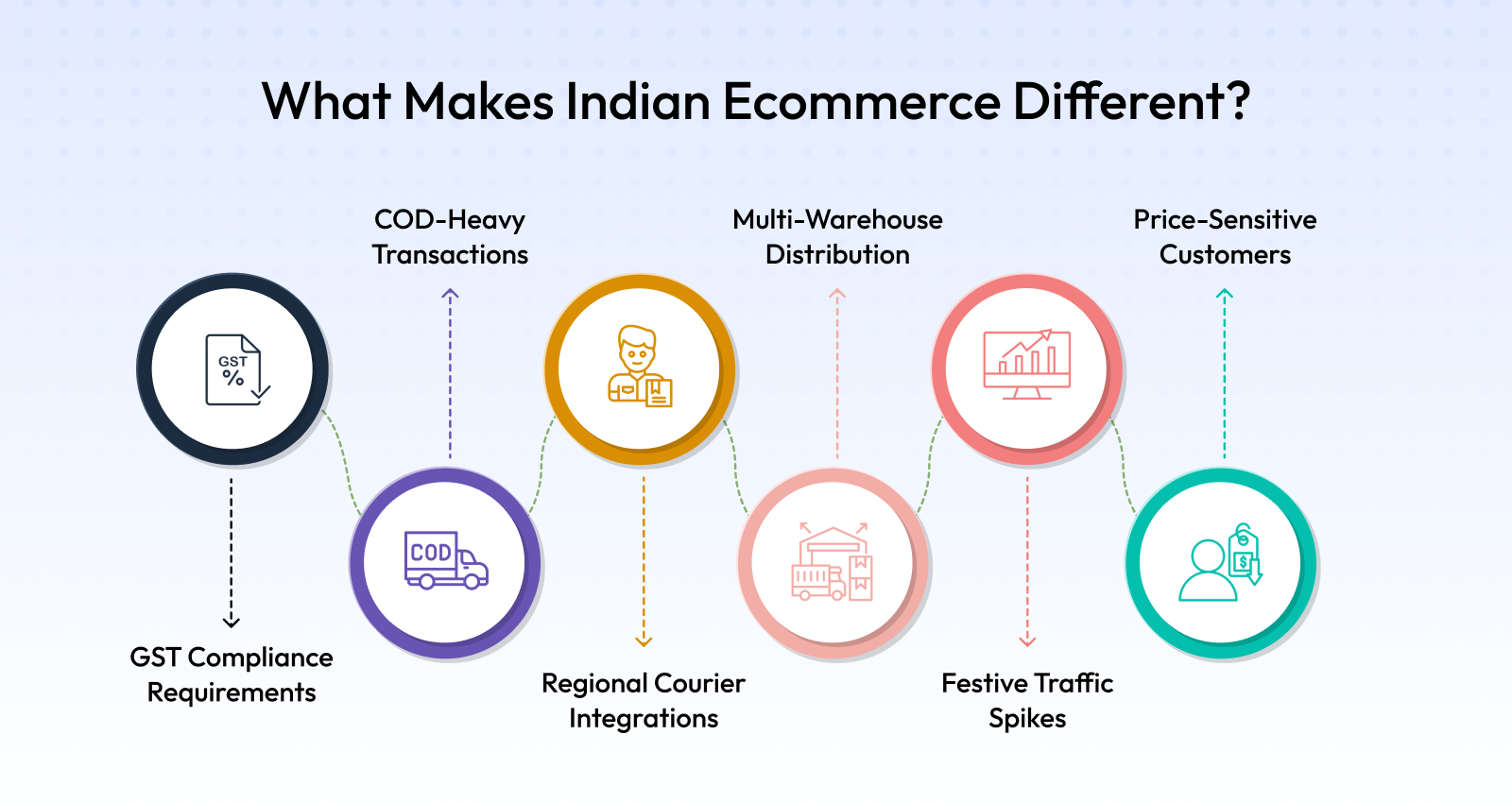
India has unique challenges:
- GST compliance requirements
- COD-heavy transactions
- Regional courier integrations
- Multi-warehouse distribution
- Price-sensitive customers
- Rapid festive sales spikes
An ecommerce platform that works well globally may not always be optimized for Indian operational complexity.
That is why the debate around Shopify vs WooCommerce India has evolved. Businesses are no longer asking which platform is more popular. They are asking which platform performs better in Indian business conditions.
What Indian SMEs & D2C Brands Actually Need
In 2026, an ideal ecommerce platform in India must support:
- Unified inventory & order management
- Marketing automation integration
- Fast, mobile-first performance
- Secure Indian payment gateway support
- Scalability during traffic spikes
- Predictable pricing structure
Fragmented systems create operational friction. Indian businesses increasingly prefer structured SaaS-based ecosystems over plugin-heavy architecture.
This is where comparisons like Shopaccino vs Shopify and Shopaccino vs WooCommerce become strategically important.
Platform Overview: A High-Level Snapshot
Let’s briefly introduce the three platforms before diving deeper in Part 2.
1. Shopaccino – India-Focused All-in-One SaaS Ecommerce Platform
Shopaccino is designed as a structured, integrated ecommerce platform built for operational clarity. Unlike plugin-dependent systems, it combines storefront, inventory, order management, and marketing compatibility within one ecosystem.
It positions itself as a strong Shopify alternative in India, particularly for businesses that want unified control rather than layered integrations.
2. Shopify – Global SaaS Leader
Shopify is a widely adopted SaaS ecommerce platform known for ease of use and global scalability. It offers:
- Hosted infrastructure
- Large app ecosystem
- International payment integration
- Extensive theme library
However, for Indian brands, total cost and app dependency often become important evaluation factors.
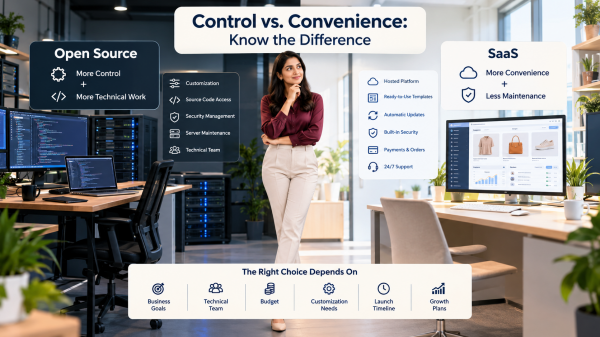
3. WooCommerce – Open-Source Flexibility
WooCommerce operates as a WordPress plugin and provides deep customization capabilities.
It is flexible but requires:
- Hosting management
- Security oversight
- Plugin configuration
- Technical expertise
The comparison of Shopify vs WooCommerce India often centers around ease of use vs customization freedom.
However, a more practical debate in 2026 is Shopaccino vs WooCommerce, especially for businesses that want low maintenance.
Why This Comparison Matters in 2026
Indian ecommerce brands are no longer in the experimentation phase. They are scaling, optimizing, and competing aggressively.
The wrong platform choice can result in:
- High operational costs
- Migration headaches
- Marketing inefficiencies
- Scalability limitations
This is why businesses are actively searching for:
- Shopify alternatives in India
- Clear answers on Shopaccino vs Shopify
- Honest evaluation of Shopaccino vs WooCommerce
- Real-world analysis of Shopify vs WooCommerce India
Choosing the right platform today determines operational flexibility for the next five years.
Detailed Comparison Across Cost, Features & Indian Use Cases
Now that we understand the Indian ecommerce landscape and why platform choice matters in 2026, let’s break down the comparison in depth.
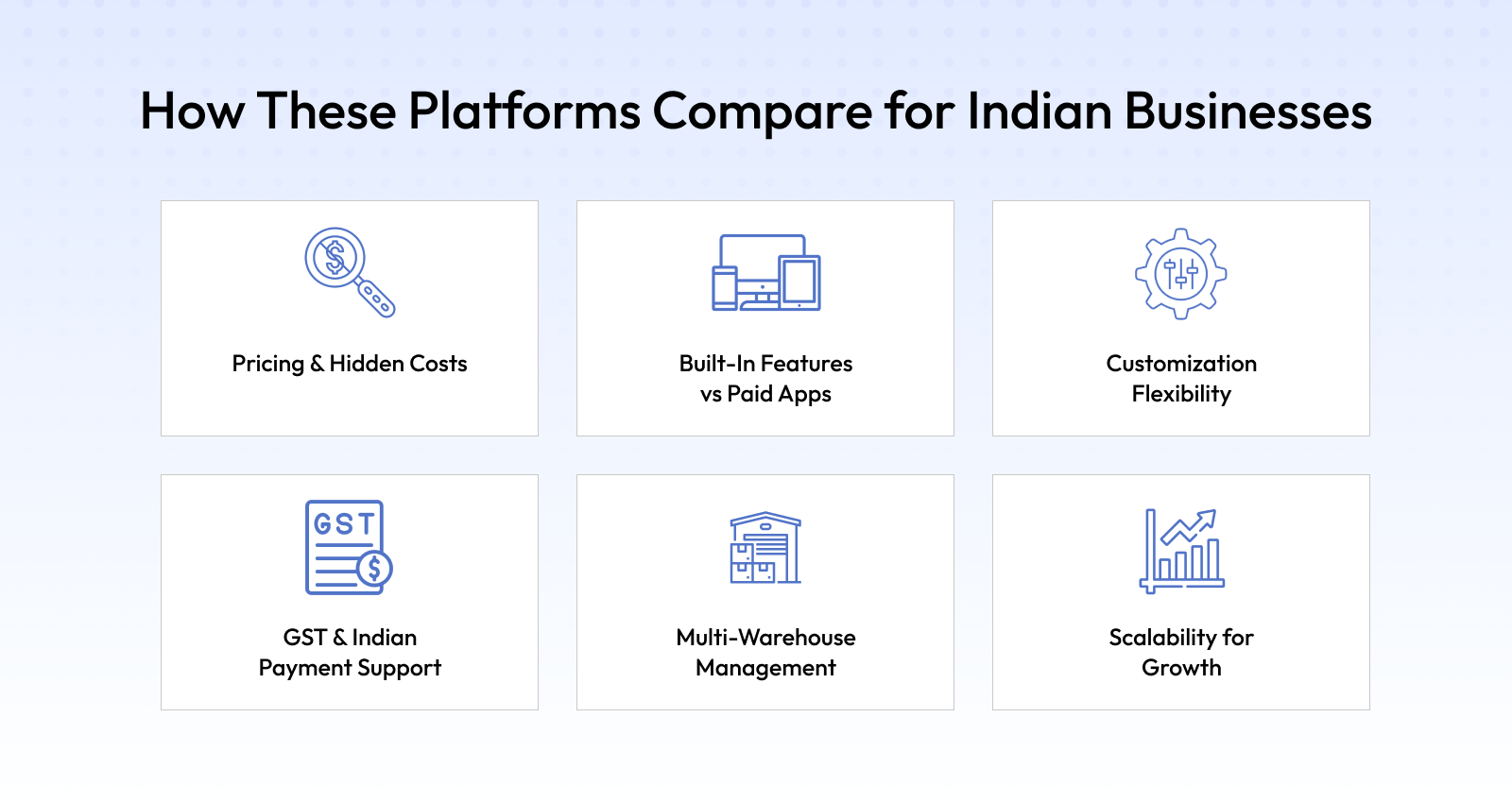
We will analyze:
- Pricing & total ownership cost
- Feature depth
- Customization flexibility
- App dependency
- Indian operational alignment
- Scalability for long-term growth
And we’ll do it in this sequence:
1. Shopaccino
2. Shopify
3. WooCommerce
1. Shopaccino – Structured All-in-One SaaS Built for Indian Businesses
When comparing Shopaccino vs Shopify and Shopaccino vs WooCommerce, the first major differentiator is structure.
Shopaccino is not a plugin-based solution. It is a complete SaaS ecommerce ecosystem.
Pricing & Cost Transparency
Unlike platforms where costs increase through add-ons, Shopaccino offers more native functionality within structured plans.
There is:
- Predictable SaaS pricing
- Reduced dependency on paid apps
- No hosting management cost
- No external security maintenance burden
For Indian SMEs and D2C brands, cost predictability is critical.
When evaluating Shopify alternatives in India, total cost over 3–5 years becomes more important than entry-level pricing.
Feature Depth & Native Functionality
Shopaccino includes:
- Multi-warehouse inventory management
- Integrated order processing
- Role-based access
- Built-in marketing compatibility
- GST-aligned structure
- Indian payment gateway integration
In the comparison of Shopaccino vs WooCommerce, the biggest advantage is reduced technical dependency.
Unlike WooCommerce, which relies heavily on plugins, Shopaccino centralizes operations within a unified dashboard.
Indian Use Case Alignment
India has unique ecommerce needs:
- COD management
- Regional courier integrations
- GST compliance
- Multi-location inventory
- Festive traffic spikes
Shopaccino is structured to handle these realities.
This is why many businesses searching for Shopify alternatives in India consider Shopaccino a practical option for local operations.
Long-Term Scalability
Shopaccino’s SaaS infrastructure supports:
- Traffic spikes
- Large product catalogs
- D2C scaling
- Operational centralization
For brands evaluating Shopaccino vs Shopify, scalability combined with operational clarity becomes a major differentiator.
2. Shopify – Global SaaS with App-Based Expansion
Now let’s examine Shopify objectively.
Shopify is a globally recognized SaaS platform with strong brand presence.
Pricing & Hidden Cost Factors
Shopify offers multiple pricing tiers, but costs often increase due to:
- App subscriptions
- Transaction fees
- Premium themes
- Advanced feature upgrades
In the debate of Shopaccino vs Shopify, Indian SMEs often evaluate total ownership cost beyond the base subscription.
Shopify’s flexibility largely depends on its app ecosystem — which can increase expenses over time.
Feature Architecture
Shopify offers:
- Clean storefront templates
- Strong global integrations
- Reliable hosting
However, advanced functionality often requires paid apps.
For Indian businesses comparing Shopify vs WooCommerce India, Shopify offers easier setup but lower backend control compared to WooCommerce.
Indian Market Adaptability
Shopify supports Indian payments and integrations, but many workflows require configuration.
For SMEs specifically looking for India-focused workflows, Shopify may require additional adjustments.
This is why many businesses search for Shopify alternatives in India when scaling beyond early growth stages.
Scalability
Shopify scales well globally and handles traffic spikes effectively.
However, customization beyond theme level often requires developer support or advanced plans.
3. WooCommerce – Flexible but Technical
Now let’s evaluate WooCommerce in the context of Shopify vs WooCommerce India and Shopaccino vs WooCommerce.
WooCommerce is an open-source WordPress plugin.
Pricing Structure
WooCommerce itself is free, but real cost includes:
- Hosting
- Security management
- Premium plugins
- Developer support
- Performance optimization
In the comparison of Shopaccino vs WooCommerce, WooCommerce may appear flexible but requires active maintenance.
For non-technical SMEs, this becomes complex over time.
Customization Flexibility
WooCommerce provides deep customization potential.
Developers can:
- Modify core functionality
- Build custom plugins
- Create advanced workflows
However, this flexibility comes with responsibility.
Plugin conflicts, security risks, and performance tuning must be managed manually.
Scalability & Performance
WooCommerce scalability depends entirely on:
- Hosting quality
- Server optimization
- Developer management
Unlike SaaS platforms, performance is not automatically handled.
For Indian SMEs without strong technical teams, WooCommerce can introduce operational risk.
Comparative Strategic Insight
When comparing:
- Shopaccino vs Shopify
- Shopaccino vs WooCommerce
- Shopify vs WooCommerce India
The differences become clearer:
|
Factor |
Shopaccino |
Shopify |
WooCommerce |
|
SaaS Hosted |
✅ |
✅ |
❌ |
|
Plugin Dependency |
Low |
High |
Very High |
|
Indian Market Alignment |
Strong |
Moderate |
Depends on Setup |
|
Technical Dependency |
Low |
Moderate |
High |
|
Cost Predictability |
High |
Moderate |
Variable |
For Indian businesses seeking clarity and simplicity, Shopaccino presents itself as a structured alternative within the category of Shopify alternatives in India.
Long-Term Scalability, Business Impact & Final Recommendation for India
Choosing an ecommerce platform is not about comparing features on paper. It is about understanding how that platform will behave when your business doubles in size, when festive traffic surges, or when marketing complexity increases.
In India’s fast-evolving ecommerce ecosystem, the difference between a platform that “works” and one that “scales” becomes visible only over time.
Let us now evaluate this comparison through the lens of long-term business impact.
Scalability in Real Indian Growth Scenarios
Indian ecommerce growth is rarely linear. A brand may experience sudden spikes during festive sales, influencer collaborations, or viral marketing campaigns. When traffic increases suddenly, the platform must remain stable without slowing checkout or breaking integrations.
In the debate of Shopaccino vs Shopify, Shopify’s global cloud infrastructure handles traffic well. However, as operational needs grow, businesses often rely heavily on third-party apps to manage complex inventory and automation workflows.
In Shopaccino vs WooCommerce, WooCommerce scalability depends almost entirely on hosting configuration and technical management. Performance tuning, security, and server optimization become continuous responsibilities.
Shopaccino’s SaaS structure centralizes infrastructure, reducing technical management burden while supporting operational growth. For Indian SMEs that want scalable simplicity, this architectural difference matters significantly.
Operational Simplicity vs Technical Complexity
The comparison of Shopify vs WooCommerce India often revolves around ease of use. Shopify simplifies hosting and setup. WooCommerce offers deep customization but demands technical involvement.
However, the more relevant comparison in 2026 is Shopaccino vs WooCommerce in terms of operational control.
WooCommerce provides flexibility but requires:
- Ongoing plugin updates
- Security monitoring
- Hosting optimization
- Developer intervention
Shopify simplifies infrastructure but introduces app dependency.
Shopaccino’s approach is different. It reduces fragmentation by integrating storefront, inventory, and order management within one system. This minimizes external plugin reliance and reduces operational confusion.
For growing Indian brands, simplicity is not about fewer features — it is about fewer moving parts.
Cost Over Time: The Reality Beyond Monthly Pricing
Initial subscription pricing rarely reflects total cost.
In Shopaccino vs Shopify, Shopify’s ecosystem often requires paid apps for:
- Advanced inventory management
- Custom checkout workflows
- Marketing automation
- Multi-warehouse support
These app subscriptions increase long-term cost unpredictability.
In Shopaccino vs WooCommerce, WooCommerce may seem affordable initially, but:
- Hosting upgrades
- Security tools
- Developer support
- Plugin renewals
gradually increase ongoing expenses.
For Indian businesses searching for Shopify alternatives in India, long-term financial clarity becomes a deciding factor.
SaaS platforms that reduce layered dependency often provide more predictable ownership cost over three to five years.
Indian Market Alignment: A Critical Differentiator
India is not just another e-commerce market.
It involves:
- High COD transactions
- GST compliance complexities
- Regional logistics partnerships
- Festive traffic volatility
- Price-sensitive customer behavior
In the comparison of Shopify vs WooCommerce India, both platforms can be configured for Indian operations, but this often requires additional setup and integration effort.
Shopaccino’s positioning as an India-aligned SaaS ecommerce platform simplifies execution by aligning more closely with local workflows.
For SMEs operating primarily in India, this localized alignment reduces operational friction significantly.
Developer Dependency vs Business Independence
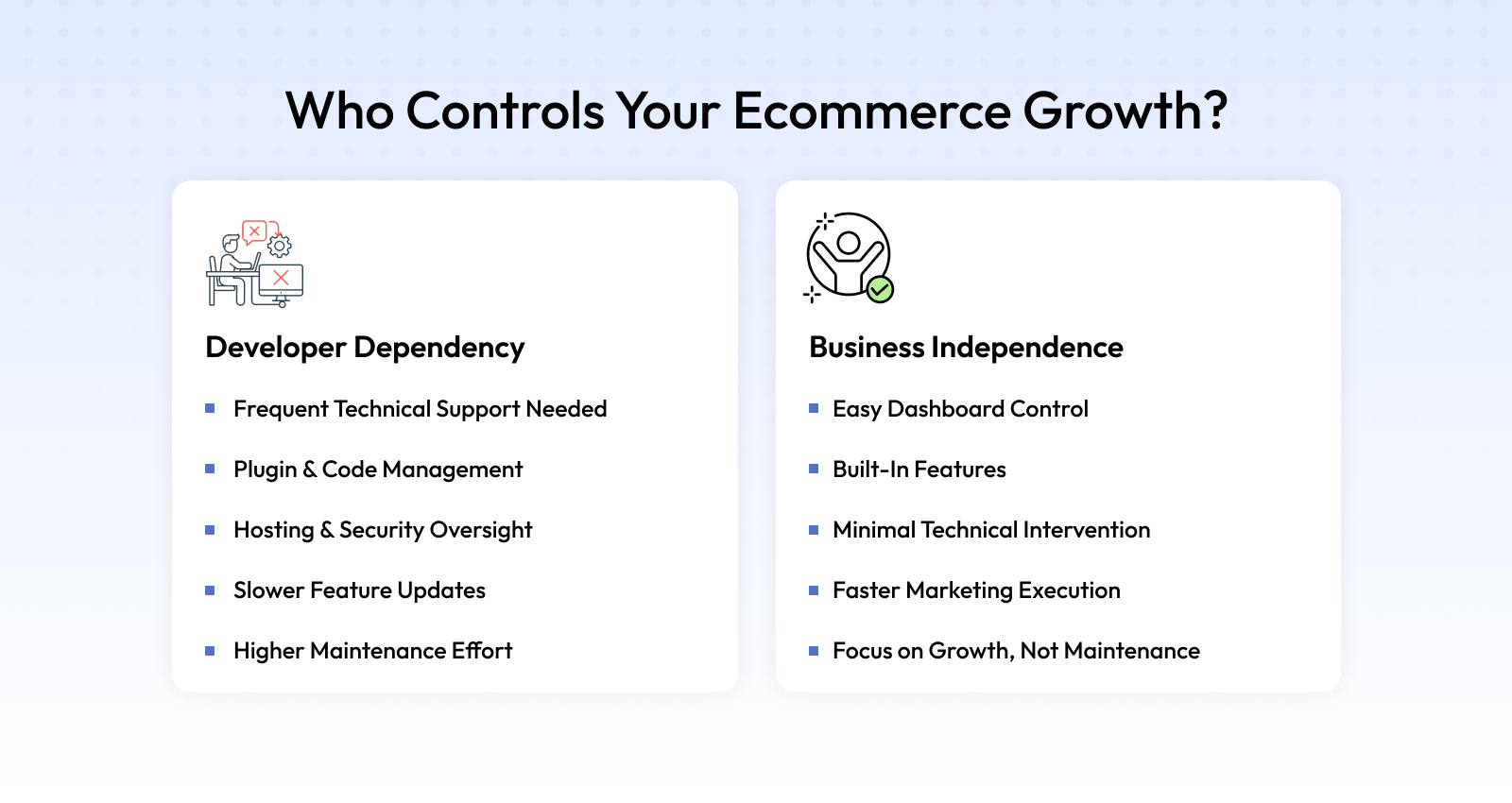
The hidden cost of technical complexity is slower decision-making.
When marketing teams depend on developers for every checkout tweak or feature update, agility decreases.
In Shopaccino vs WooCommerce, WooCommerce provides high flexibility but increases technical reliance.
In Shopaccino vs Shopify, Shopify reduces hosting burden but may still require developer assistance for advanced customization beyond theme capabilities.
Shopaccino’s structured backend minimizes technical bottlenecks, enabling teams to focus on growth rather than maintenance.
Operational independence is increasingly important for Indian SMEs without large tech teams.
Final Strategic Comparison
If we simplify the comparison across key decision pillars:
- Shopify vs WooCommerce India is a debate between SaaS simplicity and open-source flexibility.
- Shopaccino vs WooCommerce becomes a debate between structured SaaS control and developer-managed customization.
- Shopaccino vs Shopify becomes a debate between global ecosystem scale and India-aligned operational integration.
The “best” platform ultimately depends on business priorities.
However, for Indian SMEs and D2C brands that prioritize:
- Integrated operations
- Cost predictability
- Reduced plugin dependency
- Indian use case compatibility
- Long-term scalability
Shopaccino presents a balanced SaaS alternative within the growing category of Shopify alternatives in India.
Conclusion: Which Ecommerce Platform is Best for India in 2026?
There is no universal winner for every business model.
WooCommerce suits technically strong teams that want full customization control.
Shopify suits brands targeting global markets and comfortable managing layered app ecosystems.
But for Indian SMEs and D2C brands focused on operational clarity, predictable cost, and scalable SaaS infrastructure, the Shopaccino vs Shopify vs WooCommerce comparison increasingly favors structured, integrated ecosystems over fragmented setups.
The Indian ecommerce market rewards speed, efficiency, and stability.
Choosing the right platform today is not just about launching a store — it is about building a foundation that supports growth for years without costly migrations or technical stress.
In 2026, the smartest ecommerce decision is the one that reduces complexity while enabling scale
FAQs
The best ecommerce platform for Indian SMEs depends on scalability, cost predictability, and operational simplicity. Businesses should evaluate long-term ownership cost, Indian payment compatibility, GST alignment, and reduced technical dependency before choosing a platform.
In the comparison of Shopaccino vs Shopify, Shopaccino focuses on integrated operations and India-aligned workflows, while Shopify offers a strong global ecosystem. Indian businesses often evaluate cost structure, app dependency, and local integration depth when choosing between them.
In the debate of Shopify vs WooCommerce India, Shopify provides hosted SaaS convenience with app-based expansion, while WooCommerce offers open-source flexibility but requires hosting management and technical oversight for security and performance.
WooCommerce can be powerful, but it typically requires technical knowledge for hosting, plugin updates, and performance optimization. Non-technical business owners may find SaaS platforms easier to manage in the long run.
Many businesses explore Shopify alternatives in India due to rising app costs, transaction fees, and increasing operational complexity. Brands often look for platforms that offer more native functionality and predictable long-term pricing.
Scalability depends on infrastructure and operational integration. SaaS platforms with centralized management reduce technical risk during traffic spikes, while open-source systems rely on hosting configuration and developer support for scaling.