Ecommerce Automation Tools Every Indian Online Store Should Use in 2026
Running an online store in India in 2026 is very different from how it was five years ago.
Customers expect fast responses.
They expect instant order confirmation.
They expect quick delivery updates.
They expect personalized offers.
They expect smooth returns.
If you try to manage all of this manually, your team will feel overwhelmed.
This is why ecommerce automation tools are no longer optional. They are essential.
Automation is not about replacing people. It is about reducing repetitive work, minimizing errors, and improving customer experience.
Indian ecommerce brands are growing rapidly. But growth without systems creates chaos. Orders increase. Messages increase. Returns increase. Marketing campaigns increase. Without structured ecommerce automation software, operations become stressful and inefficient.
This guide will help you understand which automation systems every serious Indian online store should implement in 2026 — and how structured platforms like Shopaccino support automation across operations, marketing, and customer engagement.
Why Ecommerce Automation Is Critical for Indian Online Stores
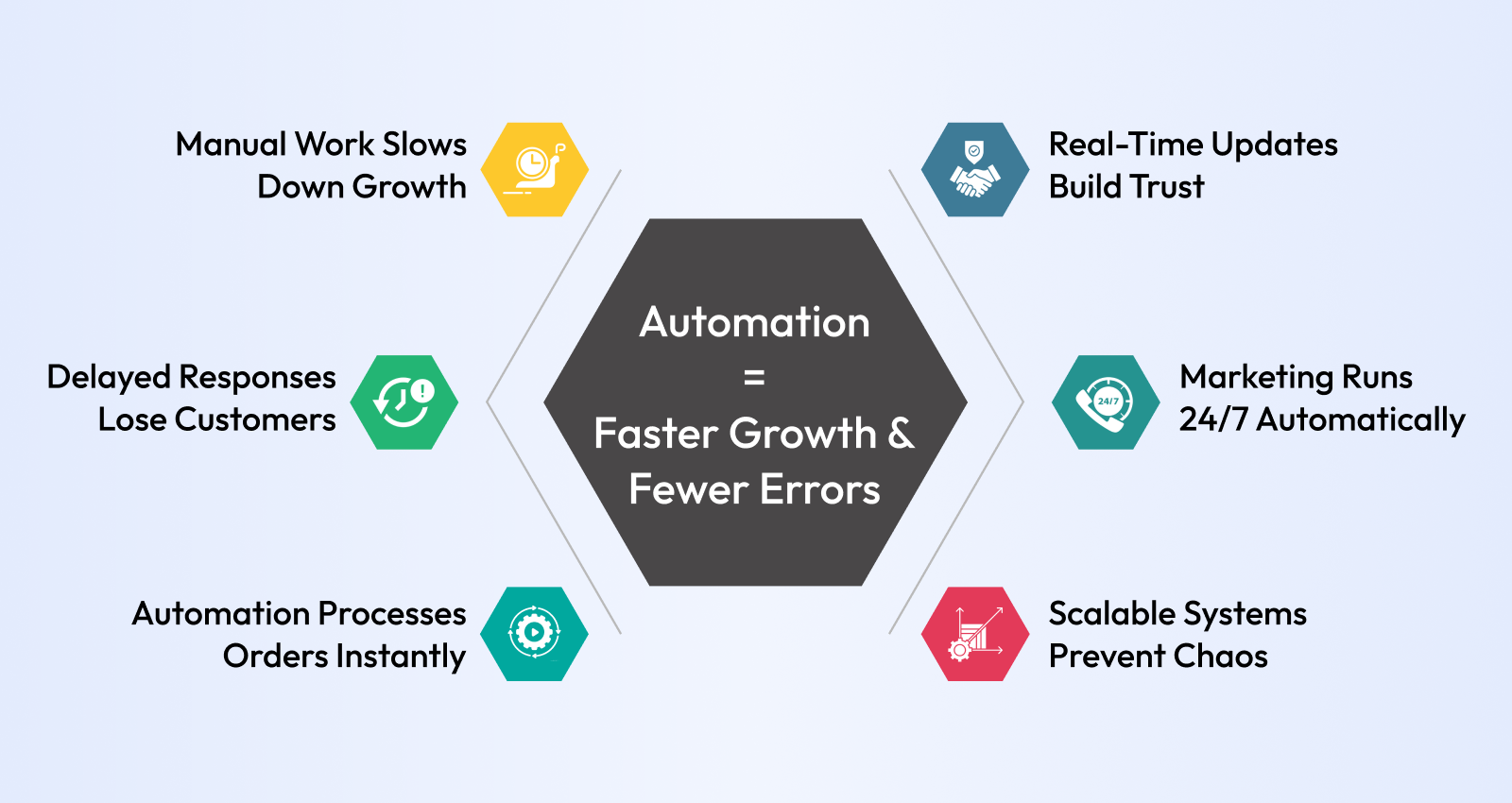
India’s ecommerce market is highly competitive. Customers compare multiple brands before buying. If your store is slow to respond or inconsistent in communication, they move to competitors.
Automation improves three major areas:
Operational efficiency
Marketing performance
Customer experience
Let’s understand this clearly.
If your team manually confirms every order, sends shipping updates individually, tracks stock through spreadsheets, and follows up with customers one by one — scaling becomes impossible.
An automated order management system ensures that orders are processed instantly. Inventory updates in real time. Shipping notifications go out automatically. This reduces delays and improves accuracy.
Similarly, ecommerce marketing automation allows brands to send targeted campaigns without manually sending emails every day.
When automation is implemented correctly, businesses save time and increase revenue simultaneously.
The Difference Between Manual Operations and Automated Systems
To understand the importance of ecommerce automation tools, imagine two stores with the same traffic.
Store A handles everything manually.
Store B uses structured ecommerce automation software.
Both receive 500 orders in a day.
Store A manually updates stock. Occasionally makes mistakes. Sometimes delays shipping confirmation. Forgets to follow up on abandoned carts.
Store B uses an automated order management system. Orders are processed automatically. Inventory reduces instantly. Customers receive real-time updates. Abandoned cart reminders go out without delay.
Which store builds better customer trust?
Which store scales faster?
The difference is not traffic. It is systems.
Automation reduces human error and increases consistency.
Core Areas Where E-commerce Automation Tools Create Maximum Impact
Not every automation tool is equally important. Some areas directly impact revenue and customer satisfaction.
Let’s explore the key areas where ecommerce automation tools make the biggest difference for Indian online stores.
1. Order Processing Automation
Order processing is the heart of ecommerce.
When a customer clicks “Buy Now,” the system must:
Confirm payment
Update inventory
Generate invoice
Assign shipping
Send confirmation message
If this process is manual, delays are inevitable.
An automated order management system ensures that every order flows smoothly from purchase to fulfillment.
Shopaccino provides integrated backend systems that help businesses automate order tracking, reduce manual errors, and maintain accurate stock records.
In 2026, no growing ecommerce brand can afford slow manual order handling.
2. Ecommerce Marketing Automation
Marketing is not just about running ads.
True ecommerce marketing automation focuses on engaging customers at the right time with the right message.
For example:
When a customer signs up, they receive a welcome message automatically.
When someone adds a product to cart but leaves, a reminder is triggered.
When a customer completes a purchase, a follow-up message is scheduled.
This is how automation increases conversion rates.
Instead of sending campaigns randomly, automated systems respond to customer behavior.
Shopaccino enables structured marketing workflows that help brands create loyalty programs, coupon campaigns, and targeted engagement strategies.
Affordable Marketing Automation for Paid Acquisition
Running paid campaigns without automation quickly becomes expensive.
Every rupee spent on ads should work harder — not get wasted on the wrong audience.
Many Indian sellers assume marketing automation is costly. In reality, affordable ecommerce marketing automation is now accessible even for small and mid-sized brands.
Instead of manually tracking which customers came from which ad, automation connects paid acquisition data with customer behavior. This means:
Retargeting can trigger automatically for visitors who viewed a product but didn't buy.
Follow-up offers can go out to first-time buyers to drive repeat purchases.
Underperforming campaigns can be flagged early, before budget is wasted.
This is where automation directly improves performance marketing results — not by increasing ad spend, but by making existing spend more efficient.
For Indian D2C brands and growing online stores, this affordability factor matters. You don't need an enterprise budget to run smart, automated paid campaigns.
Shopaccino supports this by connecting customer and order data with marketing workflows, so paid campaigns can be optimized based on real purchase behavior — not guesswork.
What are the most affordable ecommerce marketing automation tools in India?
Affordable ecommerce marketing automation tools in India typically include cart recovery reminders, WhatsApp order updates, loyalty programs, and email workflows bundled within a single ecommerce platform. Instead of paying separately for multiple tools, integrated platforms like Shopaccino offer these features together, reducing cost while keeping marketing automation accessible for small and growing online stores.
How can I automate paid acquisition for my online store affordably?
You can automate paid acquisition affordably by connecting ad campaigns with customer and order data, so retargeting and follow-up offers trigger automatically based on real behavior. This reduces wasted ad spend by focusing budget only on interested visitors. Shopaccino supports this by linking marketing workflows directly with store data.
Which marketing automation tools help increase repeat purchases?
Marketing automation tools that increase repeat purchases include post-purchase follow-up emails, loyalty point systems, and personalized offers based on past orders. These tools re-engage customers automatically instead of relying on one-time promotions. Shopaccino enables brands to set up these workflows within one platform to encourage long-term repeat buying.
Read Also : Essential eCommerce Marketing Automations for Growth
3. Email Automation for Ecommerce
Email remains one of the highest ROI marketing channels.
But manually sending emails is not practical.
Email automation for ecommerce allows brands to:
Send welcome emails
Recover abandoned carts
Promote new collections
Share order updates
Request product reviews
Automation ensures timely communication without constant manual effort.
In India, where customers appreciate clear communication, structured email automation improves both trust and repeat purchases.
When combined with data insights, ecommerce automation software makes email marketing smarter and more effective.
Why Indian Ecommerce Brands Need Integrated Automation
Many businesses use multiple disconnected tools.
One tool for email.
One for inventory.
One for order processing.
One for marketing.
When systems are disconnected, data becomes inconsistent.
An integrated e-commerce automation software platform is more powerful.
Shopaccino provides a centralized ecommerce ecosystem where inventory, orders, and marketing automation work together.
This integration reduces complexity and improves accuracy.
Automation should simplify operations — not create more confusion.
Automation Is Not Just About Saving Time
Some business owners think automation only saves time.
It does more than that.
It increases conversion rates.
It reduces abandoned cart rate.
It improves customer retention.
It lowers operational cost.
It increases scalability.
When systems run smoothly, your team focuses on growth instead of fixing errors.
Automating Customer Support for Faster Response and Higher Trust
In India, customers often have questions before buying.
They want to know delivery timelines.
They want clarity about returns.
They want confirmation about product details.
If support replies slowly, customers leave.
Manual support systems cannot handle growing traffic. As orders increase, customer queries increase as well.
This is where ecommerce automation tools play a powerful role.
Automated chat responses, instant order status updates, and structured FAQ systems reduce pressure on support teams. Instead of answering repetitive questions manually, automation provides instant clarity.
An integrated ecommerce automation software connects customer support with order data. When a buyer asks about delivery status, the system can provide real-time tracking without manual checking.
Shopaccino’s structured backend allows brands to manage customer interactions in an organized way, reducing delays and improving satisfaction.
Automation in support is not about removing human interaction. It is about ensuring speed and accuracy for routine questions, while the team focuses on complex issues.
Read Also : Automate Your Store to Increase Conversion Rates
Inventory Automation for Accurate Stock Visibility
Inventory mistakes are one of the biggest causes of customer frustration.
Imagine a customer places an order, receives confirmation, and then gets a cancellation message because the product is out of stock.
That single experience damages trust.
This is why inventory automation is critical.
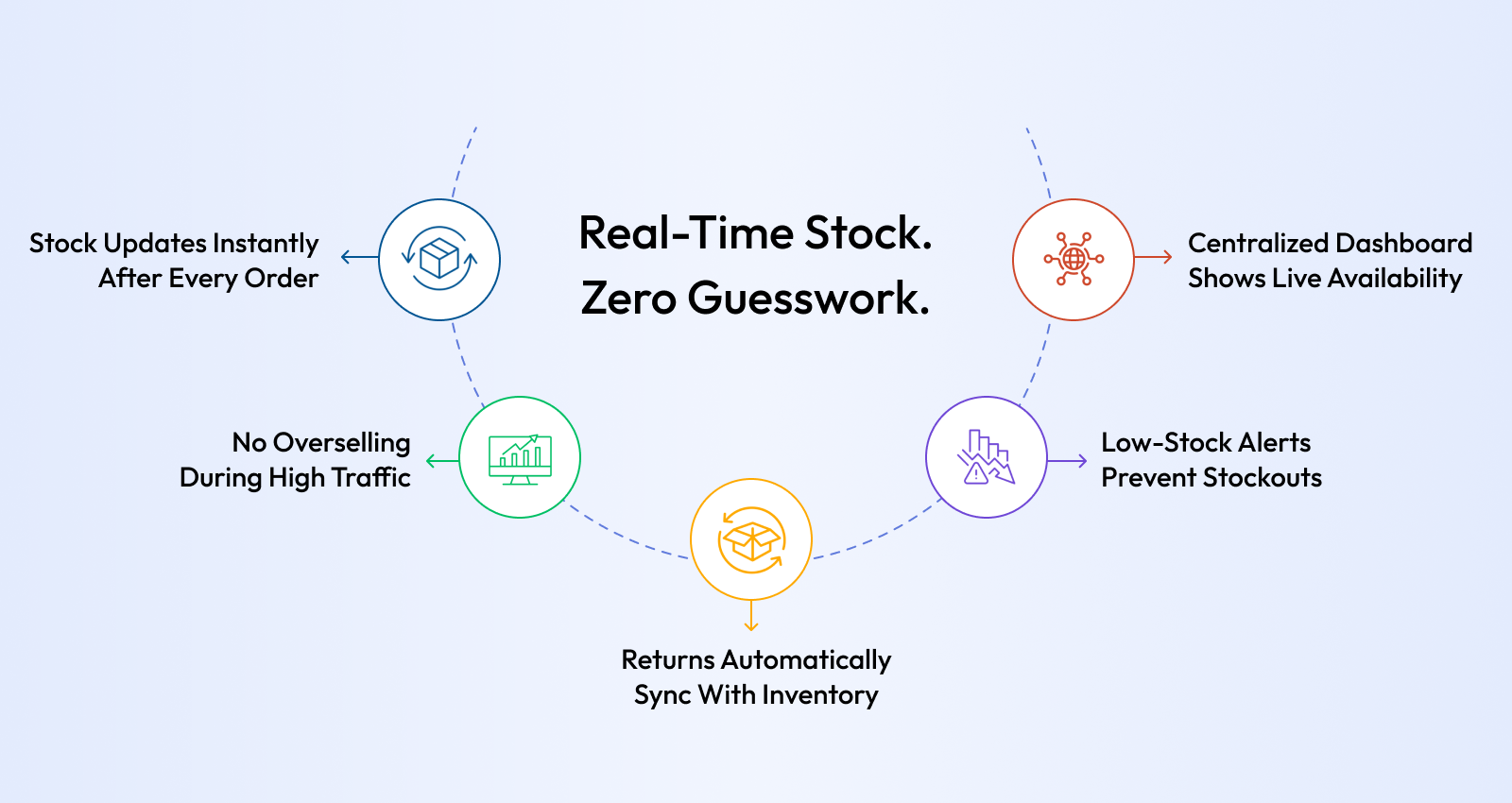
An advanced automated order management system connects directly with inventory. When a product is purchased, stock updates instantly. When a return is processed, availability adjusts automatically.
Without automation, manual updates create delays and mismatches.
Indian ecommerce brands that scale quickly cannot rely on spreadsheets. They need structured ecommerce automation tools that manage stock movement in real time.
Shopaccino integrates order flow and stock tracking within the same ecosystem, ensuring that backend accuracy supports frontend reliability.
Automation protects brand reputation.
Payment and Refund Automation for Operational Clarity
Payments and refunds are sensitive areas in ecommerce.
Customers expect instant payment confirmation and timely refunds.
If your team manually processes refund requests and updates payment status individually, errors can happen. Delays can cause dissatisfaction.
A modern ecommerce automation software platform ensures that payment confirmations are instant and refund workflows are structured.
When a return is approved, refund processing can be triggered automatically. When payment is received, invoice generation can happen without manual action.
This reduces human error and improves transparency.
For Indian ecommerce brands, where customer trust is extremely important, structured payment automation increases credibility.
Shopaccino’s integrated system ensures payment tracking and order status remain aligned, creating operational clarity.
WhatsApp and Communication Automation
In India, WhatsApp is a powerful communication channel.
Customers often prefer WhatsApp updates over email.
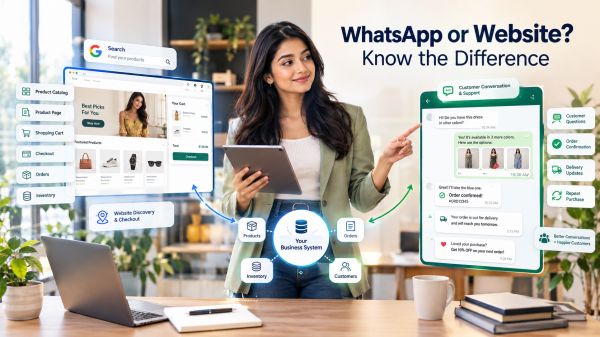
Using ecommerce marketing automation, brands can send automated order confirmations, shipping updates, delivery notifications, and promotional messages via WhatsApp.
Manual communication is slow and inconsistent.
Automation ensures every customer receives timely updates.
This reduces anxiety and improves brand perception.
When communication is structured, abandoned cart recovery becomes more effective as well. A simple automated reminder can bring back customers who were about to leave.
Integrated ecommerce automation tools help manage communication without overwhelming your team.
Read Also : Automate Gemstone Business Operations
Personalization Through E-commerce Marketing Automation
Generic messaging does not perform well anymore.
Customers expect personalized experiences.
They want relevant product suggestions.
They want offers based on previous purchases.
They want communication that feels tailored.
This is where advanced ecommerce marketing automation becomes powerful.
Instead of sending the same email to every subscriber, automation tools analyze behavior and send relevant messages.
For example:
If a customer purchases skincare products, future promotions can focus on related items.
If someone frequently shops during festive seasons, campaigns can target that timing.
Personalization increases conversion rates.
Shopaccino enables structured campaign management where customer segmentation supports targeted communication.
Personalized automation strengthens long-term customer relationships.
Email Automation for Ecommerce: Beyond Newsletters
Many brands still use email only for occasional promotions.
But email automation for ecommerce goes much deeper.
Automated email sequences can include:
Welcome series for new users
Abandoned cart reminders
Order confirmation updates
Delivery follow-ups
Product review requests
Reactivation campaigns for inactive users
These emails run automatically based on user behavior.
When structured properly, email automation improves engagement and repeat purchase rates.
For Indian ecommerce brands competing in crowded markets, consistent automated communication builds brand recall.
Integrated ecommerce automation software ensures email systems connect directly with order and customer data.
Automation makes communication timely and relevant.
Analytics Automation for Smarter Decisions
Data is powerful only when used properly.
Instead of manually checking reports every week, automation tools can generate performance summaries automatically.
For example, systems can track:
Low-stock alerts
Sales performance
Campaign results
Customer purchase trends
An advanced automated order management system combined with analytics tools helps brands identify operational gaps quickly.
If abandoned carts increase, alerts can trigger campaign adjustments.
If certain products move faster, procurement planning can be updated.
Shopaccino’s centralized dashboard supports structured data visibility, helping businesses make informed decisions.
Automation transforms data into action.
Why Integrated Ecommerce Automation Software Matters
Some businesses use multiple disconnected tools.
One tool for email.
Another for WhatsApp.
Another for inventory.
Another for analytics.
This creates complexity.
Disconnected systems increase error risk.
An integrated ecommerce automation software solution ensures that orders, inventory, marketing, communication, and analytics work together.
Shopaccino offers a structured ecosystem where operational automation and marketing automation operate within one platform.
Integration improves speed, accuracy, and scalability.
Using Ecommerce Automation Tools to Scale Without Chaos
Growth sounds exciting.
More traffic.
More orders.
More revenue.
But growth without systems creates pressure.
When order volume doubles, manual processes start breaking. Customer queries increase. Refund requests increase. Marketing campaigns increase. Inventory movement increases.
If your backend is not supported by structured ecommerce automation tools, scaling becomes stressful.
Automation ensures that growth does not create operational errors.
An integrated automated order management system keeps order flow smooth even during peak sales events. Inventory updates instantly. Shipping labels are generated automatically. Customers receive confirmation without delay.
This consistency builds trust and protects brand reputation.
Shopaccino supports scalable backend automation that helps businesses expand without losing control.
Automation is not about reducing human effort alone. It is about maintaining stability during growth.
Reducing Abandoned Cart Rate Through Automation
Abandoned carts are one of the biggest revenue leaks in ecommerce.
Customers add products to cart but do not complete the purchase.
Sometimes they get distracted.
Sometimes they hesitate.
Sometimes they want to compare options.
Without follow-up, that potential sale is lost.
This is where ecommerce marketing automation becomes powerful.
Automated reminders can bring customers back.
A structured email automation for ecommerce system can send reminders within hours of cart abandonment. WhatsApp notifications can reinforce urgency. Limited-time incentives can encourage action.
These automated workflows run continuously in the background.
Indian ecommerce brands that implement automated recovery systems often see significant improvement in conversions.
Automation reduces abandoned cart rate without increasing ad spend.
Loyalty and Retention Automation for Long-Term Growth
Acquiring new customers is expensive.
Retaining existing customers is more profitable.
Automation helps create loyalty programs that reward repeat buyers.
When customers earn points automatically after each purchase, engagement increases. When referral bonuses trigger automatically, word-of-mouth grows.
Structured ecommerce automation software allows brands to build reward systems without manual tracking.
Personalized offers based on purchase history encourage repeat orders.
Shopaccino enables businesses to configure loyalty workflows that increase customer lifetime value.
Automation strengthens long-term brand relationships.
Advanced Personalization at Scale
In 2026, generic marketing does not work.
Customers expect relevant communication.
Through advanced ecommerce marketing automation, brands can segment customers based on behavior, location, and purchase patterns.
Instead of sending one message to all subscribers, automation ensures targeted messaging.
For example:
Customers who recently purchased may receive cross-sell suggestions.
Inactive users may receive re-engagement offers.
High-value customers may receive exclusive previews.
Personalization increases engagement and improves conversion rates.
When integrated with an automated order management system, marketing and operations work in sync.
Automation makes personalization scalable.
Common Mistakes Businesses Make With Automation
While automation is powerful, improper implementation can reduce its impact.
Some businesses over-automate and send too many messages. This overwhelms customers.
Some use disconnected tools that create data inconsistencies.
Some ignore analytics and fail to optimize workflows.
Automation must be strategic.
Use automation to improve experience — not to spam users.
Integrated ecommerce automation tools work best when they are aligned with clear goals and performance tracking.
Shopaccino provides structured automation capabilities within one ecosystem, reducing complexity and improving clarity.
Read Also : From ₹1L to ₹1Cr in Ecommerce Sales
Building a Complete Automation Roadmap for 2026
To fully leverage ecommerce automation software, Indian online stores should build a phased roadmap.
First, automate operational workflows through an automated order management system. This ensures backend stability.
Second, implement ecommerce marketing automation to engage customers at key touchpoints.
Third, activate email automation for ecommerce to manage communication and abandoned cart recovery.
Fourth, integrate analytics to continuously optimize campaigns.
Finally, introduce loyalty and personalization automation to maximize retention.
When automation is implemented step by step, businesses experience steady improvement rather than disruption.
Why Integrated Ecommerce Automation Software Is the Future
Disconnected tools create confusion.
Integrated systems create clarity.
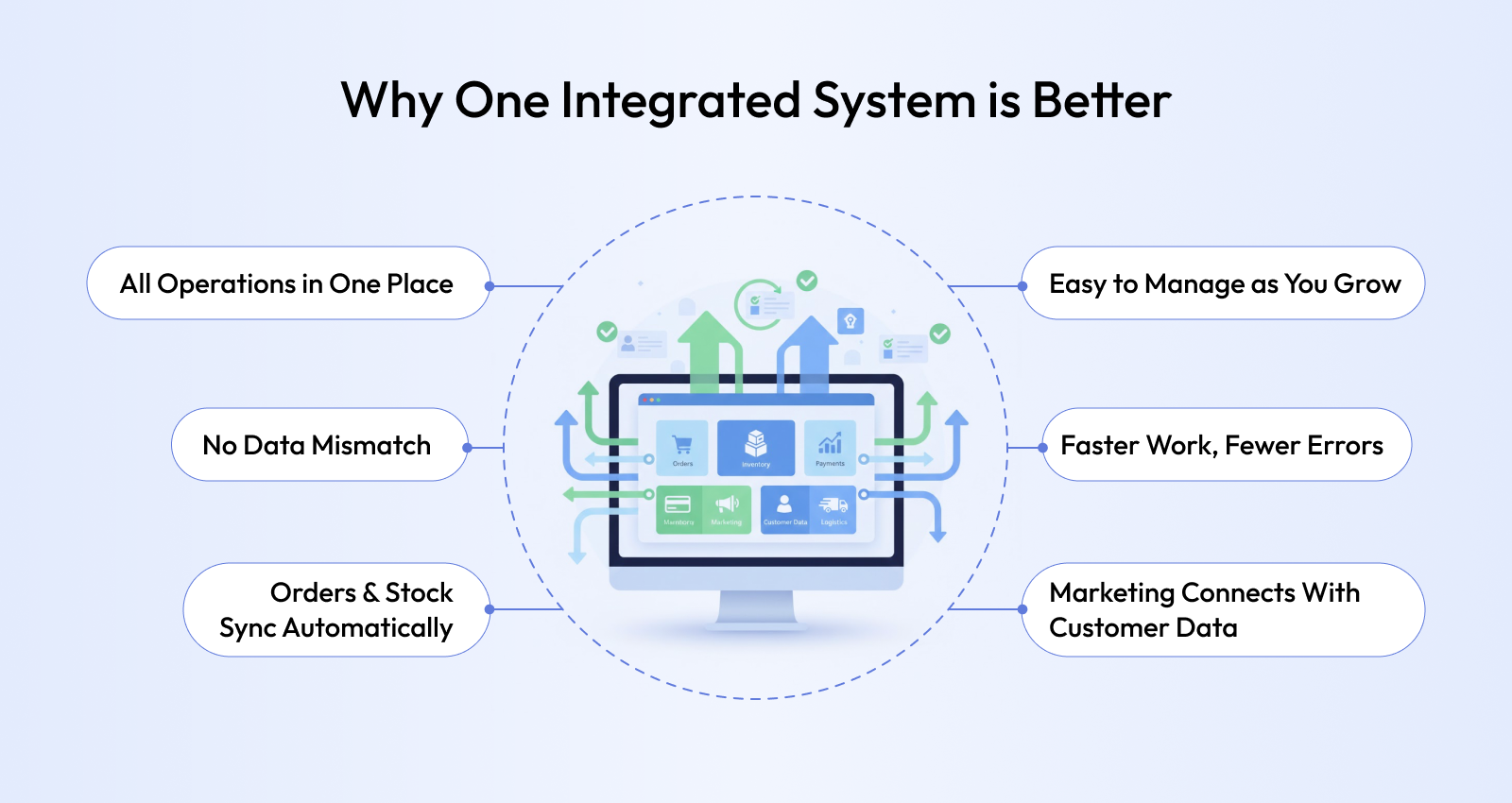
In 2026, serious ecommerce brands need centralized control over inventory, orders, marketing, communication, and analytics.
Shopaccino provides a structured ecosystem where ecommerce automation tools work together seamlessly.
Order automation connects with inventory.
Marketing automation connects with customer data.
Communication automation connects with order updates.
This integration reduces errors and improves efficiency.
Automation should simplify operations — not complicate them.
Final Thoughts: Automation Is the Foundation of Competitive Ecommerce
Indian ecommerce is evolving quickly.
Brands that rely on manual processes will struggle to keep up.
Brands that adopt structured ecommerce automation tools will operate faster, reduce errors, and improve customer experience.
Automation improves:
Operational accuracy
Conversion rates
Customer retention
Revenue scalability
An integrated ecommerce automation software platform like Shopaccino enables growing brands to build a strong automation foundation without managing multiple disconnected systems.
In 2026, automation is not a luxury.
It is the foundation of competitive ecommerce success.
FAQs
Ecommerce automation tools are software systems that automate repetitive tasks like order processing, inventory updates, customer emails, and marketing campaigns. They help online stores save time, reduce errors, and improve customer experience while scaling operations efficiently.
Indian ecommerce brands face high competition and growing order volumes. Ecommerce automation tools ensure faster order processing, accurate inventory tracking, and timely communication. This improves customer trust, reduces operational stress, and supports scalable growth
An automated order management system processes orders automatically after purchase. It updates inventory, generates invoices, assigns shipping, and sends confirmation messages. This reduces manual errors and ensures smooth order flow during high traffic periods.
Ecommerce marketing automation sends targeted messages based on customer behavior. It helps recover abandoned carts, promote new products, and re-engage inactive users. Timely and relevant communication increases conversions and boosts ecommerce sales consistently.
Email automation for ecommerce sends pre-scheduled or behavior-based emails such as welcome messages, order updates, abandoned cart reminders, and product review requests. It improves engagement and increases repeat purchases without manual effort.
Yes. Ecommerce automation software can send automated reminders via email or WhatsApp when customers leave items in their cart. These reminders encourage them to return and complete the purchase, helping reduce abandoned cart rate effectively.