How to Start an Online Store in India: Complete Step-by-Step Guide for 2026
Starting an online store in India in 2026 is not just a trend — it is a serious business opportunity.
India’s digital economy is expanding rapidly. Customers are comfortable shopping online. Payments are faster. Logistics networks reach even smaller cities. And brands are no longer dependent only on marketplaces.
But here is something very important to understand:
Starting an online store is easy.
Building a profitable e-commerce business in India is different.
Many people launch websites quickly without proper planning. They upload products, run some ads, and expect instant sales. When results don’t come, they blame marketing.875
In reality, success depends on how well your foundation is built.
If you are searching for how to start an online store in India, this guide will help you understand the real process — step by step — in a practical and professional way.
This guide is especially useful for growing brands and established businesses who want to expand digitally in a structured manner.
Why 2026 Is a Powerful Year to Start an E-commerce Business in India
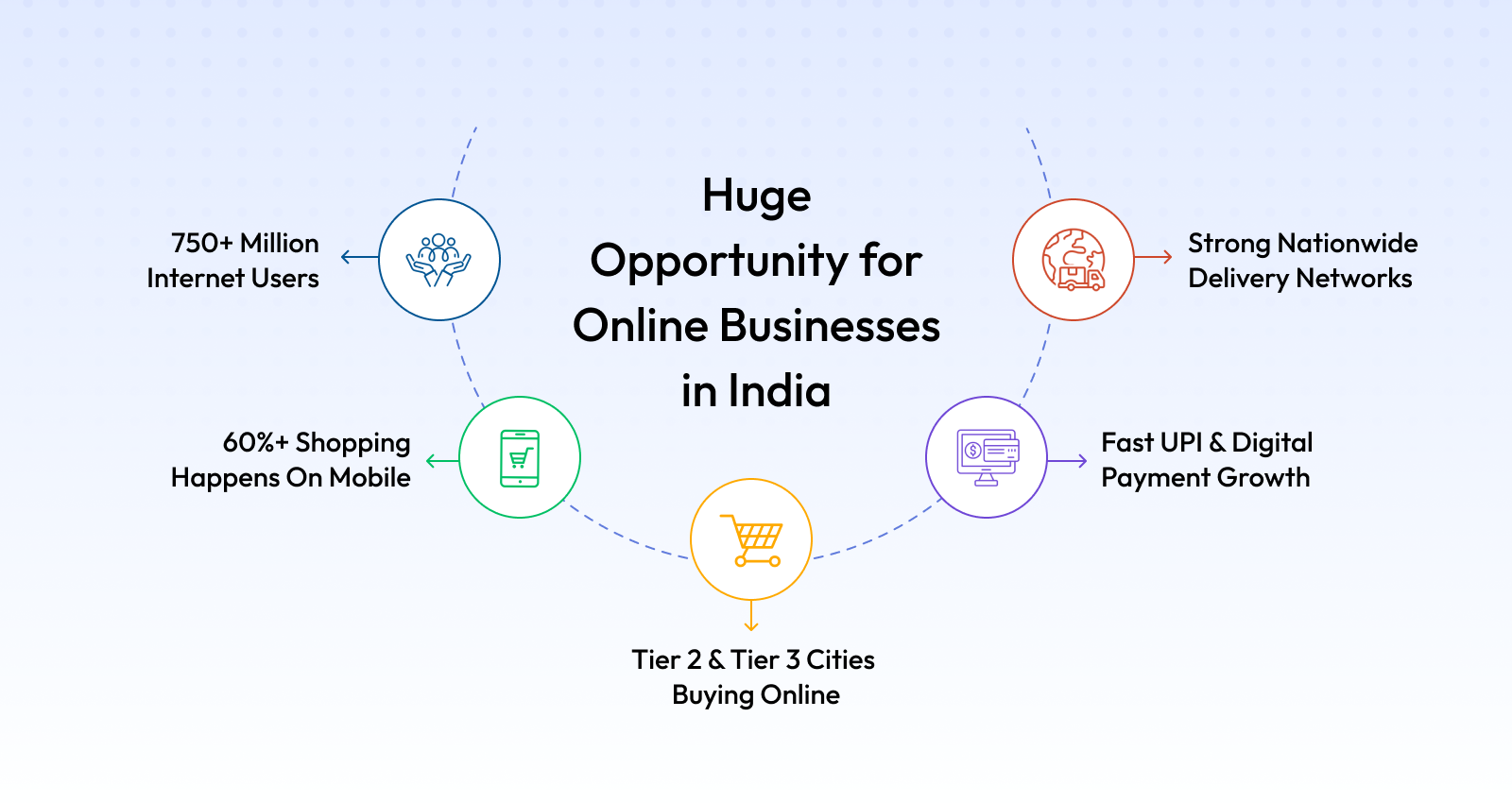
India’s ecommerce growth is not slowing down. Internet users are increasing. Mobile usage is dominating. Tier 2 and Tier 3 cities are contributing heavily to online purchases.
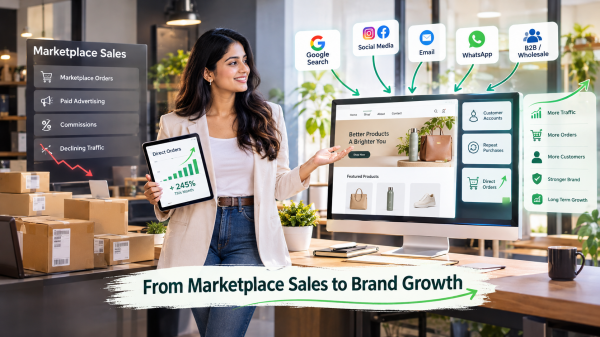
Customers now expect brands to have a direct online presence. They want to buy from official websites, not just marketplaces.
Key Stats:
India has over 750 million internet users.
More than 60% of online shopping happens through smartphones.
The ecommerce business in India is projected to cross massive growth milestones in the coming years.
Impact:
If your brand does not have a strong online presence, you are missing a large and fast-growing market.
However, the competition is also stronger. That means your online store setup in India must be professional, scalable, and optimized from the beginning.
Let’s begin with the right foundation.
Step 1: Define Your Business Model Clearly Before Going Online
Before thinking about how to create an e-commerce website, you need clarity about your business structure.
Are you a manufacturer planning to sell directly to customers?
Are you a retailer expanding online?
Are you a wholesaler entering B2B ecommerce?
Or are you a brand wanting to reduce marketplace dependency?
This clarity changes everything — from pricing to website design to logistics planning.
Established businesses often make one mistake. They assume online selling works exactly like offline selling. It doesn’t.
Online buyers compare prices instantly. They read reviews. They expect fast delivery. They demand easy returns. They expect clear product information.
So before starting your online business in India, you must answer:
Who exactly is my online customer?
What will make them choose my website over competitors?
Will I focus on D2C, B2B, or both?
When your business model is clear, every next step becomes easier.
Impact:
Without clarity, you may build a website that does not match your target audience’s expectations. That leads to poor conversions and wasted marketing budget.
Step 2: Validate Demand and Study Competition Deeply
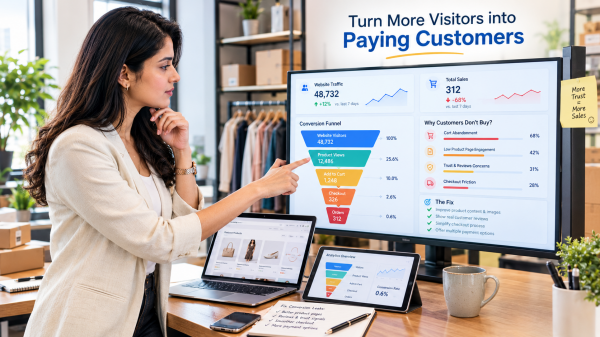
Many businesses assume that because their product sells offline, it will automatically sell online.
Online markets behave differently.
Search trends, pricing pressure, customer expectations, and competition are very transparent in ecommerce business in India.
Before investing in full online store setup in India, study:
What price range competitors are offering
How they present product images
What kind of reviews customers leave
What delivery timelines they promise
How active they are on social media
Search your product category on Google and observe the first page results. If large brands dominate the page, you need a stronger strategy. If you see smaller brands ranking, there is opportunity.
Look at marketplaces as well. Reviews reveal customer pain points. If customers complain about delivery delays, you can position your brand around faster shipping. If they complain about quality, you can highlight superior quality control.
This research helps you build a competitive advantage.
Key Insight:
Online success does not depend only on product quality. It depends on positioning, pricing, and presentation.
Step 3: Plan Financial Structure and Costing Properly
When people search for how to start ecommerce business in India, they often think the main cost is building the website.
In reality, website cost is just one part of the equation.
You must consider:
Product sourcing or manufacturing cost
Packaging cost
Shipping cost
Payment gateway charges
Platform subscription
Marketing budget
Return and replacement cost
Online business includes transaction charges and logistics complexities that offline stores may not face.
If margins are thin, heavy discounting or ad spend can quickly reduce profits.
So before creating your ecommerce website, calculate realistic margins. Decide whether you want premium positioning or price-based competition.
Established businesses expanding online must also calculate how online pricing will affect offline distributor relationships.
Impact:
Proper financial planning prevents future stress. It ensures your ecommerce business in India remains profitable, not just operational.
Step 4: Complete Legal and Compliance Setup
Professional online business requires professional compliance.
Customers trust businesses that look organized and registered. Payment gateways and logistics partners also require proper documentation.
Depending on your business scale, you may need business registration, GST registration, and a current account.
If you are an established business already registered offline, ensure your GST and bank details are ready for online integration.
Legal structure also impacts taxation, invoicing, and expansion plans.
Skipping compliance might seem easy initially, but it creates serious problems when scaling.
Impact:
Proper legal setup builds credibility and supports smooth integration with payment gateways and marketplaces.
Step 5: Choose the Right Ecommerce Platform for Long-Term Growth
Now we come to one of the most important decisions.
How to create an ecommerce website that is not just functional, but future-ready?
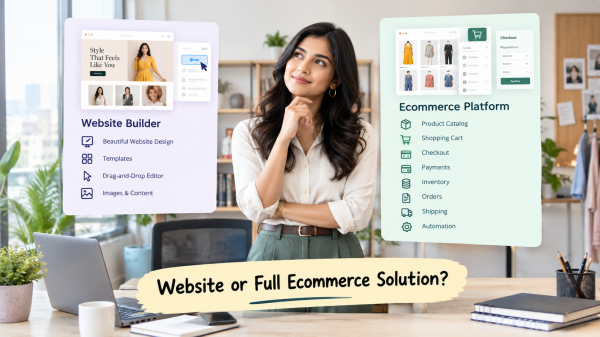
Many startups choose basic website builders because they are cheap or simple. But established and growing businesses need more than just a basic website.
You need a platform that supports:
High product volume
Inventory management
Order tracking
Return management
Marketing automation
SEO optimization
Performance under heavy traffic
Multi-channel integration
This is where choosing the right ecommerce website builder becomes critical.
If you choose a limited system, you may outgrow it in one or two years. Migration becomes expensive and technically difficult.
Shopaccino is designed for growing and established businesses that want a scalable ecommerce ecosystem. It supports structured product management, centralized operations, marketing automation, and strong backend control.
When you are serious about expanding your ecommerce business in India, you must choose a platform that grows with you.
Still deciding where to sell? Read our full breakdown of marketplace vs ecommerce website to see which channel fits your goals.
Key Insight:
Your ecommerce platform is not just a tool. It is your digital infrastructure.
Read Also : How To Launch E-commerce Store Smoothly
Step 6: Secure Your Brand Identity Online
Your domain name represents your brand in the digital world.
Choose a clean, professional, and easy-to-remember domain name. Avoid complicated spellings. Keep it aligned with your brand identity.
Also consider securing your brand name across social media platforms.
When customers search your brand on Google, your website and social profiles should appear clearly.
Strong branding improves recall and trust.
Step 7: Design Your Online Store for Trust, Not Just Looks
When people think about online store setup in India, they often focus too much on design aesthetics. They want attractive banners, bright colors, and fancy animations.
But design is not about decoration.
Design is about trust and clarity.
When a customer lands on your website, they subconsciously ask:
Is this brand professional?
Is this website secure?
Will I receive my order?
Can I trust this seller?
If your website looks cluttered, outdated, or confusing, they leave within seconds.
In 2026, Indian customers are more aware and more selective. They compare brands quickly. A poorly structured website reduces credibility instantly.
So when you create your e-commerce website, focus on:
Clear navigation so customers find products easily
Professional product images
Clean layout with proper spacing
Clear call-to-action buttons
Visible contact information
Established businesses moving online must maintain brand consistency. Your website should reflect the same professionalism as your offline presence.
Shopaccino provides customizable themes designed for serious ecommerce brands. The structure is optimized for usability, ensuring that customers focus on products — not confusion.
Impact:
A clean and professional website increases trust. Increased trust directly improves conversion rates.
Step 8: Build Product Pages That Actually Sell
Many businesses upload product images and short descriptions and think that is enough.
It is not.
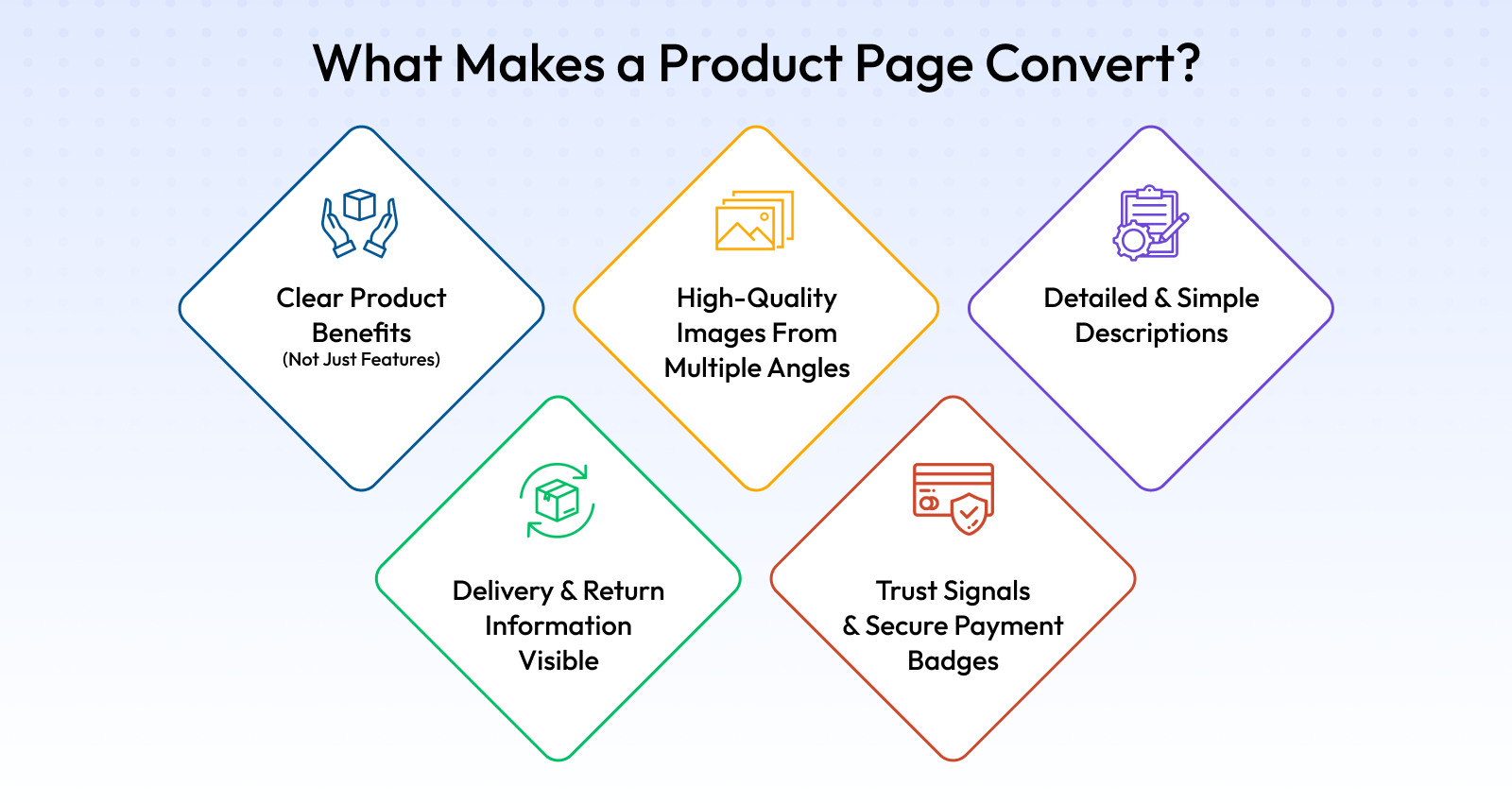
Online buyers cannot touch or feel the product. So your product page must answer every possible question in advance.
When customers search how to start ecommerce business in India, they rarely realize how important product presentation is.
Your product page must clearly explain:
What the product does
Who it is for
Why it is better
What problem it solves
What materials or specifications it includes
How long does delivery takes
In India, customers often hesitate because of uncertainty. The more clarity you provide, the more confident they feel.
High-quality images from multiple angles are essential. If possible, include lifestyle images that show the product in use.
Product descriptions should be simple but detailed. Avoid technical language unless your audience requires it.
Shopaccino allows businesses to manage product variants, detailed descriptions, and structured product information easily. This becomes very important when you have a large catalog.
Key Insight:
A good product page does not just describe a product. It removes doubt.
Impact:
Clear and detailed product pages reduce return rates and increase conversion rates.
Step 9: Set Up Secure and Flexible Payment Options
India is one of the most dynamic digital payment markets in the world.
Customers expect multiple payment options. Some prefer UPI. Some prefer credit cards. Some still prefer cash on delivery.
If your ecommerce business in India does not provide flexible payment choices, you reduce your customer base.
At the same time, security is critical.
Customers must feel that their payment details are protected. Secure payment gateway integration builds confidence.
When setting up payments, consider:
Transaction charges
Settlement time
Refund process
Support reliability
Established businesses should also monitor cash flow cycles carefully. Online payments follow different settlement timelines compared to offline transactions.
A scalable e-commerce website builder like Shopaccino integrates with secure payment gateways and supports smooth transaction handling, helping businesses operate professionally. Not sure which provider to pick? Compare the best payment gateways in India before you set up checkout.
Impact:
Offering secure and multiple payment options increases checkout completion rates significantly.
Step 10: Plan Logistics and Delivery Experience Carefully
Delivery experience can make or break your online reputation.
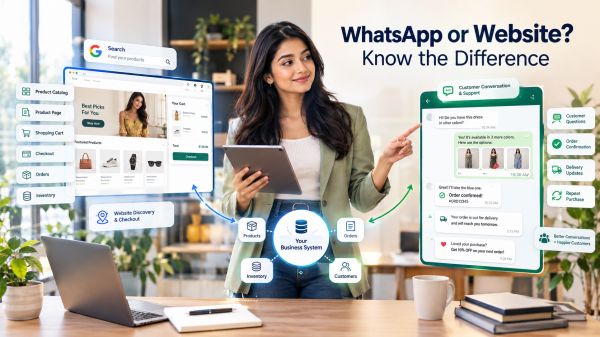
In India, customers expect timely delivery. They also expect updates through SMS or WhatsApp.
If delivery is delayed without communication, customers lose trust quickly.
So while learning how to start an online store in India, do not underestimate logistics planning.
You need to decide:
Will you use third-party logistics partners?
Will you manage shipping internally?
How will you handle returns?
How will you manage reverse logistics?
Delivery timelines should be realistic. Overpromising and under-delivering damages brand image.
Shopaccino helps businesses manage order processing and tracking efficiently, ensuring smoother coordination between the platform and logistics partners.
Key Insight:
Fast delivery is important. But predictable and transparent delivery is even more important.
Impact:
Good delivery experience increases repeat purchases and positive reviews.
Step 11: Build Trust Signals Across Your Website
Trust is the biggest currency in ecommerce business in India.
Customers look for small signals before making a purchase decision.
These include:
Clear return and refund policy
Customer support contact details
Secure payment badges
Customer testimonials
Clear pricing without hidden charges
Even established brands must actively build trust online because digital interactions lack physical presence.
Transparency improves confidence. Confidence improves sales.
When you create your ecommerce website, ensure that policies are visible and easy to understand. Avoid complicated language.
Impact:
Strong trust signals reduce cart abandonment and increase repeat buying behavior.
Step 12: Optimize for Mobile Experience
In India, mobile commerce dominates.
Most people discover products through Instagram, WhatsApp, or Google search on their smartphones.
If your website does not perform smoothly on mobile, you lose a majority of potential customers.
Mobile optimization is not just about resizing content. It includes:
Fast loading speed
Easy navigation using thumb
Simple checkout
Readable fonts
Quick product filtering
Shopaccino’s architecture supports mobile-first ecommerce experiences, which is essential in today’s Indian market.
Key Stats:
More than 60% of ecommerce transactions in India happen via mobile devices.
Impact:
A smooth mobile experience increases engagement, reduces bounce rate, and improves overall revenue.
Read Also : How Mobile-First Experiences Drive Ecommerce Growth
Step 13: Build a Strong SEO Foundation From Day One
Many businesses launch their website and immediately start spending on ads.
Paid ads can bring quick traffic. But long-term growth in ecommerce business in India depends heavily on organic visibility.
When customers search on Google for products you sell, your website should appear. That is where SEO becomes powerful.
If you truly want to understand how to start an online store in India the right way, you must treat SEO as infrastructure — not an afterthought.
Search engine optimization begins with:
Clear website structure
SEO-friendly URLs
Optimized product titles
Proper meta descriptions
Fast loading speed
Mobile performance
When you create your e-commerce website, ensure your platform supports all these technical elements. Without strong backend SEO support, even great content will struggle to rank.
Shopaccino is built with SEO-friendly architecture that helps growing brands improve their organic presence. This becomes extremely important as competition increases in 2026.
Key Stats:
More than 50% of ecommerce traffic comes from organic search.
75% of users never go beyond the first page of Google.
Impact:
If your website is not optimized for search engines, you depend heavily on paid ads. That increases marketing cost and reduces profitability.
SEO reduces customer acquisition cost over time.
Step 14: Create a Marketing Strategy That Goes Beyond Ads
Many businesses misunderstand digital marketing. They think running Facebook or Google ads is enough.
Marketing for ecommerce business in India must include:
Brand awareness
Performance advertising
Social media engagement
Content marketing
Email and WhatsApp communication
Retargeting campaigns
Customers rarely buy on first visit. They browse, compare, leave, and return later.
So your marketing must follow them across platforms.
Established businesses especially must focus on brand building — not only discounts. When your brand becomes recognizable, your conversion rates increase.
Marketing automation plays a crucial role here.
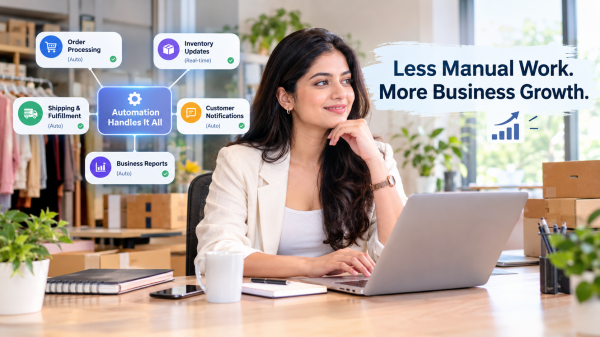
Shopaccino supports marketing automation features that allow businesses to engage customers without manual effort. Abandoned cart reminders, promotional campaigns, loyalty programs — these systems help improve repeat sales.
Key Insight:
Growth does not come from one campaign. It comes from consistent, structured marketing efforts.
Impact:
A strong marketing system increases customer lifetime value, not just first-time sales.
Read Also : Turn Traffic into Revenue with a Smarter Marketing Strategy
Step 15: Focus on Customer Retention, Not Just Acquisition
Acquiring new customers is expensive.
Retaining customers is more profitable.
In India’s competitive ecommerce environment, repeat customers are the backbone of sustainable growth.
When someone purchases from your website, your work is not finished. It has just begun.
You must:
Deliver on time
Provide smooth support
Send follow-up communication
Offer loyalty benefits
Encourage repeat purchase
Customer retention strategies include loyalty programs, referral rewards, personalized offers, and exclusive deals.
Established brands moving online must treat retention as a growth strategy.
Shopaccino’s ecosystem allows businesses to configure loyalty programs and structured engagement workflows, which help increase repeat purchase rates.
Key Stats:
Increasing customer retention by just 5% can increase profits significantly.
Impact:
A strong retention strategy reduces dependency on constant new customer acquisition.
Step 16: Track Data and Improve Continuously
Online business gives you something offline stores cannot — real-time data.
When you start online business in India, you gain access to analytics that show:
Where traffic comes from
Which products perform best
Which pages convert better
Where customers drop off
How repeat customers behave
But data is useful only if you analyze it properly.
Established businesses should review performance regularly. Look at conversion rates, average order value, and customer acquisition cost.
If certain products are not performing, adjust pricing or presentation. If traffic is high but conversions are low, optimize product pages.
Shopaccino provides structured dashboards that help businesses monitor operations, orders, and performance metrics clearly.
Key Insight:
Data removes guesswork. Smart decisions improve growth speed.
Impact:
Regular performance analysis helps optimize marketing spend and increase profitability.
Step 17: Prepare Your Business to Scale
Scaling is different from starting.
Many businesses successfully launch their online store but struggle when traffic increases.
Common scaling challenges include:
Website slowing during high traffic
Inventory mismanagement
Delayed order processing
Customer support overload
Logistics breakdown
That is why choosing the right ecommerce website builder at the beginning is critical.
Shopaccino is designed for established and growing businesses that need scalability. It supports high product volume, structured inventory management, and centralized order control.
When you plan how to start ecommerce business in India, think beyond the first six months. Think about three years ahead.
Can your platform handle festive sales?
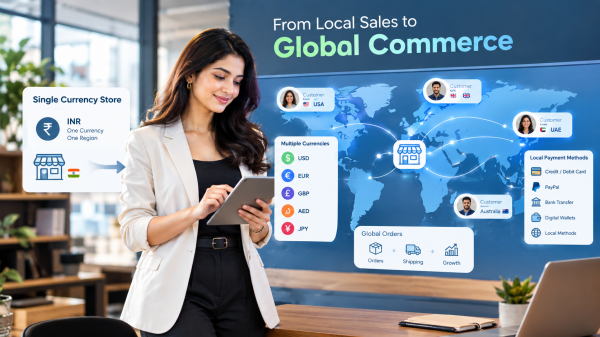
Can it support multi-city delivery?
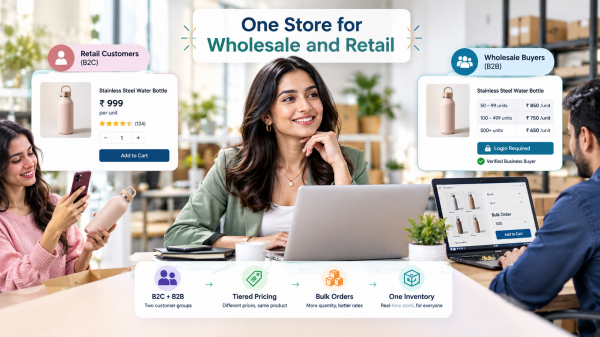
Can it manage B2B and D2C operations together?
Scalability determines long-term success.
Impact:
Businesses that prepare for scale grow smoothly. Businesses that ignore scalability face operational chaos.
Common Mistakes to Avoid When Starting an Online Store in India
Even established businesses sometimes make avoidable mistakes while entering ecommerce.
They rush into website launch without planning.
They underestimate logistics complexity.
They focus only on design, not user experience.
They depend entirely on discounts.
They choose limited platforms and outgrow them quickly.
The biggest mistake is treating ecommerce as an experiment instead of a strategic expansion.
If you approach online business seriously, with structured planning and the right platform, growth becomes predictable.
Final Roadmap: How to Start an Online Store in India Successfully in 2026
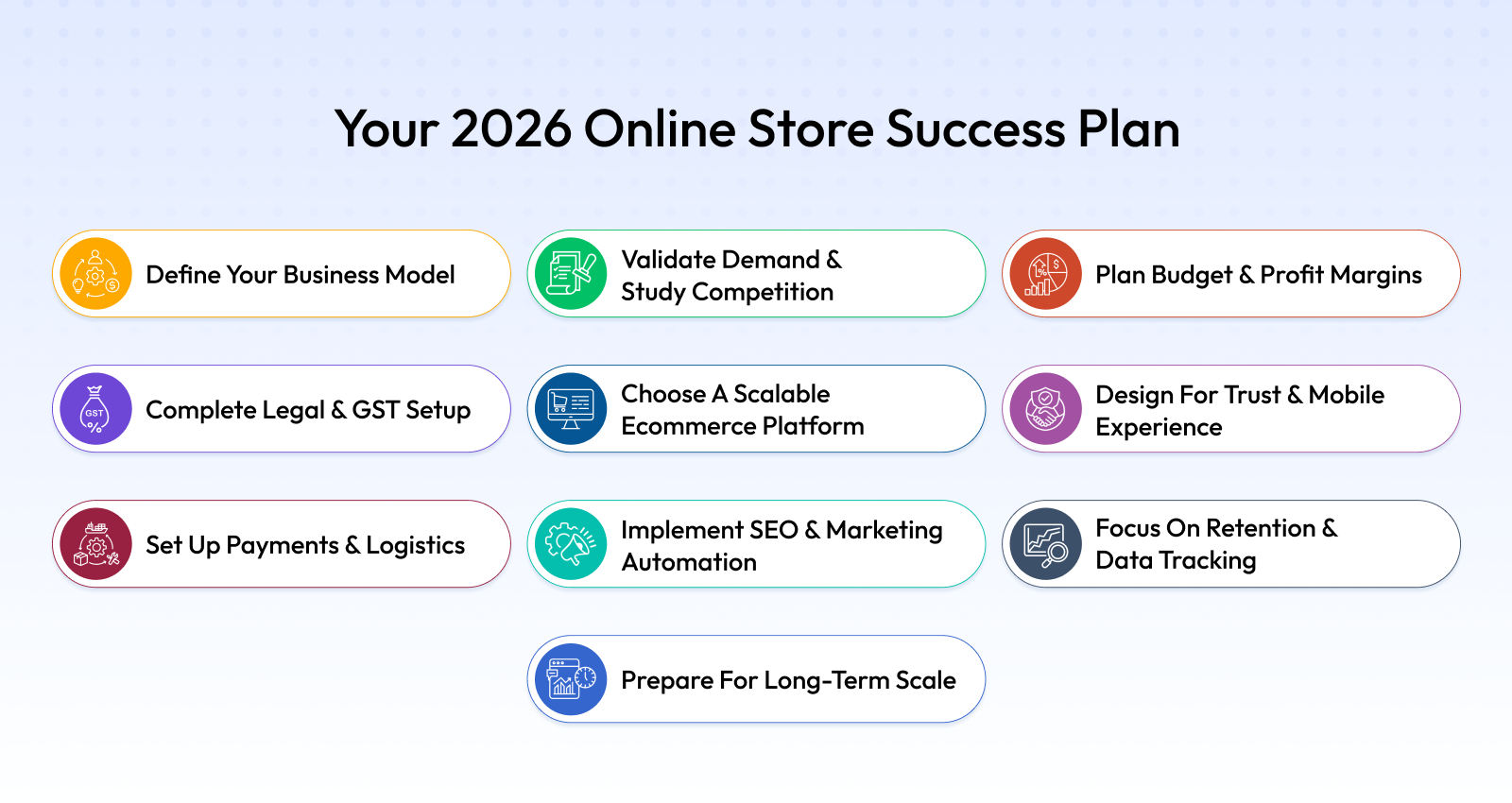
Let’s bring everything together.
To start online business in India successfully:
First, define your business model clearly.
Second, validate demand and plan finances.
Third, complete legal compliance.
Fourth, choose a scalable ecommerce website builder.
Fifth, design for trust and usability.
Sixth, build detailed product pages.
Seventh, set up secure payments and reliable logistics.
Eighth, implement SEO and structured marketing.
Ninth, focus on retention and automation.
Tenth, track data and prepare for scale.
When these elements work together, your ecommerce business in India becomes stable and growth-oriented.
Conclusion: Build for Long-Term Digital Success
Starting an online store in India in 2026 is not just about launching a website.
It is about building a digital business system.
The right ecommerce website builder plays a crucial role in this journey. For established and growing businesses, the platform must support performance, automation, scalability, and structured management.
Shopaccino provides a comprehensive ecommerce ecosystem designed for businesses that want serious digital growth — not just a basic website.
If you are planning how to start an online store in India, focus on long-term structure, not short-term shortcuts.
Digital growth rewards businesses that plan smartly and build professionally.
FAQs
To start an online store in India, first define your product and target market, complete legal registration, and choose a scalable ecommerce platform. Then create your website, set up payments, plan logistics, and implement marketing. Structured planning ensures long-term success and smooth growth.
Starting an ecommerce business in India requires business registration, GST (if applicable), a current bank account, a domain name, and a reliable ecommerce website builder. You also need payment gateway integration, shipping setup, and a clear marketing strategy to generate sales.
The investment depends on product type, inventory size, platform cost, marketing budget, and logistics. Website setup is only one part. You must also consider packaging, shipping, payment charges, and promotions. Proper financial planning ensures your ecommerce business remains profitable.
You can create an ecommerce website using a modern ecommerce website builder that offers ready templates, secure hosting, payment integration, and easy product management. Platforms like Shopaccino help established businesses build professional stores without coding or technical expertise.
GST is generally required if you plan to sell products across states or through online platforms. It allows you to issue proper invoices and claim tax benefits. Having GST registration also increases credibility and enables smooth payment gateway approval.
The best platform depends on your business size and growth plans. Established and growing businesses need a scalable ecommerce website builder that supports SEO, inventory management, automation, and performance optimization for long-term digital expansion.
SEO is extremely important because it helps your website rank on Google and generate organic traffic. Strong SEO reduces dependency on paid ads and lowers customer acquisition cost. A platform with built-in SEO features supports sustainable ecommerce growth.