Building a Private Wholesale Portal with Shopaccino
As wholesale buying begins shifting online, more B2B suppliers, exporters, manufacturers, and distributors are exploring new ways to serve their buyers more efficiently. Gone are the days when wholesale sales depended entirely on phone calls, WhatsApp messages, manual price lists, and back-and-forth negotiations. Today’s business buyers expect the same convenience they enjoy as consumers—instant catalog access, clear pricing, transparent inventory, and easy order placement.
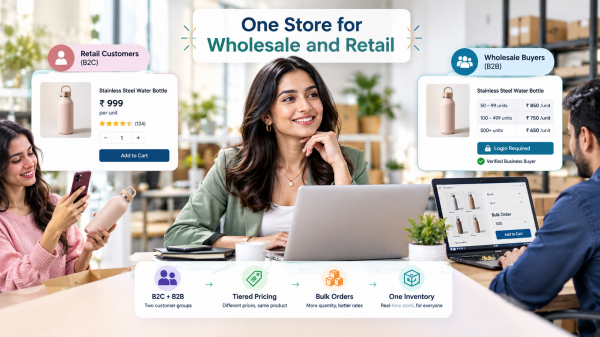
However, wholesale ecommerce has its own unique needs. It must hide pricing from the public, protect the catalog from retail visitors, show custom pricing for each buyer, handle bulk quantities, and support higher-value transactions. This is where a private wholesale portal becomes a powerful growth engine.
For MSMEs looking to modernize, Shopaccino provides the structure to build a secure, private B2B portal without complicated development. Whether a business serves domestic retailers, institutional buyers, or international partners, the right wholesale portal brings clarity, automation, and trust.
This guide explains how a private wholesale portal works, the challenges it solves, and how MSMEs can build one step-by-step using Shopaccino.
Challenging Area: Why Traditional Wholesale Selling Is Difficult to Scale
Wholesale selling is fundamentally different from D2C. The order values are higher, the expectations are stricter, and the relationship is long-term. But without a structured digital process, businesses face several roadblocks:
Manual Price Sharing
Sending price lists via PDFs or WhatsApp for every customer becomes unmanageable as the buyer base grows. Changes in pricing require resending files repeatedly.
No Control Over Who Sees What
Many wholesalers accidentally expose wholesale pricing publicly, causing confusion or conflict with retail customers.
Managing Bulk Orders Manually
Buyers often place large orders across multiple SKUs. Without a portal, teams spend hours verifying stock, quantities, and rates manually.
Hard to Track Each Buyer’s Special Terms
Every buyer has different margins, discounts, or MOQs. Handling these manually can lead to costly errors.
Slow Communication & Delayed Orders
When the process depends on manual follow-ups and confirmations, order cycles become slow and frustrating for both sides.
Solution: How an Integrated Platform Simplifies Private Wholesale Portals
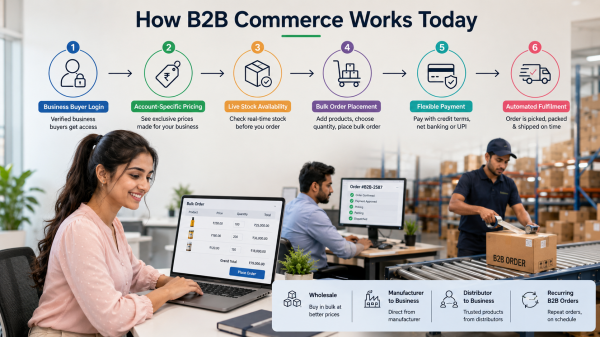
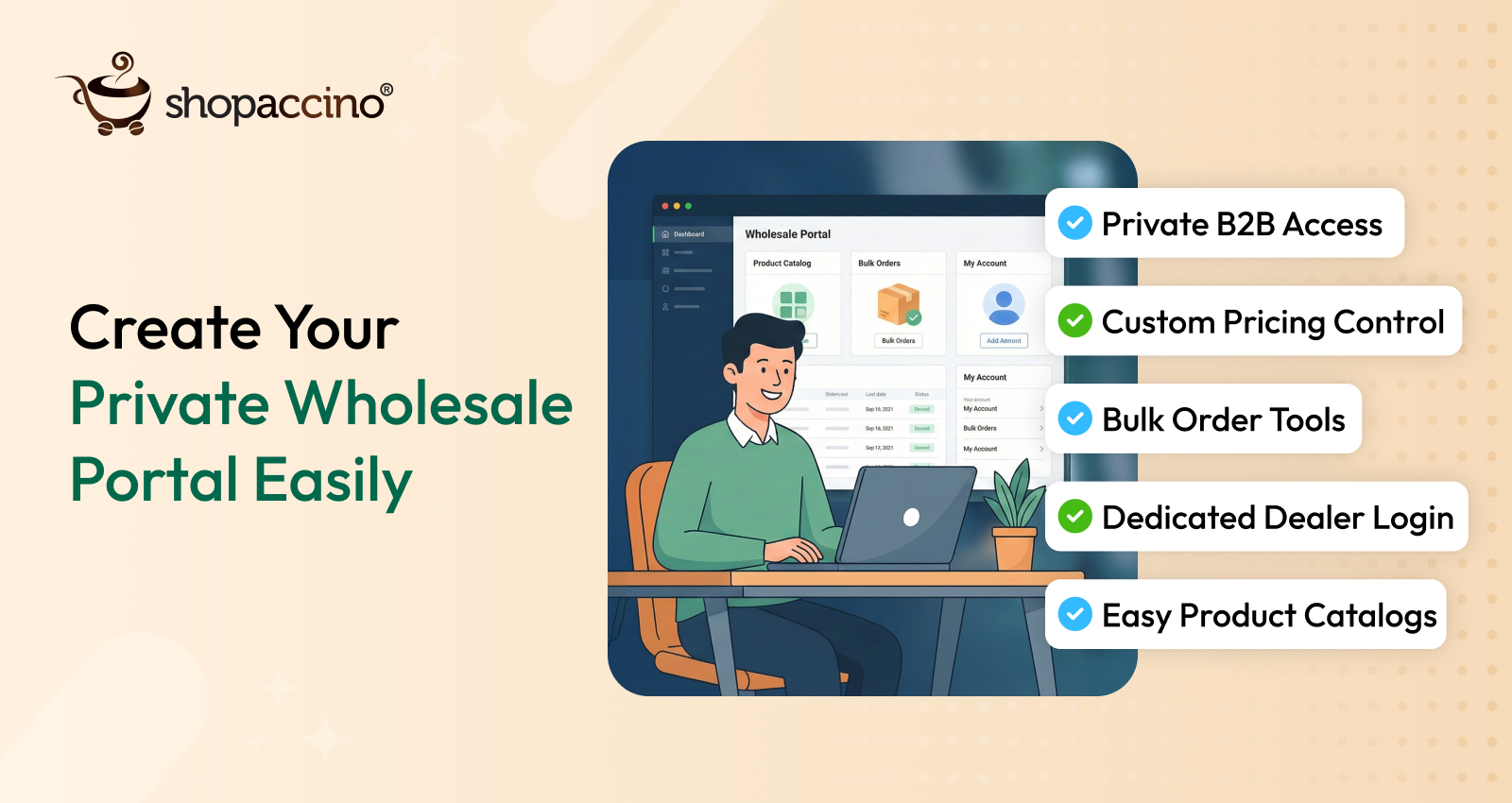
A private wholesale portal centralizes everything—access control, pricing, stock visibility, ordering, and communication—into one secure digital space.
With Shopaccino, businesses can build:
- Login-only access for approved buyers
- Customer-specific catalogs
- Wholesale-only pricing
- Minimum order quantities
- Bulk ordering tools
- Tiered discounts
- Warehouse-wise inventory visibility
- Easy repeat ordering
- GST-compliant invoicing
- Integrated shipping and waybills
Instead of juggling multiple spreadsheets, WhatsApp chats, PDFs, and manual confirmations, the entire wholesale journey becomes structured and automated.
How to Implement a Private Wholesale Portal: Step-by-Step
This section explains the process in simple language so every MSME can follow it easily.
Step 1: Decide What Will Be Visible Only to Wholesale Buyers
A private B2B portal may include:
- Different product catalogs
- Different prices from retail
- Different variants or pack sizes
- Bulk-only items
In Shopaccino, you can assign specific catalogs to specific customers or groups, ensuring only the right buyers can see wholesale products.
Step 2: Set Up Login-Based Access
The core of a private wholesale portal is restricted access.
Using Shopaccino, you can:
- Create login-only sections
- Approve each buyer manually
- Assign pricing rules to each account
- Restrict unregistered visitors from seeing wholesale rates
This keeps wholesale information safe while maintaining a professional buying experience.
Step 3: Configure Customer-Specific Pricing
Wholesale pricing is rarely standard. Buyers often receive:
- Special rates
- Volume discounts
- Category-level pricing
- Private margins
- Contract pricing
Shopaccino allows businesses to assign custom pricing to individual buyers or groups, eliminating the need to share PDFs or negotiate each time.
Step 4: Enable Bulk Order Tools
For wholesalers, order quantity matters more than browsing beauty.
Shopaccino supports:
- Bulk order forms
- Quick-add quantity boxes
- Multi-SKU ordering
- Faster cart filling for large orders
Buyers can simply enter quantities across products, making bulk buying quick and convenient.
Step 5: Add MOQs and Multipliers
To maintain profitability, wholesale sellers often use:
- Minimum Order Quantities
- Minimum Order Values
- Case-pack multipliers (e.g., order in multiples of 6, 12, or 24)
This ensures smoother order fulfillment and better production planning.
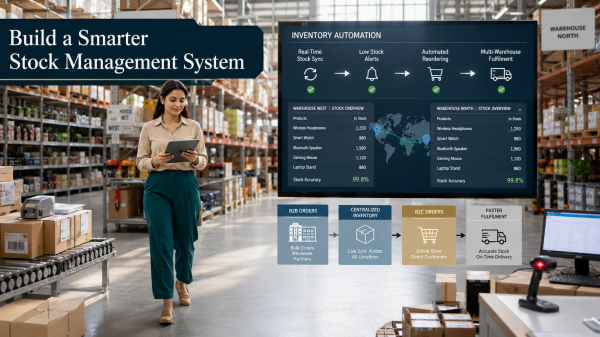
Step 6: Manage Multi-Warehouse Inventory
Wholesale customers expect accurate stock visibility.
Using Shopaccino’s multi-warehouse features, wholesalers can
- Show warehouse-wise availability
- Fulfill orders from the nearest stock point
- Automate stock sync across locations
This is especially valuable for exporters and large distributors.
Step 7: Automate Order Approvals and Invoicing
Wholesale orders often require approval before processing.
Shopaccino helps automate:
- Order verification
- Status updates
- GST-compliant invoices
- Packing slips
- Waybills via API-integrated shipping partners
This reduces errors and saves countless hours every month.
Step 8: Provide Secure Payment Options
Wholesale buyers may use:
- Bank transfers
- UPI
- Credit terms
- Split payments
- COD (in rare domestic cases)
A platform like Shopaccino centralizes all payment methods and records every transaction for reconciliation.
Step 9: Offer Re-Order Convenience
Wholesale buyers often re-order the same SKUs frequently.
Using Shopaccino, they can:
- Repeat previous orders instantly
- Access order history
- Save favorite products
- Create custom order lists
This makes repeat business easier for both sides.
Benefits of Building a Private Wholesale Portal
A private B2B portal delivers long-term, scalable benefits for MSMEs.
Higher Efficiency and Less Manual Work
Automation reduces repetitive tasks—sending price lists, confirming quantities, sharing stock updates, calculating discounts, and generating invoices.
Zero Confusion in Pricing
Customer-specific pricing prevents wrong quotes, misunderstandings, and margin losses.
Faster Order Cycles
Buyers can order anytime without waiting for manual responses.
Better Buyer Relationships
A transparent portal increases trust and positions your brand as modern and reliable.
Improved Accuracy
Because prices, stock, and MOQ rules are automated, errors reduce drastically.
Stronger Brand Identity
Your own wholesale portal separates you from competitors who rely on old-fashioned, slow processes.
Scalability Across Regions and Countries
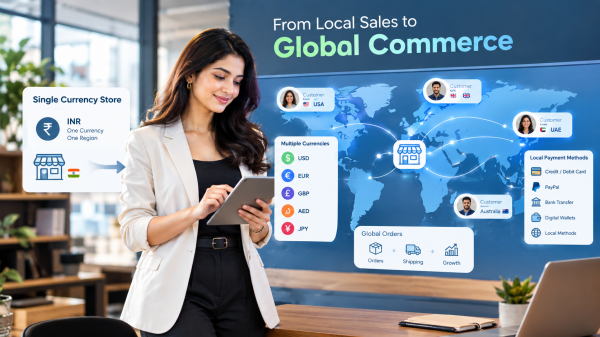
With tools like multi-warehouse and multicurrency checkout, Shopaccino supports domestic and international expansion.
Conclusion
A private wholesale portal is more than a website—it is a foundation for long-term B2B growth. In 2026 and beyond, B2B buyers expect clarity, professionalism, and speed. By digitizing the wholesale journey with Shopaccino, businesses can reduce manual work, increase accuracy, and offer a seamless ordering experience to retailers, distributors, and international partners.
As markets become more competitive, the wholesalers who embrace automation will scale faster, operate more efficiently, and build stronger buyer loyalty. A private portal is the next logical step for every MSME ready to modernize and grow sustainably.
FAQs
It is a secure, login-only online system where approved buyers can see wholesale prices, view stock, and place bulk orders.
Yes. Login-based access ensures that only approved wholesale buyers can view wholesale pricing and catalogs.
Absolutely. Platforms like Shopaccino allow assigning customer-specific price lists, discounts, and MOQ rules.
Yes. Exporters benefit from multicurrency support, warehouse-wise stock control, and private B2B catalogs.
Yes. Bulk forms, quick-order tools, and quantity-based ordering make the process fast and user-friendly.
Yes. Buyers can repeat past orders or save favorite items for quick reordering.
No. Modern platforms make it cost-effective by offering built-in B2B tools without custom development.