

Ecommerce Performance Metrics Every Founder Should Track Weekly
Running an e-commerce business without tracking data is like driving without a dashboard. You may be moving, but you have no idea how fast, how far, or whether you are running out of fuel.
Many founders check sales numbers daily. But revenue alone does not show the full picture. To truly grow, you must understand the right ecommerce metrics and review them consistently.
Weekly tracking creates clarity. It helps you detect problems early, identify opportunities, and make smarter decisions.
An effective e-commerce reporting dashboard should not feel complicated. It should give you a clear snapshot of your business health in one place. When founders track the right numbers regularly, growth becomes structured instead of accidental.
Why Weekly Tracking Matters More Than Monthly Reviews
Monthly reports are useful, but they often come too late. If something goes wrong, you lose weeks before reacting.
Weekly tracking helps you stay proactive. If traffic drops, you can adjust campaigns quickly. If the conversion rate of e-commerce declines, you can investigate checkout or pricing issues immediately. If certain products stop performing, you can respond before inventory becomes dead stock.
Tracking ecommerce performance metrics weekly creates discipline. It forces you to move from guesswork to evidence-based decisions.
For growing ecommerce brands using structured platforms like Shopaccino, dashboards provide real-time visibility into sales, orders, inventory, and customer behavior. This visibility supports faster action.
Read Also : How Indian Ecommerce Brands Can Increase Conversion Rate by 30%
Revenue is Important, But It is Not Enough
Many founders focus only on total sales.
Revenue growth feels good. But revenue alone does not tell you whether your marketing is efficient, your customers are returning, or your checkout is converting properly.
For example, you may see higher revenue this week. But if ad spend also increased significantly, profitability may not have improved.
This is why understanding key ecommerce KPIs is essential.
Revenue should be analyzed alongside traffic, conversion, customer acquisition cost, and average order value. These numbers together show whether your growth is sustainable.
A structured ecommerce reporting dashboard brings all these insights into one view so founders do not rely on scattered spreadsheets.
Understanding Conversion as a Core Growth Indicator
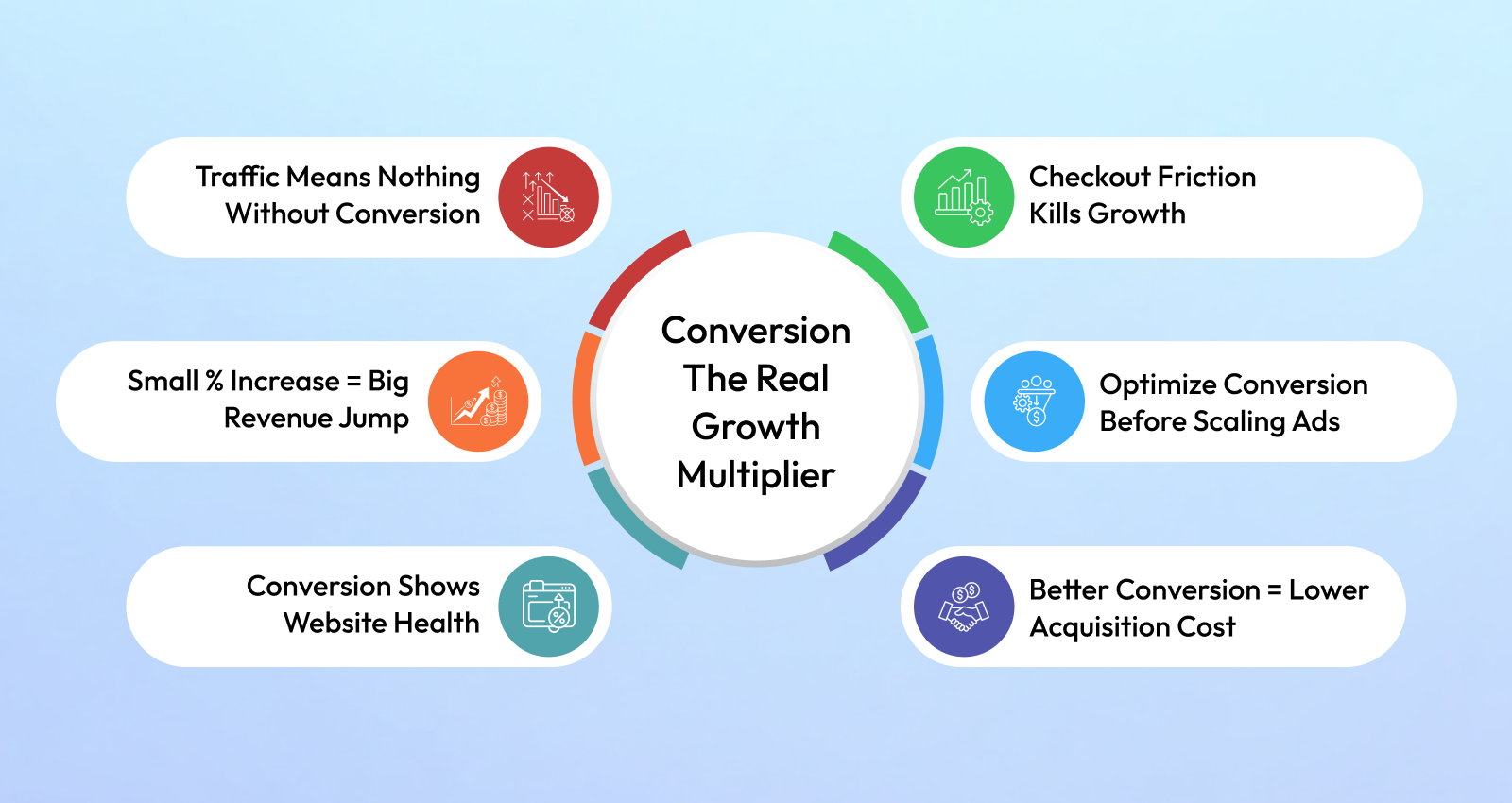
One of the most powerful ecommerce metrics every founder must track weekly is conversion.
The ecommerce conversion rate tells you how many visitors actually complete a purchase. If 1,000 visitors come to your site and 30 buy, your conversion rate is 3 percent.
Even small changes in this number can significantly impact revenue.
If your traffic remains the same but conversion improves from 2 percent to 3 percent, your sales increase dramatically without increasing marketing spend.
Conversion is influenced by product clarity, pricing, trust signals, checkout speed, and mobile experience.
When conversion drops, it signals friction somewhere in the buying journey.
Monitoring this weekly allows you to apply ecommerce performance optimization before losses grow.
Another critical part of your weekly ecommerce metrics review is understanding traffic sources.
Strong ecommerce performance metrics show not only how many people visit, but where they come from and how they behave.
Visitors from paid ads may convert differently than visitors from organic search or social media. Tracking these patterns weekly helps refine your marketing focus.
A Simple Weekly Snapshot Model
A practical ecommerce reporting dashboard should allow founders to view key performance areas clearly. A simple structure might look like this:
|
Metric Category |
What It Shows |
|
Revenue Trends |
Sales growth or decline |
|
Conversion Rate |
Efficiency of checkout |
|
Traffic Sources |
Quality of acquisition |
|
Average Order Value |
Spending behavior |
|
Repeat Purchase Rate |
Customer loyalty |
This structure keeps weekly reviews focused and meaningful.
When you review these metrics consistently, decision-making becomes more confident.
Looking Beyond Sales: The Ecommerce Metrics That Protect Your Profit
If revenue tells you how much you are earning, advanced ecommerce metrics tell you how healthy that revenue really is.
Many founders celebrate increasing sales without realizing their profit margins are shrinking. This usually happens when customer acquisition cost increases silently or when repeat purchases decline.
That is why weekly tracking must go beyond surface-level numbers.
Customer Acquisition Cost and Profit Reality
One of the most important ecommerce KPIs every founder should monitor weekly is customer acquisition cost. This number shows how much you spend to acquire a single customer through ads and marketing.
If you spend ₹10,000 on ads and gain 100 customers, your acquisition cost is ₹100 per customer. At first glance, this may seem manageable. But if your average order value is ₹1,000 and your margin is only ₹150, your real profit becomes thin.
Understanding this connection between revenue and marketing spend is essential.
A well-structured e-commerce reporting dashboard should display both revenue and acquisition cost side by side. When founders see these numbers together, decision-making becomes smarter.
Without tracking this weekly, you may grow revenue but reduce profitability.
Read Also : Your Traffic Means Nothing Without Conversions
Customer Lifetime Value and Retention
Another powerful metric that shapes long-term growth is customer lifetime value. This measures how much revenue a customer generates over multiple purchases.
If a customer buys once and never returns, you must constantly spend on acquisition. But if customers return regularly, your marketing efficiency improves.
Retention is one of the most underestimated ecommerce performance metrics.
When you track repeat purchase rate weekly, you begin to understand whether your brand is building loyalty or just attracting one-time buyers.
Shopaccino’s integrated system allows founders to monitor repeat behavior and order history clearly. This visibility helps brands design better engagement strategies.
Improving retention often increases profitability faster than increasing traffic.
Abandoned Cart as a Warning Signal
Abandoned Cart is another critical area to watch.
If many visitors add products to the cart but do not complete checkout, something is blocking conversion.
Tracking this weekly gives early warning signals.
If Abandoned Cart increases suddenly, it could indicate checkout friction, pricing confusion, payment issues, or slower page performance.
The ecommerce conversion rate is directly influenced by cart abandonment. When abandonment decreases, conversion improves naturally.
A good dashboard highlights abandonment trends so founders can act quickly instead of discovering the problem months later.
Read Also : Reducing Abandoned Cart Made Simple
Average Order Value and Revenue Growth
Average order value shows how much customers spend per purchase. Increasing this number can significantly improve revenue without increasing traffic.
For example, if your conversion rate remains steady but average order value increases, total revenue grows.
This is why average order value is one of the most strategic ecommerce KPIs.
You can influence it through bundling, upselling, and promotional strategies.
Monitoring it weekly allows you to test whether campaigns are encouraging customers to spend more or less.
Traffic Quality and Engagement Signals
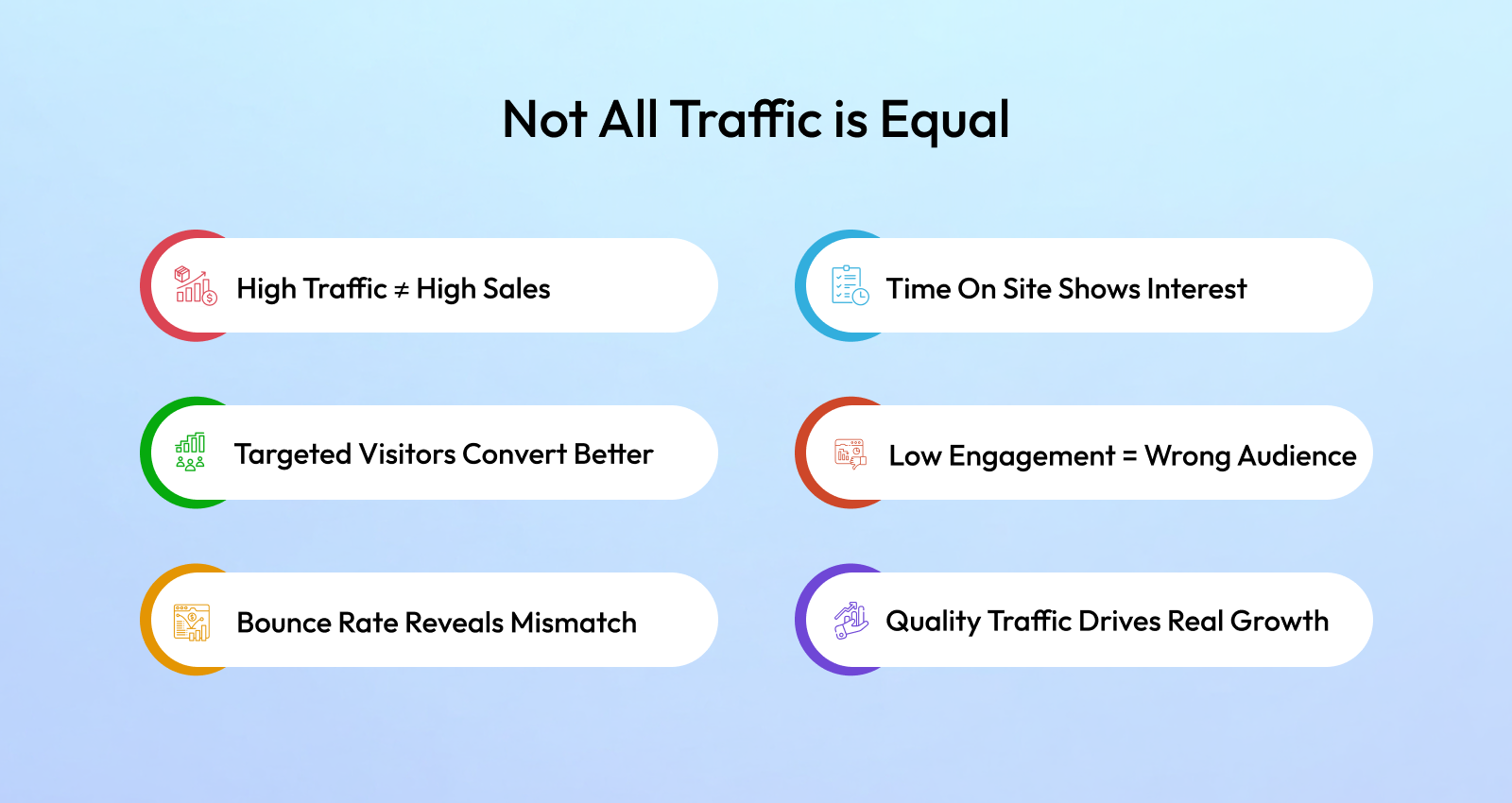
Traffic numbers alone do not reflect business health. You must understand how visitors behave once they land on your website.
Metrics like session duration, bounce rate, and page views per session are important ecommerce performance metrics that show engagement quality.
If visitors leave quickly, it may indicate targeting issues or messaging misalignment.
Weekly monitoring of engagement patterns helps refine marketing efforts and improve targeting.
Instead of simply trying to increase traffic, founders should focus on increasing meaningful traffic.
Inventory and Operational Metrics
Founders often overlook operational data when reviewing ecommerce metrics.
Inventory turnover, order fulfillment time, and return rate are equally important.
If return rate increases, it may signal product quality issues or inaccurate descriptions. If fulfillment time slows down, customer satisfaction declines.
Your weekly dashboard should combine sales and operational visibility in one place.
Shopaccino supports integrated tracking of orders, inventory, and performance so founders can manage both revenue and operations together.
Growth is not only about sales. It is about delivering consistently.
Read Also : Smart Inventory Management for Scalable Ecommerce Growth
Connecting Metrics to Action
Tracking numbers is useful only when they guide decisions.
If acquisition cost rises, optimize ads.
If conversion drops, analyze checkout.
If repeat rate falls, improve customer engagement.
Each metric must connect to an action plan.
Founders who review ecommerce metrics weekly develop faster reaction speed. They detect small shifts before they become large problems.
This proactive approach separates growing brands from struggling ones.
Turning Ecommerce Metrics Into Weekly Growth Decisions
Tracking numbers is powerful, but only when those numbers lead to action. Many founders open their analytics tools, glance at revenue, and close the dashboard without asking deeper questions. The real value of ecommerce metrics appears when you turn them into weekly decisions.
A useful dashboard should not feel overwhelming. It should feel clarifying. When designed properly, it tells a simple story: what is growing, what is slowing down, and where attention is needed.
Weekly reviews create rhythm. Instead of reacting emotionally to daily fluctuations, you begin to recognize patterns. You see how marketing campaigns influence traffic. You notice how small changes in checkout affect your conversion rate. You understand how promotions impact average order value.
This discipline builds confidence. Growth stops feeling unpredictable.
Creating a Simple Weekly Review Framework
The goal of tracking these KPIs weekly is not to drown in data. It is to focus on meaningful indicators that reflect performance.
Each week, a founder should look at revenue trends, conversion patterns, acquisition cost, repeat purchase behavior, and operational efficiency. When these ecommerce performance metrics are reviewed together, the bigger picture becomes visible.
For example, if revenue increases but acquisition cost rises sharply, profitability may not improve. If traffic grows but conversion drops, targeting or user experience may need refinement. If repeat purchases decline, customer engagement may require attention.
A structured weekly review helps founders move from reactive thinking to strategic planning.
Shopaccino’s integrated dashboard environment supports this clarity by combining sales, orders, inventory, and customer behavior insights in one place. When systems are connected, decisions become faster and more informed.
Avoiding Data Overload
One common mistake founders make is tracking too many numbers. When dashboards become cluttered, focus disappears.
Instead of monitoring dozens of indicators, concentrate on the ecommerce metrics that directly influence revenue and customer satisfaction.
Quality matters more than quantity.
If your dashboard clearly shows traffic trends, conversion rate, average order value, customer acquisition cost, and repeat purchase rate, you already have a powerful decision-making tool.
Simplicity improves consistency. When founders can review data quickly and understand it easily, they are more likely to maintain the habit weekly.
Consistency in review creates consistency in growth.
Read Also : B2B Buyers Reordering with Confidence
Using Metrics to Strengthen Marketing Strategy
Marketing becomes more effective when guided by data.
If certain campaigns drive high traffic but low conversion, targeting may be misaligned. If organic channels generate smaller traffic but higher conversion, investment may need adjustment.
Understanding ecommerce performance metrics allows you to allocate budget wisely instead of guessing.
When founders ask how to improve growth, the answer is often hidden inside their own dashboard. The numbers already show where friction exists and where opportunity lies.
Tracking ecommerce KPIs weekly turns marketing into a structured process rather than experimentation without direction.
Scaling With Confidence
Growth brings complexity. As orders increase, operational pressure increases. Without visibility into fulfillment speed, return rate, and stock turnover, scaling can create hidden problems.
A well-built dashboard connects marketing performance with operational health. When founders see both revenue and delivery timelines together, they understand whether growth is sustainable.
Shopaccino supports this integrated view, ensuring that founders do not manage marketing and operations in isolation.
When ecommerce metrics are clear, scaling decisions feel grounded rather than risky.
The Founder’s Role in Data Discipline
Founders set the tone for data culture within their company.
If leadership tracks metrics weekly, the team follows. If leadership ignores dashboards, data becomes secondary.
Building a habit of reviewing ecommerce metrics every week creates accountability. It ensures that decisions are backed by insight rather than instinct.
Over time, this discipline compounds. Small weekly adjustments based on real data prevent large future corrections.
Final Thoughts
Ecommerce success is not built only on creative campaigns or product innovation. It is built on consistent measurement and smart adjustments.
Tracking the right ecommerce metrics weekly gives founders control. Monitoring these KPIs helps improve decision-making. Watching your conversion rate reveals friction points early. Reviewing broader ecommerce performance metrics ensures growth is profitable, not just impressive.
An organized reporting view transforms data into clarity. And clarity leads to confident growth.
When founders commit to structured weekly tracking, ecommerce stops feeling unpredictable and starts feeling manageable.
FAQs
Founders should track revenue, traffic, conversion rate, customer acquisition cost, average order value, and repeat purchase rate. These ecommerce metrics help identify growth trends, marketing efficiency, and customer behavior early.
The conversion rate of e-commerce shows how many visitors complete a purchase. Even small improvements can significantly increase revenue without increasing traffic. Tracking it weekly helps identify checkout or pricing issues quickly.
Key ecommerce KPIs include customer acquisition cost, lifetime value, average order value, and retention rate. These metrics reveal whether your growth is sustainable and profitable, not just driven by higher ad spending.
An e-commerce reporting dashboard combines sales, traffic, and operational data in one place. It allows founders to review e-commerce performance metrics quickly and make faster, data-driven decisions every week.
Ecommerce performance metrics should be reviewed weekly. Weekly tracking helps detect issues early, adjust marketing strategies, and improve overall performance before small problems become major setbacks.
Yes. When founders monitor ecommerce metrics regularly, they identify opportunities to improve conversion rate, reduce acquisition costs, and enhance customer retention, which directly increases overall revenue.