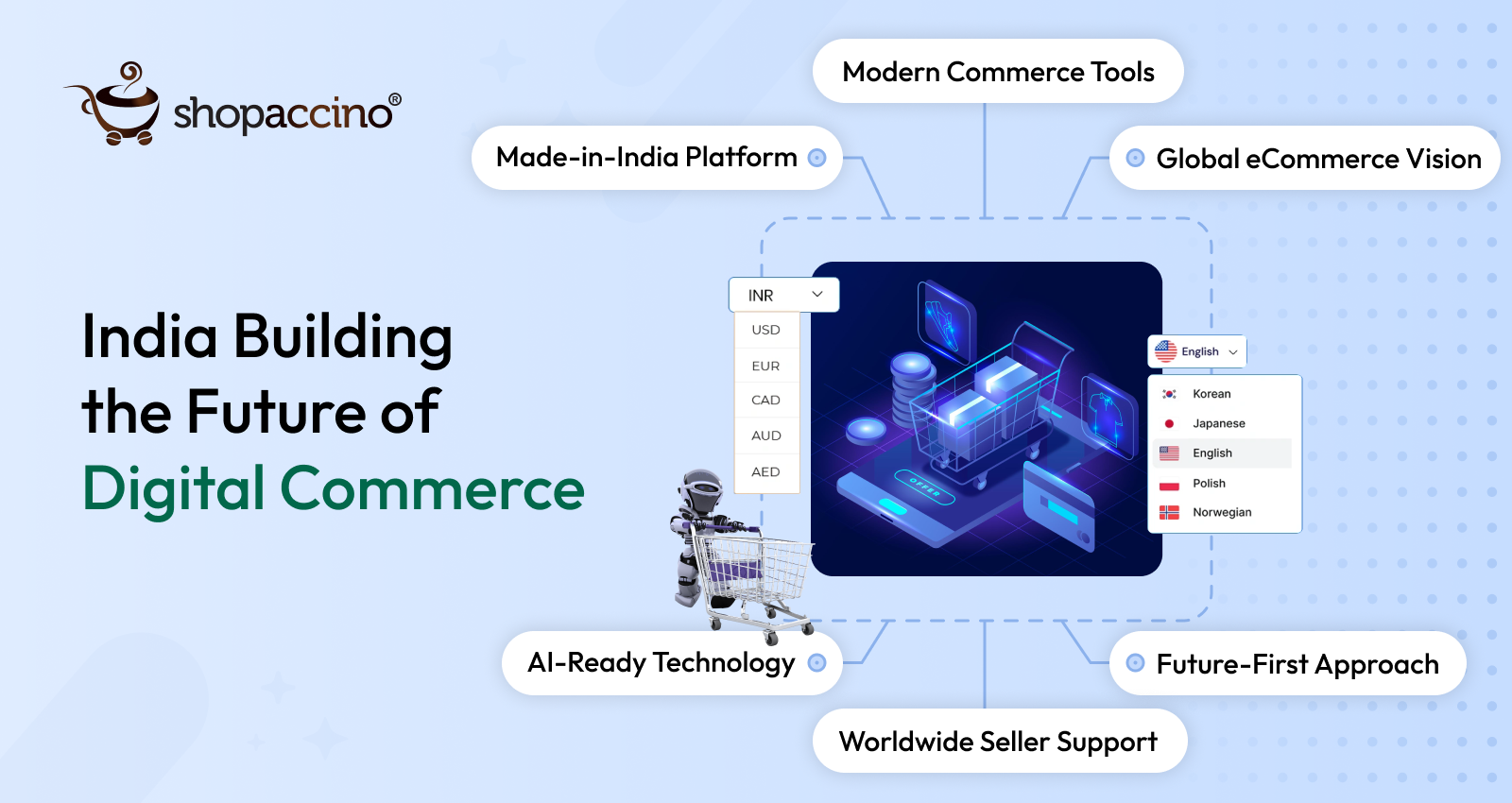
Building the Future of Digital Commerce from India to the World
Over the past decade, India has quietly transformed into one of the world’s most dynamic digital commerce ecosystems. Small shops, family-run businesses, manufacturers, exporters, and new-age D2C brands have all begun embracing digital tools that were once reserved only for large enterprises.
But the real story is not just India adopting eCommerce—it is India building the future of digital commerce for the world. Today, Indian businesses are not only selling online but offering faster delivery, more personalised customer experiences, advanced warehouse systems, subscription commerce, and global-ready checkout experiences.
Platforms like Shopaccino are a key part of this movement. They empower MSMEs to leap from local markets to international audiences by giving them the digital tools once available only to global giants. As India’s digital infrastructure grows stronger—with initiatives like UPI, ONDC, and Digital India—the country is becoming a blueprint for scalable, modern, tech-driven commerce.
This blog explores how India is shaping the future of global eCommerce and how businesses can be part of this transformation.
Challenging Area: What Slows Down India’s Digital Commerce Growth
While opportunities are huge, many Indian businesses still face barriers that stop them from scaling beyond their home region.
Fragmented operational systems
Inventory, orders, payments, warehouse management, and dispatching often happen on different tools. This slows businesses down, especially during growth phases.
Limited access to global technology
Small and mid-sized businesses cannot afford costly global platforms, specialised developers, or customised solutions.
Difficulty in managing international customers
Multiple currencies, taxes, duties, and regional delivery partners make cross-border selling complex.
No unified way to manage multiple warehouses
As brands scale, they add new warehouses, hubs, vendor locations, or regional fulfilment centres. Without real-time sync, operations become chaotic.
High digital marketing costs
Paid ads are expensive. Businesses need automated journeys, retention tools, and customer loyalty systems—but most don’t know where to start.
Lack of technical expertise
Most MSMEs do not have in-house developers or IT teams. They need tools that are simple, automated, and scalable.
These challenges slow growth and limit businesses to regional boundaries—even when demand exists across India and beyond.
Their Customer Challenging Area: What Buyers Expect in Today’s Digital Era
Indian consumers have evolved dramatically. They are confident buyers who compare, evaluate, and expect seamless experiences.
Faster websites and mobile-friendly stores
Most customers shop on mobile. Slow sites lead to instant drop-offs.
Reliable product availability
Shoppers hate “Out of Stock” surprises, especially during festive sales.
Transparent pricing with no hidden costs
Customers expect clarity around taxes, delivery charges, and duties.
Smooth checkout with multiple payment options
UPI, wallets, BNPL (Buy Now Pay Later), cards, EMI—customers want a choice.
Consistent delivery timelines
Even delays of one day reduce repeat purchase potential.
Personalised recommendations
Customers prefer brands that show relevant products rather than generic catalogues.
Trust-based buying experience
Verified reviews, clear return policies, and secure payments build confidence.
This shift in customer expectations demands a smart, unified, future-ready digital commerce system.
Solution: How Integrated Platforms Build the Future of Indian Digital Commerce
The future of digital commerce is not about having a website—it is about having a complete, automated, scalable eCommerce infrastructure.
This is where platforms like Shopaccino bring transformative value. They support India’s digital growth story by enabling businesses of all sizes to operate like global brands.
Here’s how:
End-to-end eCommerce ecosystem
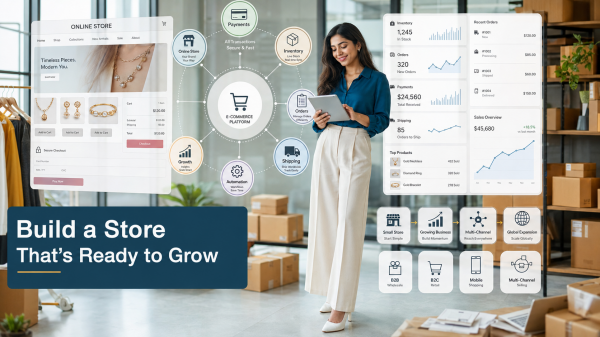
Everything—inventory, product setup, warehouse routing, checkout, payments, returns, analytics—runs in one platform.
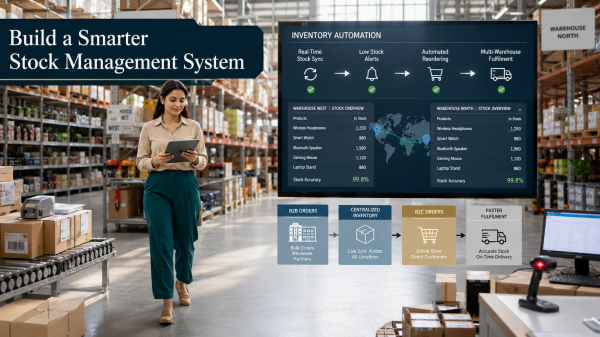
Multi-warehouse architecture for nationwide delivery
Businesses can manage multiple hubs across India and route orders based on pincode and stock availability.
Global commerce capabilities
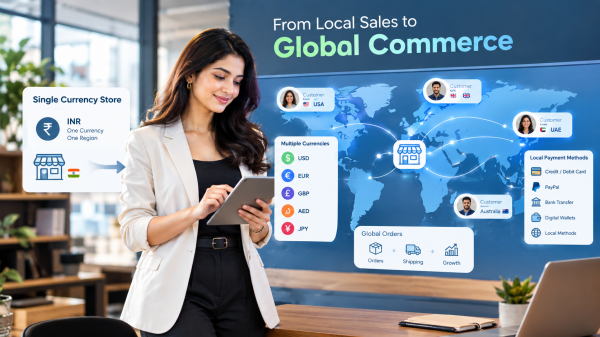
International shipping, multi-currency payments, and global tax configurations support exports.
Strong mobile-first infrastructure
Since most Indian customers shop on mobile, the platform ensures fast, responsive performance.
Customer engagement automation
Features like abandoned cart recovery, push notifications, loyalty programs, and personalised recommendations boost conversions.
Scalability without technical complexity
MSMEs don’t need developers. They can scale operations, add warehouses, expand product lines or launch apps with simple configuration.
Compliance with Indian digital frameworks
Integration with leading Indian payment gateways, shipping partners, GST compatibility, and UPI-based payments make operations smooth.
Together, these capabilities ensure Indian sellers are prepared for both domestic and global growth.
How to Implement a Future-Ready Digital Commerce Setup (Step-by-Step)
Step 1: Digitise your complete product catalog
Upload images, variants, pricing, size charts, and inventory in a clean structure.
Step 2: Set up your warehouse network
Add multiple warehouses, assign roles, map pincodes, and set inventory rules.
Step 3: Configure payments for both India and global markets
Enable:
- UPI
- Cards
- Wallets
- BNPL
- International gateways like PayPal
Step 4: Build trust-driven customer experience
Enable:
- Verified reviews
- Return policies
- Secure checkout
- Consistent product information
Step 5: Automate your customer journeys
Use:
- Abandoned cart notifications
- Push campaigns
- Loyalty points
- Subscription billing
Step 6: Launch your mobile app
Mobile commerce now drives most conversions. Apps deepen engagement and repeat purchases.
Step 7: Expand to global markets
Add:
- Multi-currency checkout
- International shipping carriers
- Automated duties/taxes
- Export-friendly payment methods
Step 8: Use analytics to guide growth
Track:
- Conversion rate
- Inventory movement
- Repeat purchase rate
- Customer lifetime value
This step-by-step roadmap helps any Indian MSME transform into a global-ready digital commerce brand.
Benefits: Why India Is Becoming a Global eCommerce Leader
Strong national digital infrastructure
Initiatives like UPI, Aadhaar, and Digital India make online commerce easier than ever.
Affordable technology platforms
Platforms like Shopaccino democratise access to premium eCommerce features at reasonable costs.
Faster delivery networks
India’s logistics ecosystem—surface, air, hyperlocal—has evolved dramatically.
Growing customer trust in online shopping
Millions of Indians now prefer digital-first brands for fashion, grocery, electronics, beauty, and home products.
MSMEs going global
Indian handicrafts, apparel, jewelry, textiles, food products, and wellness items are gaining international demand.
Secure digital payments
UPI is now one of the fastest-growing payment systems in the world.
A powerful mix of technology + entrepreneurship
India’s youth-led entrepreneurship wave is accelerating digital commerce innovation.
With modern platforms supporting them, Indian businesses are no longer local—they are global competitors.
Conclusion
India is not just participating in digital commerce—it is shaping the future of it. From mobile-first shopping to UPI-based payments, from global-ready eCommerce platforms to advanced warehouse systems, the country is building an ecosystem that empowers businesses of every size.
Platforms like Shopaccino bring this transformation within reach for MSMEs, D2C brands, wholesalers, manufacturers, and exporters. They remove the technical barriers, simplify complex operations, and help businesses think beyond boundaries.
When digital infrastructure, global ambition, and modern platforms come together, a new era begins—an era where Indian businesses can serve customers across the world with confidence, speed, and excellence.
FAQs
India has strong digital infrastructure, fast payments, affordable technology platforms, and rapidly evolving consumer behaviour, which helps businesses scale quickly.
Yes. With multi-currency payments, global shipping, and export-friendly systems, even small brands can reach international markets easily.
They simplify product setup, warehouse management, payments, checkout, marketing automation, and analytics—making it easy for businesses to scale.
Extremely important. Most online shopping in India happens on mobile, so mobile-friendly sites and apps drive higher conversions.
Yes. Automation reduces manual work, improves accuracy, and increases revenue by engaging customers at the right time.
It gives them a global storefront, automated international payments, and a structured system to manage overseas orders.
Smarter automation, global selling, multi-warehouse fulfilment, app-based commerce, and AI-driven personalisation.