Common B2B Sales Challenges — and How Ecommerce Solves Them
B2B selling has always been more complex than B2C. Orders are bigger, relationships are longer, and the decision-making process is slow, layered, and influenced by dozens of operational realities. For years, B2B sales teams relied on personal connections, revenue targets, field visits, and follow-up calls to drive growth. It worked because buyer expectations were predictable and market dynamics were stable.
But in 2026, B2B selling looks completely different. Buyers move faster, expect transparency, and want digital convenience without losing the personal relationship. Industries once driven entirely by offline interactions are now competing in a world where digital ordering, self-serve catalogues, automated workflows, and data-driven forecasting shape the pace of business.
This shift has exposed a long list of challenges that B2B brands — including Established D2C Brands, Exporters, Manufacturers, Wholesalers, and Distributors — face daily. And it has revealed how ecommerce platforms and digital ordering systems are solving these challenges more efficiently than traditional sales methods ever could.
This blog explores the most common B2B sales challenges and how modern ecommerce solutions — including platforms like Shopaccino — help businesses overcome them with structure, automation, and clarity.
Challenging Area: The Biggest B2B Sales Challenges Today
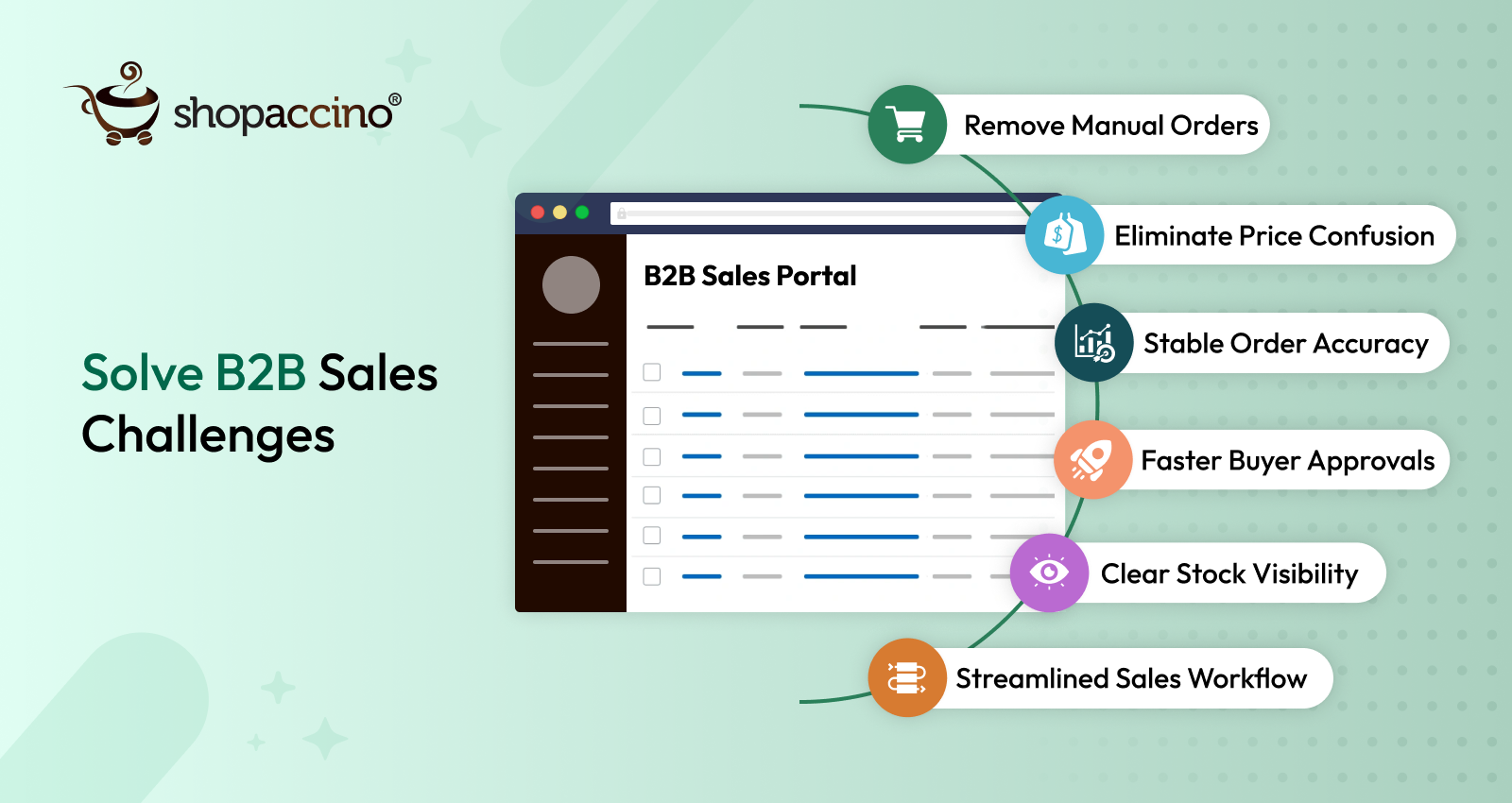
Selling in the B2B world often feels like trying to move a large machine with too many moving parts. Even small inefficiencies become major bottlenecks as the business scales.
Below are the core challenges most B2B brands face regardless of size or industry.
Unstructured and Manual Order Collection
Orders arrive in many formats:
- WhatsApp texts
- Phone calls
- Emails
- Spreadsheets
- Verbal notes from field representatives
This inconsistency increases:
- Administrative workload
- Human errors
- Order delays
- Miscommunication
Difficulty Handling Customer-Specific Pricing
Every buyer has their own:
- Price list
- Credit limit
- Discount structure
- Minimum order quantity
Managing this manually is extremely time-consuming and prone to mistakes.
No Real-Time Inventory Visibility
B2B buyers expect accurate stock information before placing an order, but sales teams often struggle because:
- Inventory is updated manually
- There is no centralised source of truth
- Warehouse and sales data rarely sync
The result: delayed fulfilment, shortages, cancelled orders, and unhappy customers.
Long Sales Cycles and Slow Approvals
Every B2B order goes through multiple steps:
- Discussion
- Confirmation
- Checking availability
- Approval
- Dispatch
- Documentation
Manual workflows slow everything down.
Heavy Dependency on Sales Representatives
If a salesperson is unavailable:
- Orders are delayed
- Customer queries go unanswered
- Revenue slows down
This dependency creates operational risk.
Disorganized Order History
Without a central system, tracking:
- Previous orders
- Past disputes
- Replacements
- Pricing agreements
…becomes stressful and time-consuming.
Slow Response Time Across Channels
Buyers expect quick answers, but sales teams often juggle hundreds of messages across multiple platforms, making it hard to respond instantly.
Their Customer Challenging Area: What B2B Buyers Expect in 2026
Today’s B2B buyer does not behave like the buyer of 2010. They are more digital, more informed, and less patient.
Here’s what they expect — across all segments.
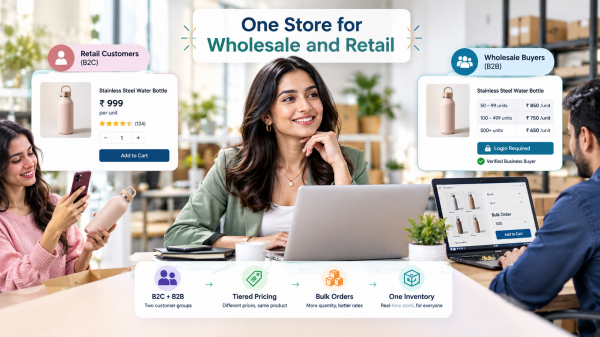
Instant Access to Product and Pricing Information
Buyers no longer want to:
- Wait for catalogs
- Ask repeatedly for prices
- Confirm stock manually
They want information on demand.
24×7 Ordering Independence
Buyers want to place orders:
- Late at night
- During peak season
- On holidays
- Without a sales rep
Zero Errors and Full Transparency
Buyers want:
- Correct product selection
- Updated pricing
- Real-time stock visibility
- Accurate dispatch timelines
Easy Reordering Experience
B2B buying often follows a repeat pattern.
Buyers expect:
- Quick reorder buttons
- Saved lists
- Favourites
Smooth Communication and Faster Resolution
They expect:
- Automated updates
- Clear documentation
- Easy tracking
When this doesn’t happen, trust suffers.
Solution: How an Integrated Ecommerce Platform Solves These Challenges
An ecommerce platform creates structure where B2B operations typically lack clarity.
It streamlines order flow, automates pricing, manages inventory in real time, and reduces manual dependency.
Platforms like Shopaccino are built to simplify the entire B2B ordering lifecycle — from browsing to dispatch.
Here’s how ecommerce solves B2B sales challenges clearly and effectively.
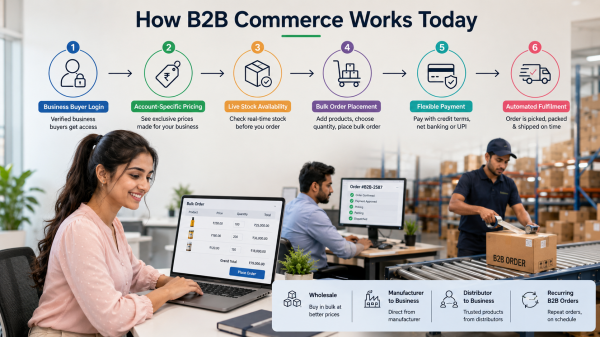
Structured and Error-Free Order Collection
Instead of receiving orders in scattered messages, buyers place orders directly through:
- A digital catalogue
- A self-serve portal
- A mobile app
This ensures accuracy and saves countless hours.
Customer-Specific Pricing Automation
The system automatically displays:
- Special pricing
- Volume discounts
- Dealer-wise rates
- Regional schemes
No negotiation, no confusion, no errors.
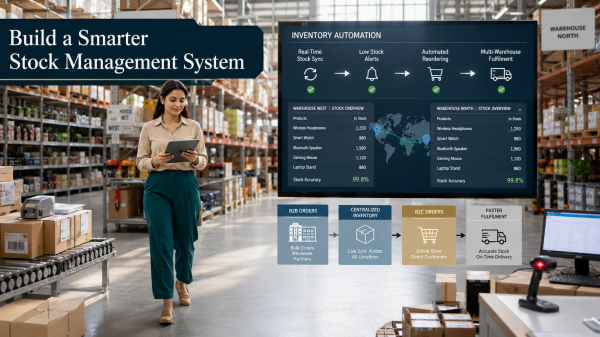
Real-Time Inventory Management
Ecommerce platforms sync inventory across:
- Warehouses
- Sales teams
- Buyers
This improves accuracy and prevents overselling.
Faster Order Processing and Approvals
Because customers place orders directly in the system:
- Sales cycles shorten
- Approvals become automated
- Dispatch processes speed up
24×7 Self-Serve Ordering Experience
Buyers can browse, select, and complete their purchase whenever they want.
No waiting for sales reps, no follow-ups, no delays.
Digital Records for All Transactions
Ecommerce centralises:
- Order history
- Payment records
- Invoices
- Disputes
- Status updates
This reduces friction and improves communication.
Smart Analytics for Better Decisions
Brands get access to:
- Customer buying patterns
- High-demand products
- Slow-moving inventory
- Regional performance
Such insights help businesses plan better and scale more confidently.
How to Implement an Ecommerce Solution (Step-by-Step)
Here’s a simple, beginner-friendly approach for B2B brands transitioning from manual sales to ecommerce.
Step 1: Digitise Your Catalogue
Upload:
- Product names
- Images
- Variants
- Pack sizes
- Descriptions
A well-organised catalog is the foundation of your ecommerce system.
Step 2: Create Customer Groups
Divide customers into groups such as:
- Distributors
- Retailers
- Superstockists
- Corporate buyers
Assign separate pricing, discounts, and rules.
Step 3: Sync Warehouse-Wise Inventory
Upload current stock levels and enable automatic updates.
Step 4: Enable Self-Serve Ordering
Give customers login access to place their own orders.
Step 5: Automate Your Communication
Set up automated:
- Order confirmations
- Dispatch notifications
- Delivery updates
- Payment reminders
Step 6: Train Sales Teams
Sales teams should understand how to:
- Monitor orders
- Assist customers
- Manage approvals
- Track performance
Step 7: Use Analytics to Scale
Review data to identify opportunities for:
- New products
- Regional expansion
- Stock optimisation
Benefits: Why Ecommerce Is the Ideal Solution for B2B Sales
Faster and More Accurate Orders
No manual errors, no unclear messages, no delays.
Stronger Customer Relationships
Buyers enjoy transparency and trust the brand more.
Reduced Workload for Sales Teams
Sales reps focus on growth and onboarding — not order collection.
Scalable Operations
Ecommerce grows with your business, supporting:
- Multiple warehouses
- Multiple price lists
- Multiple customer types
Better Cash Flow and Forecasting
With clear data and structured processes, financial planning improves.
Consistent Buying Experience Across All Customers
Everyone sees the right information at the right time.
Higher Productivity and Profitability
Automation reduces costs and improves efficiency.
Conclusion
The B2B ecosystem is transforming rapidly, and brands that adapt early grow faster and more confidently. Traditional sales methods are simply not built for the speed, transparency, and accuracy that buyers expect today. Ecommerce platforms solve the deepest B2B sales challenges by creating a centralised, structured, and scalable system for both the business and the buyer.
Digital platforms like Shopaccino empower B2B brands to modernise their sales processes, eliminate manual bottlenecks, and build durable relationships with customers.
The brands that embrace ecommerce today will become the industry leaders of tomorrow.
FAQs
Because buyers expect real-time visibility, fast ordering, and accurate information — which traditional sales methods cannot provide consistently.
It automates order collection, pricing, inventory checks, and communication, allowing sales reps to focus on growth instead of repetitive tasks.
Yes, even MSMEs benefit because ecommerce reduces errors, increases efficiency, and supports scaling without increasing staff.
Buyers get instant access to products, pricing, order status, and reordering options — making the entire process smoother and faster.
Yes, B2B platforms show customised prices automatically based on the buyer’s profile, credit terms, and negotiated rates.
Yes, many platforms route orders to the correct warehouse and update inventory in real time.
Not at all. With proper onboarding and a user-friendly system, most teams adapt quickly.