Ecommerce Solutions for Wholesale and Retail Gemstone Businesses
Many gemstone businesses do not fit neatly into a single selling model. A brand may sell loose stones in bulk to jewelers and exporters, while also offering selected pieces directly to individual buyers. This mix of wholesale and retail is common in the gemstone industry, but managing both sides of the business is rarely simple.
In most cases, wholesale and retail operations grow separately. Different price lists are created. Separate order processes are followed. Inventory is tracked in different ways. Over time, this separation creates confusion, delays, and errors. Teams struggle to know which rules apply to which customer. Customers experience inconsistencies. Owners lose visibility and control.
The problem is not ambition. It is infrastructure.
This blog explains why managing wholesale and retail gemstone sales using separate systems creates operational stress, what buyers on both sides expect, and how a unified ecommerce platform can bring clarity, structure, and efficiency without mixing workflows or pricing logic.
Challenging Area: When Wholesale and Retail Run on Separate Systems
Operating two business models sounds manageable in theory, but in practice it creates daily friction.
Fragmented Pricing Structures
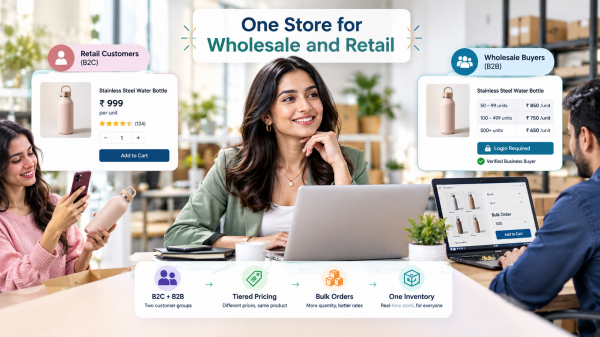
Wholesale buyers expect bulk pricing, negotiated rates, and quantity-based logic. Retail buyers expect transparent pricing and simple checkout. Managing these expectations through separate tools leads to frequent mistakes.
Inventory Confusion
A gemstone sold in bulk may still appear available for retail customers if systems are not synced. This creates double selling and broken trust.
Disconnected Order Workflows
Wholesale orders often involve approvals, invoices, and custom handling. Retail orders are expected to be fast and automated. Using separate systems increases manual coordination.
Increased Operational Load
Teams spend time switching between tools, updating the same data multiple times, and correcting errors.
Lack of Central Visibility
Business owners cannot see the full picture of stock, sales, and performance across channels.
These challenges slow down growth and make scaling risky.
Their Customer Challenging Area: Different Buyers, Same Expectation of Clarity
Wholesale and retail gemstone buyers are different, but both expect consistency and professionalism.
Wholesale Buyer Expectations
Wholesale buyers look for reliable pricing, accurate availability, and smooth repeat ordering. They want confidence that the stones shown are truly available and priced correctly.
Retail Buyer Expectations
Retail buyers want clear product details, easy navigation, and a simple checkout experience without complexity.
Shared Expectations
Both segments expect:
- Accurate product information
- Reliable availability
- Clear communication
- Smooth ordering flow
When systems fail behind the scenes, customers notice immediately.
Solution: How a Unified Ecommerce Platform Supports Both Models
A single ecommerce platform designed to handle multiple customer types brings structure without overlap.
Centralized Product Management
All gemstone data—images, specifications, certifications, and stock—is managed in one place, ensuring consistency across wholesale and retail.
Segmented Pricing Logic
Different pricing rules apply automatically based on customer type, without manual intervention.
Controlled Inventory Allocation
The same stock pool can be intelligently managed so sales in one channel update availability everywhere.
Separate Workflows, One System
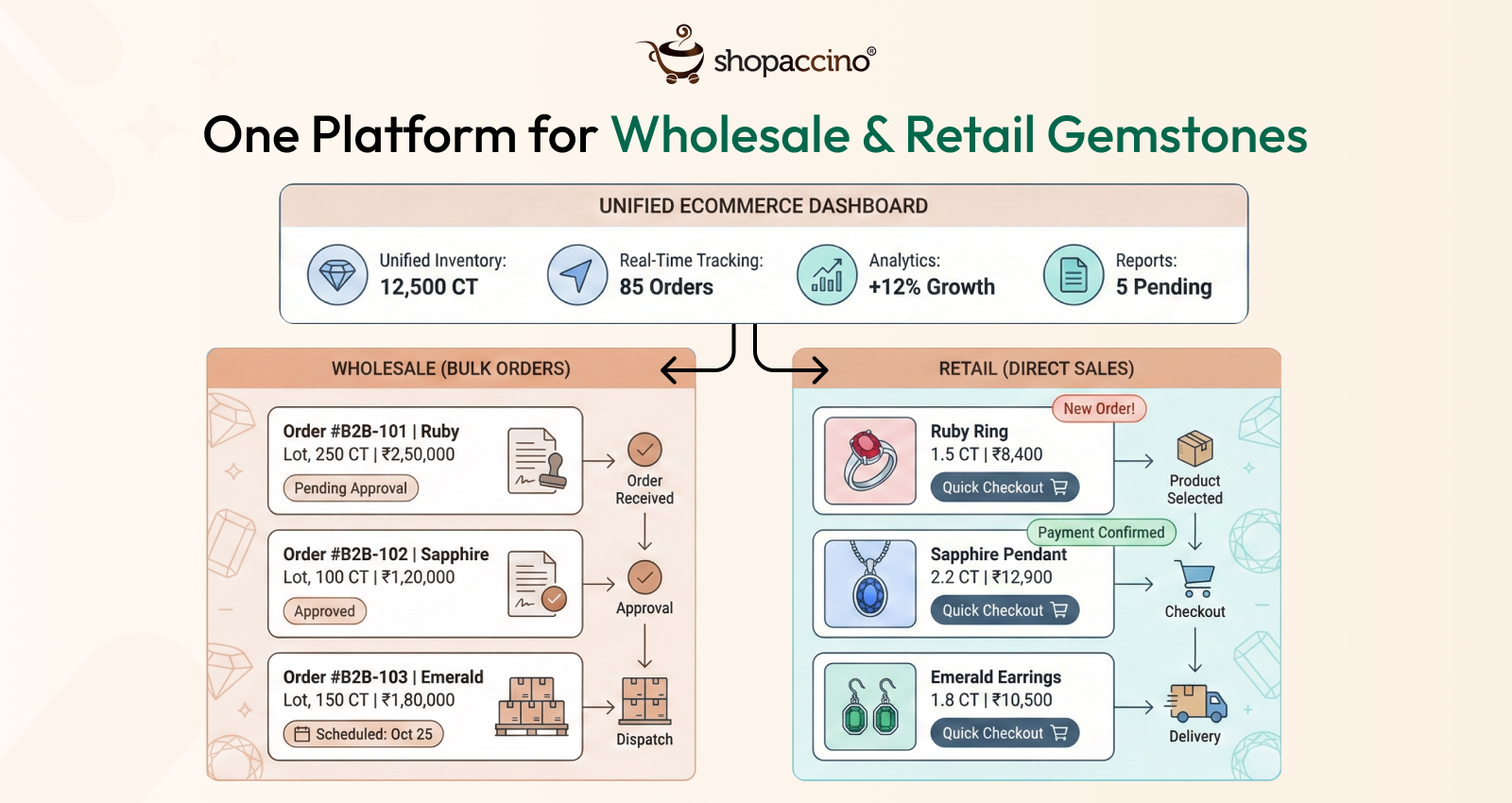
Wholesale and retail orders follow their own flows while remaining visible in one dashboard.
Reduced Manual Dependency
Automation replaces repetitive updates, lowering error rates.
Solutions like Shopaccino enable Online gemstone businesses to manage both wholesale and retail from one platform without mixing rules or customer experiences.
How to Implement a Unified Ecommerce Setup for Gemstone Businesses
Step 1: Define Customer Segments
Clearly separate wholesale buyers and retail customers within the system.
Step 2: Structure Product Listings
Use detailed attributes so the same gemstone data serves both segments accurately.
Step 3: Configure Pricing Logic
Apply quantity-based or negotiated pricing for wholesale and standard pricing for retail automatically.
Step 4: Centralize Inventory
Maintain one inventory source that updates in real time across all sales.
Step 5: Customize Order Flows
Ensure wholesale orders follow approval or invoice-based flows, while retail orders remain instant.
Step 6: Train Teams on One System
Replace multiple tools with a single platform for daily operations.
Benefits of Using One Ecommerce Platform for Wholesale and Retail
Operational Simplicity
One system replaces multiple disconnected tools.
Improved Accuracy
Centralized data reduces pricing and stock errors.
Better Customer Experience
Each buyer type gets the experience they expect.
Faster Decision-Making
Owners gain full visibility into sales and inventory.
Scalable Growth
Adding new buyers or products does not increase complexity.
Stronger Brand Trust
Consistency across channels builds credibility.
Conclusion
Online Gemstone businesses that operate in both wholesale and retail do not need separate systems to succeed. They need one system that understands the difference between buyer types without forcing teams to manage complexity manually.
A unified ecommerce platform brings clarity to pricing, inventory, and workflows while keeping customer experiences distinct and professional. With Ecommerce Solutions Like Shopaccino, gemstone sellers can scale confidently, knowing that wholesale and retail operations work together—not against each other.
FAQs
Yes, with proper customer segmentation and pricing logic, both models can coexist smoothly.
No. Pricing rules apply based on customer type.
It prevents double selling and keeps availability accurate.
Yes. It simplifies operations and supports growth.
Yes. Wholesale and retail orders follow separate flows within one system.
Yes. Shopaccino allows segmented pricing, inventory, and order workflows.