How Inventory Management Impacts Ecommerce Sales & Customer Experience
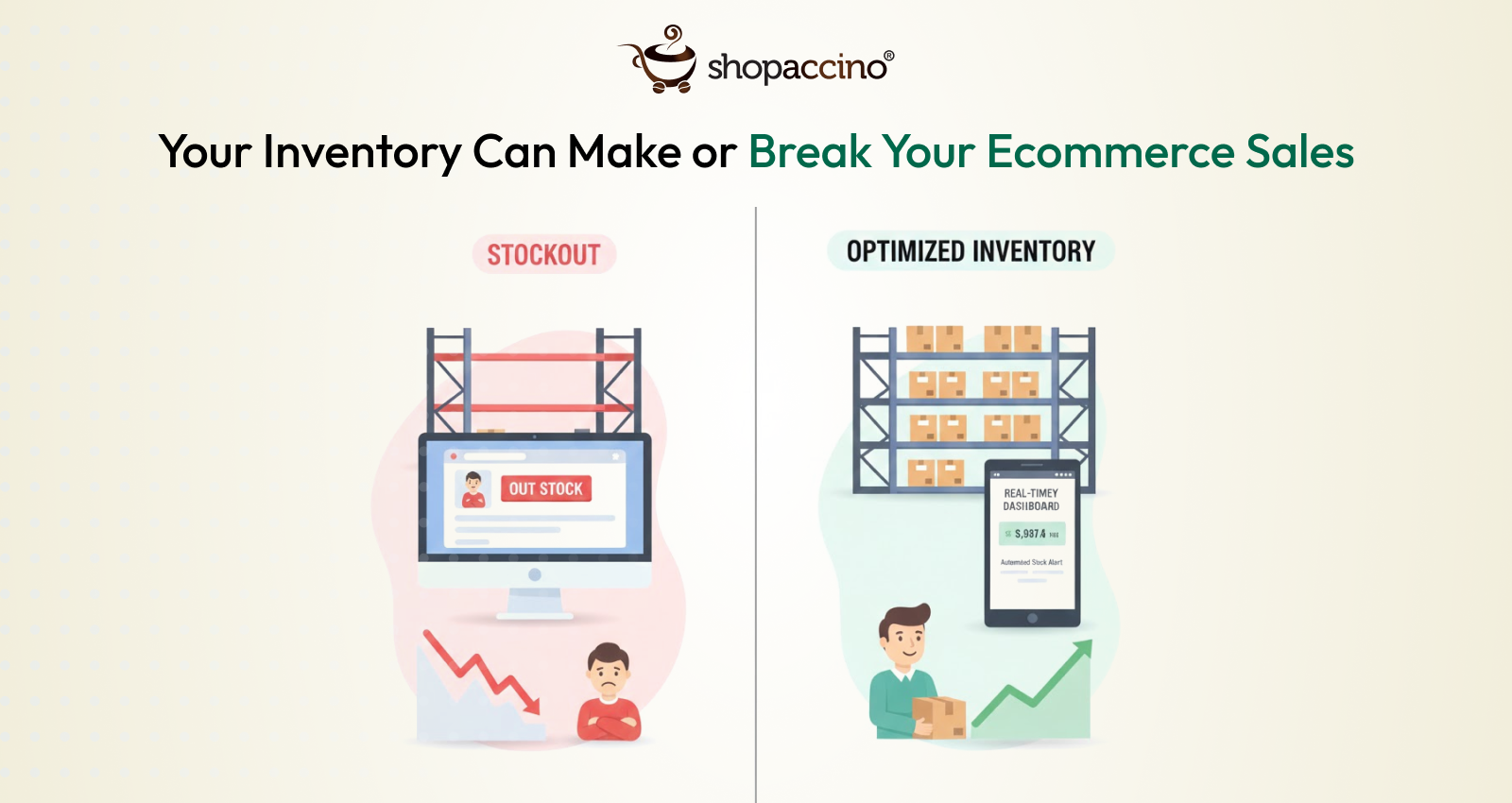
Inventory is one of the most underestimated growth drivers in ecommerce. Many brands focus heavily on marketing, website design, and pricing, but overlook how inventory decisions silently influence sales, customer trust, and long-term brand perception. In reality, the way inventory is managed can either support ecommerce growth or quietly limit it.
In this blog, we’ll explore how inventory management directly impacts ecommerce sales and customer experience, why it matters more than ever today, and how businesses can turn inventory from a backend operation into a competitive advantage.
What Inventory Management Really Means in Ecommerce
Inventory management in ecommerce is not just about tracking stock levels. It is the process of planning, organizing, and controlling how products are stored, updated, and fulfilled across sales channels. Effective inventory management for ecommerce ensures that the right products are available at the right time, in the right quantity, and at the right location.
In an ecommerce environment, inventory decisions directly affect order fulfillment speed, product availability, and customer satisfaction. Poor inventory management often leads to overselling, stockouts, delayed deliveries, or excess inventory—all of which negatively impact revenue and customer trust. On the other hand, structured inventory management creates operational stability, reduces errors, and supports consistent sales performance.
Why Inventory Management Directly Impacts E-commerce Sales
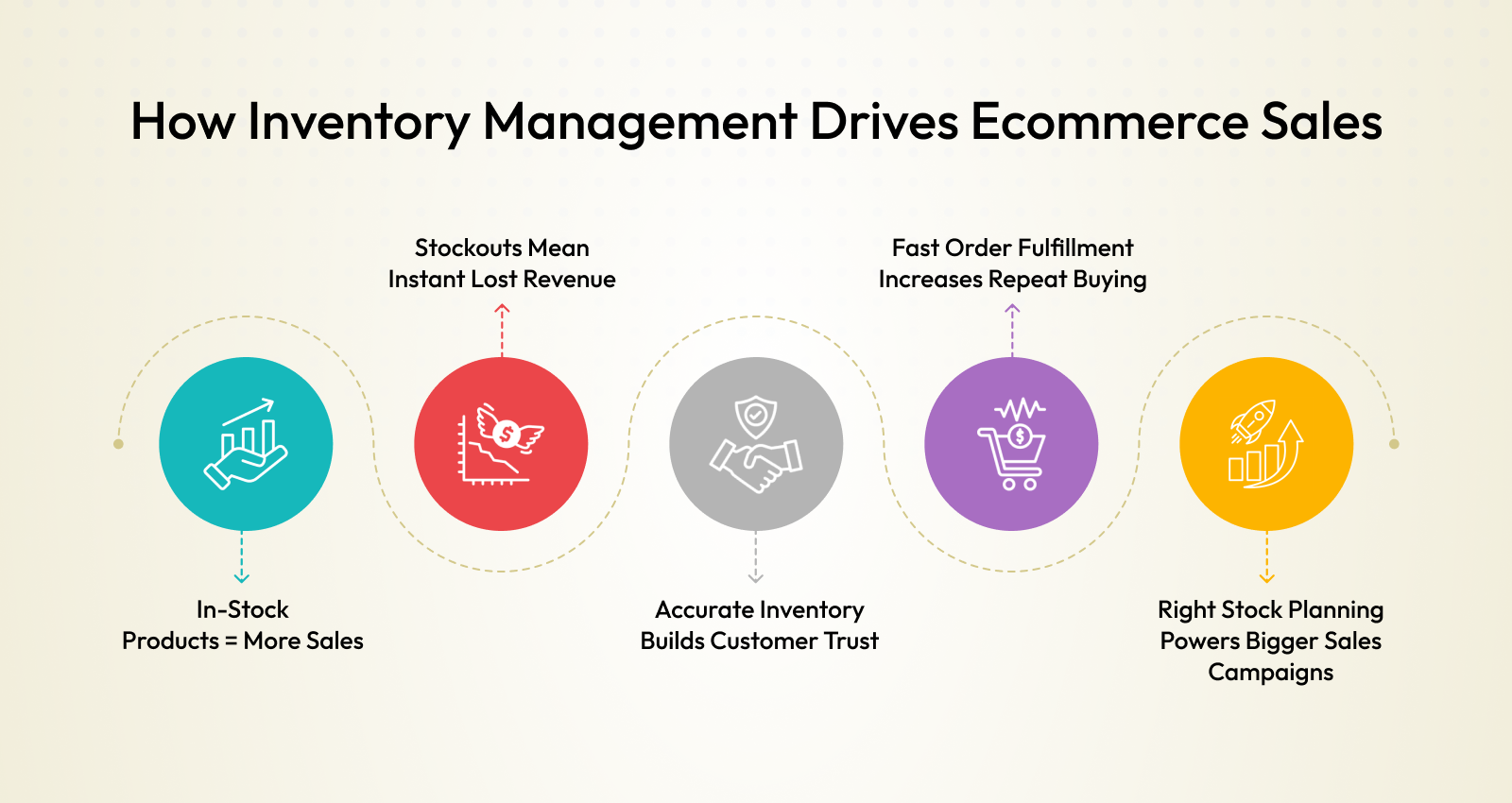
Inventory has a direct and measurable impact on e-commerce sales. When products are out of stock, customers simply move to a competitor. When inventory data is inaccurate, businesses risk canceling orders or delaying shipments, leading to lost revenue and negative reviews.
Strong inventory management ensures product availability during high-demand periods, such as sales campaigns or seasonal spikes. It also allows businesses to plan promotions confidently without fear of fulfillment issues. When customers consistently find products available and delivered on time, purchase confidence increases. Over time, this reliability translates into higher conversion rates, repeat purchases, and overall sales growth.
How Inventory Issues Affect Customer Experience
Customer experience in ecommerce is closely tied to fulfillment accuracy and speed. Inventory problems often surface at the worst possible moment—after a customer has already placed an order.
Common inventory-related customer experience issues include:
- Orders are getting canceled due to stock unavailability
- Delayed shipping because products were not ready
- Partial fulfillment of orders
- Mismatch between online stock status and actual availability
These issues create frustration and reduce trust. Customers rarely blame “inventory problems”—they blame the brand. This is why inventory accuracy plays such a crucial role in delivering a smooth and reliable customer experience.
Inventory Visibility and Its Importance for Online Stores
Inventory visibility refers to having real-time, accurate information about stock levels across all locations and channels. Without visibility, ecommerce businesses operate reactively instead of proactively.
An effective inventory management system provides centralized control and real-time updates, allowing businesses to:
- Prevent overselling
- Display accurate stock availability online
- Plan replenishment efficiently
- Respond quickly to demand changes
When inventory visibility is strong, customers experience fewer disruptions, and internal teams can make better decisions. This visibility becomes even more critical as order volumes increase and sales channels expand.
Inventory Management vs Warehouse Management: Understanding the Difference
Inventory management and warehouse management are closely related but serve different purposes. Inventory management focuses on stock planning, availability, and movement, while a warehouse management system focuses on how products are stored, picked, packed, and shipped within physical locations.
In ecommerce, both systems must work together. Inventory management ensures the right stock is available, while warehouse management ensures orders are fulfilled efficiently. When these systems are disconnected, delays, errors, and inefficiencies occur. A coordinated approach helps businesses deliver faster shipping, accurate orders, and a better post-purchase experience.
Why Inventory Becomes More Complex as Ecommerce Grows
As ecommerce businesses scale, inventory management becomes increasingly complex. Growth introduces more products, higher order volumes, multiple warehouses, and additional sales channels.
Without structured inventory management for ecommerce, businesses face:
- Frequent stock mismatches
- Slower order processing
- Increased operational costs
- Poor customer satisfaction
What worked at a small scale often breaks down as volume increases. This is why inventory processes must evolve alongside business growth. Treating inventory as a strategic function instead of a manual task is essential for sustainable ecommerce success.
The Hidden Cost of Poor Inventory Management
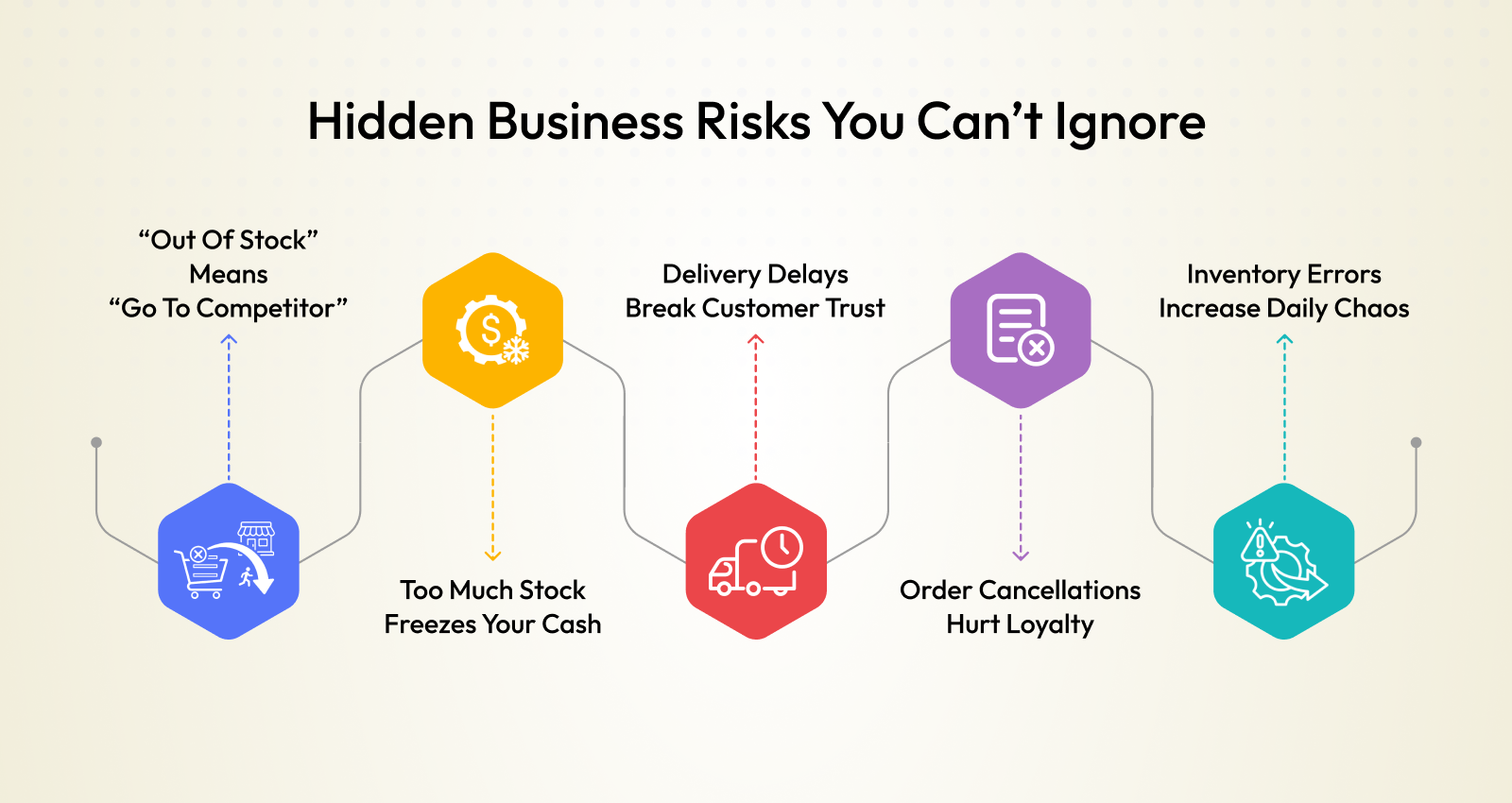
Poor inventory management does not always show immediate damage, but its long-term impact is significant. Excess inventory ties up capital and increases storage costs, while stockouts lead to missed sales opportunities.
Additionally, operational inefficiencies caused by inaccurate inventory data increase return rates, customer complaints, and support workload. Over time, these issues erode margins and damage brand reputation. Businesses that fail to optimize inventory often find themselves spending more on marketing just to compensate for operational weaknesses—an unsustainable approach.
Setting the Foundation for Smarter Inventory Decisions
Inventory management should be treated as a core part of ecommerce strategy, not just an operational task. Strong inventory processes create a foundation for better planning, smoother fulfillment, and improved customer experience.
When inventory data is reliable, businesses can confidently scale marketing efforts, expand product lines, and enter new markets. This foundation is what separates growing ecommerce brands from those that struggle with operational chaos.
How Inventory Systems Shape Ecommerce Growth and Daily Operations
An inventory management system acts as the central control unit for ecommerce operations. It tracks stock levels, updates availability in real time, and ensures that sales, fulfillment, and replenishment stay aligned. Without a proper system, ecommerce businesses rely on manual updates or disconnected tools, which increases the risk of errors as order volumes grow.
For ecommerce brands, an inventory management system helps maintain accuracy across product listings, prevents overselling, and supports faster order processing. It also enables better planning by providing clear insights into fast-moving products, slow inventory, and restocking needs. As ecommerce becomes more competitive, having a structured system is no longer optional—it’s essential for maintaining operational stability and supporting consistent sales growth.
How Inventory Accuracy Impacts Conversions and Sales
Inventory accuracy directly influences customer buying decisions. When customers see products marked “in stock” but later receive cancellation or delay notifications, trust is immediately damaged. Even a single poor experience can prevent repeat purchases.
Accurate inventory management for ecommerce ensures that product availability shown on the website reflects actual stock. This reliability reduces friction in the buying journey and improves conversion rates. Customers are more likely to complete purchases when they feel confident that products will be delivered as promised. Over time, consistent inventory accuracy leads to fewer complaints, fewer refunds, and stronger brand credibility—factors that significantly impact long-term ecommerce sales performance.
Inventory Management and Its Impact on Marketing Campaigns
Marketing and inventory are deeply connected, yet often managed separately. When inventory data is inaccurate or poorly planned, marketing campaigns can backfire. Promoting products that are out of stock or low in quantity results in wasted ad spend and frustrated customers.
Strong inventory management allows marketing teams to plan campaigns with confidence. Businesses can promote products that are well-stocked, pause ads for low-inventory items, and align sales events with availability. This coordination improves campaign performance and protects customer experience. Inventory-aware marketing ensures that demand generation and fulfillment capacity move in sync, helping ecommerce brands maximize revenue without operational stress.
Managing Inventory Across Multiple Sales Channels
As ecommerce businesses expand, they often sell across multiple channels—websites, marketplaces, and social platforms. Without centralized inventory control, managing stock across these channels becomes risky.
An effective inventory management system synchronizes stock levels across all sales channels in real time. This prevents overselling, reduces manual updates, and ensures consistency in product availability. Centralized inventory management also simplifies reporting and forecasting by providing a unified view of sales and stock movement. For growing ecommerce brands, multi-channel inventory control is critical to maintaining accuracy, avoiding customer dissatisfaction, and scaling operations smoothly.
Warehouse Management System and Fulfillment Efficiency
A warehouse management system focuses on the physical movement of inventory within storage locations. While inventory management determines what stock is available, warehouse management controls how efficiently products are picked, packed, and shipped.
In ecommerce, warehouse efficiency directly affects delivery speed and order accuracy. A well-implemented warehouse management system helps optimize storage layouts, reduce picking errors, and speed up fulfillment. When warehouse operations align with inventory data, businesses can process orders faster and deliver more reliable customer experiences. As customer expectations for quick delivery increase, warehouse efficiency becomes a critical factor in ecommerce success.
Inventory Challenges Faced by Growing E-Commerce Businesses
Growth introduces complexity. As e-commerce businesses scale, inventory challenges often multiply rather than disappear. Increased product variety, higher order volumes, and multiple fulfillment locations make manual processes unsustainable.
Common challenges include:
- Stock mismatches between systems
- Difficulty forecasting demand
- Overstocking slow-moving items
- Understocking high-demand products
Without structured inventory management for ecommerce, these challenges lead to increased costs and operational inefficiencies. Growing brands must upgrade inventory processes early to avoid disruptions that slow growth and damage customer trust.
The Relationship Between Inventory Management and Customer Retention
Customer retention is closely tied to fulfillment reliability. Customers who receive orders on time and as expected are far more likely to return. Inventory issues, on the other hand, create negative experiences that push customers away.
Effective inventory management supports retention by ensuring consistent availability, accurate delivery timelines, and smooth post-purchase experiences. When customers trust that a brand can fulfill orders reliably, they feel confident placing repeat orders. Over time, this trust reduces acquisition costs and strengthens customer lifetime value—making inventory management a key contributor to long-term ecommerce growth.
Inventory Planning as a Competitive Advantage
Inventory planning is no longer just an operational task—it’s a competitive advantage. Brands that plan inventory effectively can respond faster to demand shifts, launch promotions confidently, and minimize losses from unsold stock.
Strategic inventory planning uses historical data, sales trends, and seasonality to make informed decisions. This proactive approach allows ecommerce businesses to stay agile and customer-focused. In competitive markets, brands that manage inventory intelligently outperform those that rely on reactive or manual processes.
Inventory Management Best Practices for Ecommerce Businesses
Successful ecommerce businesses treat inventory management as a strategic function rather than a back-office task. Best practices start with maintaining accurate product data, setting clear reorder points, and reviewing inventory performance regularly. Businesses should categorize products based on demand, seasonality, and sales velocity to prioritize planning efforts.
Another important practice is aligning inventory decisions with marketing and sales forecasts. This prevents overstocking slow-moving items and understocking high-demand products. Regular audits and system checks help maintain accuracy and reduce errors over time. When inventory management is disciplined and data-driven, ecommerce businesses can operate more efficiently, improve fulfillment reliability, and deliver a more consistent customer experience.
How Inventory Automation Improves Efficiency and Reduces Errors
Manual inventory processes become risky as e-commerce operations scale. Automation plays a crucial role in reducing human error and improving operational efficiency. Automated inventory updates ensure that stock levels adjust instantly after every sale, return, or restock.
Automation also supports faster decision-making by providing real-time insights into inventory movement, low-stock alerts, and demand trends. This allows teams to focus on planning and optimization instead of repetitive tasks. For e-commerce businesses handling high order volumes, inventory automation minimizes delays, prevents overselling, and improves fulfillment accuracy. Over time, automation helps reduce operational costs while supporting faster, more reliable customer experiences.
Common Inventory Mistakes That Hurt Ecommerce Growth
Many ecommerce businesses struggle not because of lack of sales, but because of avoidable inventory mistakes. One common error is relying on outdated or manual stock tracking, which leads to mismatches between actual and displayed inventory. Another frequent issue is poor demand forecasting, causing excess inventory or frequent stockouts.
Ignoring inventory performance data is another costly mistake. Without analyzing sales velocity and product trends, businesses cannot optimize stock levels effectively. These mistakes often result in higher return rates, delayed deliveries, and dissatisfied customers. Avoiding these pitfalls requires structured inventory processes, accurate systems, and regular performance reviews. Correcting inventory mistakes early protects both revenue and brand reputation.
Inventory Management and Its Role in Scaling Ecommerce Operations
Scaling ecommerce operations introduces new inventory challenges that require proactive planning. As order volumes grow, inventory processes must handle increased complexity without slowing down fulfillment. Scalable inventory management ensures that businesses can expand product lines, add warehouses, and serve new markets smoothly.
A strong inventory foundation allows businesses to scale marketing efforts confidently, knowing fulfillment can keep pace with demand. It also supports faster order processing and consistent delivery timelines. Ecommerce brands that invest in scalable inventory systems early avoid operational bottlenecks later. This readiness enables sustainable growth and protects customer experience during high-demand periods.
How Technology Platforms Support Inventory-Driven Growth
Modern ecommerce platforms play an important role in simplifying inventory management. A platform like Shopaccino provides businesses with a stable ecommerce foundation where inventory, orders, and fulfillment workflows can stay aligned as the business grows.
By centralizing inventory data and supporting integration with operational tools, such platforms help reduce manual effort and improve accuracy. This allows ecommerce teams to focus on growth, marketing, and customer experience instead of constant inventory firefighting. The right platform ensures that inventory management scales alongside the business, supporting both operational efficiency and customer satisfaction.
The Long-Term Impact of Inventory Management on Customer Trust
Customer trust is built through consistency. When customers repeatedly receive orders on time, with accurate product availability and clear communication, confidence in the brand grows. Inventory management plays a silent but powerful role in delivering this consistency.
Poor inventory practices create broken promises—out-of-stock cancellations, delayed shipments, or incorrect orders. Over time, these issues erode trust and reduce repeat purchases. Strong inventory management, on the other hand, supports reliable fulfillment and transparent communication. This reliability becomes a key differentiator in competitive ecommerce markets and directly contributes to long-term customer loyalty.
Inventory as a Strategic Advantage, Not Just an Operational Task
Ecommerce businesses that succeed long term view inventory as a strategic asset. Inventory data informs pricing decisions, promotion planning, and product expansion strategies. When inventory is managed intelligently, it supports better business decisions across departments.
Strategic inventory management allows brands to respond quickly to demand shifts, reduce waste, and maximize profitability. Instead of reacting to problems, businesses operate proactively. This mindset transforms inventory from a cost center into a growth enabler. In a competitive ecommerce landscape, this strategic approach often separates scalable brands from those that struggle operationally.
Final Takeaways
Inventory management directly impacts ecommerce sales, customer experience, and long-term growth. Accurate stock tracking, automation, and alignment with marketing and fulfillment are essential for operational success. Businesses that invest in structured inventory management reduce errors, improve conversions, and build stronger customer trust. Treating inventory as a strategic function—not just a backend task—creates a foundation for sustainable ecommerce growth.
Closing Thoughts
In ecommerce, customers may never see your inventory processes—but they always feel the results. From product availability to delivery reliability, inventory management shapes every stage of the customer journey.
Brands that manage inventory effectively sell more, retain customers longer, and scale with confidence. As ecommerce competition intensifies, inventory management will continue to be one of the most important drivers of both sales performance and customer experience.
FAQs
Inventory management ensures products are available when customers want to buy them. Accurate stock control prevents overselling, reduces order cancellations, and supports timely fulfillment, all of which directly impact ecommerce sales and customer satisfaction.
Poor inventory management leads to stockouts, delayed deliveries, and order cancellations. These issues frustrate customers, reduce repeat purchases, increase refund requests, and ultimately result in lost revenue and damaged brand credibility.
An inventory management system centralizes stock tracking, updates availability in real time, and helps businesses manage replenishment efficiently. It reduces manual errors and supports smoother operations as ecommerce order volumes grow
Inventory accuracy ensures that customers receive what they order without delays or cancellations. When stock information is reliable, customers trust the brand more, leading to higher satisfaction, better reviews, and increased repeat purchases.
Inventory management focuses on stock planning and availability, while a warehouse management system handles physical storage, picking, packing, and shipping. Both must work together to ensure fast and accurate ecommerce order fulfillment.
Effective inventory management allows businesses to run promotions confidently, avoid advertising out-of-stock products, and align campaigns with available stock. This improves campaign performance and protects customer experience.
As businesses grow, product variety, order volume, and fulfillment locations increase. Without structured inventory management, this complexity leads to stock mismatches, higher costs, and slower fulfillment, making scalable systems essential.
Yes. Reliable inventory management ensures consistent availability and on-time delivery. Customers who receive dependable service are more likely to trust the brand, place repeat orders, and remain loyal over time.
Ecommerce brands can improve inventory management by adopting automation, using real-time inventory systems, analyzing sales data regularly, and aligning inventory planning with marketing and demand forecasts