From Showroom to Ecommerce: Bringing the Jewelry Store Experience Online
A jewelry showroom is not just a place to buy ornaments. It is a space where trust is built slowly and carefully. Customers walk in, touch the pieces, observe the shine under lights, ask questions, and listen to explanations about purity, weight, craftsmanship, and price. Every detail reassures them that they are making the right choice.
When the same jewelry store moves online, something important often gets lost.
A few photographs and a price tag are rarely enough to convey the value of a finely crafted ring or a heavy gold necklace. Customers hesitate. They zoom into images that feel flat. They wonder if the piece will look the same in real life. Even if they like the design, doubt quietly interrupts the buying journey.
For jewelry brands, the challenge is clear. The goal is not just to sell online, but to recreate the confidence of the showroom experience through a screen. This blog explains why that experience breaks online, what customers expect, and how ecommerce platforms help jewelry brands bring the warmth, clarity, and assurance of a physical store into the digital world. This shift is part of a broader move toward jewelry ecommerce, where brands recreate the showroom experience online.
Challenging Area: Where Jewelry Brands Struggle Online
Most jewelry brands start their online journey by uploading products and prices. At first, this feels like progress. Over time, cracks begin to show.
The biggest challenge is visual representation. Jewelry is a tactile product. Poor photos flatten its depth. Limited angles hide craftsmanship. Customers cannot judge finishing, thickness, or detailing properly.
Another issue is missing context. In a showroom, a salesperson explains why a piece costs what it does. Online, customers often see a final price without understanding gold weight, making charges, or purity. This lack of explanation creates uncertainty.
Trust also becomes fragile. Jewelry is a high-value purchase. Customers want assurance about authenticity, certifications, returns, and payments. If these are not clearly communicated, hesitation grows.
Internally, teams feel the pressure too. Customer queries increase. Support teams answer the same questions repeatedly. Sales slow down not because of lack of interest, but because of lack of confidence.
Their Customer Challenging Area: What Jewelry Buyers Expect Online
Jewelry buyers do not browse casually. They evaluate carefully. Whether it is a wedding purchase or a gift, the emotional value is high.
Customers expect:
- Detailed Visuals That Show True Craftsmanship
- Clear Explanation Of Price And Purity
- Assurance Of Authenticity And Certification
- A Calm, Guided Buying Journey
When these elements are missing, customers pause. They compare with marketplaces. They postpone decisions. Sometimes, they abandon the idea of buying online altogether.
Most buyers are not asking for discounts. They are asking for reassurance. They want the online experience to feel as honest and informative as the in-store conversation they trust.
Solution: How Ecommerce Platforms Recreate the Showroom Experience
The solution lies in shifting focus from listing products to guiding buyers.
A robust ecommerce platform allows jewelry brands to design the online journey with the same care they apply to their physical showroom. The emphasis moves to storytelling, clarity, and transparency.
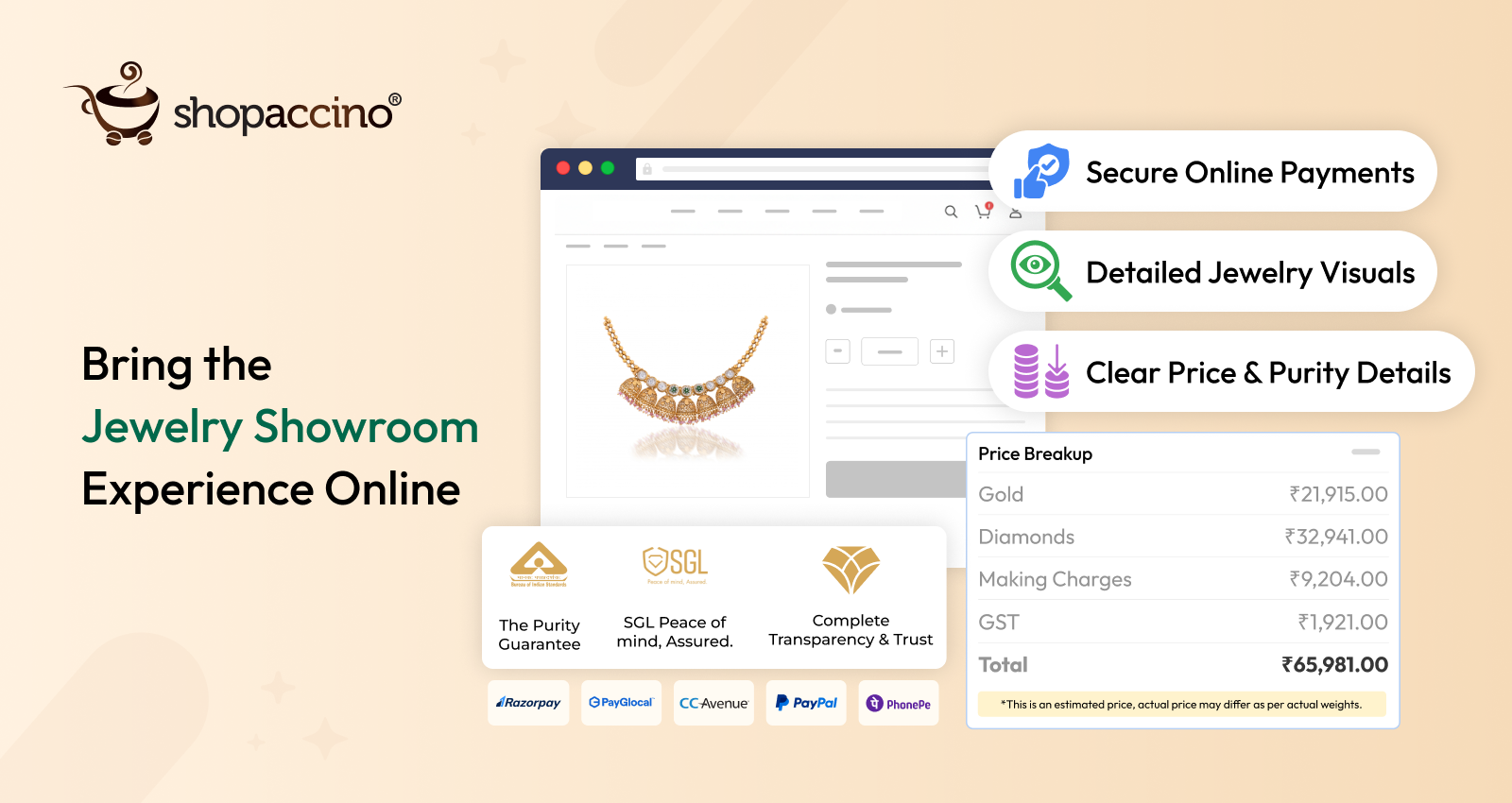
High-quality images, multiple angles, zoom views, and videos help customers understand craftsmanship better. Detailed product descriptions explain weight, purity, stone quality, and making charges.
Structured pricing logic ensures that customers know exactly how the final price is calculated. Certifications, policies, and security indicators are placed visibly, not hidden in footers.
Platforms like Shopaccino help jewelry brands organize these elements into a smooth flow, so customers feel guided rather than left alone with doubts. The technology supports the experience, but the trust comes from how thoughtfully it is presented.
How Jewelry Brands Mirror In-Store Confidence Online
Successful jewelry ecommerce stores focus on experience first, not features.
They recreate familiar showroom moments digitally.
When a customer clicks on a product, they do not just see an image. They see close-ups, weight details, purity marks, and clear pricing. Just like a salesperson would explain in-store, the website answers questions before they are asked.
Trust is reinforced at every step. Secure payment options are visible. Return and exchange policies are easy to find. Certification details are explained in simple language.
The buying journey feels calm, not rushed. Customers are encouraged to understand before they purchase.
How to Implement: Step-by-Step Guidance for Jewelry Brands
Bringing the showroom experience online does not require guesswork. It requires structure.
Step 1: Invest in Detailed Visual Presentation
Use high-resolution images, multiple angles, and zoom features. Show craftsmanship clearly instead of relying on one perfect shot.
Step 2: Explain Product Details Like a Salesperson
Write descriptions that explain weight, purity, stones, and making charges in simple language. Avoid assumptions.
Step 3: Make Pricing Transparent
Break down the final price into gold value, making charges, and taxes. Transparency builds confidence.
Step 4: Highlight Trust Signals Clearly
Display certifications, secure payment badges, and policies where customers can see them easily.
Step 5: Guide the Customer Journey
Structure pages so buyers move smoothly from understanding to decision, without confusion or pressure.
This approach replaces hesitation with clarity.
Benefits of Bringing the Showroom Experience Online
When jewelry brands focus on experience rather than just listings, the impact is measurable.
Key benefits include:
- Higher Customer Confidence During Purchase
- Reduced Pre-Sale Queries And Doubts
- Better Conversion Rates For High-Value Items
- Stronger Brand Trust Compared To Marketplaces
- Fewer Returns Due To Clear Expectations
Customers feel informed, not uncertain. Brands feel in control, not reactive.
Conclusion
Selling jewelry online is not about replicating shelves and counters. It is about replicating confidence.
When customers feel guided, informed, and reassured, they buy with the same comfort they feel inside a showroom. Ecommerce platforms make this possible by giving jewelry brands the tools to present products clearly, explain pricing honestly, and build trust consistently.
The brands that succeed online are not the ones with the loudest promotions. They are the ones that quietly recreate the familiar, trusted experience customers already love—only now, on a screen.
FAQs
Jewelry is a high-value, emotional purchase. Buyers hesitate when visuals are unclear, pricing is confusing, or trust signals are missing.
Yes. With detailed visuals, transparent pricing, and guided information, online stores can closely mirror the reassurance of a physical showroom.
Extremely important. Good visuals replace physical inspection and help customers judge quality and craftsmanship confidently.
Yes. When customers understand how prices are calculated, they feel safer completing high-value purchases.
Absolutely. Clear presentation and trust-building benefit small brands even more by helping them compete with larger marketplaces.