
Furniture Brand Success Story: Managing Large Inventory with Ease
Every furniture brand begins with a simple vision: create beautiful, durable pieces that transform living spaces. But once a brand starts scaling, creativity alone is not enough. Behind every great furniture business lies a complex system of inventory management—tracking hundreds of SKUs, managing bulky stock, handling custom orders, coordinating multiple warehouses, and ensuring timely delivery for products that cannot afford mistakes.
This is the story of how a growing furniture brand—once struggling to keep up with rising demand—regained full control over its large inventory and streamlined its operations using an integrated ecommerce system like Shopaccino. It is a real-world example of how digital transformation can turn a chaotic backend into a structured, efficient, and scalable engine.
Introduction: From Beautiful Designs to Growing Operational Chaos
The brand started with handcrafted wooden furniture—beds, tables, seating, bookshelves, and decor items. Their craftsmanship quickly gained popularity, first locally and then internationally. Orders grew faster than their systems could handle.
With the expansion came challenges:
- Larger product categories
- Made-to-order items
- Different finishes and specifications
- Bulky warehouse operations
- Higher delivery expectations
The brand realised that their spreadsheet-led system couldn’t keep up. Each new design created additional complexity. Each new warehouse created more confusion. And each new order risked delays, errors, or stock mismatch.
They needed a system that worked with the unique nature of the furniture industry—one where inventory size, production cycles, and delivery logistics are far more complicated than ordinary ecommerce.
This is where the turnaround began.
Challenging Area: What the Furniture Brand Couldn’t Handle Anymore
Furniture brands are different. They don’t deal in small boxes or fast-moving products. They handle:
- Bulky furniture
- Custom orders
- Multiple finish options
- Fragile items
- Multi-warehouse stock
- Heavy logistics
For this brand, the challenges piled up quickly.
Difficulty Managing Large, Complex Inventory
Beds, sofas, tables, and wardrobes require proper location mapping — aisle, row, and floor placement. With rapid scale, items got misplaced or double-counted.
Inaccurate Stock Levels
Products available online sometimes weren’t actually available in the warehouse. This caused delays, cancellations, and customer dissatisfaction.
Made-to-Order Complications
Custom furniture requires:
- Manufacturing timelines
- Finish selection
- Fabric swatches
- Lead time
- Status updates
They lacked a structured process for this.
Limited Visibility Across Multiple Warehouses
The brand expanded into three warehouse locations but had no centralised dashboard to track real-time stock.
Inefficient Dispatch Workflow
Pickup requests, fragile handling, insurance, and packaging took longer than they should.
Manual Entry Led to Costly Errors
Wrong SKU entries, duplicated records, and missing stock became a daily issue.
No Integration With Delivery Partners
Heavy furniture requires specialised couriers. Manual bookings slowed down operations.
The problems didn’t stop the brand’s growth—but they did slow it significantly.
Their Customer Challenging Area: What Buyers Expected but Didn’t Always Get
Furniture buyers have high expectations because they spend more, wait longer, and place larger trust in the brand.
Accurate Stock and Availability
When customers select a product, they expect it to be actually available—or clearly marked as made-to-order.
Delivery Timeline Transparency
Furniture isn’t like clothing; customers want proper delivery estimates, not guesswork.
High-Quality Product Information
Specifications, materials, dimensions, finishes, and placement guidelines must be clear.
Real-Time Order Tracking
Customers want to know exactly where their bulky shipment is.
Hassle-Free Returns (Where Applicable)
Even though furniture returns are rare, customers expect proper policies.
A Smooth Mobile and Website Experience
They want easy browsing, quick filtering, and simple checkout.
To meet these expectations, the brand needed a fully automated and integrated backend.
Solution: How an Integrated Ecommerce Platform Helped Them Regain Control
When the brand shifted to a structured digital system through Shopaccino, everything changed—inventory, operations, warehouse workflows, and customer experience.
Here’s how the platform transformed their business:
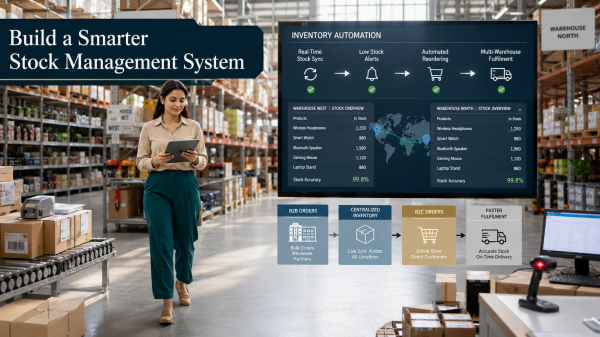
Centralised Inventory Management for Bulky Stock
Shopaccino allowed the team to maintain:
- Exact stock levels
- Multiple warehouse visibility
- Image-based SKU tagging
- Location mapping for large items
This reduced confusion and improved picking speed.
Real-Time Sync Across Warehouses
Stock was updated instantly across all warehouses.
No more:
- Duplicate orders
- Overselling
- Manual corrections
This helped them manage thousands of units more confidently.
Flexible Settings for Made-to-Order Furniture
The platform supported:
- Lead time display
- Estimated shipping days
- Finish options
- Customisation fields
Customers now saw clear timelines, reducing inquiries and uncertainty.
Pincode-Based Delivery Availability
Before checkout, customers could check whether delivery is available in their area.
This eliminated cancellations due to non-serviceable locations.
Smart Product Categorisation & Filters
With Shopaccino’s tools, shoppers could filter furniture easily by:
- Material
- Finish
- Size
- Room type
- Availability
- Price
A smoother browsing experience increased conversions.
API Integration With Shipping Partners
The brand connected their logistics providers directly through API.
This simplified:
- Waybill generation
- Pickup scheduling
- Fragile handling instructions
- Delivery tracking
Automated Email & WhatsApp Notifications
Shopaccino’s automation kept customers informed:
- Order confirmation
- Dispatch details
- Tracking updates
- Delivery progress
This improved trust and reduced support calls.
Multi-Warehouse Optimisation
Shopaccino helped the brand divide inventory smartly:
- Fast movers in central warehouse
- Heavy items near metro hubs
- Export-ready units in specialised facility
Faster delivery and lower freight cost followed.
How the Furniture Brand Implemented the Transformation (Step-by-Step)
Here is the exact process they followed—simple, structured, and repeatable.
Step 1: Audit the Entire Inventory
They counted physical stock, matched SKUs, and cleaned data before uploading it to the system.
Step 2: Add Multi-Warehouse Configurations
Each warehouse was added with:
- Roles
- Permissions
- Stock type
- Dispatch responsibilities
Step 3: Enable Lead Time & Delivery Settings
They added:
- Estimated shipping days
- Made-to-order timelines
- Delivery restrictions
This improved clarity for customers.
Step 4: Integrate Courier Partners
Using API, they connected their furniture logistics partners.
Step 5: Set Up Product Filters & Category Flow
Clear categorisation helped customers find relevant furniture quickly.
Step 6: Activate Inventory Sync & Automation
Shopaccino’s automation eliminated manual processes like:
- Out-of-stock alerts
- Low inventory notifications
- Reserved inventory
Step 7: Use Analytics to Optimise Inventory Flow
They identified:
- Best sellers
- Slow movers
- Warehouse performance
- Stock ageing
This helped reduce storage cost significantly.
Benefits: What the Furniture Brand Achieved After Digitizing
After completing the setup, the transformation was visible across the entire organisation.
Accurate Inventory Tracking
Stock became 99% accurate across all warehouses.
Faster Order Processing
Picking and packing became faster due to better SKU mapping.
Better Customer Satisfaction
Clear timelines, transparent tracking, and reliable stock reduced complaints.
Reduced Delivery Errors
API-integrated shipments reduced manual waybill mistakes.
Lower Logistics Cost
Warehouse optimisation helped ship from the closest location.
Smooth Handling of Large Catalogue
From sofas to wardrobes, every SKU was properly managed even with high volumes.
Stronger Scalability
The brand now handles:
- Thousands of SKUs
- Multiple warehouses
- Domestic + export orders
- Seasonal spikes
without operational breakdown.
Conclusion
Managing a large furniture inventory is complicated—but with the right digital ecosystem, it becomes manageable, predictable, and scalable. This furniture brand’s journey proves that growth doesn’t require more manpower or more warehouses—it requires smarter systems.
With an integrated platform like Shopaccino, they gained clarity, control, and consistency across their entire operation. Their success is a reminder that when the backend is strong, the brand’s creativity and market reach can grow freely.
FAQs
It prevents overselling, reduces mismatches, and ensures accurate availability for customers.
Yes, using lead times and customisation settings, timelines become clear for buyers.
Orders are shipped from the nearest warehouse, reducing time and shipping cost.
Yes, it avoids cancellations by showing availability before checkout.
Automation reduces manual errors and speeds up processes significantly.
Filters help buyers find the exact style, finish, or size quickly.
Absolutely. Even brands with 20–50 SKUs benefit from organised inventory.