
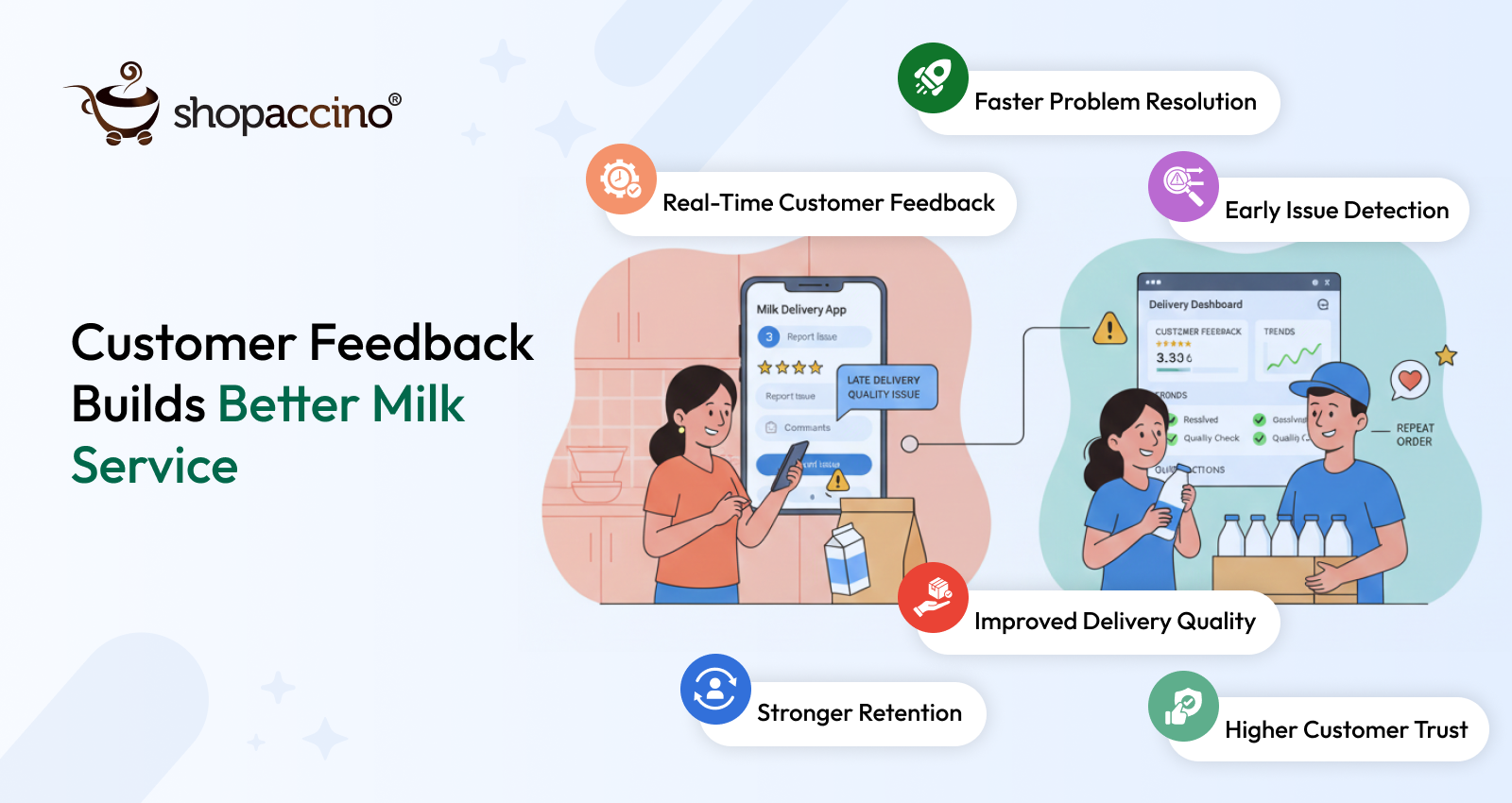
How Customer Feedback Improves Milk Delivery and Dairy Services
Milk delivery is not just another ecommerce category. It is a daily habit, deeply connected to trust, routine, and reliability. Customers do not “shop” for milk the way they shop for clothes or gadgets. They depend on it. One missed delivery, one spoiled packet, or one unresolved complaint is enough to push a customer to another dairy service—often permanently.
Yet many milk delivery businesses lose customers not because their product is bad, but because they don’t hear problems early enough. Complaints stay unspoken. Small frustrations build quietly. By the time a customer stops ordering, the business has no idea why.
In this environment, customer feedback becomes more than a support feature—it becomes a business survival tool. When feedback is captured at the right time and acted upon quickly, it helps dairy businesses fix issues before churn happens, improve daily operations, and build long-term customer loyalty.
This blog explains why customer feedback is critical for milk delivery and dairy services, the challenges businesses face without it, what customers expect today, and how an integrated digital system helps turn feedback into better service quality and stronger retention.
Challenging Area: Why Milk Delivery Businesses Miss Service Issues
Milk delivery operations are complex, even if they look simple from the outside. Routes change daily, quantities vary by customer, and delivery happens early in the morning when teams are stretched thin. Without a structured feedback system, problems slip through unnoticed.
Lack of Visibility Into Daily Service Problems
Most milk businesses rely on phone calls or WhatsApp messages for complaints. Many customers do not complain at all—they simply reduce orders or cancel subscriptions. The business never sees early warning signs like delayed deliveries, quantity mismatches, or packaging issues.
Feedback Reaches Too Late
When complaints come days later, it becomes impossible to trace the exact cause. Was it a route delay? A rider issue? A stock problem? Late feedback removes the chance for quick correction.
No Central Place to Track Complaints
Issues are scattered across calls, chats, and verbal conversations. There is no single view of recurring problems. Patterns remain invisible, so the same mistakes repeat across routes and customers.
Operational Teams Work Blind
Delivery staff, customer support, and management operate in silos. Without shared feedback data, teams cannot coordinate improvements effectively.
Their Customer Challenging Area: What Milk Customers Expect Today
Milk customers are not demanding luxury. They want consistency, clarity, and control. Their expectations are simple but strict.
They Expect Their Voice to Be Heard
Customers want an easy way to report issues without making calls or chasing support teams. A simple tap or short response feels natural in today’s digital world.
They Want Quick Resolution
If milk is missed today, the customer wants acknowledgement today—not after multiple follow-ups. Silence feels like neglect.
They Expect Service Improvement
When customers give feedback, they expect visible change. Repeated problems without improvement break trust faster than a single mistake.
They Want Transparency
Customers feel more confident when they know their feedback is recorded, tracked, and acted upon—not lost in a chat thread.
Solution: How an Integrated Ecommerce Platform Turns Feedback Into Better Service
A milk delivery app development solution transforms feedback from a reactive task into a continuous improvement loop. Platforms like Shopaccino allow dairy businesses to collect, analyze, and act on feedback in real time—without adding operational burden.
In-App Feedback Collection
Customers can submit feedback directly from their app or website after delivery. No calls, no waiting. Feedback becomes immediate and contextual.
Structured Issue Categories
Instead of vague complaints, feedback is organized into clear categories such as late delivery, wrong quantity, quality issue, or rider behavior. This clarity speeds up resolution.
Centralized Feedback Dashboard
All feedback flows into one system where patterns become visible. Managers can quickly see which routes, products, or time slots need attention.
Faster Communication Loop
Acknowledgements, updates, and resolutions are shared digitally, reassuring customers that their issue is being handled.
How to Implement Customer Feedback in Milk Delivery (Step-by-Step)
Step 1: Enable Feedback at the Right Moment
Collect feedback immediately after delivery, when the experience is fresh. Timing matters more than long surveys.
Step 2: Keep Feedback Simple
Use short options like ratings or quick issue selection. Customers are more likely to respond when it takes seconds, not minutes.
Step 3: Centralize All Responses
Ensure feedback from all channels—app, website, or support—is stored in one system for visibility and analysis.
Step 4: Assign Responsibility
Link feedback to routes, delivery staff, or operations teams so accountability is clear and corrective action is faster.
Step 5: Close the Loop
Update customers once the issue is addressed. Closure builds confidence and shows respect for their time and input.
Benefits: Why Feedback-Driven Milk Businesses Perform Better
Reduced Customer Churn
Early feedback allows businesses to fix issues before customers leave silently.
Better Delivery Discipline
When teams know issues are tracked, service quality naturally improves.
Stronger Customer Trust
Customers feel valued when their feedback leads to real improvements.
Data-Driven Decisions
Recurring issues highlight operational gaps that need systemic fixes.
Higher Lifetime Value
Satisfied customers stay longer, subscribe more consistently, and recommend the service.
Conclusion
Milk delivery is built on trust, not marketing. Discounts and promotions may bring users in, but listening to customers keeps them. Feedback is the simplest, most powerful way to understand what is really happening on the ground—before churn, complaints, and negative word-of-mouth take over.
With an integrated system like Shopaccino, milk delivery businesses can turn everyday feedback into actionable insight, fix service gaps quickly, and create a smoother experience for both customers and operations teams.
In a daily-need business, the brands that listen earliest are the ones that grow strongest.
FAQs
Customer feedback helps identify delivery delays, quality issues, and service gaps early. Acting on feedback reduces churn and improves trust in a daily-need business like milk delivery.
Ideally after each delivery or at regular intervals. Frequent, lightweight feedback ensures problems are detected before customers stop ordering.
Delivery timing, quantity accuracy, product quality, and rider behavior are the most critical factors influencing customer satisfaction.
Yes. Most customers leave silently. Early feedback gives businesses a chance to correct issues before customers cancel subscriptions.
Digital feedback is faster, structured, and easier to analyze. It reduces dependency on calls and provides better visibility across operations.
Feedback highlights recurring issues by route, product, or time slot, allowing teams to fix root causes instead of reacting randomly.