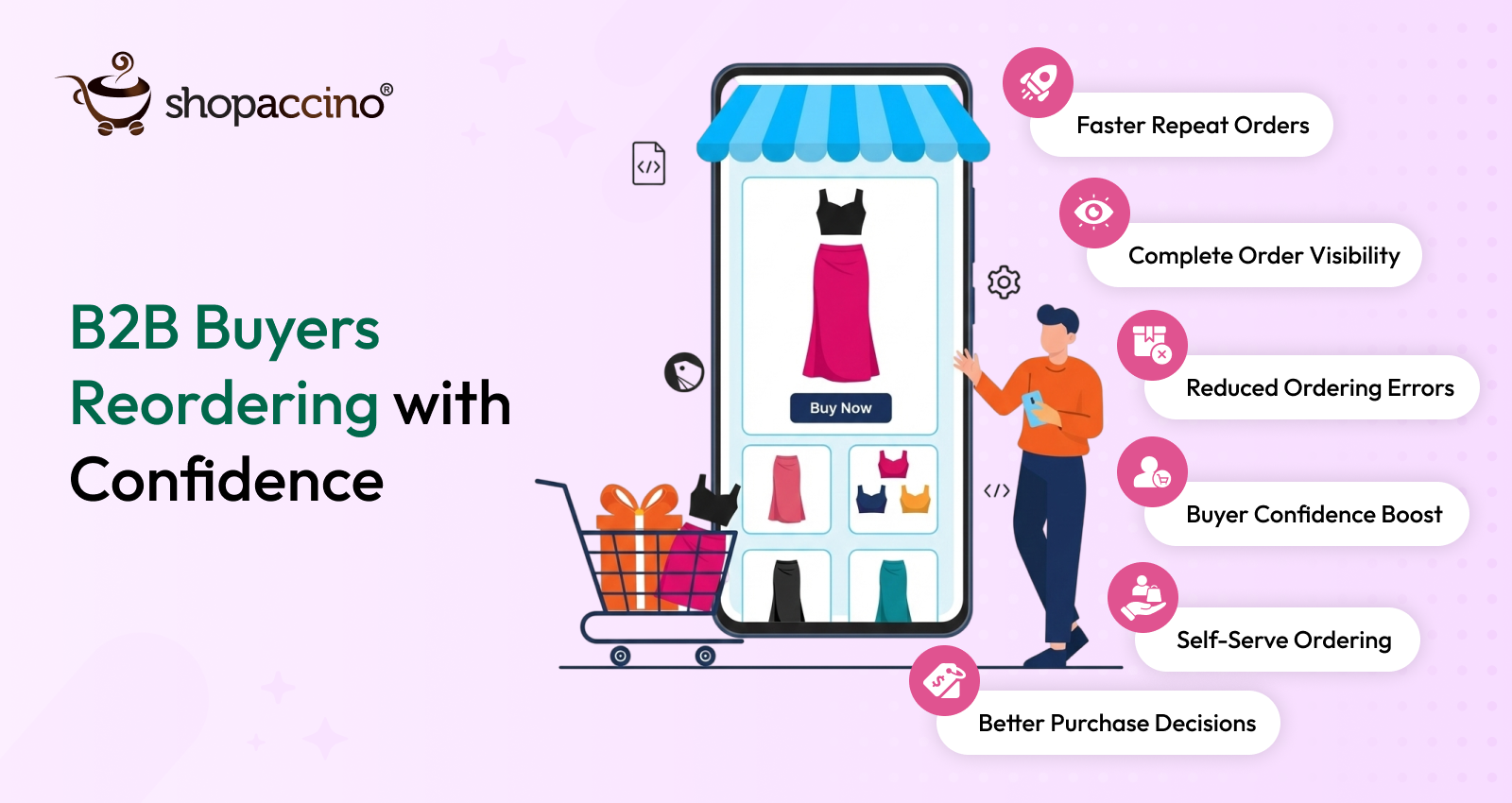
How Digital Order History Helps B2B Buyers Place Orders Faster & More Confidently
In B2B commerce, buying is rarely impulsive. Orders are planned, repeated, reviewed, and often placed under pressure. A distributor placing a bulk order, a retailer restocking shelves, or a wholesaler preparing for peak demand does not have the luxury of trial and error. Every order must be correct, timely, and aligned with past buying patterns.
Yet, for years, B2B buying has depended heavily on memory, spreadsheets, emails, WhatsApp chats, and phone calls. Buyers dig through old messages to find what they ordered last time. They call sales representatives to confirm quantities. They forward screenshots of previous invoices just to avoid mistakes. This slows down ordering and creates hesitation.
In 2026, this approach no longer works. B2B buyers expect speed, clarity, and confidence. One of the most overlooked yet powerful tools enabling this shift is digital order history. When buyers can see what they ordered earlier, at what price, in what quantity, and how it was delivered, decision-making becomes easier and faster.
This blog explains why digital order history matters so deeply in B2B commerce, the challenges buyers and sellers face without it, and how integrated ecommerce platforms transform order history into a confidence-building engine for repeat purchases.
Challenging Area: Business Challenges Without Digital Order History
For manufacturers, wholesalers, and distributors, the absence of a structured order history creates friction that grows quietly over time.
Orders Depend on Human Memory
Sales teams often become walking order books. Buyers ask, “What did I order last month?” or “What was the quantity during the festive season?” Relying on memory increases errors and slows response times.
Manual Record Searching Wastes Time
Order details are scattered across:
- Emails
- Excel files
- Messaging apps
- Paper invoices
Finding one past order can take minutes or even hours.
High Risk of Repetition Errors
Without reference to past orders, buyers often:
- Miss SKUs
- Order incorrect quantities
- Forget preferred variants
Each mistake leads to returns, delays, or disputes.
Sales Teams Are Overloaded
Instead of selling, sales teams spend time pulling old data, confirming past orders, and resolving confusion.
Limited Data for Forecasting
When order history is not structured, businesses cannot easily identify buying patterns, seasonal spikes, or reorder cycles.
Their Customer Challenging Area: What B2B Buyers Expect Today
B2B buyers operate under pressure. Their expectations are shaped by efficiency, not convenience alone.
Buyers Want to Reorder Without Guesswork
They want to see exactly what worked last time and repeat it confidently.
Buyers Need Proof Before Committing
Past invoices, delivery timelines, and quantities reassure buyers that they are making the right decision.
Buyers Want Independence
Waiting for sales confirmation slows down their operations. They prefer self-serve systems.
Buyers Expect Accuracy
One wrong line item can disrupt their entire supply chain.
Buyers Want Professional Transparency
Clear records build trust and reduce friction in long-term relationships.
Solution: How an Integrated Ecommerce Platform Enables Digital Order History
An integrated ecommerce platform converts scattered transactions into a clear, usable timeline of buyer activity.
Platforms like Shopaccino allow B2B buyers to access their complete order history securely, transforming past data into a decision-making tool.
Complete Order Visibility
Buyers can view:
- Past orders
- Product details
- Quantities
- Prices
- Order status
This eliminates uncertainty.
One-Click Reordering
Repeat orders become fast and error-free. Buyers simply reorder previous baskets.
Invoice and Document Access
Invoices, dispatch notes, and payment records remain available at all times.
Price Consistency
Buyers gain confidence knowing they are ordering at the same agreed terms.
Self-Serve Confidence
Buyers feel in control, not dependent.
How to Implement Digital Order History Step by Step
Step 1: Centralise All Orders Digitally
Ensure every order—online or offline—flows into one system.
Step 2: Enable Buyer Login Accounts
Provide secure access so buyers can view their history anytime.
Step 3: Structure Order Data Clearly
Include SKUs, variants, quantities, pricing, and delivery status.
Step 4: Enable Reorder Functionality
Allow buyers to repeat past orders instantly.
Step 5: Train Buyers and Teams
Show how digital history saves time and reduces errors.
Step 6: Use History for Insights
Analyse repeat patterns to improve service and planning.
Customer Segmentation
Digital order history benefits all major B2B segments:
- Manufacturers managing repeat dealer orders
- Wholesalers handling bulk replenishment
- Distributors serving multiple retail outlets
- Exporters tracking long-cycle orders
- Established D2C Brands managing B2B supply chains
Benefits of Digital Order History for B2B Commerce
Faster Ordering Cycles
Reordering becomes a matter of minutes, not hours.
Higher Buyer Confidence
Past success reassures buyers during every purchase.
Fewer Errors
Structured data reduces human mistakes.
Reduced Sales Dependency
Buyers place orders independently.
Better Relationship Transparency
Clear records prevent disputes.
Smarter Demand Planning
Historical data improves forecasting.
Conclusion
In B2B commerce, confidence drives speed. Buyers who are confident place orders faster, reorder more frequently, and build stronger partnerships. Digital order history is no longer a convenience feature—it is a foundation of modern B2B buying.
Integrated ecommerce platforms turn order history into a powerful trust-building tool. With systems like Shopaccino, buyers gain clarity, independence, and assurance, while sellers reduce workload and errors.
In 2026, the businesses that win will not just sell better products—but provide better buying confidence.
FAQs
It helps buyers reorder accurately, verify past purchases, and make decisions faster with confidence.
Yes, buyers rely on previous orders instead of memory.
Yes, most platforms offer one-click reordering.
Absolutely, especially for repeat bulk purchases.
Yes, it improves forecasting and service quality.
Yes, access is controlled through buyer logins.