How Distributors Can Streamline Orders Using Online Platforms
Distribution businesses operate in one of the most demanding segments of commerce—high order volumes, multiple pricing tiers, frequent bulk purchases, coordinated deliveries, and constant communication with retailers or resellers. The traditional methods of handling distributor operations—manual calls, WhatsApp messages, handwritten purchase orders, and unstructured spreadsheets—no longer match the speed or accuracy of today's market demands.
As the supply chain becomes increasingly digital, distributors who continue using old systems face delays, stock mismatches, inaccurate invoicing, and lost sales opportunities. Meanwhile, distributors who adopt modern online platforms are transforming their workflows, gaining visibility, reducing errors, and offering retailers the convenience of placing orders anytime.
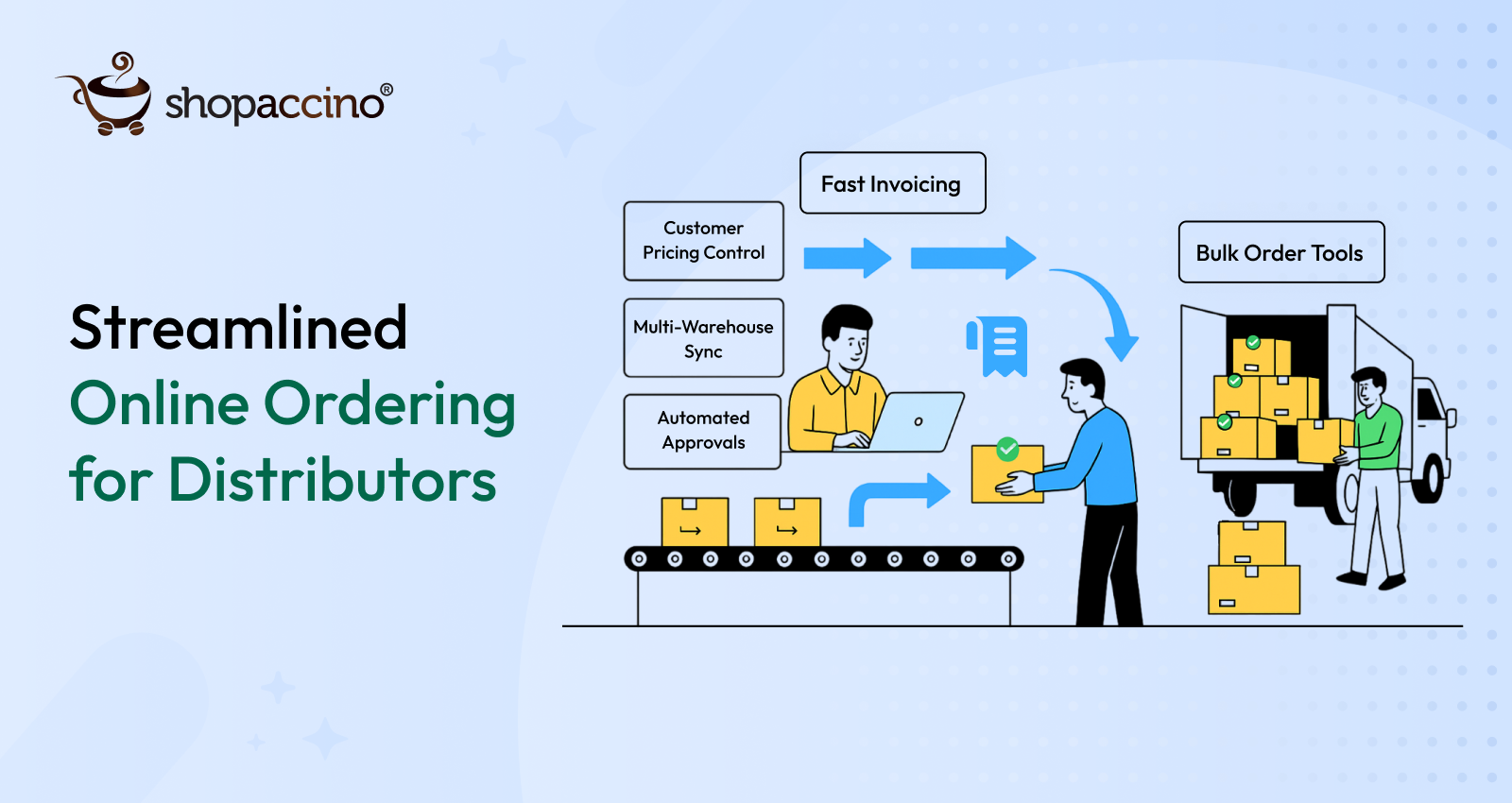
Online platforms like Shopaccino are redefining distribution workflows with features such as customer-specific pricing, multi-warehouse management, bulk ordering tools, staff access control, analytics, and automated approval systems. When implemented strategically, these tools streamline the entire order cycle—from inquiry to fulfilment—making distributors more efficient, scalable, and profitable.
Challenging Area: Why Distributors Struggle with Order Management
Distributors juggle a complex operational ecosystem. Most of their challenges arise from fragmented communication, manual paperwork, and inconsistent ordering patterns from retailers.
The key operational pain points include:
- Unstructured Ordering Processes
Orders typically come via calls, messages, WhatsApp images, or email threads. There is no unified order flow, causing miscommunication and duplicate entries. - Handling Multiple Price Lists
Retailers, wholesalers, franchise stores, and corporate clients often have different pricing. Managing this with spreadsheets increases risk of mistakes. - Limited Visibility of Stock
When inventory is updated manually or across multiple branches, distributors struggle to provide accurate stock status to buyers. - Manual Approval Workflows
Many distributors require approval from supervisors or finance teams before confirming orders. Without automation, approvals slow down fulfilment. - Inaccurate or Delayed Invoicing
Paper-based billing often leads to delays or miscalculations, affecting cash flow and trust. - Lack of Real-Time Insights
Without proper dashboards, distributors cannot monitor sales patterns, top buyers, or fast-moving items efficiently.
These gaps collectively contribute to inefficiencies that slow down operations and reduce overall profitability.
Their Customer Challenging Area: What Retail Buyers Expect Today
Retailers, dealers, and business buyers now expect the same convenience and clarity in B2B purchases that they experience in B2C shopping.
Modern buyers expect:
Easy Ordering
Retailers want a simple online catalog with real-time availability—no more calling or messaging repeatedly for stock updates.
Correct & Consistent Pricing
They expect their unique pricing tier to reflect automatically at checkout without negotiation each time.
Order Tracking Transparency
Retailers want to know when their bulk orders will arrive, especially if they depend on inventory rotation.
Clear Communication
Delivery timelines, shipping charges, and minimum order quantities should be defined upfront.
Simple Repeat Ordering
Retailers want to reorder fast-moving SKUs quickly without navigating hundreds of products each time.
Online platforms create a structured environment where distributors can meet these expectations consistently.
Solution: How Online Platforms Streamline Distributor Workflows
Modern B2B ecommerce platforms bring structure and scalability to distribution operations. They allow distributors to digitize their product catalog, automate retailer-specific pricing, centralize orders, and coordinate fulfillment across branches.
Here’s how online platforms—such as those powered by Shopaccino—transform the distributor ecosystem:
Centralized Ordering Dashboard
Instead of handling orders via multiple channels, all retailer orders arrive in one unified dashboard. This allows staff to review, approve, and fulfil orders without confusion.
Customer-Specific Pricing
Distributors can assign different price lists for different buyer groups—retailers, wholesalers, franchisees, or corporate customers.
Shopaccino enables this through customer-specific pricing and B2B catalog controls.
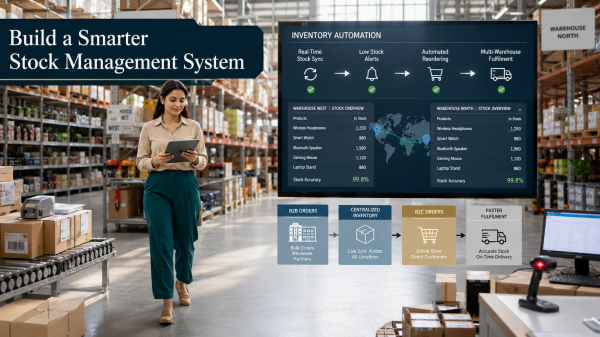
Multi-Warehouse Routing
Distributors often operate from multiple warehouses. Online platforms allow automatic order assignment to the nearest warehouse, ensuring faster delivery.
Shopaccino supports multi-warehouse routing and region-based stock visibility.
Bulk Order Tools
Retailers can select quantities quickly, reorder previously purchased items, or upload bulk orders—all without repeated manual entry.
Automated Approval Workflows
Whether pricing, credit limits, or order value needs clearance, online platforms automate approval notifications and tracking.
Staff Access Management
Distributors can assign role-based rights so salespeople, managers, accountants, and warehouse supervisors each manage their part of the workflow.
Shopaccino supports staff role permissions for secure operations.
Purchase, Invoice & Delivery Integration
From generating invoices to printing packing slips and creating waybills, online platforms reduce manual paperwork significantly.
Real-Time Reporting & Analytics
Distributors get a clear view of:
- Fast-moving SKUs
- Top retailers
- Monthly order volume
- Warehouse-level stock
These insights help improve purchasing decisions, optimize logistics, and increase profitability.
How to Implement an Online Ordering System as a Distributor
Step 1: Digitize Your Product Catalog
Upload product images, SKUs, variants, minimum order quantities, and pricing tiers. Ensure accuracy to avoid retailer confusion.
Step 2: Segment Customer Groups
Group customers into pricing tiers or account types.
Distributors can assign price lists based on retailer category, location, or order volume.
Step 3: Set Up Multi-Warehouse Inventory
Define stock levels across warehouses.
Platforms like Shopaccino allow automatic routing based on pincode or region.
Step 4: Configure Order Approval workflows
Set automated workflows for Orde approvals
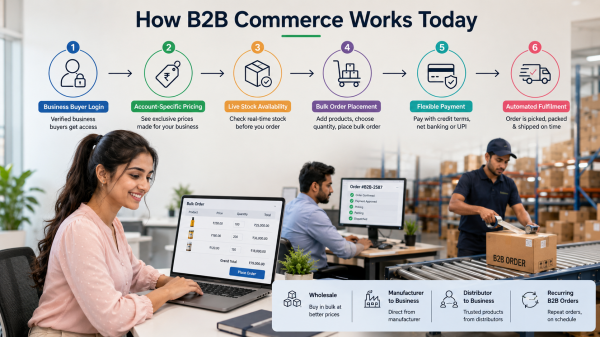
Step 5: Provide Retailers Access
Retail buyers can log in, browse B2B catalogs, check availability, and place orders independently.
Step 6: Train Internal Teams
Ensure staff understands their dashboards—sales, warehouse, accounts, and management teams must collaborate smoothly.
Step 7: Automate Documentation
Generate invoices, packing slips, and delivery waybills digitally to reduce paperwork delays.
Step 8: Monitor Analytics & Optimize
Use reporting to adjust inventory planning, pricing strategies, and retailer offers.
Benefits of Using Online Platforms for Distributor Operations
Faster Order Processing
Digitized ordering eliminates back-and-forth communication, reducing order turnaround time.
Fewer Errors & Disputes
Accurate pricing, live stock status, and automated invoices reduce manual mistakes.
Better Relationships with Retailers
Retailers appreciate transparent pricing, predictable delivery, and self-service ordering.
Higher Productivity for Staff
Teams work efficiently with dashboards, approvals, and warehouse automation.
Improved Cash Flow
Accurate invoicing, automated reminders, and faster fulfilment enhance payment cycles.
Scalability Without Chaos
Distributors can add more retailers, warehouses, and product lines without increasing operational complexity.
Conclusion
Distributors operate at the heart of the supply chain, but without structured digital systems, even the most capable teams struggle to manage rising demand. Moving to an online ordering platform streamlines the entire workflow—making orders transparent, accurate, and fast. With tools such as customer-specific pricing, multi-warehouse management, bulk ordering, approval workflows, and real-time dashboards, platforms like Shopaccino empower distributors to modernize operations without disrupting their existing business model.
For distributors aiming to scale, serve retailers better, and improve operational efficiency, adopting an online platform is no longer optional—it’s the next logical step for sustainable growth.
FAQs
Because online systems reduce manual errors, improve speed, and offer centralized order visibility.
Yes. Platforms like Shopaccino offer customer-specific pricing and B2B catalog controls.
It ensures orders are fulfilled from the nearest warehouse, reducing delivery time and cost.
Absolutely. Retailers can browse catalogs, check stock, and reorder frequently bought items with minimal effort.
Digital systems generate invoices, packing slips, and enable approval workflows to speed up the fulfilment process.
Yes. Retailers can place large quantity orders or reorder items quickly using bulk tools.