
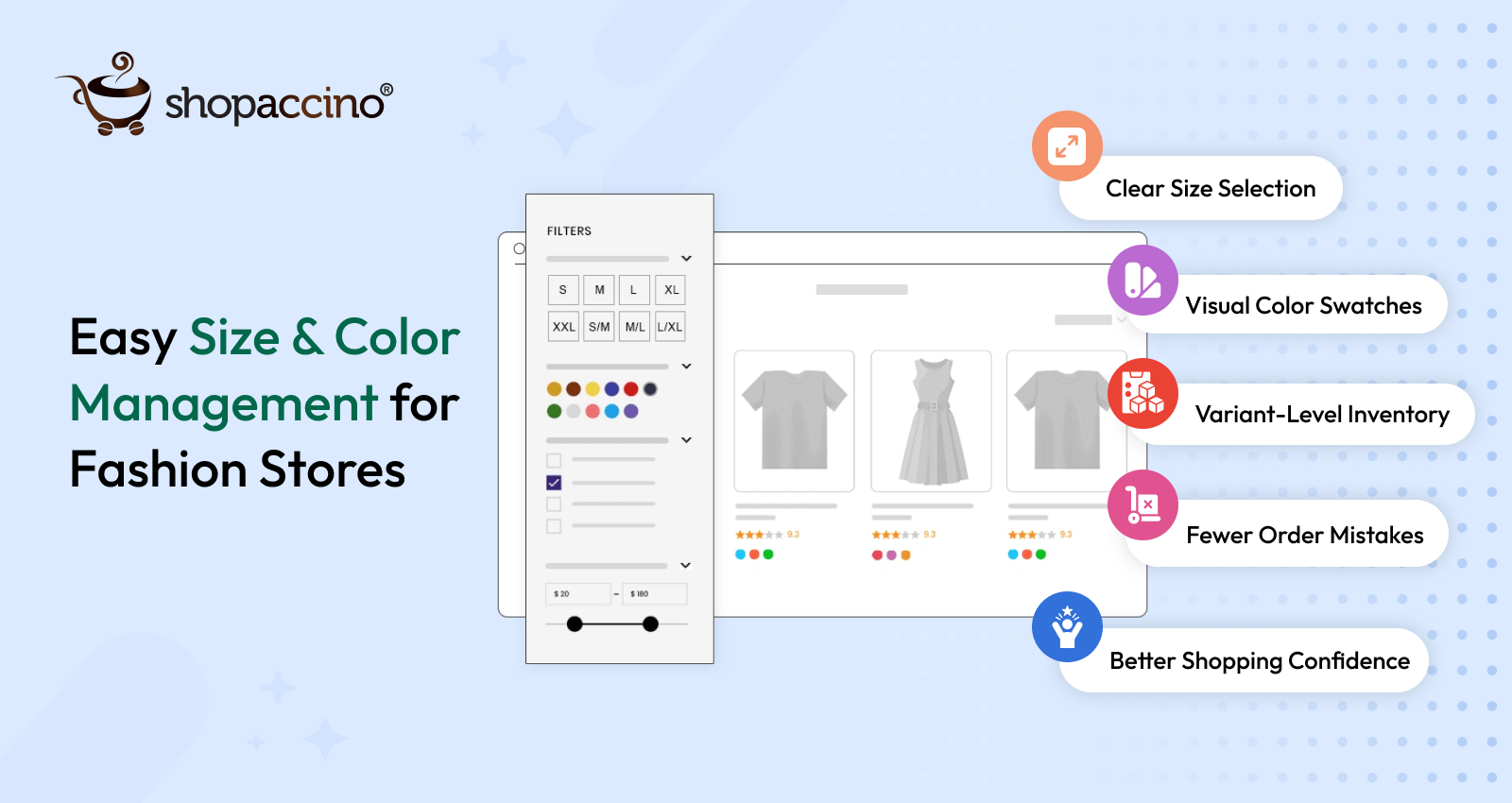
How Fashion-Friendly Ecommerce Software Makes Size and Color Management Easy
Fashion ecommerce looks simple on the surface—beautiful images, trendy collections, and seasonal launches. But behind every product page lies one of the most complex challenges fashion brands face: managing sizes and colors accurately.
A single kurti may come in five sizes and six colors. A shirt might have slim fit and regular fit variants. Shoes require size precision. What looks like one product to a customer quickly turns into dozens of combinations for a store team to manage. When this complexity is not handled properly, it creates confusion everywhere—from customers selecting the wrong size to backend teams shipping incorrect variants.
This is why fashion-friendly ecommerce software matters. Unlike generic ecommerce tools, it is built to handle size and color variations clearly, visually, and logically. When done right, it simplifies shopping for customers and operations for store owners.
This blog explains why size and color management is a real challenge in fashion ecommerce, what customers expect while shopping, and how the right ecommerce software makes variant handling smooth, accurate, and scalable.
Challenging Area: Business Challenges in Managing Sizes and Colors
Fashion businesses don’t fail because of poor designs. They struggle because managing product variants manually or with basic tools creates hidden operational problems.
Too Many Variants, Too Little Structure
A single product can generate dozens of SKUs. Without structured variant management, teams struggle to track availability, pricing, and stock accurately.
Inventory Confusion at Variant Level
When size and color stock is not tracked individually, stores oversell some variants and underutilize others. This leads to cancellations, refunds, and unhappy customers.
Manual Errors During Order Processing
If staff must manually check size and color details from notes or spreadsheets, mistakes are inevitable—especially during high order volumes.
Poor Product Presentation
Generic product pages often list variants in confusing dropdowns or text-heavy formats, making it hard for customers to understand options.
Scaling Makes It Worse
As collections grow, manual size and color handling breaks down completely. What worked for 20 products fails at 200.
These challenges don’t just slow operations—they directly impact trust and revenue.
Their Customer Challenging Area: What Fashion Shoppers Expect
Fashion customers are visual buyers. They want clarity, confidence, and ease when choosing variants.
They Want to See Options Clearly
Customers expect size and color choices to be visible, not hidden in confusing dropdowns.
They Expect Accurate Availability
If a size or color is unavailable, they want to know immediately—not after placing the order.
They Want Confidence Before Buying
Clear size charts, variant images, and selection feedback reduce hesitation and returns.
They Expect Consistency Across Pages
Whether browsing, adding to cart, or checking out, variant information should remain consistent and clear.
They Want Fewer Mistakes
Receiving the wrong size or color breaks trust instantly and reduces repeat purchases.
When customers feel confident choosing variants, they buy faster and return more often.
Solution: How Fashion-Friendly Ecommerce Software Solves Variant Complexity
Fashion-friendly ecommerce software is designed specifically to handle product variations as a core feature—not an afterthought.
Structured Variant Creation
Sizes, colors, fits, and materials are defined systematically under one product. Each combination becomes a clearly tracked variant.
Visual Color Selection
Colors are shown as swatches or images, allowing customers to see exactly what they are choosing.
Size-Specific Inventory Tracking
Each size and color combination has its own stock level, preventing overselling and last-minute cancellations.
Variant-Level Pricing and Offers
Different sizes or colors can have different pricing if needed, without creating separate product listings.
Clean Product Pages
Customers see one product page with clear options instead of multiple confusing listings.
Platforms like Shopaccino support this structured approach, allowing fashion brands to manage complexity without creating chaos.
How to Implement Size and Color Management Effectively (Step-by-Step)
Step 1: Define Clear Variant Attributes
Start by identifying all variant attributes—size, color, fit, fabric. Keep naming consistent across the catalog.
Step 2: Create One Product, Multiple Variants
Avoid duplicating products. Use one master product with structured variants underneath.
Step 3: Upload Visual References
Add images for each color and ensure size charts are visible and readable on mobile and desktop.
Step 4: Track Inventory at Variant Level
Ensure stock is updated individually for each size and color combination.
Step 5: Simplify Frontend Selection
Use buttons, swatches, or grids instead of text-heavy dropdowns for variant selection.
Step 6: Test the Buying Journey
Place test orders for different variants to ensure clarity remains consistent from product page to checkout.
Benefits: Why Clear Size and Color Management Matters
Reduced Order Errors
Clear variant selection reduces wrong-size or wrong-color deliveries.
Lower Return Rates
When customers choose confidently, return requests drop significantly.
Faster Shopping Decisions
Simple selection flows help customers buy faster without second-guessing.
Improved Customer Trust
Consistency and clarity build confidence in the brand.
Easier Backend Operations
Store teams spend less time correcting mistakes and more time growing the business.
Scalable Fashion Catalog
New collections can be added without breaking existing systems.
Conclusion
Size and color management is not a small feature in fashion ecommerce—it is the foundation of a smooth shopping experience. When variants are handled poorly, customers get confused, teams make mistakes, and trust is lost.
Fashion-friendly ecommerce software removes this friction. It brings structure to complexity and clarity to choice. Customers see what they want, choose confidently, and receive exactly what they ordered. Store teams gain control, accuracy, and peace of mind.
With the right tools, fashion brands can focus on creativity and growth—while the system quietly handles sizes and colors in the background. Platforms like Shopaccino make this balance possible by combining flexibility with structure.
FAQs
Because each size and color combination is a unique product. Poor management leads to wrong deliveries, refunds, and loss of customer trust.
It organizes variants under one product with clear visual selection, making options easy to understand for customers.
Yes. Fashion-friendly ecommerce software tracks stock at variant level, preventing overselling.
Absolutely. When customers choose confidently, return rates drop significantly.
Yes. It simplifies operations early and supports scaling without chaos.
Shopaccino supports structured variants, visual swatches, and variant-level inventory for fashion businesses.