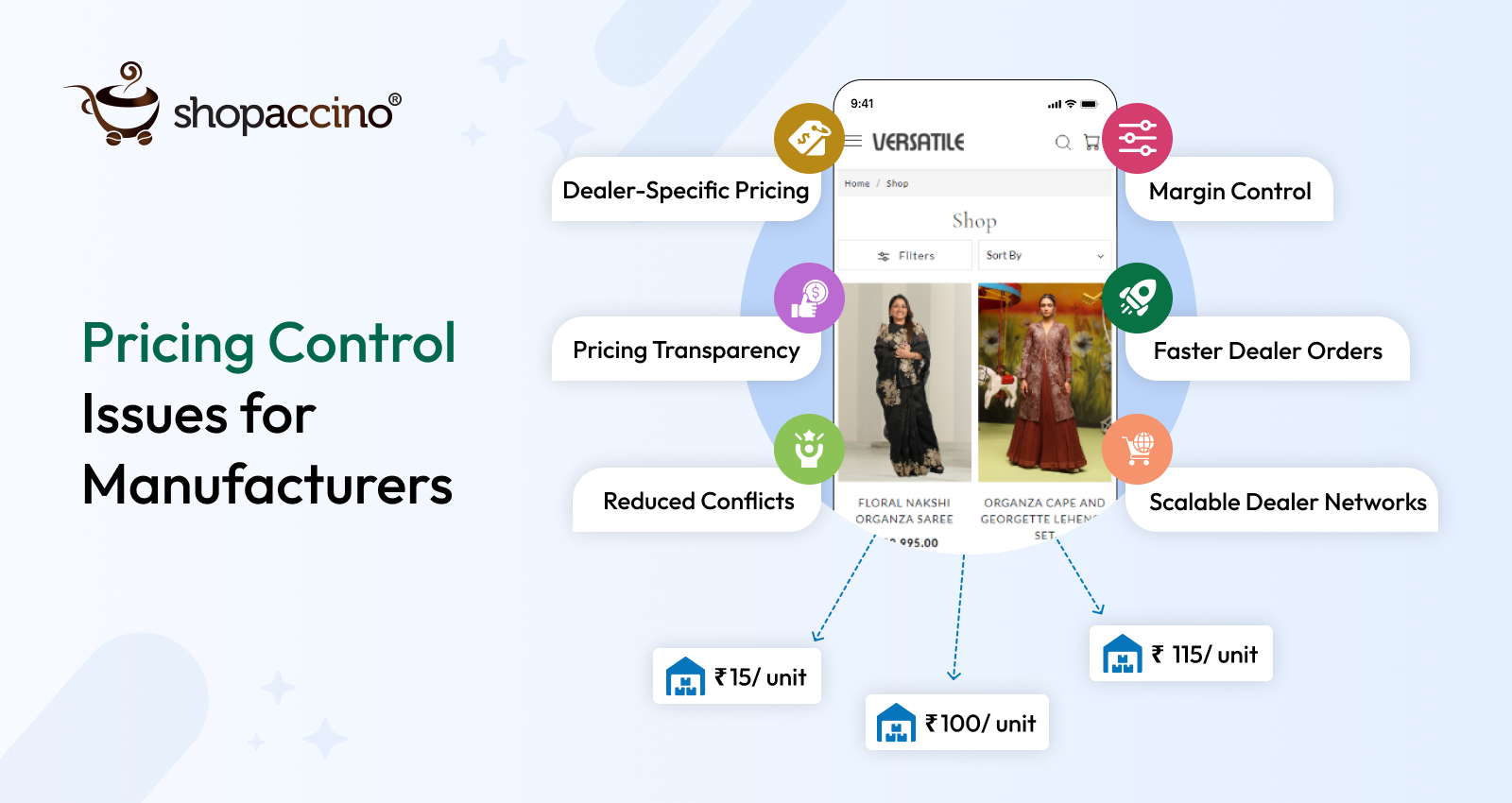
How Manufacturers Can Maintain Different Pricing Across Dealer Networks
For manufacturers, pricing is not just about covering costs or earning margins. Pricing is deeply connected to relationships—especially when a business works with a wide dealer network. Dealers operate in different regions, serve different customer segments, handle different volumes, and face different market pressures. Because of this, a single uniform price rarely works for everyone.
In the early stages of growth, many manufacturers manage dealer pricing informally. Prices are shared over calls, WhatsApp messages, or spreadsheets. This works when the network is small. But as the number of dealers grows, pricing becomes one of the biggest operational challenges. Confusion, disputes, mismatched expectations, and margin leakage slowly begin to appear.
In 2026, manufacturers are expected to maintain pricing consistency, accuracy, and fairness—without slowing down operations. Dealers want clarity, while manufacturers need control. Balancing both is not easy when pricing rules are complex and constantly changing.
This blog explains why maintaining different pricing across dealer networks is difficult, what dealers expect today, and how manufacturers can use structured ecommerce systems to manage pricing smoothly—without conflict, errors, or manual overload. If you also sell in bulk, see how bulk pricing and tiered discounts work differently in B2B versus B2C.
Challenging Area: Why Dealer-Based Pricing Is Difficult for Manufacturers
Dealer pricing complexity grows quietly. At first, it feels manageable. Over time, it becomes one of the biggest operational stress points for manufacturers.
Every Dealer Has a Different Commercial Reality
Dealers differ based on:
- Region
- Market competition
- Order volume
- Payment terms
- Logistics cost
A dealer in a metro city may sell fast but demand competitive pricing. A dealer in a smaller town may order less but expect higher margins. Managing this diversity manually quickly becomes confusing.
Pricing Information Gets Scattered
Manufacturers often store pricing in:
- Excel sheets
- WhatsApp chats
- Email threads
- Printed rate cards
Over time, different versions exist simultaneously. Sales teams may share outdated prices, leading to disputes and loss of trust.
Margin Leakage Goes Unnoticed
When pricing rules are unclear, discounts are often given inconsistently. Some dealers receive unintended benefits, while others feel treated unfairly. This slowly eats into manufacturer margins without anyone noticing.
Sales Teams Become Pricing Messengers
Sales representatives spend a large part of their time explaining pricing instead of selling. Every new order requires confirmation, negotiation, and approval.
Price Conflicts Between Dealers
When dealers discover price differences—especially within nearby regions—it often leads to conflict. Manufacturers then spend time justifying pricing instead of focusing on growth.
Difficulty Scaling Dealer Networks
As the dealer network grows, pricing management becomes harder to control. Adding new dealers increases complexity rather than revenue efficiency.
Their Customer Challenging Area: What Dealers Expect From Manufacturers
Dealers are business owners too. Their expectations from manufacturers are clear and practical.
Dealers Want Clear and Consistent Pricing
Dealers want to know exactly what price applies to them, without confusion or repeated confirmation.
Dealers Expect Fair Treatment
They understand pricing can differ, but they expect logic and transparency behind it.
Dealers Want Pricing Visibility Before Ordering
Waiting for confirmations slows down their own sales cycles. They prefer instant visibility.
Dealers Expect Stable Pricing Rules
Frequent, unexplained price changes create uncertainty and reduce confidence.
Dealers Want Easy Reordering at the Same Rates
Repeating orders should not feel like renegotiating every time.
Dealers Prefer Professional Digital Systems
Dealers increasingly trust manufacturers who provide structured ordering instead of informal communication.
Solution: How an Integrated Ecommerce Platform Solves Dealer Pricing Challenges
An integrated ecommerce platform brings structure, logic, and transparency to dealer pricing. Instead of treating pricing as a conversation, it becomes a system.
Platforms like Shopaccino help manufacturers manage dealer-based pricing in a controlled, scalable way—without removing flexibility.
Dealer Groups With Defined Pricing Rules
Dealers can be grouped based on region, volume, or partnership type. Each group has predefined pricing rules, reducing confusion.
Automatic Price Visibility for Each Dealer
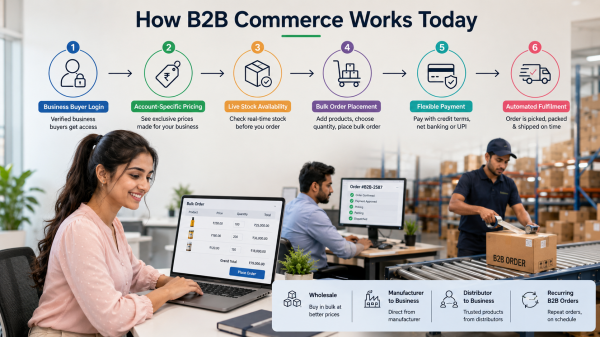
When dealers log in, they see only their assigned prices. No comparisons. No disputes.
Centralised Price Management
Manufacturers update pricing once, and it reflects instantly across all dealer accounts.
Volume-Based and Quantity Rules
Bulk discounts, MOQs, and tier-based pricing are applied automatically, ensuring fairness.
Reduced Dependency on Sales Teams
Dealers can check pricing and place orders independently, freeing sales teams for relationship building.
Complete Pricing Audit Trail
Every price rule is recorded, making it easy to review decisions and prevent leakage.
How to Implement Dealer-Based Pricing Step by Step
Manufacturers can adopt structured pricing gradually without disrupting existing operations.
Step 1: Segment the Dealer Network
Classify dealers such as Manufacturers, Wholesalers, Distributors, Exporters, and Established D2C Brands based on volume, region, and relationship type.
Step 2: Define Pricing Logic for Each Segment
Decide pricing based on:
- Order volume
- Logistics cost
- Market competition
- Long-term partnership value
Step 3: Digitise the Product Catalogue
Ensure every product has:
- Clear SKUs
- Variants
- Packaging details
- Base pricing
Step 4: Assign Prices to Dealer Groups
Attach pricing rules directly to dealer accounts instead of sharing price lists manually.
Step 5: Enable Dealer Self-Serve Ordering
Allow dealers to log in, view prices, and place orders without confirmation calls.
Step 6: Monitor Pricing Performance
Track margins, order frequency, and dealer behavior to refine pricing over time.
Step 7: Train Sales and Accounts Teams
Ensure internal teams understand the pricing logic to avoid overrides and confusion.
Benefits of Structured Dealer Pricing Management
Stronger Dealer Trust
Transparency builds confidence and long-term loyalty.
Fewer Pricing Disputes
Clear rules eliminate misunderstandings.
Improved Margin Control
Manufacturers prevent accidental discounts and leakage.
Faster Order Processing
Dealers place orders instantly without waiting.
Reduced Sales Team Load
Sales teams focus on growth, not pricing explanations.
Scalable Dealer Expansion
New dealers can be added without increasing complexity.
Conclusion
Maintaining different pricing across dealer networks is not a problem—it is a necessity. The challenge lies in managing it without confusion, conflict, or margin loss. In a fast-moving B2B environment, informal pricing methods no longer work.
Integrated ecommerce platforms give manufacturers the control and clarity they need. With solutions like Shopaccino, pricing becomes structured, transparent, and scalable—benefiting both manufacturers and dealers.
Manufacturers who master dealer pricing digitally will build stronger networks, healthier margins, and sustainable growth in 2026 and beyond.
FAQs
Because dealers operate in different regions, volumes, and markets, requiring flexible pricing structures.
It automates pricing visibility and applies rules consistently.
No, dealers only see pricing assigned to their account.
Yes, it reduces manual effort and prevents pricing mistakes.
Yes, updates reflect instantly across all dealer accounts.
Absolutely. Clear visibility removes confusion and negotiation friction.