How SMEs Can Compete with Big Brands Using Smart eCommerce Tools
For decades, large brands dominated the retail landscape with advantages like nationwide distribution, massive advertising budgets, and advanced supply chain systems. But digital commerce has changed the dynamics entirely. Today, small and medium enterprises can challenge category leaders not by outspending them, but by operating smarter—with technology that automates operations, builds direct customer relationships, and strengthens brand identity.
From niche apparel labels to regional grocery brands to handcrafted artisanal goods, SMEs are no longer limited by geography or offline shelf space. They can now launch digital storefronts, run targeted marketing, fulfil orders directly, and manage customer engagement at scale. The competition is no longer about size; it’s about efficiency, speed, and personalization.
However, while digital tools open new opportunities, they also create a new layer of challenges. SMEs must choose systems that streamline operations rather than add complexity, unify processes rather than silo them, and support growth without requiring large teams or custom development. This is where choosing the right ecommerce platform makes a measurable difference.
Platforms like Shopaccino help SMEs set up branded stores, manage inventory, fulfil orders, and engage customers through an integrated ecosystem—giving them enterprise-grade capabilities without enterprise-level cost.
Challenging Area – Why SMEs Struggle Competing with Large Brands
Competition isn’t just about marketing—it’s operational. SMEs often face constraints that large brands can mask through budget and manpower.
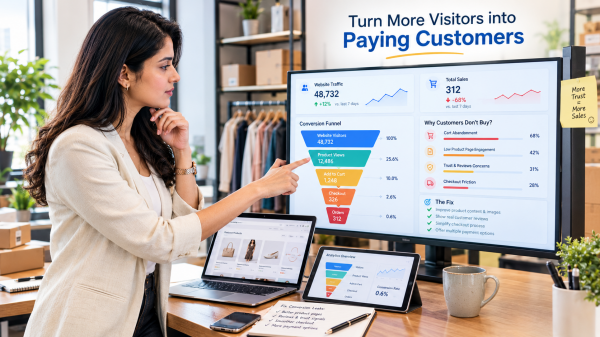
One major challenge is limited operational efficiency. Small businesses often rely on manual workflows—processing orders through spreadsheets, confirming stock via phone calls, or dispatching without automation. This slows fulfilment, creates errors, and limits scalability.
Another issue is fragmented technology adoption. SMEs begin with simple tools—payment links, social selling, basic catalog pages—and gradually add marketing apps, CRM tools, courier portals, invoicing software, and inventory systems. Over time, this patchwork becomes harder to manage than a unified platform.
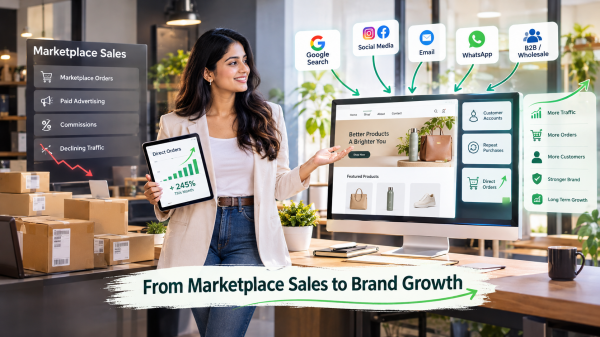
Brand visibility is also constrained. Without ad budgets or distribution reach, SMEs struggle to acquire customers sustainably. They rely heavily on marketplaces, which help with exposure but reduce margins and limit control over branding and data.
Finally, SMEs lack continuity in customer relationships. Unlike large brands that run loyalty programs, retention strategies, and automated engagement, smaller players depend on new traffic and experience inconsistent repeat sales.
These challenges weaken competitiveness—not because SMEs lack potential, but because they lack integrated systems.
Their Customer Challenging Area – What Buyers Expect Today
Consumers don’t care whether a brand is a startup or a multinational—they expect professional ecommerce experiences everywhere they shop.
A few key expectations define modern buying behavior:
Fast and Smooth Checkout
Customers expect seamless payments, instant confirmation, and multiple payment modes including UPI, wallets, card, COD, and digital wallets.
Accurate Stock and Delivery Visibility
If a product is listed, customers expect it to be available and shipped promptly. Unreliable timelines damage trust.
Personalized Discovery
Modern shoppers prefer curated product recommendations, tailored offers, and relevance based on preferences—not generic browsing.
Transparent Policies
Return rules, shipping fees, warranty, and product details must be visible and credible.
Engagement Beyond Purchase
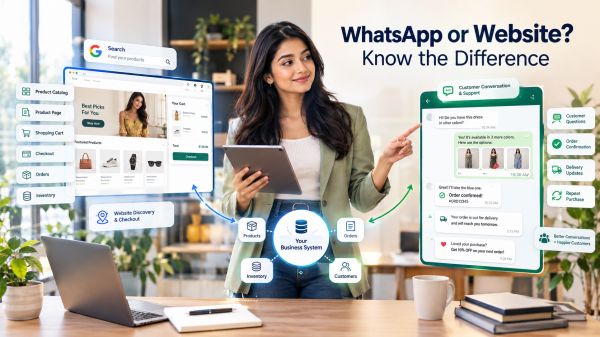
Buyers expect real-time tracking, repeat reminders, reorder prompts, and communication on support channels.
These expectations require a strong digital backbone—something SMEs must achieve without corporate budgets.
Solution – How Integrated eCommerce Tools Enable SMEs to Compete
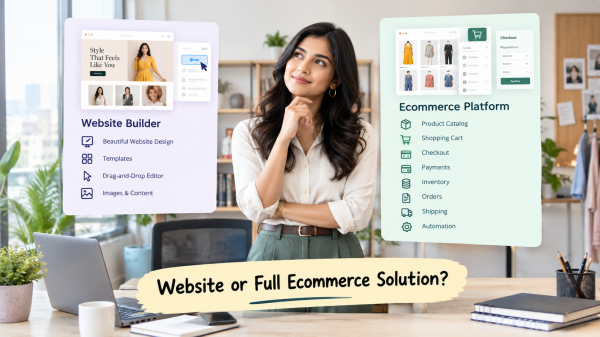
Instead of using multiple tools, SMEs need a platform that combines:
- Storefront
- Payments
- Catalog control
- Logistics & couriers
- CRM & marketing
- Customer data
- Reports & insights
This creates an ecosystem where operations flow smoothly across sales, fulfilment, and customer experience.
Platforms like Shopaccino enable SMEs to compete by providing:
Centralized Storefront + Backend Operations
Businesses manage catalog, orders, stock, and communication from one system—reducing manual work.
Real-Time Inventory and Dispatch Workflows
Integrated courier partners allow faster fulfilment and better customer experience without switching between systems.
Better Ownership of Customer Relationships
Brands collect their own data, send targeted campaigns, and manage repeat orders independently of marketplaces.
Flexible Catalog and Pricing Models
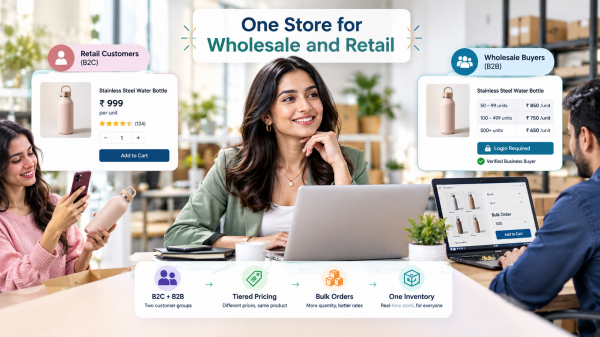
Whether selling single products, variants, bundles, bulk pricing, or category-mix inventories, the platform adapts to the business model.
Cost-Efficient Scale
SMEs can operate professionally without hiring tech teams, reducing long-term operating cost.
By replacing fragmentation with integration, SMEs can compete on execution—not just marketing.
How to Implement – A Practical Growth Roadmap for SMEs
Competing with big brands requires a structured digital strategy, not spontaneous deployment of tools. Here’s a step-by-step path:
Step 1: Build a Branded Online Store
A dedicated store builds trust, ownership, and repeat purchase capability. Social media and marketplaces supplement, but do not replace, a branded site.
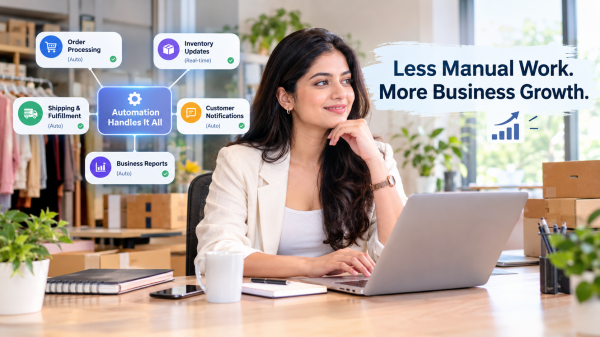
Step 2: Automate Core Operations
Automate:
- Order confirmation
- Dispatch workflows
- Payment reconciliation
- Courier allocation
- Customer notifications
Automation frees time for scaling rather than micromanagement.
Step 3: Use Data to Drive Decisions
Monitor:
- Highest-selling products
- Repeat purchase cycles
- Delivery performance
- Abandoned carts
- Customer cohorts
Insights guide better pricing, stocking, and marketing.
Step 4: Focus on Customer Retention
Retention improves ROI and reduces marketing dependency.
Use:
- Reorder prompts
- Feedback surveys
- Targeted offers
- Loyalty systems
- Personalized messaging
Even simple retention systems outperform paid ads over time.
Step 5: Expand Channels Gradually
Don’t start everywhere. Begin with owned commerce, then expand to:
- Marketplaces
- Social commerce
- Offline retail
- Third-party distribution
This ensures stability while growing reach.
Benefits of Smart eCommerce Adoption
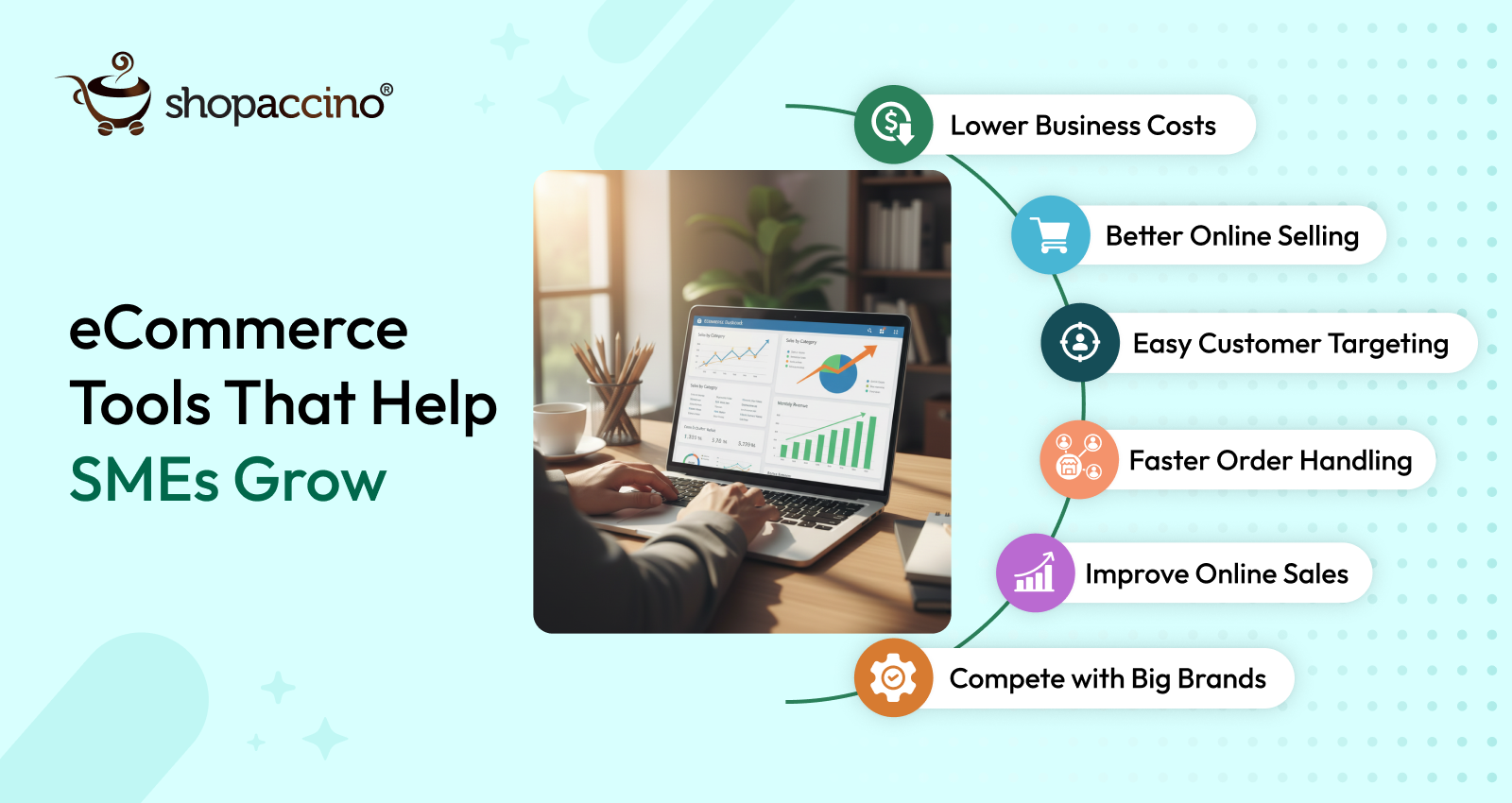
With the right tools, SMEs turn constraints into competitive strengths.
Lower Cost of Growth
Technology replaces manpower, reducing operating expenses.
Faster Fulfilment & Better Reviews
Automation reduces delays, increasing trust.
Better Margins Than Marketplace-First Selling
Owning transactions reduces commissions and protects pricing.
Higher Repeat Business
Data and communication improve loyalty.
Ability to Run Like a Large Brand
SMEs operate with enterprise-grade capability without complexity.
Conclusion
Competing with large brands is no longer a matter of budget or scale—it’s a matter of digital capability. A small business with efficient inventory, fast checkout, automated fulfilment, and data-driven engagement can outperform established brands that rely on outdated retail processes.
What SMEs need is not more manpower or larger marketing spend, but tools that help them operate with precision and consistency. Platforms like Shopaccino offer this foundation: a single ecosystem for store management, logistics, payments, communications, and customer insights—allowing SMEs to focus on products, brand value, and relationships.
With the right digital infrastructure, even emerging brands can compete on equal footing, win customer trust, and grow sustainably in a competitive ecommerce landscape.
FAQs
Yes—technology enables SMEs to operate efficiently, improve customer experience, and build direct relationships.
Not always—retention, organic content, and repeat purchase strategies often reduce paid marketing dependency.
It reduces complexity by centralizing inventory, orders, payments, and communication.
It saves time, prevents errors, and improves fulfilment speed.
Yes—digital commerce expands reach beyond physical geography.
Start with a branded store for control, then expand to marketplaces strategically.
Yes—platforms like Shopaccino enable management without custom development.