
How to Integrate Payment Gateways and Accept Global Payments
India’s digital economy has evolved rapidly, offering businesses unprecedented access to global consumers. Whether it’s handcrafted textiles, beauty products, organic foods, digital services, or private-label manufacturing, Indian brands today have demand beyond domestic borders. But selling globally requires more than product readiness—it requires the ability to collect payments seamlessly from international customers in their preferred methods and currencies.
Global payments play a critical role in enabling cross-border commerce. Customers in the US may prefer paying through cards, buyers in Europe may prefer localized payment networks, and buyers in the Middle East or Southeast Asia may rely on region-specific options. If a brand cannot support these payment preferences, buyers abandon purchases, regardless of product demand.
For MSMEs, this challenge often feels overwhelming because integrating international payment systems is perceived as expensive, technical, and compliance-heavy. However, with modern ecommerce platforms and globally enabled payment gateways, businesses can accept overseas payments without hiring developers, building custom billing systems, or navigating complex banking infrastructure.
This guide explains the challenges Indian MSMEs face, what international customers expect, how integrated ecommerce platforms simplify global transactions, and the steps to enable cross-border payments confidently and compliantly.
Challenging Area – Why Indian MSMEs Struggle with International Payments
Entering global markets is not just a matter of adding a “Ship Worldwide” button. Payment integration affects taxation, compliance, pricing, currency handling, and platform compatibility.
The most common challenges include:
Lack of Multi-Country Payment Acceptance
Many MSMEs start online using domestic payment systems that do not process foreign cards or currencies. As a result, customers outside India cannot complete transactions—even if there's demand.
Currency Conversion & Settlement Complexity
Even when payments are received in foreign currency, issues arise around:
- Conversion delays
- Fluctuating exchange rates
- Settlement charges
- Unclear reconciliation
Without automated workflows, accounting becomes cumbersome.
Compliance and Regulatory Uncertainty
Cross-border transactions must comply with:
- RBI export & FEMA guidelines
- International card network rules
- Country-specific banking norms
Many MSMEs feel unprepared to navigate compliance independently.
High Transaction Costs for International Orders
Global payments may involve higher charges from:
- Processors
- Issuing banks
- Currency conversion fees
- Settlement partners
If not managed strategically, profit margins shrink.
Lack of Trust in Unknown Payment Pages
Buyers abroad may hesitate if checkout pages look unfamiliar, generic, or unverified, making payment failures more likely.
These challenges create a gap between intent and execution, slowing down global expansion for Indian brands.
Their Customer Challenging Area – What International Buyers Expect
A global audience approaches payments from a convenience and confidence perspective. The moment friction appears, users abandon the checkout, regardless of price or quality.
Key expectations include:
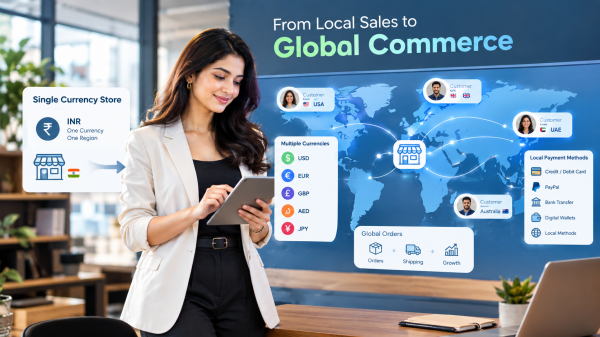
Payments in Familiar Currency
International buyers want product prices visible in:
- USD
- GBP
- EUR
- AED
- SGD
- AUD
If forced to calculate manually, they hesitate.
Trusted Global Payment Methods
Buyers expect recognizable payment modes such as:
- Visa / Mastercard / Amex
- PayPal
- Local region-specific options
- Secure payments via wallets or BNPL providers (market specific)
If their preferred method is unavailable, conversion drops sharply.
Secure Checkout and Verified Processing
Global buyers look for trust signals like:
- SSL certificates
- secure URL redirects
- compliance badges
- known gateway branding
These reassure them that payments are safe.
Clear Charges & Transparent Conversions
Unexpected taxes, duties, or conversion fees create cart abandonment. Transparency drives conversion.
Ensuring this experience requires integrated checkout systems designed for global commerce.
Solution – How Integrated Platforms Simplify International Payment Acceptance
Indian brands don’t need to assemble payment systems manually—modern ecommerce platforms like Shopaccino integrate global-ready payment gateways directly into store setups, reducing reliance on developers or complex configurations.
This approach enables businesses to:
- Accept multiple international card types
- Enable region-specific payment modes
- Manage settlements through gateway dashboards
- Automate tax and currency settings
- Reconcile global payments systematically
By offering a unified backend, Shopaccino reduces the cost and complexity associated with cross-border commerce while maintaining compliance with domestic regulations. Businesses integrating wallet development services can further streamline global transactions, improve payment flexibility, and enhance security for international customers.
Here’s how:
Unified Payment Gateway Integrations
Brands can connect gateways that support international payments without developing custom APIs.
Automated Checkout Configurations
Storefronts adapt to global buyers with structured routing, secure redirects, and encrypted flows.
Support for Digital & Card-Based Global Payments
Customers can pay using globally recognized networks without friction.
Streamlined Accounting & Settlement Handling
Transactions flow into a centralized dashboard, making reconciliation and auditing easier.
How to Implement – Step-by-Step Setup for Global Payments
Below is a practical roadmap for Indian MSMEs integrating international payments for the first time.
Step 1: Select a Payment Gateway That Supports Cross-Border Transactions
Choose gateways known for international support such as:
- PayPal
- PayU (Global)
- Razorpay International
- Cashfree for cross-border
- PayGlocal
- Stripe (regional availability varies)
Evaluate based on:
- Supported countries
- Currencies
- Fees
- Payout timelines
- Compliance readiness
This ensures technical compatibility from day one.
Step 2: Submit Compliance Documentation
International payments require regulatory approval, which may include:
- Business registration
- KYC documentation
- Bank account proof
- Export compliance declarations (case-based)
Most gateways assist with onboarding and compliance submission.
Step 3: Configure Payment Settings in the Ecommerce Platform
Within platforms like Shopaccino:
- Enable international card processing
- Link merchant accounts
- Configure settlement currency preferences
- Customize global checkout flow
This enables seamless routing of foreign payments.
Step 4: Display Relevant Pricing Transparently
Even if full multi-currency conversion is not enabled, brands should:
- Mention accepted currencies
- Clarify conversion billing at gateway
- Display estimates for global pricing
- Avoid hidden currency charges
Transparent communication increases trust.
Step 5: Test and Monitor Transactions
Before going live:
- Run test payments
- Verify success rates across countries
- Check tax invoices
- Ensure email notifications trigger correctly
Stable performance reduces disputes later.
Step 6: Plan for Payouts and Reconciliation
Regularly monitor:
- Settlement cycle
- Conversion rates
- Regional payment performance
- Refund handling workflows
Structured financial oversight ensures profitability.
Benefits of Accepting Global Payments
Expanding payment capability unlocks a new phase of business growth.
Access to International Revenue Streams
Brands can sell to NRIs, overseas customers, exporters, and global markets without intermediaries.
Higher Conversion Rates from Global Visitors
Flexible payments remove friction and improve purchase completion.
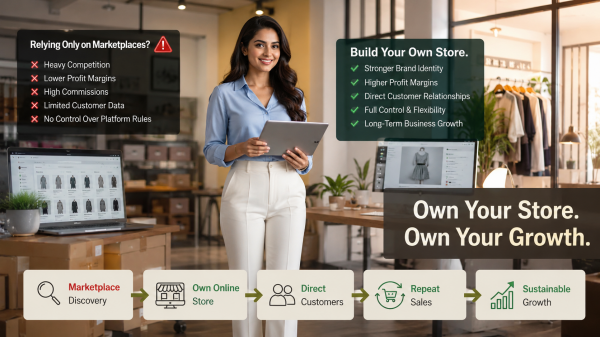
Reduced Dependency on Marketplaces
Owning the checkout experience gives brands full visibility into customer behavior and lifetime value.
Faster Business Expansion Without Physical Presence
Brands can reach new markets digitally without opening stores abroad.
Conclusion
Global commerce is no longer limited to large brands or exporters with deep technical resources. Today, even small Indian businesses can sell internationally with the right payment infrastructure, compliance alignment, and digital tools. When brands integrate globally enabled payment gateways into their ecommerce platforms, they open doors to worldwide demand without operational complexity.
Platforms like Shopaccino help simplify global selling by making payment integration seamless, secure, and scalable—allowing businesses to focus on product, branding, and customer relationships instead of technical setup.
Cross-border payments are not just a feature—they are the gateway to global expansion. With the right systems in place, Indian MSMEs can serve customers anywhere in the world.
FAQs
Yes, using international-enabled payment gateways approved for cross-border transactions.
No. Some are domestic-only; choose gateways that explicitly support foreign currencies and cards.
Yes. Global transactions require regulatory approval and merchant verification.
This depends on platform settings and gateway capabilities; transparency reduces confusion.
Visa, Mastercard, Amex, PayPal, and localized methods based on region.
They may include higher charges due to conversion, bank fees, and cross-border processing.
Yes—online selling and international shipping allow growth without physical presence.