How to Reduce Abandoned Cart Using Smart Checkout Flows
Abandoned cart is one of the biggest hidden losses in ecommerce. Customers browse, add products to their cart, show clear buying intent—and still leave without completing the purchase. For MSMEs and growing digital brands, this is especially painful because every abandoned cart represents lost revenue, wasted marketing spend, and missed opportunities to build customer relationships.
Studies from the U.S. Department of Commerce and industry researchers show that global abandoned cart rates often exceed 65%. This means more than half of your potential customers walk away at the final step. But the real reason isn’t lack of interest—it’s friction.
A complex, confusing, or time-consuming checkout flow is enough to make customers rethink their purchase. However, with the right smart checkout design, brands can turn abandoned carts into successful orders. Integrated ecommerce platforms like Shopaccino make the process easier by offering optimized checkout experiences and automated recovery tools that help MSMEs retain more customers without extra marketing costs.
Challenging Area: Why Brands Fail at Checkout
Even brands with strong product pages and smooth navigation fail during the checkout stage. Here are the most common issues:
Checkout Takes Too Long
Multiple pages, unnecessary questions, and slow loading times frustrate customers.
No Guest Checkout Option
Forcing customers to create an account drives them away instantly.
Complicated Payment Processes
Limited gateways or failed transactions are major reasons for abandonment.
Unexpected Costs
Delivery charges, taxes, or additional fees shown at the last step cause instant drop-offs.
Poor Mobile Checkout Experience
If forms are hard to fill on mobile, customers give up quickly.
No Real-Time Stock or Delivery Info
Customers feel uncertain when shipping days or availability aren’t visible.
No Cart Recovery System
Without automated reminders, abandoned carts remain lost forever.
For MSMEs juggling operations with limited resources, these factors create a silent leak in revenue that grows month after month.
Their Customer Challenging Area: What Buyers Expect During Checkout
Customers today are impatient. They know there are hundreds of alternatives just a click away. When they reach checkout, they expect:
Fast Checkout
They want to complete the order in under a minute—especially on mobile.
Transparency
No hidden charges. No surprises. Clear shipping fees and taxes upfront.
Multiple Payment Options
Customers expect to pay using:
- Cards
- UPI
- Wallets
- Net banking
- COD (where applicable)
- PayPal for international orders
Security
They trust stores that use secure, encrypted payment gateways.
Personalization
Customers appreciate:
- Saved addresses
- Auto-filled details
- Recently viewed items
Simple Forms
Long forms feel like a burden. Customers prefer minimal inputs.
Flexible Delivery Preferences
Options like store pickup, express delivery, or scheduled delivery add convenience.
If checkout becomes mentally or technically demanding, customers simply abandon.
Solution: How Smart Checkout Flows Reduce Abandonment
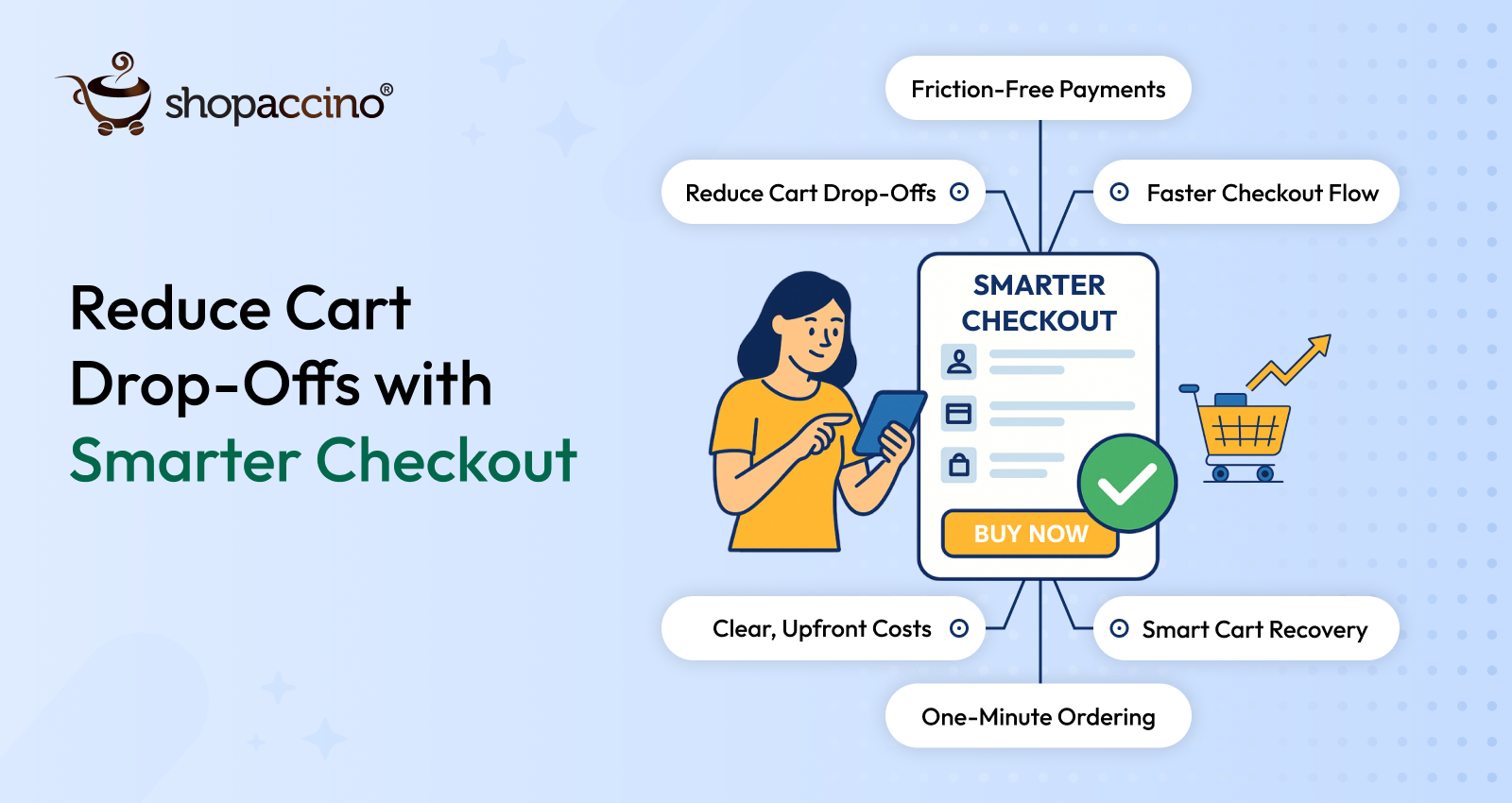
A smart checkout flow reduces friction, speeds up completion, and provides clarity to buyers. Integrated platforms like Shopaccino help MSMEs optimize their checkout with features that create seamless buying experiences.
Here’s how smart checkout flows solve key issues:
Guest Checkout for Instant Purchases
Many customers don’t want to create an account for a one-time purchase. Shopaccino’s guest checkout feature allows them to buy quickly and worry-free.
Auto-Filled Customer Details
Returning buyers see their information pre-filled, reducing steps and speeding up checkout.
Multiple Global & Local Payment Integrations
Shopaccino supports various payment gateways—from UPI and cards to PayPal—so customers can choose their preferred method.
Transparent Shipping & Taxes
Showing shipping rates and tax breakdown early improves trust and reduces “surprise cost” abandonment.
Address Validation & Pincode-Based Availability
Customers instantly know whether a product can be delivered to their location.
Mobile-Optimized Checkout Layout
Since most shoppers buy on mobile, Shopaccino ensures fluid navigation, easy input fields, and fast loading.
Abandoned Cart Notifications
This is one of the most powerful recovery tools. Shopaccino enables automated:
- Email reminders
- WhatsApp reminders
- SMS reminders
These messages help customers complete their pending orders.
One-Click Reorder
For groceries, essentials, or repeat-purchase categories, Shopaccino supports quick reorder features that encourage faster conversions.
Smart checkout isn’t about adding more features—it’s about removing friction and making buying effortless.
How to Implement Smart Checkout (Step-by-Step Guidance)
Even if you are beginning from scratch, here is a simple guide to building an effective checkout flow.
Step 1: Simplify the Checkout Form
Ask only essential information:
- Name
- Mobile
- Address
- Payment
Remove:
- Unnecessary fields
- Lengthy forms
- Repetitive details
Shorter forms = higher conversions.
Step 2: Enable Guest Checkout
Make account creation optional, not mandatory.
You can allow customers to create an account after the order is placed.
Step 3: Offer Multiple Payment Options
Different buyers prefer different payment choices.
Shopaccino supports:
- UPI
- Credit/Debit cards
- PayPal
- Wallets
- Net banking
- COD
More payment flexibility = fewer drop-offs.
Step 4: Show Transparent Costs Upfront
Display:
- Shipping fees
- COD charges
- Taxes
- Estimated delivery dates
Before customers begin checkout—not after.
Step 5: Use Smart Cart Reminders
Automated reminders do the recovery work for you.
Shopaccino helps you send:
- Email reminders
- WhatsApp alerts
- SMS nudges
Simple messages like “Your items are still in your cart—complete your order here” work brilliantly.
Step 6: Provide Delivery Flexibility
Offer:
- Standard delivery
- Express options
- Store pickup
Flexibility increases customer confidence and reduces friction.
Step 7: Optimize for Mobile First
Ensure:
- Buttons are easy to tap
- Fields are large
- Pages load fast
- No unnecessary scrolling
Mobile-first checkout is essential because most shoppers purchase on the go.
Step 8: Test, Track & Improve
Monitor:
- Checkout drop-off points
- Payment gateway failures
- Page load speeds
- Cart recovery success rates
Make continuous improvements using real data.
Benefits of Smart Checkout for Ecommerce Brands
Smart checkout flows bring measurable improvements. Here’s what MSMEs gain:
Lower Abandoned Cart Rate
A smoother process keeps customers engaged until they complete payment.
Higher Conversions
When buyers face fewer obstacles, more of them finish the purchase.
Reduced Customer Frustration
Simple checkouts feel comfortable and trustworthy.
Faster Buying Decisions
Customers complete the order in fewer steps and less time.
Better Mobile Shopping Experience
Optimized layouts improve convenience for mobile-first buyers.
Improved Customer Retention
One-click reorders and saved details make repeat buying effortless.
More Revenue With Less Advertising Spend
Recovering abandoned carts increases sales without acquiring new customers.
Conclusion
Checkout is the moment of truth in ecommerce. It’s where excitement turns into revenue—or frustration turns into abandonment. Brands that optimize their checkout flows gain a tremendous advantage in digital commerce.
Smart checkout systems eliminate friction, reduce confusion, and guide customers toward a smooth purchase. Platforms like Shopaccino make it easier for MSMEs to activate fast checkout, transparent pricing, multiple payment options, mobile optimization, and abandoned cart recovery—all essential tools for reducing abandoned cart.
The brands that win online aren’t just the ones with great products—they’re the ones with great checkout experiences. When your checkout is simple, smart, and supportive, customers finish their orders with confidence.
FAQs
Common reasons include complex checkout forms, hidden charges, limited payment options, and slow page loading.
By offering fast, simple forms, guest checkout, multiple payment options, and clear cost breakdowns.
Yes. Automated email, WhatsApp, and SMS reminders recover a significant percentage of abandoned orders.
COD can increase conversions in certain regions. Offering it gives customers more flexibility.
Shopaccino provides smart checkout flows, abandoned cart notifications, multiple payment integrations, and mobile-optimized layouts.
Absolutely. Reducing friction directly increases conversions and overall order completion rates.