How to Scale Your Ecommerce Store from ₹1L to ₹1Cr in Sales — Strategies That Actually Work
Reaching your first ₹1 lakh in ecommerce sales is a proud milestone every founder remembers. It proves something powerful — people trust your product and are willing to pay for it. That early success builds confidence and motivation. But soon after that first win, a new phase begins.
You add more products.
You run ads more consistently.
You stay active on social media.
Yet growth doesn’t always feel predictable. Revenue fluctuates. Some months perform well, while others feel slower than expected. And one honest question keeps coming back:
“If my store can do ₹1 lakh… why can’t it scale to ₹1 crore?”
The answer is simple — but important.
Scaling ecommerce is not about working harder.
It is about building the right structure for growth.
Real scaling happens when your business moves from scattered efforts to focused execution. Brands that grow steadily focus on:
• clear product communication
• strong trust and credibility
• smooth shopping experience
• repeatable marketing systems
• customer retention, not just acquisition
This guide focuses on strategies that actually work because they are practical, proven, and easy to implement. Every step is designed to help you move from unpredictable sales to confident, sustainable growth — step by step, in simple language.
The Hidden Challenges Most Ecommerce Stores Don’t Notice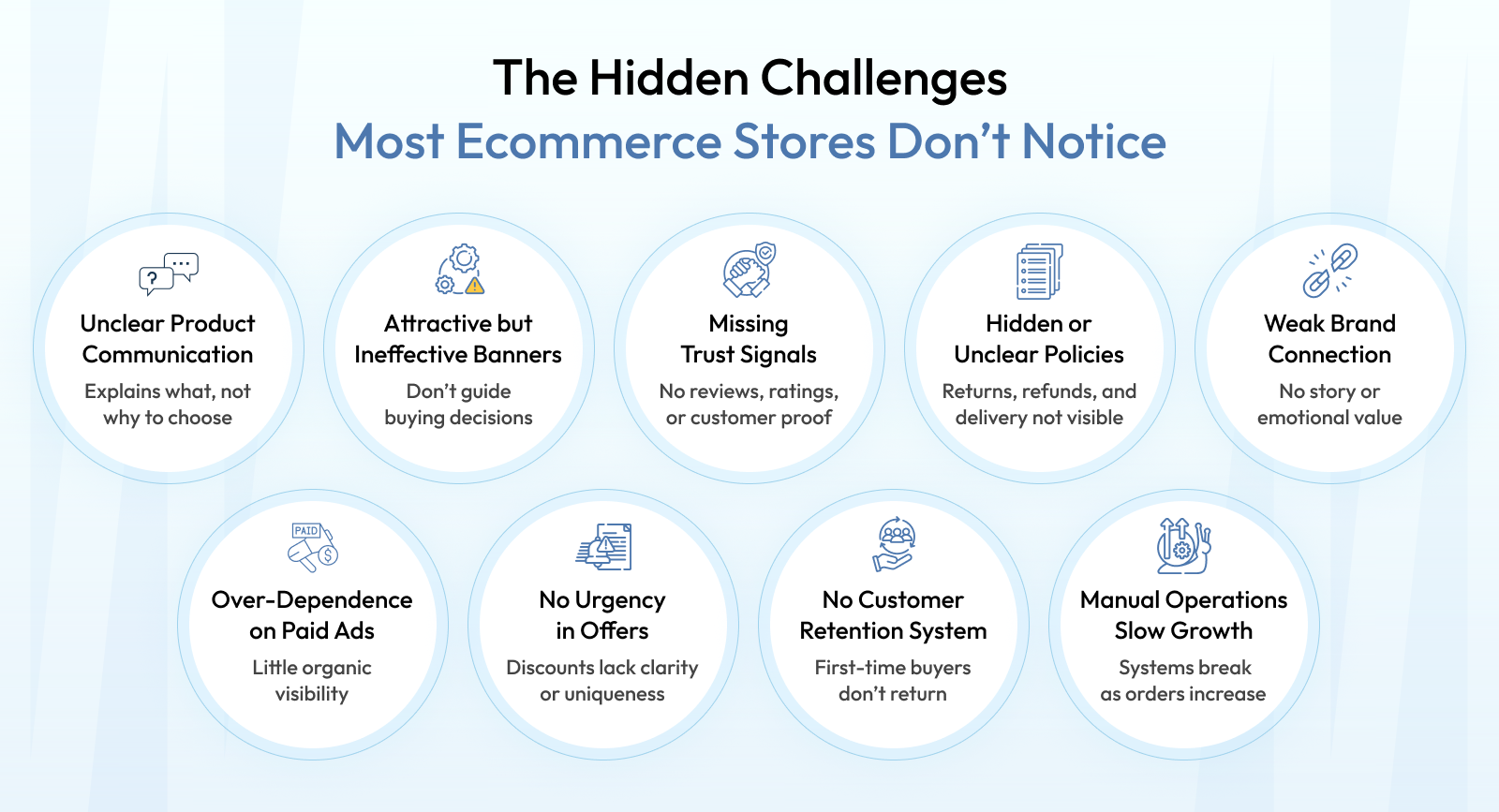
Most ecommerce founders are genuinely committed to growing their business. They experiment, learn, follow trends, and put in consistent effort. Yet many stores that reach ₹1L–₹5L in monthly revenue start feeling stuck — not because of lack of ambition, but because of small, unnoticed gaps that quietly slow growth.
These challenges are often ignored because the store is still running. Orders come in. Ads generate clicks. But growth feels inconsistent and unpredictable. Some of the most common hidden challenges include:
• Product pages that explain what the product is, but not why a customer should choose it
• Banners and images that look attractive but are not designed to guide buying decisions
• Missing trust signals like reviews, ratings, or customer proof
• Unclear or hidden return, refund, and delivery policies
• No strong brand story or emotional connection
• Heavy dependence on paid ads with little organic visibility
• Offers that lack urgency, clarity, or uniqueness
• No planned marketing calendar or campaign structure
• No system to retain customers after the first purchase
• Manual operations that become slow as order volume grows
Individually, each issue feels small and manageable. Together, they reduce conversions, weaken trust, and make scaling harder than it needs to be.
The good news is simple: none of these are permanent barriers. With clear strategy, structured improvements, and the right ecommerce systems in place, these challenges turn into powerful growth opportunities.
Read Also : A simple guide to setup an ecommerce store
Why Scaling Feels Hard — But Is Very Achievable
At a certain stage, scaling an ecommerce business can feel confusing. You are doing many things right — products are live, orders are coming in, marketing is active — yet growth does not move as smoothly as expected. This is where a simple mindset shift changes everything.
Scaling ecommerce is not about adding more products or increasing ad spend.
It is about increasing trust, clarity, and repeatability across your entire business.
The real difference between a ₹1 lakh store and a ₹1 crore store is not luck, timing, or shortcuts. It is structure. High-growth ecommerce brands are built with intention. They communicate clearly, guide customers confidently, and remove friction at every step of the buying journey.
What separates scalable brands includes:
• Clear, benefit-driven product communication
• Conversion-ready product and category pages
• Strong trust signals that reduce buying hesitation
• Smooth, consistent customer experience
• Systems that encourage repeat purchases
• A structured, long-term growth plan
From the outside, successful ecommerce brands often look simple. But behind the scenes, they run on strong systems and repeatable processes — not guesswork. Once these foundations are in place, growth becomes easier, more predictable, and much more achievable.
And this leads to the most important belief to remember as you scale:
When your systems improve, growth naturally follows.
Read More : How Owned Ecommerce Websites are Powering D2C Growth
Your website is not just a catalog — it is your best salesperson.
Many ecommerce founders think of their website as a place to list products. But in reality, your website plays a much bigger role. Your website is your most consistent and hardworking salesperson, available 24×7, guiding every visitor who walks in. Unlike a physical salesperson, it never gets tired, never misses a question, and never pushes unnecessarily. Its job is simple — to make buying feel easy and confident.
A well-built ecommerce website should quietly do what a great salesperson does in a store. It should explain the product clearly, guide customers to the right choice, and reassure them at every step. It should answer doubts before they are asked, show proof that others trust you, and remove hesitation during checkout. When done right, the buying decision feels natural — not forced.
Your website should:
• explain benefits, not just features
• guide users with clear layout and calls-to-action
• reassure customers through reviews, policies, and support
• convince with storytelling and real value
• support decisions with FAQs and comparisons
• close the sale smoothly, without friction
When your website performs this role well, growth becomes predictable. Traffic converts better, customers return more often, and your ecommerce store starts scaling with confidence — even when you are not actively selling.
Who This Guide Is For
This guide is written for people who are already in the ecommerce journey and are now ready to take the next meaningful step. It is especially useful for founders and teams who have proven that their products can sell, but now want to scale with clarity and confidence instead of trial and error.
This guide is ideal for:
• ecommerce founders building their own brand
• D2C brands looking to scale sustainably
• wholesalers taking their business online
• resellers evolving into brand-led businesses
• entrepreneurs managing small but growing stores
• marketing teams supporting ecommerce growth
You will find this guide particularly relevant if you:
✔ already sell online and receive regular orders
✔ want consistent growth, not random spikes
✔ prefer structure over guesswork
✔ aim to build a long-term, trusted brand
Inside this guide, you will learn:
• why many stores hit a revenue ceiling early
• what needs to evolve at each growth stage
• how to improve conversions without confusion
• how to build customer retention systems
• how to scale in a controlled and confident way
You will also see how choosing the right ecommerce platform — such as Shopaccino — can simplify scaling through automation, marketing tools, and business-ready features that support growth instead of limiting it.
The Growth Journey — From ₹1 Lakh to ₹1 Crore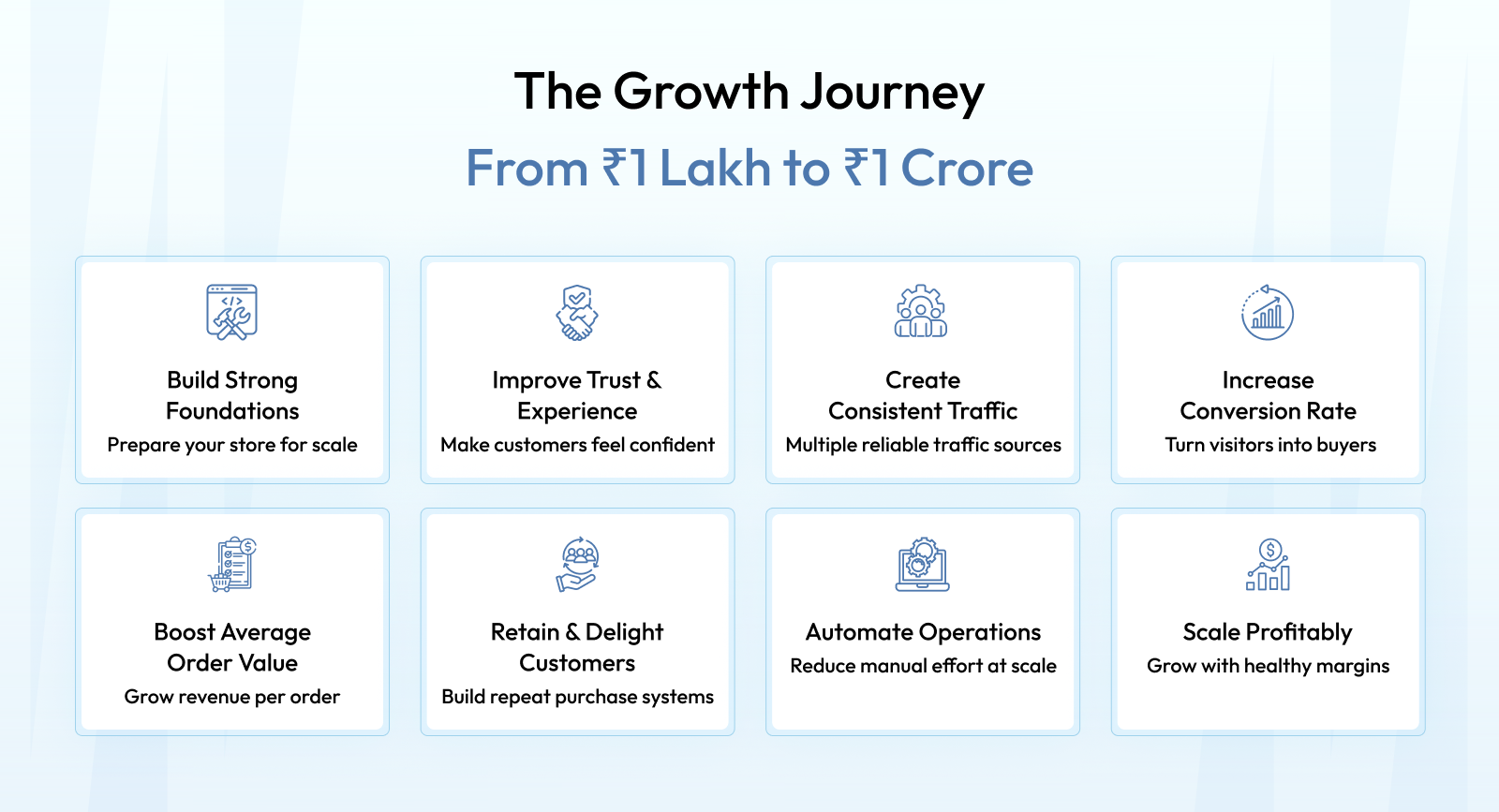
Scaling smartly means following a clear roadmap.
This guide breaks the journey into 8 practical stages:
- Build a Strong Growth Foundation
- Improve Store Experience & Trust
- Create Consistent Traffic Streams
- Increase Conversion Rate
- Lift Average Order Value (AOV)
- Retain & Delight Customers
- Automate Operations & Fulfilment
- Scale Profitably — With Healthy Margins
Each stage builds on the previous one — so growth becomes smooth, structured, and scalable.
Let’s walk through them — one by one.
1. Build a Strong Growth Foundation
Before you focus on increasing revenue, your ecommerce store must be ready to handle growth. A strong growth foundation ensures that every visitor who lands on your website has a smooth, confident, and frustration-free experience. When this base is solid, marketing efforts work better and customers naturally move toward purchase. When it is weak, even high traffic leads to confusion, drop-offs, and unnecessary support requests.
At this stage, the goal is not to scale fast — it is to stabilise the basics. Your store should load quickly, look clean on mobile devices, and clearly communicate essential information. Customers should never struggle to find product details, contact information, or policies. A secure checkout and reliable delivery setup are equally important, as they directly influence trust and buying confidence.
A strong foundation focuses on:
• fast-loading pages that don’t test user patience
• mobile-first design for effortless browsing
• secure HTTPS checkout for payment confidence
• clear contact and support information
• visible return, refund, and delivery policies
• dependable shipping and fulfilment setup
• analytics tools to track real performance
• well-structured categories for easy navigation
When these elements are in place, your business develops strong roots — not just temporary growth. This foundation allows everything else, from marketing to retention, to scale smoothly and predictably.
Key Business Impact
✔ Customers trust you faster
✔ Fewer drop-offs
✔ Higher satisfaction
✔ Stronger SEO potential
2. Improve Store Experience & Trust
Once your growth foundation is in place, the next critical step is building conversion confidence. At this stage, your store may already look good and function well — but now it must make customers feel right about buying from you. Trust and experience are what turn visitors into buyers.
When a customer visits your store, they should immediately feel:
• safe while browsing
• understood as a buyer
• guided through choices
• supported before and after purchase
And most importantly, they should feel confident clicking “Buy Now.”
Trust is built through both emotional and practical signals. Emotionally, customers connect with brands that speak their language and understand their needs. Practically, they look for proof, clarity, and reassurance before spending money online.
To strengthen store experience and trust, focus on:
• benefit-focused product descriptions that explain why it matters
• visual storytelling that shows real usage and value
• authentic product photography instead of stock images
• visible reviews, ratings, and testimonials
• a clear and relatable brand story
• assurance badges for quality, payments, and delivery
• transparent warranty, guarantee, or replacement information
Customers don’t just buy products.
They buy certainty, reassurance, value, identity, and experience.
When your store delivers all of this naturally, trust builds faster — and conversions follow without pressure.
Key Business Impact
✔ Higher conversion rate
✔ Strong brand positioning
✔ More repeat buyers
3. Build Consistent Traffic Streams
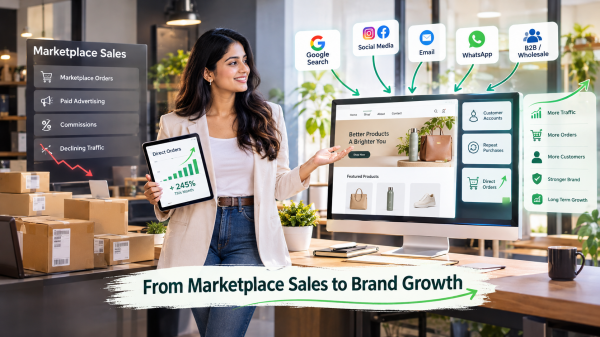
To scale your ecommerce store confidently, traffic must be reliable and diversified. Depending on a single source — especially paid ads — makes growth unpredictable. Strong, scalable brands build traffic from multiple channels so that momentum continues even when one channel slows down. This balance creates stability and reduces pressure on marketing spend.
Consistent traffic means your store is visible wherever your customers are searching, browsing, or discovering products. Instead of chasing quick spikes, the focus shifts to building systems that bring visitors every day — naturally and repeatedly.
Strong brands balance traffic from:
• SEO and organic search
• content that educates and informs
• social discovery and community engagement
• paid ads used strategically
• influencer collaborations
• retargeting campaigns
• word-of-mouth and referrals
A smart traffic strategy also includes:
• ranking category and product pages on Google
• capturing high-intent search demand
• publishing educational blogs and guides
• using short videos to explain and demonstrate products
• partnering with relevant influencers
• creating remarketing journeys for interested visitors
• using marketplaces strategically for visibility (not dependency)
When traffic comes from multiple sources, growth becomes predictable instead of accidental. You gain control, plan better, and scale with confidence — knowing your store is always discoverable.
Key Business Impact
✔ Steady revenue inflow
✔ Lower dependency on ads
✔ Stronger discoverability
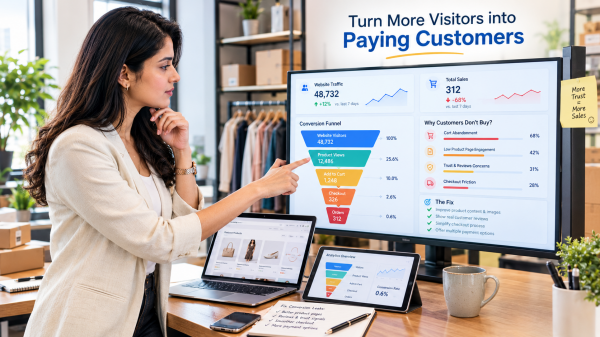
4. Improve Conversion Rate (CRO)
Driving more traffic is only effective when your store is designed to convert visitors into customers. If conversion rates are low, scaling traffic simply increases costs without improving results. Conversion Rate Optimization (CRO) focuses on making small, meaningful improvements that help more visitors feel confident about buying.
CRO is about understanding customer behaviour and removing hesitation at every step of the journey. Visitors should never feel confused, rushed, or unsure. Instead, your store should guide them smoothly from discovery to checkout.
Focus on improving these key areas:
• clear and visible calls-to-action (CTAs)
• a simple, distraction-free checkout process
• helpful FAQs that answer common doubts
• clear delivery timelines and charges
• size guides, usage instructions, or fit details
• visible trust signals like reviews and security badges
• strong product images and videos
• emotional storytelling that connects with real needs
Always remember one important principle:
People don’t buy products — they buy outcomes.
Your store should clearly explain:
• what changes after the purchase
• which problem the product solves
• why the product feels worth the price
When conversions improve, every visitor becomes more valuable — making growth efficient, profitable, and sustainable.
Key Business Impact
✔ More revenue from same traffic
✔ Higher profits
✔ More confident buyers
Read Also : Increase Your Ecommerce Conversion Rate by 30%
5. Increase Average Order Value (AOV)
Scaling your ecommerce store becomes significantly easier when each order contributes more revenue. Increasing Average Order Value (AOV) means you grow without needing proportional increases in traffic or ad spend. At the same time, customers receive more value — creating a win-win situation.
AOV growth is not about pushing customers to spend more. It is about helping them buy better. When you present relevant options at the right moment, customers often appreciate the convenience and value. This also improves overall shopping satisfaction.
When AOV increases:
• customers receive greater value per purchase
• revenue grows faster with the same traffic
• paid ads become more profitable and efficient
Proven and customer-friendly AOV boosters include:
• product bundles that solve multiple needs
• combo packs designed for convenience
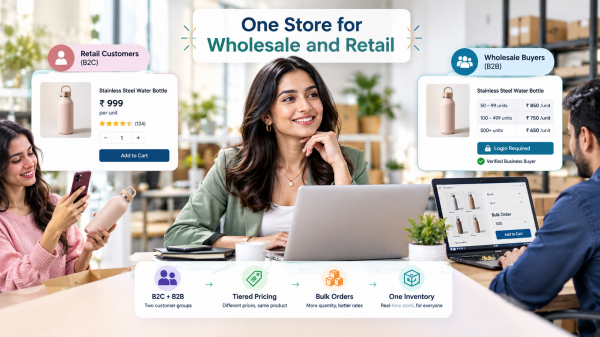
• volume-based discounts for bulk buyers
• relevant upsell add-ons at checkout
• free shipping thresholds that encourage extra items
• membership benefits for loyal customers
• subscription options for repeat-use products
Customers are not opposed to spending more — they simply want it to feel worth it. When your offers are meaningful and well-presented, AOV grows naturally, and your ecommerce business scales faster with healthier margins.
Key Business Impact
✔ Faster revenue climb
✔ Better margins
✔ Higher lifetime value
6. Retain & Delight Customers
Customer retention is one of the most powerful and often underestimated drivers of ecommerce growth. While acquiring new customers is important, retaining existing customers creates momentum that compounds over time. When people return to buy from you again, growth becomes smoother, more predictable, and more profitable.
Returning customers naturally:
• purchase more frequently
• spend higher amounts over time
• require less persuasion and marketing cost
• trust your brand more deeply
• recommend your store to others
Retention works because trust has already been built. Instead of starting from zero every time, you strengthen an existing relationship. This is what turns a store into a brand.
To build effective retention systems, focus on:
• loyalty programs that reward repeat purchases
• reorder reminders for frequently used products
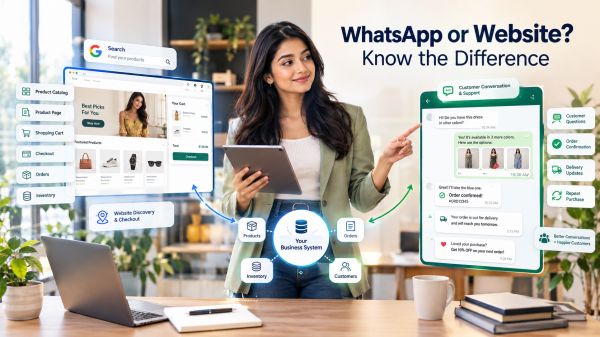
• email and WhatsApp journeys that stay helpful and relevant
• subscription or renewal options where applicable
• VIP tiers that recognise your best customers
• personalised offers based on past behaviour
Customers should never feel like they are only being sold to. They should feel appreciated, remembered, and valued. When customers enjoy coming back, retention becomes automatic — and your ecommerce business grows with long-term stability.
Key Business Impact
✔ Lower CAC
✔ Higher profit
✔ Strong brand advocacy
7. Automate Operations & Fulfilment
As your ecommerce store grows, manual processes that once worked well can quickly become overwhelming. Scaling requires operational clarity, and this is where automation plays a crucial role. Automation helps turn day-to-day chaos into a smooth, predictable flow — allowing your business to grow without constant stress or errors.
When operations are automated, your team spends less time fixing issues and more time focusing on growth. Orders move faster, inventory stays accurate, and customers receive timely updates without manual intervention. This consistency builds trust and improves overall experience.
Key areas to automate and systemise include:
• real-time inventory synchronisation
• order confirmation and status updates
• shipping and fulfilment workflows
• returns and replacement processing
• accounting and payment tracking
• customer communication across channels
Using the right ecommerce platform makes this process much easier. Platforms like Shopaccino are designed to streamline:
• complete ecommerce management
• logistics and shipping integration
• secure payment handling
• built-in marketing tools
• performance and sales reporting
Automation removes friction from growth.
It reduces stress, minimises errors, and ensures your business runs smoothly — even as order volumes increase.
Key Business Impact
✔ Faster fulfilment
✔ Higher accuracy
✔ Better customer experience
Read Also : Automate Repeat Orders for Beauty Brands
8. Scale Profitably — Not Blindly
Revenue growth is exciting, but profit is what builds long-term stability. Scaling profitably means understanding where your money comes from, where it goes, and how each decision impacts the health of your business. Blind growth — driven only by higher sales numbers — often creates pressure instead of progress.
Profitable scaling is about balance. It allows you to invest confidently in marketing, inventory, and operations without worrying about cash flow gaps. When profits are healthy, growth feels controlled and sustainable.
To scale profitably, founders must track and understand:
• product margins and pricing health
• marketing and advertising costs
• return, refund, and replacement impact
• customer acquisition cost (CAC) vs lifetime value (LTV)
• repeat purchase revenue contribution
• logistics and fulfilment expenses
When these metrics are visible, decisions become clearer. You know which products deserve promotion, which campaigns are worth scaling, and where optimisation is needed.
Growth should never feel stressful or forced. Smart founders scale with clarity — not pressure. By focusing on profitability alongside revenue, you create a business that grows steadily, confidently, and sustainably over time.
Key Business Impact
✔ Cash-flow stability
✔ Long-term success
✔ Stress-free growth
Voice Search, AI & SGE Ready Positioning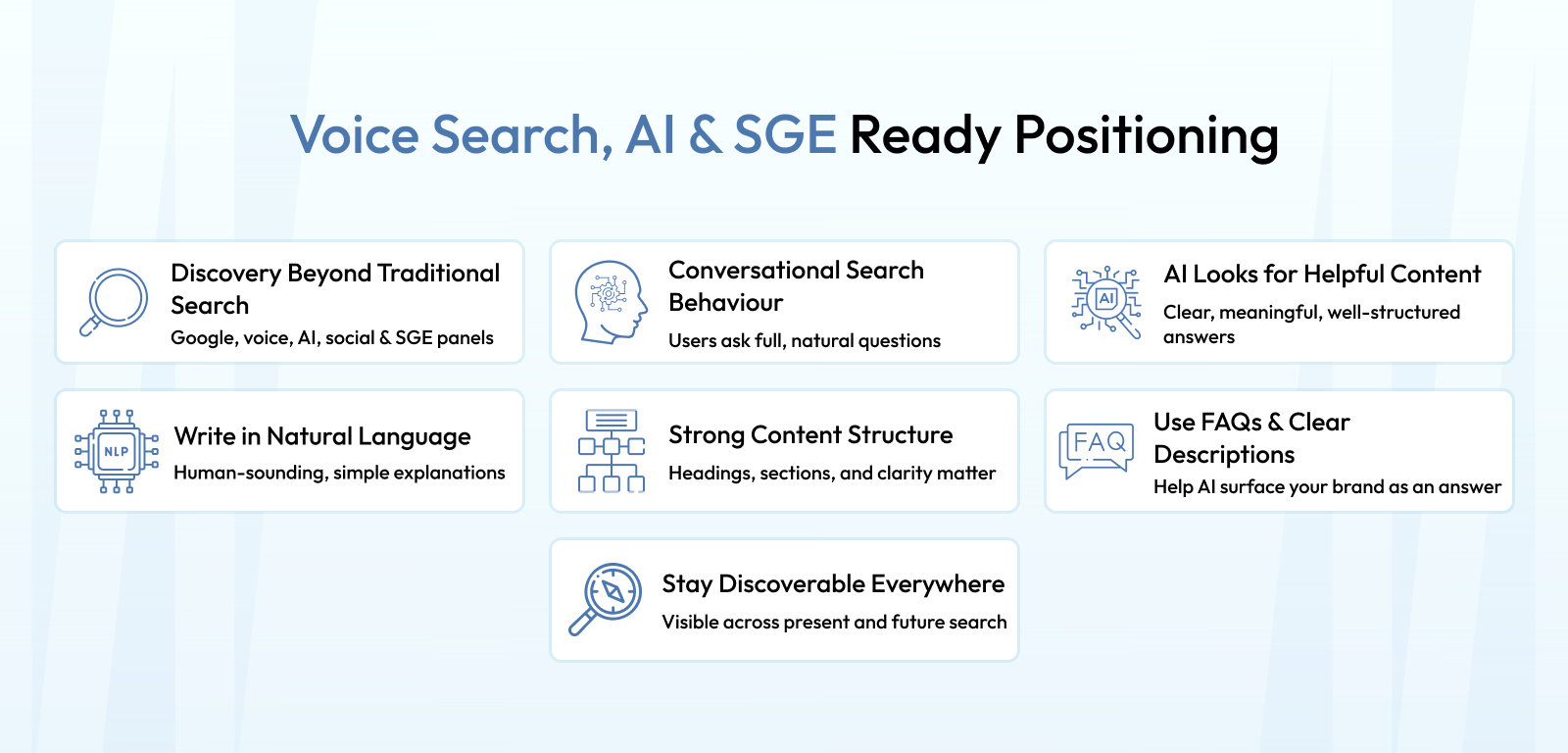
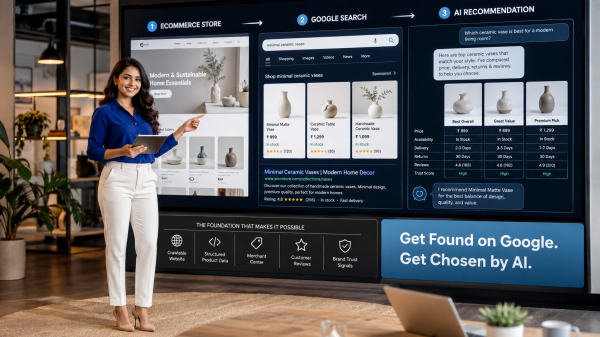
Ecommerce discovery today goes far beyond traditional search. Customers now find products through Google Search, voice assistants, AI-powered platforms, social search, and SGE (Search Generative Experience) panels. To stay visible in this evolving landscape, your ecommerce content must be prepared for how people actually search and ask questions.
Modern search is conversational. Instead of typing short keywords, users speak or ask complete questions. AI systems look for content that sounds natural, helpful, and clearly structured. This means your website should focus on answering real customer queries in simple language — not just targeting keywords.
To be voice, AI, and SGE ready, your content should be:
• conversational and human-sounding
• written in clear, natural language
• meaningful and value-driven
• well-structured with headings and sections
• easy to understand without technical jargon
FAQ sections, descriptive product pages, and clear category explanations play a major role here. When your content is helpful and direct, AI platforms are more likely to surface your brand as an answer — not just a result.
This positioning ensures your ecommerce store remains discoverable everywhere, today and in the future, no matter how customers choose to search.
Final Thoughts — Your 1 Crore Journey Starts With Strong Foundations
Scaling an ecommerce store from ₹1 lakh to ₹1 crore in revenue is not about chasing shortcuts or sudden spikes. It is a structured journey built on the right foundations — foundations that support growth without stress, confusion, or burnout. When clarity replaces guesswork and systems replace randomness, growth becomes predictable.
Every successful ecommerce brand that reaches the ₹1 crore milestone follows the same core principles:
• clear communication that builds confidence
• strong trust through transparency and proof
• smooth, customer-friendly shopping experience
• repeatable systems that support scale
• customer-first thinking at every stage
When these elements come together, scaling no longer feels overwhelming. You stop reacting to problems and start growing with intention. Traffic converts better, customers return more often, and operations run smoothly even as volumes increase.
Choosing the right ecommerce platform also plays a crucial role in this journey. With a platform like Shopaccino, your business is supported by:
• ecommerce-ready, scalable features
• built-in automation to reduce manual effort
• loyalty and retention tools
• checkout and conversion optimisation
• growth-focused analytics and reporting
• mobile-first, responsive design
• strong security and reliability
Technology should support your ambition — not limit it.
Your store has already proven one important thing: people want what you sell. Now, with the right structure and systems in place, it’s time to scale confidently, sustainably, and proudly.
Your ₹1 crore journey starts now.
FAQs
The timeline depends on your product category, margins, marketing strategy, and operational readiness. Many stores achieve this within 12–36 months by focusing on strong foundations, trust-building, and repeatable growth systems rather than quick wins.
No. While ads help with visibility, sustainable growth comes from a balanced mix of SEO, organic content, repeat customers, referrals, and smart advertising. Over-reliance on ads alone often leads to unstable growth.
The most common mistake is trying to increase traffic before fixing conversion, trust, and experience issues. Scaling works best when your store is optimised to convert and retain customers first.
Customer retention is critical. Returning customers buy more often, spend more, and require lower marketing effort. Strong retention systems significantly accelerate long-term growth.
Yes. Small brands win by offering better experience, clear communication, trust, and direct customer relationships. Brand-owned stores create loyalty that marketplaces cannot easily replicate.
Absolutely. Your website acts as your best salesperson. A clear, fast, mobile-friendly, and trustworthy website improves conversions, reduces friction, and supports consistent growth.
Automation reduces manual work, improves accuracy, and ensures smooth operations as order volumes grow. It allows founders to focus on strategy instead of daily firefighting.
SEO brings high-intent, long-term traffic without constant spending. Ranking product and category pages builds consistent visibility and reduces dependence on paid advertising.
Shopaccino offers ecommerce-ready features like automation, marketing tools, checkout optimisation, loyalty systems, analytics, and scalable infrastructure — helping businesses grow confidently without technical limitations.