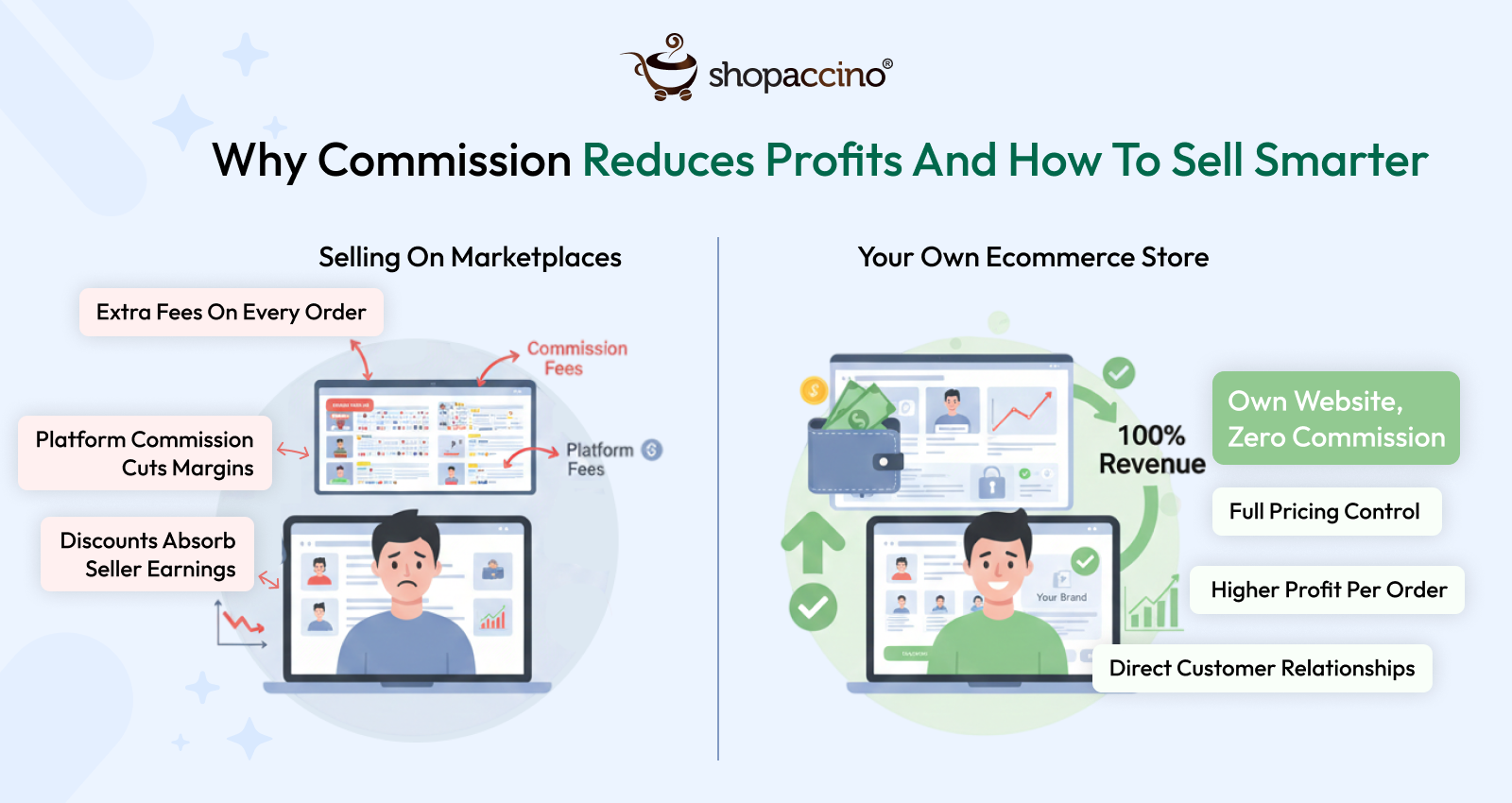
Why High Sales Don’t Always Mean High Profits on Marketplaces
Many sellers believe that once sales numbers go up, profits will automatically follow. More orders should mean more money. At least, that is how it looks from the outside. On marketplaces, dashboards show rising order counts, growing revenue graphs, and increasing traffic. Everything appears positive.
But when sellers check their bank balance at the end of the month, the story feels different.
Despite high sales, profits remain low. Sometimes they even shrink. Sellers work harder, ship more orders, and handle more customers, yet the business does not feel healthier. This creates frustration and confusion.
The truth is simple but often overlooked: high sales do not always mean high profits, especially on commission-based marketplaces.
This blog explains why marketplace sales can be misleading, what sellers and buyers actually experience, and how running an own online ecommerce store helps sellers earn more from every order.
Challenging Area: Business Problems Sellers Face on Marketplaces
Marketplaces are designed to move large volumes of products. They are not designed to protect seller margins.
As sales grow, several hidden costs quietly grow along with them.
Commission Takes a Cut From Every Order
Marketplaces charge a commission on each sale. It may look small at first, but it applies to every order, every day.
As order volume increases, the total commission amount increases automatically. Sellers sell more but give away more money with each sale.
Extra Fees Add Up Over Time
Beyond commission, sellers often pay for payment processing, shipping programs, promotions, and visibility boosts. Each fee feels manageable on its own, but together they reduce take-home profit significantly.
High sales begin to feel expensive.
Discounts Become a Survival Tool
To stay competitive on marketplaces, sellers often rely on discounts. This further reduces margins. Sellers are pushed into price wars where profit becomes the sacrifice for visibility.
Growth Feels Risky Instead of Rewarding
Instead of celebrating growth, sellers start worrying. More sales mean more fees, more returns, and more pressure. Growth no longer feels like progress.
Their Customer Challenging Area: Buyer Expectations on Marketplaces
Buyers also play a role in this problem, often without realizing it.
Buyers Expect Lower Prices
Marketplaces train customers to compare prices instantly. Buyers expect the lowest possible price, not long-term value.
This puts constant pressure on sellers to reduce prices.
Buyers Do Not Connect With Brands
On marketplaces, buyers remember the platform, not the seller. Loyalty stays with the marketplace, not the brand.
This makes repeat business unpredictable for sellers.
Buyers Expect Fast Resolution, Not Relationships
Customer support, returns, and disputes are handled by marketplace rules. Sellers have limited control over how issues are resolved, even when they want to build trust.
Solution: How an Integrated Ecommerce Platform Solves These Issues
The solution to low profitability is not selling less. It is selling smarter, with control.
Running an own ecommerce store allows sellers to change the economics of their business.
No Commission Per Sale
When sellers run their own store, they do not pay commission on every order. This alone improves profit per sale immediately.
Each order contributes fully to the business, not to platform fees.
Full Control Over Pricing
Sellers decide pricing based on value, not competition pressure. Discounts become a strategy, not a requirement.
This protects margins.
Direct Customer Ownership
Sellers build direct relationships with customers. They understand buying behavior, preferences, and repeat patterns.
Platforms like Shopaccino allow sellers to own customer data and communication, which is not possible on marketplaces.
Predictable Profitability
Without commission increasing with sales, profits grow more predictably. Sellers can plan inventory, marketing, and expansion with confidence.
How to Implement: Step-by-Step Guidance
Moving from marketplace dependence to an own store does not need to be sudden or risky.
Step 1: Start With an Own Ecommerce Store
Create a branded ecommerce website that represents your business clearly.
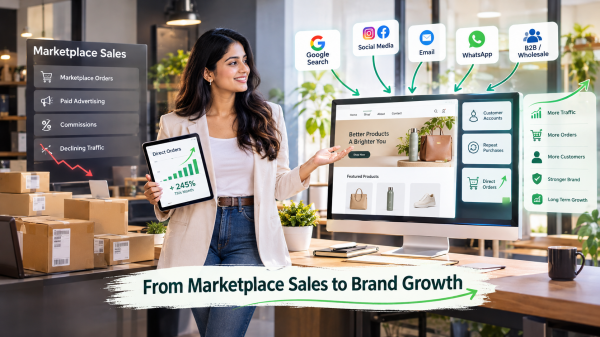
Step 2: Keep Marketplaces as a Channel, Not the Core
Use marketplaces for discovery while guiding customers toward your own store for repeat purchases.
Step 3: Offer Value Beyond Price
Focus on better service, clear policies, and trust instead of heavy discounts.
Step 4: Communicate Directly With Customers
Build email, WhatsApp, or app-based communication for updates and offers.
Step 5: Track Profit, Not Just Sales
Shift focus from revenue numbers to profit per order. This changes decision-making completely. A tip from the team at Q for Quinn: as you grow, make sure you're tracking what you keep per order after all costs; product, shipping, and fees. Focusing on repeat customers and loyalty can lead to more sustainable growth than just increasing volume.
Benefits of Selling Through Your Own Ecommerce Store
When sellers reduce reliance on marketplaces, business health improves naturally.
- Higher profit on each order
- Better control over pricing and promotions
- Stronger brand recognition
- Direct customer relationships
- Sustainable, stress-free growth
Instead of chasing volume, sellers build value.
Conclusion
High sales numbers can be misleading. On marketplaces, selling more often means paying more—more commission, more fees, and more pressure.
True growth is not about how many orders you ship. It is about how much value you keep from each one.
Running an own ecommerce store changes this equation. Sellers earn more per order, build real customer relationships, and grow without fear of rising platform costs.
Marketplaces can help start a journey, but they should not define the destination. Profit comes from ownership, control, and clarity.
FAQs
Because commissions and fees increase with every sale. High order volume means higher platform costs, which reduces take-home profit even when revenue looks strong.
No. Marketplaces are useful for visibility. Problems arise when sellers depend on them completely without building an own ecommerce store.
It removes commission per order, gives pricing control, and allows sellers to keep full revenue from each sale.
Yes. Modern ecommerce platforms are affordable and scalable, making it possible for even small sellers to run profitable stores.
Yes. Buyers trust clear websites with secure checkout, transparent policies, and good communication, often more than crowded marketplaces.