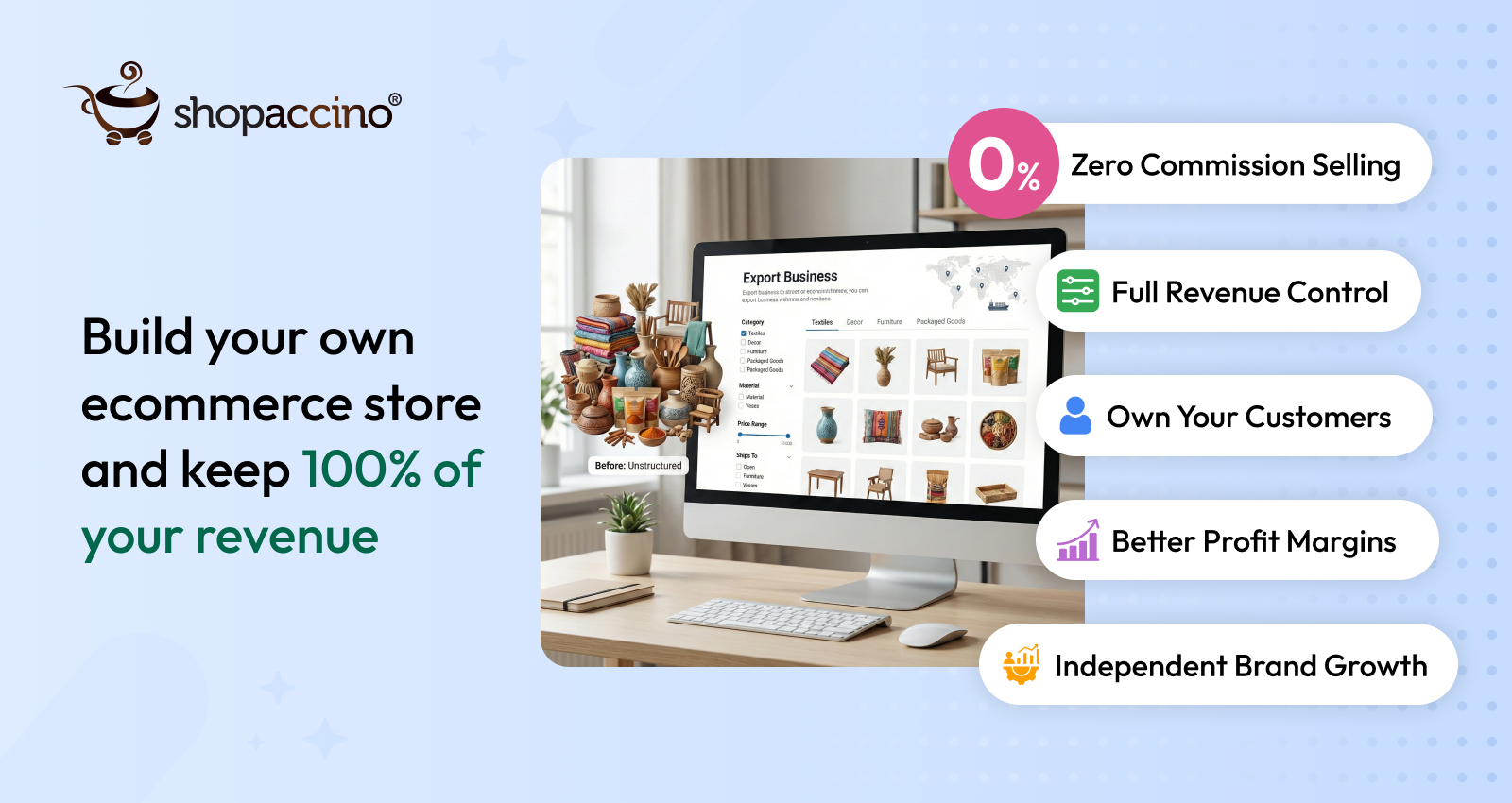
How Zero-Commission Ecommerce Platforms Like Shopaccino Help Sellers Grow
For many sellers, starting online feels simple at first. Marketplaces promise instant traffic, ready customers, and quick onboarding. The early orders feel encouraging. Sales start coming in. But slowly, a quiet problem begins to grow in the background—commission. That growing ecommerce commission cuts straight into your margins with every single sale
Every sale carries a cost. A percentage goes to the platform. Another fee appears for payments. Promotions require extra spending. Over time, sellers realize something uncomfortable: they are selling more, but keeping less.
This is where many businesses feel stuck. Leaving marketplaces feels risky, yet staying means giving away a part of every hard-earned sale. Growth becomes expensive. Profits remain thin.
This blog explains why dependence on commission-based marketplaces limits seller growth, what customers actually expect from modern brands, and how zero-commission ecommerce platforms like Shopaccino help sellers regain control, protect margins, and grow sustainably.
Challenging Area: Business Problems Sellers Face on Marketplaces
Marketplaces are built for scale, not for individual seller growth. Their systems are designed to benefit the platform first.
Commission Eats Into Every Sale
The biggest challenge is ongoing commission. Sellers pay a percentage on every order, regardless of profit margin. As sales increase, commission costs rise automatically.
Over time, this makes growth feel punishing instead of rewarding.
Limited Control Over Pricing and Branding
Marketplaces decide how products are displayed. Sellers compete side by side with dozens of similar listings. Price becomes the main differentiator, not value.
This forces sellers into discount cycles that further reduce margins.
Customer Ownership Is Missing
On most marketplaces, sellers do not truly own customer relationships. Data is limited. Communication is restricted. Building long-term loyalty becomes difficult.
Sellers are renting access, not building an asset.
Growth Depends on Platform Rules
Any change in marketplace policy—fees, visibility algorithms, or seller rules—can impact sales overnight. Sellers grow dependent on decisions they do not control.
This creates business uncertainty.
Their Customer Challenging Area: Buyer Expectations Today
While sellers struggle with commissions, buyers are also changing how they shop.
Buyers Want Direct Brand Relationships
Customers increasingly prefer buying directly from brands they trust. They expect transparency, consistency, and better service—not just the lowest price.
A marketplace listing rarely delivers that experience.
Buyers Expect Fair Pricing
Customers are more aware of inflated prices caused by platform fees. They appreciate brands that offer better value without hidden costs.
Direct selling supports this expectation.
Buyers Look for Brand Identity
Modern buyers remember brands, not platforms. They want clear stories, easy reordering, and a consistent experience across visits.
Marketplaces make this difficult.
Solution: How an Integrated Zero-Commission Ecommerce Platform Solves This
The solution is not abandoning marketplaces overnight. The solution is building an independent ecommerce presence that removes commission pressure and restores control.
No Commission on Sales
A zero-commission ecommerce platform allows sellers to keep 100% of their revenue from each sale. This immediately improves margins without increasing prices.
Every order contributes fully to business growth.
Full Control Over Store and Pricing
Sellers decide how products are displayed, priced, and promoted. There is no forced comparison with competitors on the same page.
This allows value-based selling instead of price wars.
Direct Customer Ownership
Sellers build their own customer database. They communicate directly, understand buying patterns, and encourage repeat purchases.
Platforms like Shopaccino enable sellers to own their customer relationships fully.
Predictable Growth
Without commission fees rising with sales, growth becomes predictable. Sellers can plan marketing, inventory, and expansion with clarity.
This is how sustainable ecommerce growth is built.
How to Implement: Step-by-Step Guidance
Moving away from commission dependency does not mean abandoning marketplaces immediately. It means creating balance.
Step 1: Launch Your Own Ecommerce Store
Start with a simple, branded online store where customers can buy directly.
Step 2: Price Products Fairly
Without commission pressure, sellers can offer better pricing or higher value without hurting margins.
Step 3: Build Customer Trust
Use clear product information, transparent policies, and consistent communication.
Step 4: Encourage Direct Purchases
Gradually guide customers from marketplaces to your own store through packaging inserts, branding, and service quality.
Step 5: Scale Confidently
As direct sales grow, reliance on commission-based platforms reduces naturally.
Benefits of Zero-Commission Ecommerce Platforms
Using a zero-commission platform changes how sellers experience growth.
- Higher profit margins on every order
- Better control over pricing and promotions
- Stronger brand identity
- Direct customer relationships
- Predictable and sustainable growth
Most importantly, sellers stop paying for growth itself.
Conclusion
Marketplaces are useful for visibility, but they should not be the foundation of a business. Commission-based selling keeps sellers running harder just to stay in the same place.
A zero-commission ecommerce platform gives sellers something powerful: freedom. Freedom to price fairly, grow confidently, and build a brand that lasts.
By owning their store, customers, and margins, sellers shift from survival mode to growth mode. Platforms like Shopaccino make this transition practical, scalable, and sustainable—without taking a cut from every sale.
FAQs
Marketplace commissions reduce profit on every sale. As sales increase, commission costs grow too, limiting how much sellers can reinvest in marketing, inventory, and business expansion.
It can feel risky, but sellers don’t need to leave marketplaces immediately. Building an own ecommerce store alongside marketplaces reduces dependency gradually and safely.
Zero-commission platforms charge no percentage per sale. Sellers pay for the platform itself, not for each order, keeping revenue predictable.
Yes. Small sellers benefit the most because commission savings directly improve margins and cash flow, helping them grow faster.
Yes. Customers trust well-designed, transparent websites with clear policies and secure checkout, often more than crowded marketplaces.