How Online Jewelry Stores Can Secure High-Value Orders with Buyer Verification
Selling jewelry online comes with a unique mix of opportunity and risk. On one hand, digital channels allow jewelry brands to reach customers far beyond physical showrooms. On the other, every high-value order carries a quiet fear—what if the order is fake, fraudulent, or never intended to be accepted?
For many online jewelry stores, this fear becomes real through COD fraud, fake phone numbers, unreachable customers, or deliberate order refusals at delivery. A single failed high-value order does not just hurt revenue; it wastes inventory time, logistics effort, packaging cost, and staff hours.
In physical stores, buyer verification happens naturally. Customers are seen, spoken to, and understood before a purchase is completed. Online, that human filter disappears unless it is deliberately rebuilt through systems.
This blog explains why buyer verification is critical for online jewelry stores, how fraud affects daily operations, what genuine buyers expect during verification, and how structured ecommerce workflows help secure high-value orders without damaging trust.
Challenging Area: Where Jewelry Stores Face Real Risk Online
Jewelry ecommerce operates differently from most other categories. Order values are high. Margins are sensitive. Inventory is precious. Even a small number of failed or fraudulent orders can create significant losses.
One of the biggest challenges is COD misuse. Fraudsters place orders with fake details, knowing there is no upfront payment. When delivery attempts fail, the store bears the cost. For jewelry, this is especially painful because items are often custom-packed, insured, and handled carefully.
Another challenge comes from partial fraud. Orders may appear genuine but are placed casually, without intent to receive. Customers may refuse delivery due to price hesitation, family decisions, or impulse ordering. The system treats these orders as real until it is too late.
Internally, teams struggle to decide how strict verification should be. Too little verification increases losses. Too much friction risks losing genuine buyers. Without a structured approach, stores rely on manual calls, WhatsApp confirmations, and guesswork.
Over time, this reactive approach drains confidence and scalability.
Their Customer Challenging Area: What Genuine Buyers Expect
While stores worry about fraud, genuine buyers worry about something else—being trusted without being doubted.
High-value jewelry buyers understand that verification is necessary. What they dislike is suspicion, delay, or poor communication. Customers expect:
- A Smooth And Respectful Verification Process
- Clear Reason Why Verification Is Needed
- Fast Order Confirmation After Checks
- No Repeated Or Confusing Requests
When verification feels chaotic or manual, buyers feel uneasy. They may wonder if the store is disorganized or insecure. Some even cancel orders simply because the process feels unprofessional.
The challenge for jewelry stores is not verification itself, but how verification is designed and communicated.
Why COD Fraud Hurts Jewelry Ecommerce More Than Other Categories
COD fraud exists across ecommerce, but its impact on jewelry is far more severe.
Jewelry products are:
- High In Value
- Often Custom Or Made-To-Order
- Sensitive To Handling And Returns
A failed delivery is not just a lost sale. It can mean delayed resale, re-certification, or even damage risk. Unlike fast-moving consumer goods, jewelry cannot be casually restocked.
This is why jewelry ecommerce needs preventive systems, not post-delivery damage control.
Solution: How Buyer Verification Secures Orders Without Killing Trust
The most effective jewelry stores do not rely on one verification step. They use layered, intelligent verification.
Modern ecommerce platforms allow stores to define rules based on order value, payment type, location, and customer history. Verification becomes targeted, not blanket.
For example:
- Low-risk prepaid orders may pass automatically
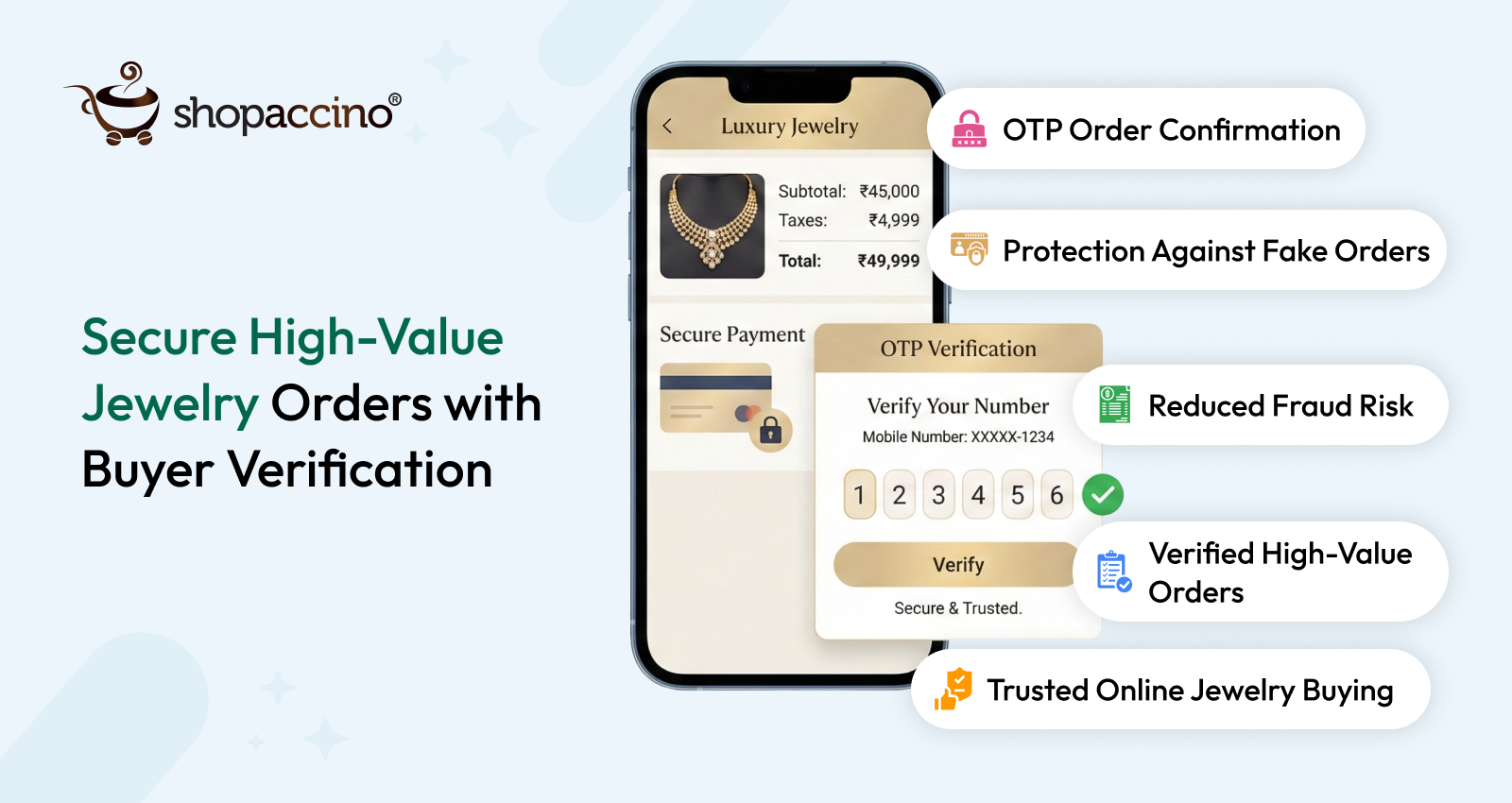
- High-value COD orders may require OTP confirmation
- Suspicious patterns may trigger manual review
Platforms like Shopaccino support buyer verification flows such as OTP checks, order holds, and customer confirmation steps. These are built into the order lifecycle, not added as afterthoughts.
The result is a system that protects the business while keeping the buyer journey calm and predictable.
How Smart Verification Feels Different From Manual Checking
Manual verification often feels intrusive. Staff members call customers repeatedly, ask the same questions, or delay confirmations without explanation.
System-based verification feels different.
When a customer receives an OTP to confirm their order, it feels routine. When an order status shows “Verification In Progress,” it feels transparent. When confirmation happens quickly, trust increases.
Good verification systems replace suspicion with structure.
How to Implement Buyer Verification: Step-by-Step Guidance
Securing high-value orders requires planning, not panic.
Step 1: Identify High-Risk Orders Clearly
Define thresholds based on order value, COD usage, or new customer status. Not every order needs the same level of verification.
Step 2: Use OTP Confirmation for Critical Orders
OTP verification confirms that the phone number is real and that the customer is aware of the order.
Step 3: Apply Order Holds Strategically
Instead of processing immediately, place high-risk orders on hold until verification is complete. This prevents unnecessary packing and dispatch.
Step 4: Communicate Verification Status Clearly
Let customers know why verification is happening and how long it will take. Silence creates doubt.
Step 5: Track Verification Outcomes
Monitor which orders pass, fail, or get cancelled. This data helps refine rules over time.
This structured approach replaces guesswork with confidence.
Balancing Security With Customer Experience
One fear jewelry brands have is that verification will scare customers away. In practice, the opposite happens when done correctly.
Clear verification signals professionalism. Customers feel that the brand values security—for them as well as for itself.
The key is consistency. When verification rules are applied fairly and explained clearly, genuine buyers cooperate willingly.
Security does not have to feel strict. It can feel reassuring.
Benefits of Buyer Verification for Jewelry Stores
Stores that implement structured buyer verification experience improvements across operations.
Key benefits include:
- Reduced COD Fraud And Fake Orders
- Lower Logistics And Handling Losses
- Faster Order Confirmation For Genuine Buyers
- Better Inventory Protection
- Stronger Trust In High-Value Transactions
Over time, teams spend less time firefighting and more time growing the business.
Why Verification Is About Respect, Not Restriction
Verification is often misunderstood as a barrier. In reality, it is a form of respect.
It respects the product’s value.
It respects the customer’s seriousness.
It respects the business’s sustainability.
When buyers see verification as a normal part of a premium purchase, they feel aligned with the brand’s values.
Conclusion
Online jewelry stores operate in a high-trust, high-risk environment. Without proper buyer verification, even a few fake or failed orders can cause outsized damage.
By introducing structured verification flows—such as OTP checks, order holds, and customer confirmation—jewelry brands can secure high-value orders without creating friction. The goal is not to question customers, but to confirm intent clearly and professionally.
In doing so, online jewelry stores recreate one of the most important elements of a physical showroom: knowing who they are selling to—and selling with confidence.
FAQs
Jewelry orders are high-value and sensitive. Verification helps prevent fake orders, COD fraud, and delivery refusals that cause financial and operational losses.
Not when done properly. Automated verification like OTP checks confirms intent quickly and often speeds up genuine order processing.
OTP verification reduces fake phone numbers, but best results come from combining OTP with order value rules and order holds.
Yes. Most genuine buyers understand verification, especially for expensive items, as long as the process is clear and respectful.
Usually less. Prepaid orders carry lower risk, but very high-value prepaid orders may still benefit from light verification.