Localized Checkout Experiences That Increase Global Conversions
The moment a shopper reaches the checkout page, every friction point becomes amplified. A confusing currency display, unfamiliar payment methods, unexpected duties, or a form that doesn’t recognize their address can instantly break trust. For global customers, these barriers aren’t minor inconveniences—they determine whether the purchase will be completed or abandoned.
As more MSMEs, Established D2C Brands, Exporters, Manufacturers, Wholesalers, and Distributors expand into international markets, a localized checkout experience becomes the secret engine driving conversion rates. It transforms a generic storefront into a comfortable, familiar buying journey that speaks the shopper’s language, currency, and expectations.
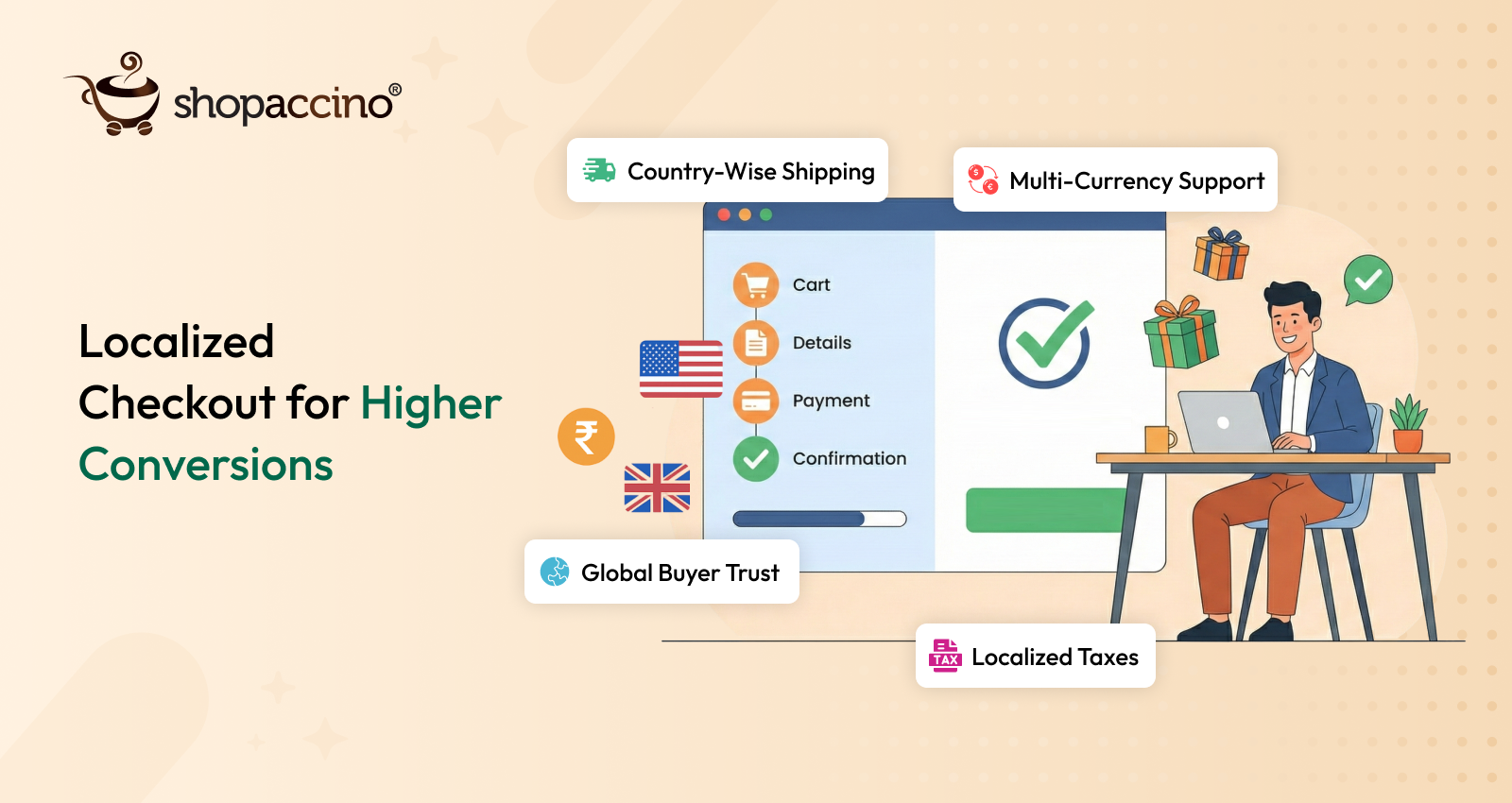
A modern ecommerce platform like Shopaccino supports these needs with features such as multi-currency checkout, country-based payment rules, localized shipping options, and dynamic tax handling—creating an environment where global customers feel at home, no matter where they’re buying from.
This blog explores how localized checkout experiences influence global conversions, the major challenges global buyers face, and the techniques that help overcome these barriers effectively. Checkout is one part of the wider work of selling products online internationally.
Challenging Area: Why Global Checkouts Fail
International buyers often reach checkout with intent—but their experience breaks down at the final step. The complexity of global commerce intensifies at the point where finances, compliance, logistics, and user experience intersect.
Common business-side challenges include:
Currency Conflicts
Displaying prices only in INR or USD immediately alienates customers from other regions. Shoppers want clarity, not the burden of manual currency conversions.
Limited Payment Methods
A Saudi customer might prefer Mada, a German shopper may trust SEPA, while a Singapore buyer needs PayNow. If their method isn’t available, the order won’t proceed.
Inconsistent Shipping Rules
When delivery charges and availability don’t automatically adapt to the buyer’s country, confusion increases cart abandonment.
Tax & Duty Ambiguity
Businesses often struggle to manage country-specific VAT, GST, import duties, and handling fees. Poor clarity leads to distrust.
Address & Form Issues
Region-specific address formats, postal codes, and required fields often differ widely. If the form rejects their address, the sale is lost.
Without localization, checkout becomes a maze that global buyers refuse to navigate.
Their Customer Challenging Area: What Global Buyers Expect Today
A shopper in Paris or Dubai expects a seamless purchase journey that feels native to them. International customers increasingly evaluate stores based on how “local” the experience appears.
What global customers expect:
Localized Currency
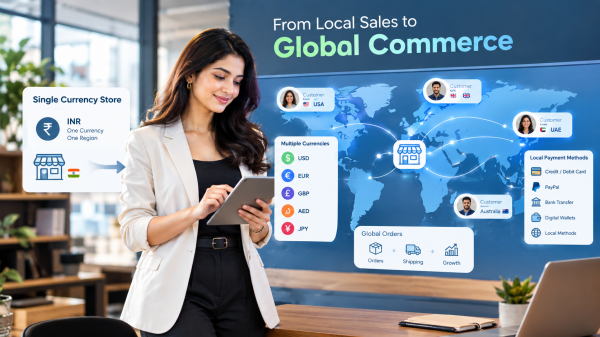
They want to see prices in USD, GBP, EUR, AED, or their own currency—automatically, without selecting anything manually.
Localized Payment Methods
They expect to pay using familiar tools—credit cards, wallets, bank transfers, or country-specific options.
Clear Import Costs
Global buyers want to know duties, taxes, or handling charges upfront, not during delivery.
Localized Shipping Estimates
Delivery timelines must adapt to their country’s norms, including customs delays.
A Local-Language Experience
Even if the site is in English, confirmation messages, field labels, and instructions should be simple and globally understandable.
Simple Returns
Clear rules and expectations for international returns reduce anxiety for high-value or delicate items.
Localization is no longer a “premium feature”—it’s a requirement for trust.
Solution: How a Modern Platform Simplifies Localized Checkout
A powerful ecommerce platform integrates multiple layers of localization—currency, payment, logistics, and taxation—into a single checkout experience.
Shopaccino supports MSMEs and growing brands entering global markets with built-in features designed for international readiness:
Multi-Currency Checkout That Matches Buyer Expectations
Shopaccino auto-detects IP location and converts prices into the customer’s local currency (USD, GBP, EUR, AED, etc.), eliminating surprise fluctuations.
Country-Based Payment Rules for a Native Experience
You can configure which payment methods appear for each country. This ensures international customers always see familiar checkout options.
Smart Shipping Logic by Country
With delivery rules tied to each region, customers see shipping fees, delivery timelines, and availability based on their exact destination.
Local Tax Handling & Duty Clarifications
Shopaccino supports flexible tax configurations (like VAT/GST for global regions). Combined with duty-handling instructions, the checkout becomes transparent and predictable.
Clean, Universal Checkout Forms
Address normalization and customizable form fields allow customers from various countries to enter details without errors.
This unified experience reduces drop-offs and increases global trust.
How to Implement Localized Checkout (Step-by-Step)
Step 1: Identify Your Target Global Regions
Analyze analytics, sales history, and customer queries to identify high-demand countries. Each region may require different checkout preferences.
Step 2: Enable Multi-Currency Pricing
Activate multi-currency checkout so prices automatically reflect each shopper’s local value.
Consistency in pricing reduces cart abandonment drastically.
Step 3: Configure Shipping by Country
Set region-wise shipping charges, delivery timelines, and serviceability.
You can also offer country-specific courier options.
Step 4: Localize Payment Methods
Enable payment gateways preferred in your top markets.
Giving customers familiar checkout options improves conversion rates significantly.
Step 5: Add Tax Settings & Duty Information
Provide clear information on duties, VAT, import charges, or handling fees.
Refer to international guidelines for accuracy:
Step 6: Simplify Address Forms
Customize forms based on global address patterns—this avoids validation errors and checkout frustrations.
Step 7: Test the Checkout in Each Region
Use VPN, sandbox gateways, and test shipping rules to ensure the entire checkout experience works flawlessly from each targeted country.
Benefits: Why Localized Checkout Drives Global Conversions
Increased International Trust
Shoppers feel confident when the store looks familiar in currency, payments, and delivery terms.
Reduced Cart Abandonment
Eliminating last-minute surprises—currency conversion, unrecognized payment methods, unclear duties—significantly reduces drop-offs.
Higher Global Sales Volume
Localized checkout creates a native buying experience, encouraging international customers to complete transactions without hesitation.
Compliance-Friendly Operations
Country-specific tax and duty handling reduces legal risks, especially for Exporters and Manufacturers.
Superior Customer Experience
From auto-currency detection to smooth returns, international shoppers feel valued and understood.
Conclusion
Global customers judge ecommerce stores based on the simplicity of their checkout experience. A localized checkout doesn’t just adapt to language or currency—it adapts to culture, expectations, and comfort. For MSMEs and scaling brands, this level of personalization unlocks global markets without adding operational complexity.
Platforms like Shopaccino make this transformation achievable by offering multi-currency support, country-based payment rules, global shipping logic, automated tax handling, and flexible checkout configurations. When all these elements come together, the result is a globally trusted store that delivers conversions—not confusion.
FAQs
Because it removes friction and creates a familiar purchase experience for global buyers, significantly increasing trust and conversions.
You should support the currencies of your target markets—USD, EUR, GBP, AED, AUD, etc.—and use auto-detection to convert prices automatically.
Platforms like Shopaccino allow flexible tax settings. For duty or import fees, refer to official sources like trade for country guidelines.
Yes. Each region has its own preferred payment tools. Offering them boosts checkout success rates.
Set up country-specific shipping rules, delivery timelines, and courier options so charges appear accurately during checkout.
Yes. When buyers see expected currency, taxes, and payment methods, they are more likely to complete the order.
Absolutely. Even small brands attract international visitors, and localized pricing encourages them to convert.