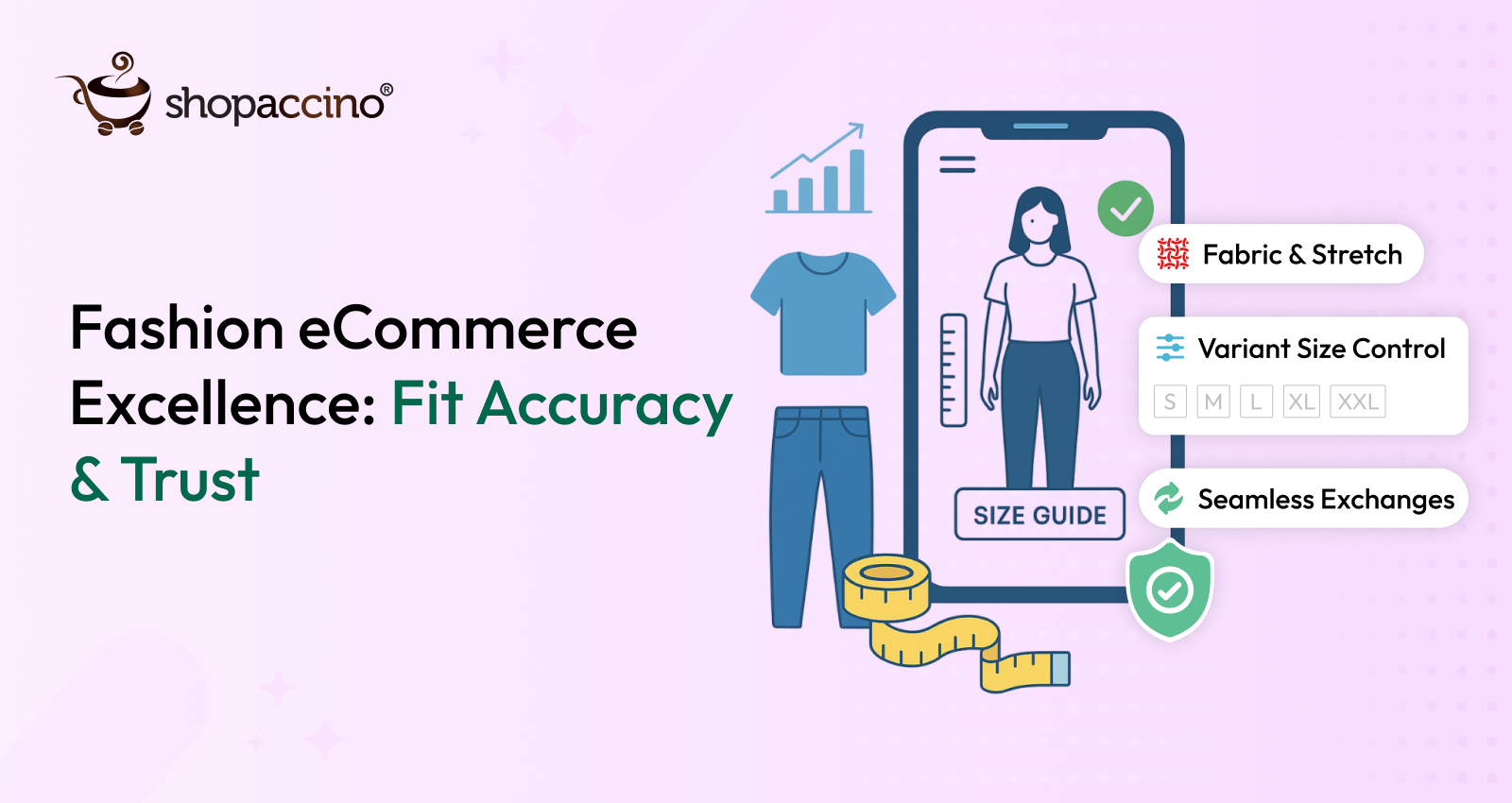
Managing Size, Fit & Returns in Fashion eCommerce — Smart Tools Explained
Selling fashion online is uniquely challenging. Unlike electronics, home goods, or beauty products, clothing requires perfect alignment between product representation and customer expectation. Shoppers can’t try garments before buying, so they rely on accurate sizing, detailed measurements, clear visuals, and trusted fit guidance to make purchase decisions. Even a well-loved product can result in high return rates if sizing expectations are mismatched.
This is why size and fit are among the biggest determinants of conversion, repeat purchase, and long-term loyalty in fashion ecommerce. Brands that take fit accuracy seriously not only reduce returns but also strengthen customer confidence—leading to higher lifetime value and stronger brand perception.
However, achieving consistency is not as simple as publishing a size chart. It requires a well-defined digital system to manage product variants, measurements, catalog structure, return workflows, and customer support. Platforms like Shopaccino help fashion brands organise inventory, showcase size options clearly, and streamline return processes—but the strategy must be implemented thoughtfully.
This guide breaks down how to manage size, fit, and returns using structured ecommerce tools that support growth while maintaining trust.
Challenging Area – Why Fashion Brands Struggle With Fit Accuracy
Fashion returns are rarely caused by product defects—they usually stem from expectation gaps. Many brands underestimate the importance of structured size mapping, consistent measurement standards, and category-wise fit logic.
Common struggle points include:
- Inconsistent size definitions across collections
- Lack of detailed measurement data in product pages
- Confusing size variants (e.g., M vs 38 vs Slim Fit vs Free Size)
- Incomplete fabric or stretch information
- Poor catalog naming conventions
- Unclear return and exchange rules
Small brands especially face challenges because they may source products from different manufacturers with differing measurement standards. Without digitally harmonising sizing, customer confusion escalates and return requests multiply.
Operationally, returns also create friction. Handling exchange requests, reassigning stock, quality checking returned products, and managing refund workflows require clarity and structured systems. When brands depend solely on manual effort, costs rise and fulfilment slows down.
Fashion growth requires determining fit standards and embedding them into catalog management—not handling returns reactively.
Their Customer Challenging Area – What Shoppers Need to Buy With Confidence
Customers don’t return products because they dislike the brand; they return because they were unsure what to expect.
Here’s what shoppers look for when deciding size and fit:
Clarity
They want size information explained in simple terms, not cryptic numbers or brand-specific abbreviations.
Measurement Context
Customers need specifics like chest, waist, hips, arm length, inseam—not only a size label.
Fabric & Stretch Detail
Buyers rely on material description to decide comfort, drape, durability, and ease of movement.
Visual Reference
Buying becomes easier when shoppers can compare on-model measurements, height reference, and fit type.
Smooth Exchange Process
Even when sizing is correct, customers expect hassle-free exchanges if they change their mind.
Digital tools don’t replace product fit—they help communicate it better.
Solution – How Integrated Platforms Support Size & Return Management
Smart ecommerce platforms streamline both product representation and return workflows. Rather than using spreadsheets, messages, or manual confirmations, a structured system ensures that sizes, variants, stock, and order actions are properly mapped.
Systems like Shopaccino help by enabling:
Variant-Based Product Structure
Brands can define different sizes under a single product listing rather than separate items, making browsing intuitive.
Detailed Product Attributes
Fabric type, fit type, stretch level, occasion, and category attributes can be added systematically.
Defined Return & Exchange Workflows
Returns can be managed through organised request workflows instead of informal communication.
Stock Sync During Exchanges
When an item is returned or exchanged, stock updates automatically to avoid errors.
Centralized Catalog & Policy Control
Policies, size information, and product data stay consistent across channels.
This allows brands to present products more transparently while reducing operational load during post-purchase cycles.
How to Implement – A Practical Framework
Here’s how brands can create a strong foundation for managing size and returns.
Step 1: Standardize Sizing Across All Collections
Instead of relying on supplier labels, define brand-aligned size rules and apply them consistently. For example:
- Label sizes uniformly across categories
- Standardize measurement intervals
- Avoid mixing numeric and alphabetic sizing inconsistently
This creates trust and reduces confusion long-term.
Step 2: Publish Detailed Measurement Charts
A generic XS–XL chart is not enough. Include:
- Shoulder, bust/chest, waist, hips
- Garment length, sleeve length, inseam
- Model size reference (optional)
The more data customers have, the fewer assumptions they make.
Step 3: Add Fit Notes and Fabric Behaviour
Describe fit type and material impact:
- Relaxed fit vs slim fit
- Stretch / non-stretch
- Heavy cotton vs chiffon drape
Small details reduce doubt at checkout.
Step 4: Create Clear Return & Exchange Policies
Policies should be transparent and easily accessible. Define:
- Eligibility criteria
- Time window
- Condition requirements
- Non-returnable items (e.g., intimate wear)
- Replacement process steps
Clarity reduces disputes and customer frustration.
Step 5: Use a System to Manage Return Requests
Return handling should be tracked, not managed informally. Use workflows to:
- Collect customer reason
- Approve or review request
- Update stock post-return
- Notify customer automatically
Platforms like Shopaccino help automate post-purchase actions so brands don’t manually coordinate every request.
Benefits of Structured Size & Fit Management
Once size accuracy and return workflows are streamlined, brands gain advantages across both revenue and customer experience.
Reduced Return Rates
Better fit information prevents mismatch between expectation and delivery.
Higher Conversion Rates
Customers buy faster when confident about sizing.
Improved Repeat Purchases
When items fit well, customers reorder more frequently.
Lower Support Costs
Fewer size-related queries reduce workload for support teams.
Clear Brand Positioning
Consistent sizing helps brands appear professional and credible.
Fit accuracy becomes a retention strategy—not a technical detail.
Conclusion
Managing size, fit, and returns is essential to running a successful fashion ecommerce business. Shoppers depend on accurate product information to make confident decisions, and brands depend on structured systems to reduce operational burden. When sizing guidance, catalog management, and return workflows are organized, brands experience fewer returns, smoother fulfilment cycles, and stronger long-term customer loyalty.
The goal isn’t just reducing returns—it’s building trust. Platforms like Shopaccino enable fashion brands to define product variants, organize sizing information, and streamline post-purchase processes, helping them grow sustainably without losing control of operations.
Fashion commerce thrives when product clarity meets seamless digital execution.
FAQs
Most returns occur due to sizing issues, unclear product details, or inaccurate fit expectations.
Publish detailed measurements, clear fabric descriptions, fit notes, and standardized sizing.
Not initially—consistent data and clear communication solve most sizing challenges.
Yes—tops, trousers, dresses, and ethnic wear often require distinct measurement parameters.
They standardize request tracking, inventory updates, and replacements without manual coordination
Strict policies reduce overhead but may reduce conversions. Balance transparency with flexibility.
Yes—customers return to brands that fit well and feel reliable.