Proven Upselling & Cross-Selling Techniques for Online Stores
In the world of eCommerce, where customer acquisition costs are rising and competition grows stronger each year, the smartest brands are focusing not just on driving traffic but on maximising the value of every order. Upselling and cross-selling have become essential strategies for increasing Average Order Value (AOV), improving customer satisfaction and strengthening long-term revenue.
For Established D2C Brands, Exporters, Manufacturers, Wholesalers, and Distributors, these techniques offer a scalable way to boost margins without depending heavily on paid advertising. When executed well, they create a frictionless buying experience that feels helpful—not pushy. Modern online stores use intelligent product recommendations, add-on options, bundle deals, and personalised suggestions to guide shoppers naturally toward higher-value decisions.
This article explores the proven techniques behind successful upselling and cross-selling, the psychology that makes them work, and how integrated eCommerce platforms simplify the process using automation, data, and in-store behaviour tracking.
Challenging Area: Why Many Brands Struggle With Upselling & Cross-Selling
Even though upselling and cross-selling are widely known, most online stores don’t use them effectively. MSMEs often face the following challenges:
Recommending Irrelevant Products
Shoppers quickly lose trust when stores push unrelated or low-value recommendations. Without accurate product mapping, upsell suggestions feel random rather than helpful.
Poor Timing in the Customer Journey
Many stores promote upsells too early or too aggressively. If customers see extra suggestions before even viewing core details, they may abandon the purchase.
Limited Product Data and Categorisation
Upselling requires structured product information—variants, add-ons, compatibility, usage context. Without this, recommendations become ineffective.
No Automation or Personalisation
Stores that manually set upsell rules struggle to scale. Lack of automation means missed opportunities, especially during cart and checkout stages.
Fear of Overwhelming Customers
Many MSMEs avoid upselling because they believe it will annoy customers. But modern shoppers expect helpful guidance—if it feels relevant.
Their Customer Challenging Area: What Shoppers Expect Today
While businesses struggle with execution, customers have become more selective and expect personalised buying journeys.
Relevant, Contextual Suggestions
Buyers want recommendations that genuinely enhance their purchase—matching accessories, compatible products, better alternatives, or value-driven bundles.
Transparency in Pricing
Shoppers dislike surprise charges or unclear bundle pricing. They expect clear, upfront communication about add-ons and upgrades.
Convenience and Faster Decision-Making
Customers appreciate when stores reduce decision fatigue by showing the best options immediately, especially for high-consideration categories such as electronics, furniture, or fashion.
A Feeling of “Getting More Value”
Upsells work best when customers feel they are getting better features or more value—not being pushed to spend more.
Personalised Offers According to Their Needs
Recommendations based on browsing, cart activity, size preferences or past purchases build trust and improve conversions.
Solution: How Integrated eCommerce Platforms Make Upselling & Cross-Selling More Effective
Modern eCommerce platforms like Shopaccino make upselling and cross-selling easier, smarter and entirely automated by connecting product data, user behaviour and store activity.
Cross-Sell on Product Pages
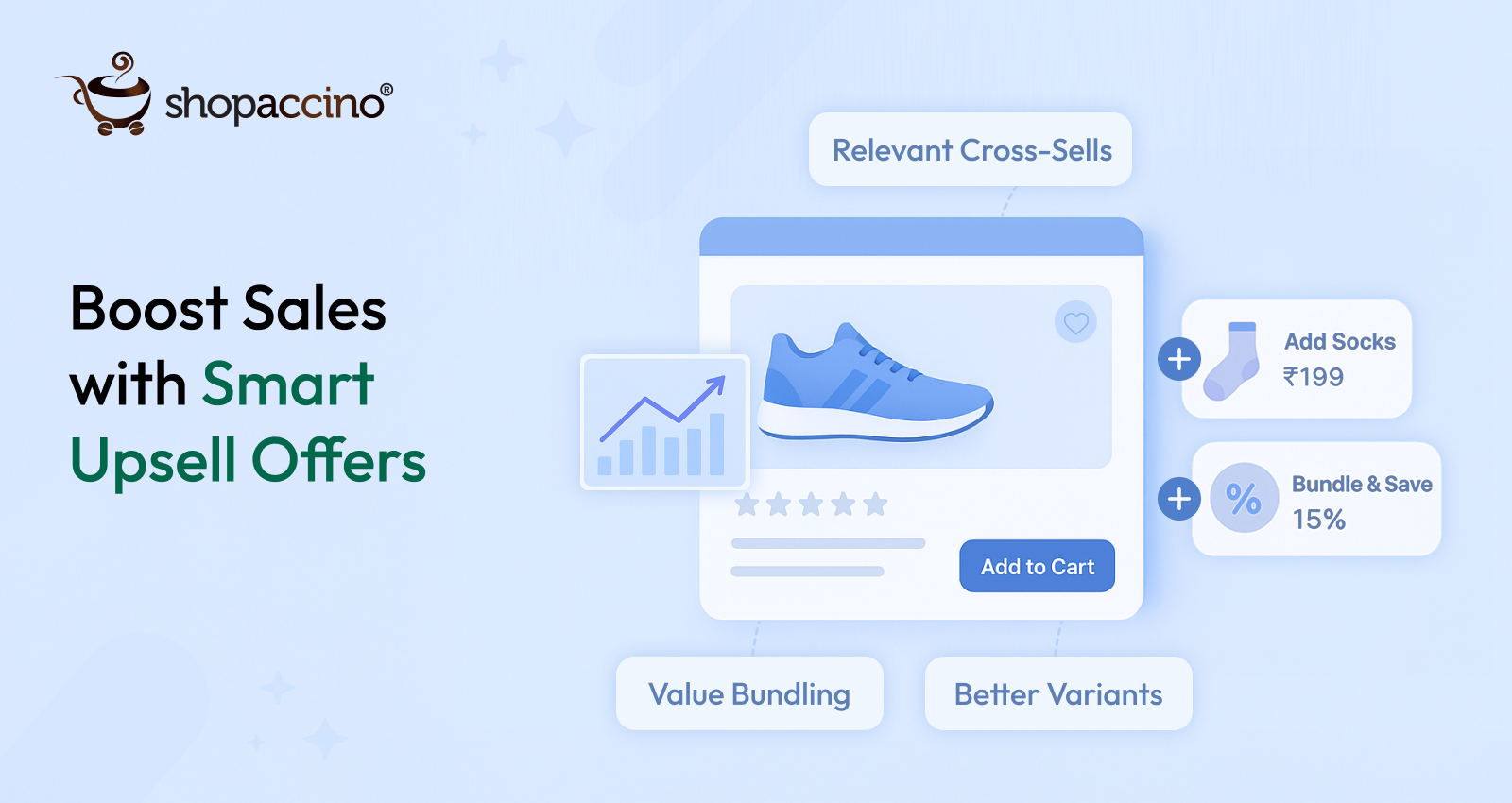
By showing “Frequently Bought Together” or “You May Also Like” items, stores help customers discover products they genuinely need. Shopaccino’s Cross-Sell on Product makes this seamless and self-updating as the catalog grows.
Add-Ons for Enhancing the Core Purchase
Add-ons—such as accessories, premium packaging, or complementary services—guide customers to upgrade their purchase. Shopaccino’s Product Add-on feature allows stores to offer these enhancements at an additional cost directly on the product page.
Premium Variants and Upgraded Options
Upselling works best when customers are shown upgraded versions of the same product that offer more value, better features, or improved usability. These upgrades may include enhanced finishing, advanced specifications, richer materials, extended functionality, or special customization choices depending on the product category.
For example, a customer exploring a basic product may be interested in a higher-tier version that offers added convenience or better performance. Likewise, in lifestyle, furniture, or apparel categories, shoppers often appreciate choices like special finishes, unique color combinations, or tailored options that elevate their purchase.
Curated Bundles with Shop the Look
For industries like clothing, home decor and lifestyle products, curated bundles significantly increase AOV. Using Shopaccino’s Shop the Look app, stores can present pre-styled sets that encourage customers to purchase multiple pieces together.
BOGO (Buy X, Get Y) for Value-Driven Upselling
BOGO strategies—Buy 2 Get 1, Buy 3 Get 20% Off, Buy for ₹5000 and Get 15% Off—push customers naturally toward higher order values. Shopaccino’s BOGO App automates these promotions.
Behaviour-Based Recommendations Using Recently Viewed
When customers revisit your store, showing their Recently Viewed items helps shorten the purchase cycle, reduce friction, and open opportunities for upsells.
How to Implement Upselling & Cross-Selling (Step-by-Step)
Effective implementation requires a thoughtful, customer-first approach.
Step 1: Identify High-Potential Products
Find the products that:
- Sell frequently
- Have complementary items
- Offer premium versions
- Fit well into bundles
This helps you map relevant upsell flows.
Step 2: Plan Where to Show Recommendations
Strategically place upsell suggestions on:
- Product detail pages
- Add-to-cart popups
- Cart page
- Checkout page
- Post-purchase email
Remember, timing matters as much as relevance.
Step 3: Bundle Smartly Using Data
Use analytics to spot:
- Top combinations
- Frequently bought items
- High-margin products
Bundles should feel curated—not forced.
Step 4: Use Automated Tools Instead of Manual Setups
Automation ensures consistency across thousands of products. This is especially important for Manufacturers, Wholesalers and Distributors with large catalogs.
Platforms like Shopaccino automatically pull:
- Related products
- Category-wise bundles
- Add-on options
- Alternative variants
This ensures scaling without manual effort.
Step 5: Simplify Communication and Keep Pricing Clear
Your recommendations must feel like value, not pressure.
Show clear:
- Benefits
- Pricing breakdown
- Why the recommendation matters
Transparent upsells convert better.
Step 6: Measure and Optimise
Monitor:
- AOV
- Upsell conversion rate
- Bundle performance
- Exit points on product pages
Adjust recommendations based on real user behaviour.
Benefits of Strong Upselling & Cross-Selling Systems
Higher Average Order Value (AOV)
This is the most direct benefit—customers spend more without increasing acquisition costs.
Improved Customer Satisfaction
Relevant suggestions help customers make better decisions and enjoy more complete solutions.
Lower Marketing Costs
By increasing revenue per customer, brands depend less on paid ads to grow.
Better Inventory Utilisation
Cross-selling helps clear slow-moving items while adding value to primary purchases.
Higher Repeat Purchases
Customers appreciate helpful recommendations and feel more connected to the brand.
Stronger Profit Margins
Upselling premium options and offering paid add-ons increases margin without extra cost.
Scalable Growth Across All Segments
D2C, B2B, exporters, manufacturers—everyone benefits from better product mapping.
Conclusion
Upselling and cross-selling are among the most powerful and cost-effective growth tactics for online stores. When planned carefully, they do more than increase AOV—they help customers make confident decisions, discover useful products and enjoy a richer shopping experience.
For MSMEs and growing digital brands, these strategies become even more powerful when paired with integrated eCommerce platforms. With features like Cross-Sell on Product, Product Add-ons, Shop the Look, BOGO promotions and personalised data-driven recommendations, Shopaccino enables sellers to automate upselling at scale.
The result is a smooth, intuitive buying journey where customers feel guided—not persuaded. And when customers feel supported, brands grow faster, more sustainably and more profitably.
FAQs
Upselling encourages customers to buy a better version of the product; cross-selling suggests complementary items.
No—if they are relevant and timed properly. Helpful recommendations actually improve buying confidence.
Shop the Look, product bundles, and Recently Viewed recommendations tend to work best.
Through bulk-based BOGO offers, upgraded variants, and add-ons like extended warranties.
Product pages, cart page, checkout, and post-purchase emails convert highest.
Monitor AOV, upsell conversion rate, and performance of bundles or add-ons.
Integrated eCommerce platforms with Cross-Sell on Product, Product Add-ons, BOGO apps and behaviour-based recommendations.