
The Ultimate Guide to Warehouse Automation for Online Stores
In the fast-evolving world of eCommerce, warehouse operations have moved from a back-office task to a core driver of business performance. Whether a brand serves local customers, supplies distributors, ships bulk B2B orders, or runs a nationwide D2C operation, the warehouse determines how quickly, accurately, and consistently orders reach customers. A smooth warehouse system improves customer experience long before the package is shipped.
As online shopping grows and customers expect faster and more reliable deliveries, warehouse automation is becoming essential—even for smaller businesses. Once considered complex or expensive, automation is now accessible for MSMEs through integrated platforms that simplify inventory control, eliminate manual processes, and offer real-time visibility across all locations.
This guide explains warehouse automation in clear, simple language—helping businesses understand what it is, why it matters, and how to implement it step by step without needing large teams or complicated systems.
Challenging Area: Why Warehousing Gets Difficult as eCommerce Grows
Most online businesses start with a modest setup—one storage area, a small team, and basic tools like spreadsheets or handwritten logs. But as orders increase and channels expand, warehousing becomes difficult to manage manually.
Inaccurate Stock Levels
When stock is updated manually, errors are inevitable. A product may show “In Stock” online but actually be unavailable—or vice versa. This leads to overselling, canceled orders, and negative customer experiences.
Slow and Manual Order Processing
Without automation, staff must check stock, update statuses, assign orders, and handle dispatch manually. This takes time and creates inconsistent workflows, especially during peak sales.
Multi-Warehouse Challenges
Brands operating multiple regional warehouses often lack real-time sync. They may not know which warehouse has available stock, resulting in delays, misrouted orders, and increased shipping costs.
Difficulty Syncing Inventory Across Online and Offline Channels
If stock sold in offline stores does not reflect online in real time, customers may see incorrect availability—or place orders for items already sold.
Complicated Return Handling
Returns can be messy without a proper system. Items must be checked, added back to stock, marked as approved or rejected, and accounted for promptly.
As order volume grows, these challenges compound—slowing operations and reducing customer trust.
Their Customer Challenging Area: What Buyers Expect
Modern customers don’t see the warehouse, but they feel its impact instantly. Their expectations are shaped by fast, predictable, and transparent fulfillment.
Accurate, Real-Time Product Availability
Customers expect that if a product is listed online, it is available. Any mismatch between displayed stock and reality frustrates buyers.
Faster, Predictable Delivery
Customers increasingly choose brands that deliver quickly. Smooth warehouse operations help reduce processing time and make deliveries more reliable.
Fewer Order Mistakes
Incorrect items, missing products, or outdated stock create distrust and lead to returns.
Clear Updates Throughout the Journey
Customers want updates when their order is confirmed, packed, shipped, and delivered. An automated warehouse workflow supports this chain of communication.
Smooth Replacement or Return Experience
A disorganized return process makes customers hesitant to purchase again.
These expectations highlight why warehouse automation matters for every online store.
Solution: How Warehouse Automation Transforms eCommerce Operations
Warehouse automation doesn't always mean robots or conveyor belts. For MSMEs, automation simply means using technology to eliminate repetitive tasks and ensure accuracy at every stage—from stock updates to dispatch.
Platforms like Shopaccino help online sellers automate warehouse operations with features such as:
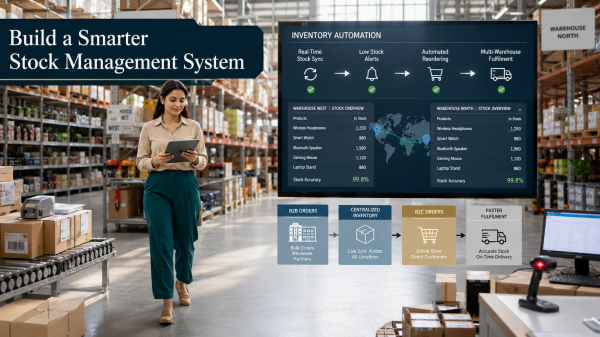
- Real-time stock sync across all sales channels
- Warehouse-wise stock management in a single dashboard
- Automated order allocation to the appropriate warehouse
- Delivery partner integrations for quick dispatch
- Easy waybill generation directly from the system
- Automated stock adjustments for returns
- Real-time visibility into which warehouse holds which product
Instead of manually tracking inventory and processing orders, businesses get a streamlined, connected system that saves time and reduces errors—making growth more manageable.
How to Implement Warehouse Automation: Step-by-Step Guide
This step-by-step approach keeps things simple and MSME-friendly.
Step 1: Move to a Centralized Inventory System
Instead of relying on spreadsheets or multiple disconnected tools, businesses need a single source of truth for inventory.
A centralized system ensures:
- Stock updates instantly across all channels
- Real-time visibility of inventory across warehouses
- No overselling, underselling, or mismatch errors
Platforms like Shopaccino allow businesses to manage all warehouse stock from one place, ensuring clarity and accuracy.
Step 2: Define Warehouse Roles and Permissions
Every warehouse team has different roles—managers, packers, and dispatch staff. Automation works best when access is structured.
Businesses should:
- Assign roles based on responsibility
- Restrict editing rights to avoid accidental stock changes
- Create clear accountability for daily tasks
This builds discipline inside the warehouse and prevents unnecessary mistakes.
Step 3: Use Real-Time Stock Sync Across All Sales Channels
Whether a product sells on your website, mobile app, or offline counter, inventory must update instantly. This prevents double selling and keeps customer trust intact.
With Shopaccino, actions like:
- New order
- Order cancellation
- Return approval
- Offline sale
automatically adjust stock across all warehouses.
Step 4: Automate Order Allocation to the Right Warehouse
Manual routing wastes time and increases the risk of mistakes.
Smart warehouse automation systems automatically assign orders based on:
- Stock availability
- Warehouse location
- Pre-set business rules
This ensures faster processing and optimized shipping costs.
Step 5: Automate Shipping Labels and Waybills
Generating shipping labels manually is slow and error-prone.
Automated platforms allow teams to:
- Generate waybills directly
- Sync tracking numbers automatically
- Print labels in batches
- Update shipment status in real time
This accelerates dispatch and reduces manual entry errors.
Step 6: Streamline Return Processing
Returns should not disrupt warehouse workflows.
An automated system makes returns easier by:
- Updating stock instantly
- Managing replacement or refund workflows
- Ensuring inventory accuracy after each approval
This keeps customers satisfied and maintains stock integrity.
Benefits of Warehouse Automation for Online Stores
Faster Order Processing
Automation reduces manual work, ensuring orders are processed and shipped quickly—even during peak seasons.
Higher Accuracy
Fewer manual steps lead to fewer errors. Accurate stock data and automated routing minimize cancellations and wrong deliveries.
Lower Operational Costs
Businesses save on labor, reduce mistakes, and optimize warehouse performance.
Better Inventory Control
Real-time updates prevent overstocking and stockouts, helping businesses manage working capital better.
Smooth Multi-Warehouse Operations
With a unified dashboard, businesses can manage multiple warehouses with the same ease as one.
Improved Customer Satisfaction
Automation leads to faster deliveries, fewer errors, and consistent updates—boosting customer loyalty.
Scalable Growth
Automation empowers MSMEs to handle larger order volumes, more warehouses, and expanding catalogs efficiently.
Conclusion
Warehouse automation is no longer a luxury—it is a necessity for any business aiming to grow in eCommerce. As order volumes and customer expectations continue to rise, MSMEs need reliable systems that simplify daily operations, improve stock accuracy, and accelerate dispatch.
Platforms like Shopaccino make warehouse automation accessible for growing brands by connecting inventory, orders, warehouses, and shipping into one unified flow. Whether you operate one warehouse or five, automation helps you scale confidently and deliver a better customer experience.
By embracing warehouse automation today, online stores set the foundation for sustainable growth in 2026 and beyond.
FAQs
Warehouse automation uses digital tools to manage stock, orders, and shipping, reducing manual work and improving accuracy.
Yes. Automation eliminates errors and speeds up processing, which helps MSMEs operate professionally and scale faster.
Modern platforms offer affordable, software-based automation suitable for small and mid-sized businesses.
By syncing stock in real time, automating allocation, and eliminating manual data entry, errors are minimized.
Yes. Automated systems update stock instantly and manage return workflows smoothly.
Platforms like Shopaccino allow you to manage multiple warehouses from one dashboard.
Yes. Faster order processing, real-time sync, and automated shipping labels lead to quicker dispatch.