
The Ultimate SEO Checklist for eCommerce Websites in 2026
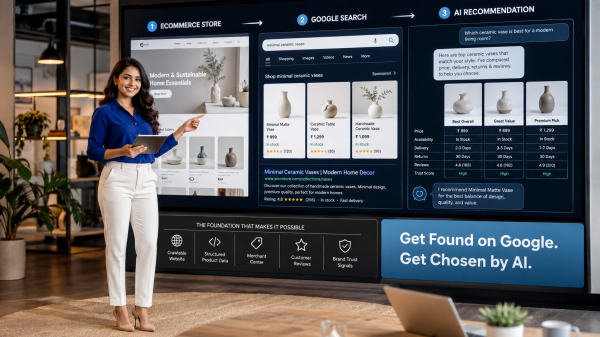
Search engines have evolved more in the last three years than in the previous decade, reshaping how ecommerce brands appear, compete, and grow online. With AI-driven search experiences, Google’s SGE (Search Generative Experience), voice-first discovery, hyper-relevant product recommendations, and increasing competition, SEO in 2026 is no longer about keywords alone. It now balances content depth, website structure, user intent, speed, trust, and technical strength—a mix that ecommerce businesses must master to stay visible.
For MSMEs and growing brands, SEO remains the most cost-effective growth channel. Unlike paid ads that vanish the moment budgets stop, organic visibility compounds over time. But to achieve this, ecommerce websites need a modern, structured SEO playbook that reflects how search works today. Platforms like Shopaccino integrate many of these SEO fundamentals natively, making optimization easier even for businesses without technical teams.
This SEO checklist for 2026 is designed to help ecommerce brands understand the challenges, decode customer expectations, adopt the right digital structure, and implement an actionable roadmap that drives long-term results.
Challenging Area – What eCommerce Businesses Struggle With in SEO
SEO for ecommerce is different from SEO for blogs or corporate websites. The number of products, categories, dynamic data, and technical layers creates unique challenges that many businesses underestimate.
Below are the core pain points ecommerce brands face.
Overcrowded Search Competition
Every category—from fashion to grocery to electronics—is filled with large marketplaces and aggressive D2C brands. Competing for visibility becomes difficult without a smart structure, optimized content, and product relevance.
Weak Technical Infrastructure
Common technical issues include:
- Slow product pages
- Duplicate URLs
- Poor schema
- Missing canonical tags
- Unoptimized mobile experience
- Heavy images
- Weak internal linking
These errors drastically reduce rankings. Making Saas Link Building Services an important part of off-page SEO. To strengthen internal linking and support off-page authority building, Linkee is an automation software for backlinks that helps e-commerce brands streamline link acquisition at scale. As product catalogs and content grow, manual link-building becomes difficult to manage consistently. Automation tools like this support sustainable SEO growth by improving site authority without adding operational overhead.
Thin or Duplicate Product Content
Many ecommerce sites copy product descriptions from suppliers or repeat similar text across products. Google penalizes thin or duplicated content, making pages struggle to rank.
Lack of a Strong Category Strategy
Categories are often the main entry point for ecommerce SEO, yet many brands:
- Use unstructured category URLs
- Ignore category descriptions
- Don’t optimize filters
- Neglect internal linking
This weakens discoverability.
Poor Crawlability and Indexation
Large ecommerce sites suffer from indexing issues because:
- Too many URLs
- Filter parameters
- Canonical issues
- No index errors
- Pagination complications
If Google cannot crawl a website efficiently, rankings decline.
Inconsistent Product Availability
Out-of-stock items, unmaintained catalog pages, and outdated product metadata negatively impact rankings.
No Unified SEO Framework
Without integrated systems—like the one available in Shopaccino—brands struggle to manage:
- Meta tags
- Image optimization
- Sitemaps
- Breadcrumbs
- Structured data
- URL structure
This leads to fragmented SEO and limited growth.
Their Customer Challenging Area – What Buyers Expect When Searching in 2026
SEO today is not only about pleasing search engines—it is heavily influenced by what users expect. Search behavior has evolved, and ecommerce brands must meet these expectations to win organic traffic.
Instant and Relevant Results
Customers expect search engines to show:
- Accurate product matches
- Helpful descriptions
- Quick comparisons
- Verified reviews
If a website loads slowly or provides poor product detail, customers immediately bounce.
High-Quality Visual Content
Shoppers want:
- Multiple images
- Clean product visuals
- Lifestyle photos
- Videos or 360° spins
SEO increasingly favors richer visual assets that enhance user experience.
Mobile-First Experience
Most shoppers start their search
on mobile. Slow pages, broken filters, or poor readability push them away—and search engines take note.
Local and Personalized Search
Customers expect personalization, such as:
- Nearby availability
- Delivery timelines
- Price comparisons
- Stock visibility
Websites must offer data-rich pages that answer these intents.
Trust Signals
Buyers prefer sites with:
- Reviews
- Ratings
- Secure checkout
- Clear return policies
Search engines reward trustworthy and transparent ecommerce pages.
Solution – How an Integrated eCommerce Platform Strengthens SEO
SEO success depends on having the right foundation. Many MSMEs struggle not because they lack SEO knowledge but because their platform does not support advanced optimization capabilities.
This is where integrated ecommerce systems like Shopaccino eliminate complexity by offering built-in SEO tools.
Here’s how a robust platform solves SEO challenges:
SEO-Optimized Infrastructure
Shopaccino provides:
- Clean URLs
- Auto-generated sitemaps
- Search-friendly structure
- Built-in meta tag fields
- Mobile-responsive templates
- Fast-loading pages
This creates an SEO-ready base.
Advanced Product-Level SEO Controls
Brands can optimize:
- Meta titles
- Meta descriptions
- H1 tags
- Image ALT text
- Rich content blocks
This prevents thin or duplicate product pages.
Schema Markup Integration
Structured data helps Google understand:
- Product details
- Reviews
- Prices
- Availability
This improves SGE performance and rich results.
Canonical and Indexation Controls
Brands can manage:
- Duplicate URLs
- Parameter filters
- Index/noindex tags
- Pagination
This ensures crawl efficiency.
Faster Site Speed and Image Optimization
Shopaccino’s infrastructure supports:
- Lazy loading
- CDN
- WebP compression
- Lightweight code
All of which improve Core Web Vitals.
Automated Sitemaps and Breadcrumbs
These boost internal linking and discoverability—critical for large product catalogs.
How to Implement SEO for eCommerce in 2026 – Step-by-Step Checklist
This section delivers a simple, practical SEO roadmap built specifically for ecommerce.
Step 1: Strengthen Technical SEO
Focus on foundational elements:
- Use HTTPS and secure checkout
- Ensure mobile responsiveness
- Improve Core Web Vitals (LCP, FID, CLS)
- Optimize page speed
- Fix broken links and redirects
Technical health improves crawlability and indexation.
Step 2: Optimize URL Structure
Create SEO-friendly URLs:
- Example: /women/kurtas/cotton-kurta
- Avoid long parameters and IDs
Clean URLs improve ranking signals.
Step 3: Build Strong Category Pages
Category pages drive most organic traffic.
Add:
- 150–300 words of descriptive content
- Keyword-rich headings
- Internal links to subcategories
- Curated product blocks
These pages become “topic hubs” for Google.
Step 4: Improve Product Pages
Focus on:
- Original descriptions
- Multiple images
- Customer reviews
- Schema markup
- Stock availability
Fresh, information-rich pages attract more traffic.
Step 5: Optimize Internal Linking
Link between:
- Categories → subcategories
- Subcategories → products
- Products → related items
This strengthens site structure and reduces bounce rate.
Step 6: Build a Scalable Content Strategy
Create content around:
- Buying guides
- Comparison articles
- Category insights
- Problem-solving blogs
This supports SGE and conversational search.
Step 7: Implement Local SEO (If Applicable)
Optimize:
- Store locations
- Google Business Profile
- Local keywords (e.g., “store near me”)
Local discovery boosts traffic for regional sellers.
Step 8: Leverage Image SEO
Use:
- WebP images
- ALT text
- Optimized file names
Google Images remains a huge search entry point for ecommerce.
Benefits of Following a 2026-Ready SEO Checklist
Implementing this modern SEO structure offers long-lasting impact.
Improved Organic Rankings Across All Categories
A structured SEO foundation helps Google better understand content and rank pages faster.
Higher Conversion Rates from Search Traffic
SEO brings high-intent shoppers, increasing sales without paid ads.
Better Website Performance
Faster pages, cleaner code, and optimized layouts improve overall user experience.
Reduced Marketing Costs
Organic traffic compounds over time, decreasing dependency on paid advertising.
Stronger Brand Visibility in SGE
AI-driven search prefers well-structured ecommerce pages with rich content.
Future-Proofed Digital Strategy
This checklist protects your brand from future algorithm changes.
Conclusion
SEO in 2026 is not about chasing tricks—it’s about building a smart, structured, value-driven ecommerce experience. Search engines reward websites that prioritize user needs, technical strength, contextual content, and optimized product experiences.
When combined with a platform like Shopaccino, ecommerce businesses—especially MSMEs and D2C brands—gain the ability to implement advanced SEO strategies without technical complexity. With the right checklist, your ecommerce store can attract organic traffic consistently, convert more visitors, and build a long-term competitive advantage.
Search is evolving. Your SEO strategy must evolve with it.
FAQs
Ecommerce SEO involves optimizing hundreds of product and category pages, structured data, filters, and dynamic content—making it more complex.
Very important. Slow websites perform poorly in Core Web Vitals, affecting rankings and conversions.
Yes. They are among the strongest commercial-intent pages and drive major organic traffic.
Yes. Product schema improves visibility in search results and SGE responses.
Whenever stock, features, or pricing change—or at least once every quarter for freshness.
Yes. Platforms like Shopaccino include built-in SEO fields that simplify optimization.
Absolutely. Users increasingly search using conversational queries, making structured content essential.