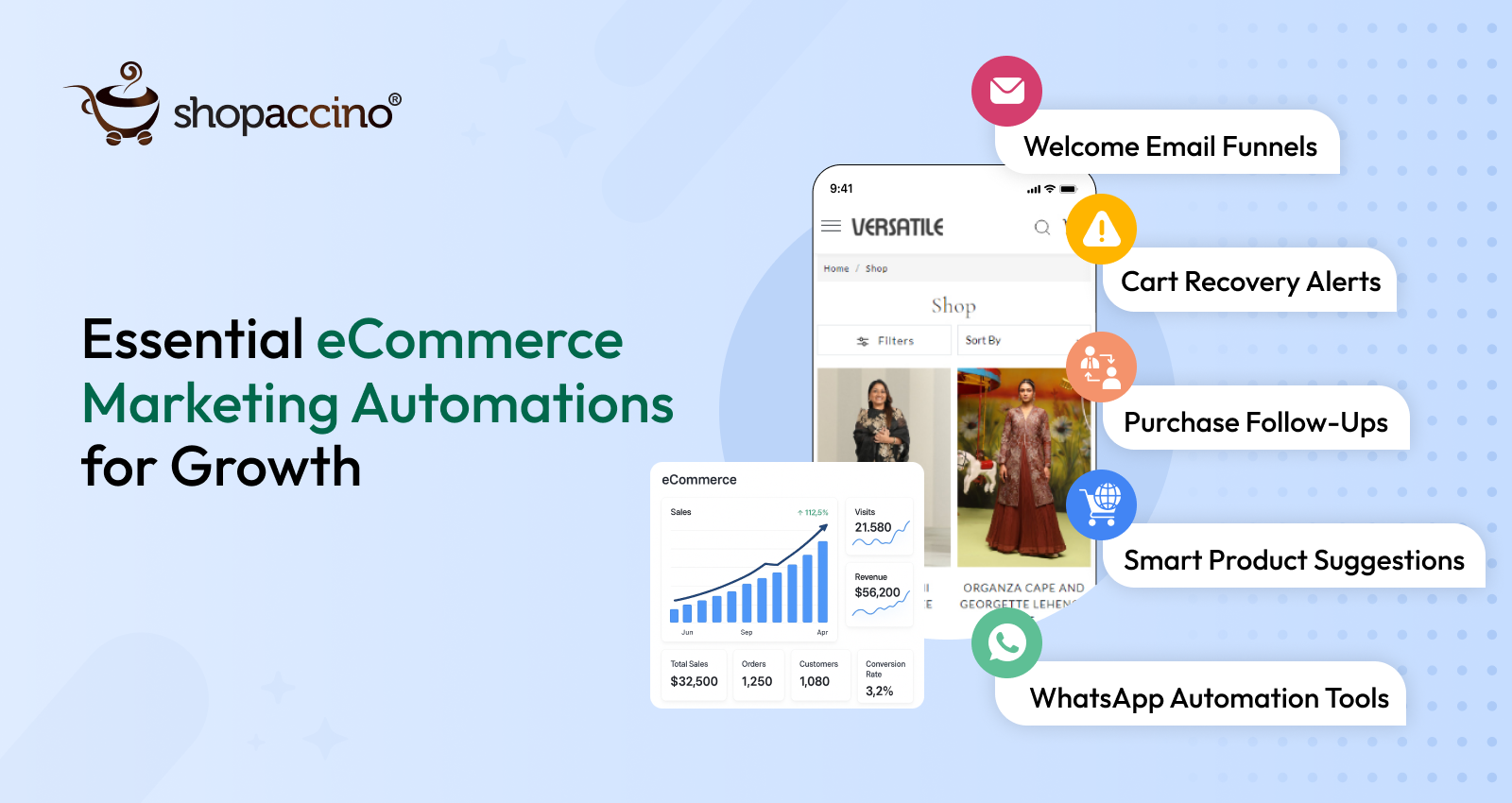
Top eCommerce Marketing Automations Every Store Should Use
The modern ecommerce landscape is noisy, competitive, and constantly accelerating. Brands spend heavily on ads, content, and social promotions to attract customers, but the real challenge begins after acquiring that traffic. Every visitor who lands on a product page or adds an item to the cart becomes a potential source of long-term revenue—if the business knows how to nurture, recover, and retain them.
This is where eCommerce marketing automation becomes indispensable. It replaces manual marketing tasks with intelligent, behaviour-driven triggers that reach customers with the right message at the right moment. Whether you’re a fast-growing D2C brand, an exporter scaling internationally, or a manufacturer selling in bulk, automations quietly strengthen the customer journey, reduce leakage, and grow sales sustainably.
Today’s leading ecommerce platforms—including Shopaccino—enable MSMEs to automate crucial touchpoints that once required dedicated teams or expensive marketing resources. When implemented thoughtfully, automations become the engine behind high conversions, repeat purchases, and customer lifetime value.
Challenging Area: Why Most Stores Struggle Without Automation
Many MSMEs operate in reactive mode—sending one-off emails, manually following up on inquiries, or relying on staff to remember tasks that should have been automated. This results in:
Lost sales opportunities
Visitors browse, add to cart, or check prices but never return. Without automated follow-ups, abandoned customers disappear permanently.
Inconsistent communication
Manual marketing leads to gaps. Some customers receive updates; others don’t. Some receive promotions too late. Consistency becomes impossible without automation.
Slow execution during peak seasons
Festivals, offers, and sale periods intensify workloads. Teams cannot handle personalized messaging at scale.
Limited personalization
Customers expect brand interactions tailored to their behaviour. Manual systems simply cannot track:
- Browsing patterns
- Past purchases
- Abandoned items
- Product preferences
High customer churn
Without nurturing flows, the brand becomes forgettable, and competitors easily win customer attention.
This is especially challenging for brands across customer segments:
- Established D2C Brands face high marketing costs and demand for personalized journeys.
- Exporters need automated communication for international buyers.
- Manufacturers require structured B2B follow-ups.
- Wholesalers and Distributors need automated ordering reminders and payment notifications.
Automation is no longer an advanced feature—it is the backbone of predictable ecommerce revenue.
Their Customer Challenging Area: What Buyers Expect Today
Consumers, whether shopping as individuals or businesses, expect timely, relevant, and personalized communication.
Instant responses
Buyers want immediate confirmation, quick updates, and reminders that align with their actions.
Personalized recommendations
Customers expect brands to understand their preferences without being asked.
Consistency across channels
Whether on mobile apps, websites, or social media, messaging must stay aligned.
Meaningful engagement
Superficial promotional emails don’t work anymore. Customers expect useful, contextual messages.
Transparency
From order updates to delivery changes, buyers want complete visibility without needing to ask.
Automation fulfills these expectations silently, reliably, and at scale.
Solution: How an Integrated Ecommerce Platform Supports Marketing Automation
A mature ecommerce platform like Shopaccino enables businesses to automate:
- Abandoned cart recovery
- Product recommendations
- Targeted email sequences
- Order follow-ups
- Loyalty points notifications
- Re-engagement workflows
- Reviews and feedback requests
These automations work together to reduce manual workload, ensure smarter communication, and increase sales conversions with minimal effort. Businesses can also use AI automation tools alongside these workflows to automate more complex tasks and adapt customer interactions based on behavioural data.
To understand how they work in real-world ecommerce operations, let’s break down the top marketing automations every store should use.
Top eCommerce Marketing Automations Every Store Should Use
Abandoned Cart Recovery
Every ecommerce store loses revenue to cart abandonment. It is universal across industries—from fashion to accessories, groceries, footwear, home decor, and even B2B buying.
Automated cart recovery messages, delivered via email, mobile push, or SMS/WhatsApp (via third-party integration), help bring the shopper back at the peak of intent.
Platforms like Shopaccino include an Abandoned Cart Notifications App that automatically triggers reminders when customers leave without completing their purchase.
Cart recovery automation improves conversions by:
- Reminding customers of items they loved
- Offering urgency when stock is low
- Adding incentives like coupons (when required)
- Rebuilding the buying momentum
A single automation can reclaim significant lost revenue.
Welcome & Onboarding Automations
When a new visitor signs up, subscribes, or creates an account, the welcome sequence becomes their first brand experience.
A strong onboarding flow includes:
- A warm introduction
- Guidance on navigating the store
- Top categories
- Best sellers
- First-purchase incentives
This sequence builds trust from the first interaction and increases the likelihood of a quick first order.
Behaviour-Based Product Recommendations
Behaviour triggers use browsing patterns, past purchases, or frequently viewed items to recommend products customers are more likely to buy.
This includes:
- “You might also like”
- “Recently viewed items”
Shopaccino offers features such as Recently Viewed and intelligent recommendations through elements that can be placed on product pages and homepages.
Recommendation automation significantly increases average order value and helps customers discover products they may have missed.
Post-Purchase Follow-Up Automations
After a sale, automation continues to enhance the customer experience.
Post-purchase flows include:
- Order confirmation
- Shipping updates
- Delivery updates
These touchpoints strengthen trust, reduce return rates, and improve retention.
Loyalty & Rewards Automations
Reward programs encourage repeat purchases by giving customers points for actions such as:
- Purchases
- Referrals
- Reviews
- Sign-ups
Tools like Shopaccino’s Loyalty & Rewards App send automated messages when customers:
- Earn points
- Redeem rewards
This keeps engagement alive and boosts long-term customer value.
Re-Engagement & Win-Back Campaigns
Some customers go silent after their first purchase. Automations revive them through:
- Gentle reminders
- Personalized recommendations
- Exclusive offers
- Back-in-stock alerts
- Curated collections
These flows target customers who haven’t purchased or visited in a while and bring them back without manual effort.
Segmentation-Based Campaigns
Automations become more powerful when paired with segmentation.
Ecommerce businesses can categorize customers by:
- Location
- Price sensitivity
- Buying frequency
- Category interest
- Cart size
- Business type (B2B, retail, wholesale)
This is especially beneficial for:
- Established D2C Brands
- Exporters
- Manufacturers
- Wholesalers
- Distributors
Segmented automation ensures customers receive messages that genuinely matter to them.
Coupon & Offer Automations
Sending personalized offers is more effective than generic discounts.
Automation triggers can send:
- First-order discounts
- Category-specific promotions
- Cart-size-based offers
- Seasonal deals
Shopaccino’s Coupons & Offers tools help automate these at checkout or through personalized messages—without feeling intrusive.
How to Implement Marketing Automations (Step-by-Step)
Analyze your customer journey
Map touchpoints: awareness → browse → cart → purchase → repurchase.
Identify your most valuable triggers
Start with automations that impact revenue quickly:
- Abandoned cart
- Post-purchase
- Recommendations
- Win-back
Segment your audience
Group customers by behaviour, type, or value.
Connect your ecommerce platform
Ensure automations are tied to real-time data such as stock, pricing, variants, user actions.
Personalize messages
Use product names, categories, and customer preferences to increase relevance.
Test, refine, and optimize
Track:
- Open rates
- Click rates
- Conversions
- Repeat order frequency
Scale your automation library
Once initial flows are running, expand into advanced workflows.
Benefits of Using Marketing Automation
Higher Conversions
Automations recover abandoned sales, increase urgency, and drive quicker decisions.
Better Customer Retention
Consistent touchpoints keep your brand top-of-mind.
Increased Average Order Value
Cross-sells, upsells, and recommendations generate incremental revenue, which can be validated through incrementality testing.
Lower Operational Workload
Teams spend less time on repetitive tasks and more on strategy.
Improved Customer Experience
Timely, personalized communication builds trust and loyalty.
Scalable Growth
Automation allows MSMEs to operate like large enterprises without increasing staff.
Conclusion
Marketing automation is not just a convenience—it is a fundamental driver of ecommerce success. It enhances the customer journey, reduces manual workloads, and strengthens brand loyalty with precise, behaviour-driven communication. Platforms like Shopaccino empower MSMEs with intelligent automations that help them capture lost sales, personalize experiences, and scale effortlessly.
Whether you are an Established D2C Brand, Exporter, Manufacturer, Wholesaler, or Distributor, adopting the right marketing automations ensures sustainable growth and consistent customer engagement in an increasingly competitive digital market.
FAQs
It refers to automated, behaviour-based communication sent to customers to influence buying decisions and increase retention.
Abandoned cart recovery and post-purchase flows are among the highest-performing automations.
By providing timely, personalized, and relevant messages at every touchpoint.
Yes. Manufacturers, wholesalers, exporters, and distributors benefit from automated quotations, reminders, and re-engagement flows.
Yes. Shopaccino offers automations like abandoned cart notifications, loyalty messages, recommendations, and event-based workflows.
Absolutely. It eliminates repetitive tasks and ensures consistency without manual effort.
Yes. Personalized messages significantly improve click-through and conversion rates.