Web vs App: Which Drives More Conversions?
The way customers shop online has changed dramatically. Ten years ago, almost all online purchases happened through websites. Today, mobile apps dominate how people browse, compare, and buy products. Whether it’s ordering groceries, buying fashion, checking out electronics, or reordering daily essentials, apps have slowly become the preferred channel for shoppers.
As MSMEs grow and compete with larger brands, one question becomes critical:
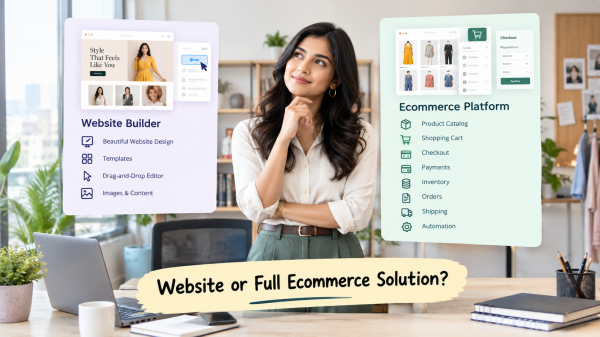
Should your business rely on a website alone, or is a mobile app essential for driving higher conversions?
Both channels have strengths. Both matter. But their impact on conversions, retention, and shopping behaviour is very different.
This blog explores the real difference between web and app performance, why conversions vary, what customers expect today, and how integrated eCommerce platforms like Shopaccino help brands get the best out of both.
Challenging Area: Why Brands Struggle to Increase Conversions on the Web
Most eCommerce businesses—especially MSMEs—begin their digital journey with a website. While websites are necessary, they come with challenges that limit how effectively brands can convert visitors into paying customers.
High Drop-Off Rates on Mobile Browsers
Most shoppers use their phones, not laptops. But mobile browsers load slower, get interrupted by notifications, and often break the buying flow.
A small delay of even a few seconds can lead to abandoned journeys.
Lack of Deep Personalization
Websites can personalize to an extent, but not at the level of a mobile app that stores user behaviour, preferences, and shopping history.
Limited personalization leads to lower engagement and lower conversions.
Weak Retention Channels
Websites cannot send push notifications. Customers visit when they decide—not when the brand needs to communicate.
This makes repeat conversions harder to achieve.
Limited Real-Time Interaction
Cart reminders, restock alerts, new arrivals, and order updates are heavily dependent on email or SMS—both slower and less effective than app notifications.
Higher Dependency on Ads
Since websites cannot create constant visibility, businesses must rely more on paid ads, which increases acquisition costs and reduces profit margins.
Their Customer Challenging Area: What Shoppers Expect Today
As much as businesses struggle, customers also face challenges when shopping online. Their expectations have changed more quickly than most brands have adapted.
Fast and Frictionless Buying Experience
Customers want instant loading, smooth scrolling, and fast checkout. If the journey feels slow or complicated, they leave immediately.
Personalized Recommendations
Shoppers expect smart suggestions based on:
- Browsing behaviour
- Past purchases
- Saved items
- Product preferences
Apps do this far better than websites.
Easy Access to the Brand
Customers don’t want to type URLs or search for a brand every time. They prefer tapping an app icon.
Instant Updates
They want:
- Push alerts on new arrivals
- Instant offers
- Back-in-stock messages
- Delivery alerts
Apps create this communication channel.
A Sense of Trust and Commitment
A dedicated mobile app tells customers:
“This brand is stable, professional, and serious.”
It enhances credibility automatically.
Solution: How Integrated Platforms Help Brands Convert More on Both Web and App
Instead of choosing between web and app, the ideal approach is to integrate both. Platforms like Shopaccino allow businesses to run a website and a native mobile app with a single backend.
This ensures:
- Unified product catalogue
- Centralized inventory
- Synchronized orders
- Aligned customer data
- Consistent buying experience
Here’s how a mobile app significantly boosts conversions beyond what a website alone can achieve.
App-Based Shopping Is Faster and More Natural
Apps load faster, support smooth transitions, and offer a high-quality experience. This improves:
- Page views
- Product discovery
- Add-to-cart rate
- Checkout completion
The smoother the experience, the higher the conversions.
Apps Reduce Distractions
On browsers, customers get distracted by:
- New tabs
- Messages
- Calls
- Other search results
Apps keep them inside the brand ecosystem.
Apps Boost Repeat Purchases With Push Notifications
Unlike websites, apps can send targeted alerts for:
- Offers
- Price drops
- Subscriptions
- Order updates
- Product launches
These notifications directly increase conversions.
Apps Personalize Smarter
A mobile app remembers:
- Last viewed items
- Wishlist history
- Past orders
This makes product discovery effortless.
Apps Enable One-Click Checkout
Once a customer saves their information, a mobile app makes repurchasing extremely quick. This alone improves conversion rates dramatically.
How to Implement the Right Web + App Strategy (Step-by-Step)
Below is a simple and beginner-friendly guide written in easy language to help MSMEs understand the implementation process.
Step 1: Start With a Strong Website Foundation
Your website remains the starting point. It should be:
- Fast
- Clean
- Easy to navigate
- Mobile responsive
Think of it as your universal access point for all visitors.
Step 2: Launch a Native Mobile App for Higher Conversions
A website brings traffic, but an app turns visitors into loyal buyers.
Platforms like Shopaccino allow businesses to build a native mobile app without coding—fully synced with their website.
Step 3: Create App-Exclusive Experiences
To motivate customers to download and use your app, offer:
- App-only discounts
- Faster reorders
- Exclusive deals
- Push notifications
This builds loyalty and repeat conversions.
Step 4: Integrate Inventory, Orders, and Notifications
Your backend must stay synchronized across:
- Website
- Mobile app
- Warehouses
- POS
- Delivery partners
Shopaccino ensures a single dashboard manages everything.
Step 5: Promote Your App Smartly
Place your app at the center of your customer journey:
- QR codes on packaging
- Download banners on your website
- Whatsapp sharing
- Email signatures
Once customers install the app, retention becomes easier.
Step 6: Track Conversion Metrics Regularly
Monitor:
- Add-to-cart rate
- Checkout completion
- Repeat purchase rate
- App downloads
- Time spent on app vs web
Use these insights to improve the buying experience.
Benefits: Why Brands With Apps Convert More
Higher Repeat Purchases
Apps make customers return faster and more frequently.
Increased Conversion Rates
Smooth navigation and instant checkout boost revenue.
Lower Marketing Costs
With push notifications, you don’t need to run ads every time.
Better Customer Relationships
Apps help brands stay connected and build trust.
Stronger Personalisation
Apps deliver a more customised experience than websites.
Faster Shopping Journeys
Apps reduce distractions and shorten the path to purchase.
Advantage Over Competitors
Brands with apps look more modern, reliable, and established.
Conclusion
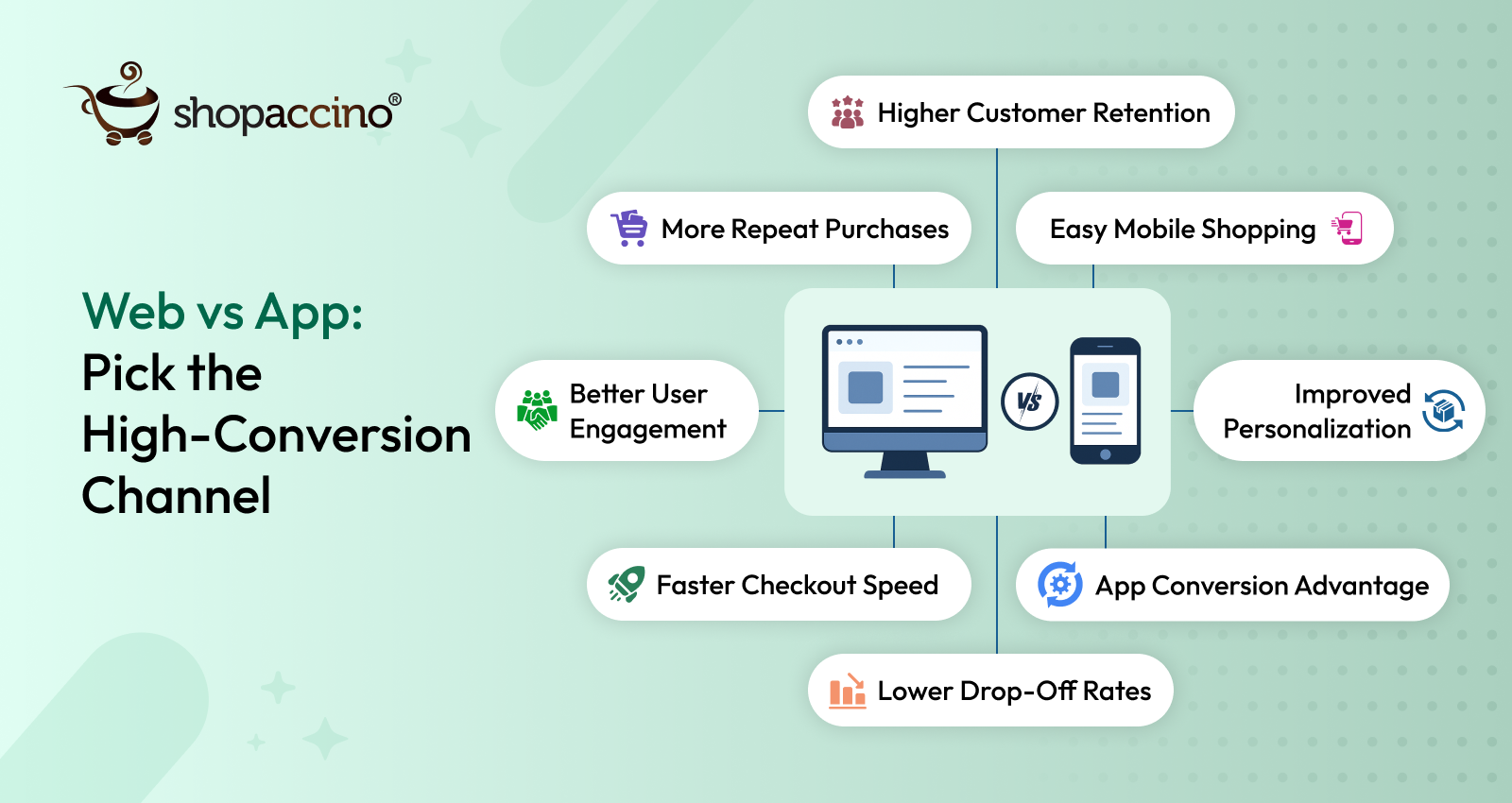
Websites will always remain essential. They attract new customers, help with SEO visibility, and offer broad accessibility. But when it comes to conversions, repeat purchases, and long-term customer loyalty, mobile apps often outperform websites by a wide margin.
For MSMEs, exporters, manufacturers, wholesalers, and distributors, combining both channels is the most effective strategy. With solutions like Shopaccino, brands can build powerful websites and native mobile apps that work together seamlessly—without technical complexity.
The result is a high-conversion ecosystem where customers discover products on the web and buy again through the app.
This is the future of modern eCommerce.
FAQs
Mobile apps usually convert higher because they offer faster, smoother and more personalized buying experiences.
Yes. Websites attract new traffic and apps retain customers, creating a strong growth cycle.
Apps support push notifications, one-click checkout, and saved preferences, making repeat purchases effortless.
Yes. Modern platforms like Shopaccino offer affordable, ready-made app solutions synced with your online store
Absolutely. Apps personalise recommendations and show customers what they truly want.
Yes. Push notifications allow free re-engagement instead of running paid ads.
Yes. Integrated platforms support full backend management for seamless fulfilment.