
10 Essential Integrations for a High-Performing Online Store
The modern ecommerce ecosystem is built on speed, automation, intelligence, and seamless connectivity. Whether a business sells apparel, furniture, groceries, jewelry, or handicrafts, one truth remains consistent: an online store cannot scale sustainably without the right integrations working in the background. What customers see on the front end—a smooth checkout, accurate inventory, personalized recommendations—is only possible when the backend is stitched together with reliable, interoperable systems.
Today’s high-performing online stores are no longer defined only by design or catalog size. They are defined by how efficiently they connect inventory, logistics, payments, marketing, analytics, and customer experience into one synchronized environment. This is where integrated platforms like Shopaccino empower growing brands with the infrastructure needed to manage complexity—without technical barriers.
Before exploring the 10 essential integrations, it’s important to understand the challenges businesses face and why integrations are no longer optional but foundational.
Challenging Area: Why Businesses Struggle Without Strong Integrations
Many MSMEs begin their ecommerce journey with enthusiasm but soon find themselves overwhelmed by operational chaos. As order volumes rise, so do the complexities. Manual work increases, errors multiply, and customer satisfaction drops. Most challenges trace back to one root cause: isolated systems that cannot talk to each other.
Some of the most common challenges include:
- Inventory discrepancies leading to overselling or stockouts
- Inability to manage website, marketplaces, and POS inventory together
- Fragmented customer data with no centralized visibility
- High delivery delays due to manual shipping coordination
- Ineffective marketing because data is siloed
- Payment failures or lack of trusted payment methods
- Difficulty managing multi-location or multi-warehouse operations
For Established D2C Brands, the struggle is scaling operations without inflating backend workload.
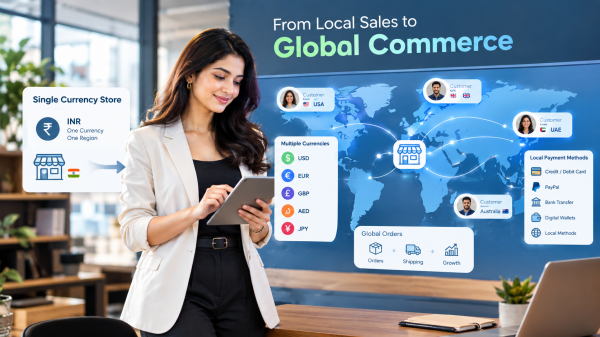
For Exporters, the challenge lies in multi-currency checkout, global logistics, and compliance.
For Manufacturers, synchronizing production cycles with website inventory becomes complex.
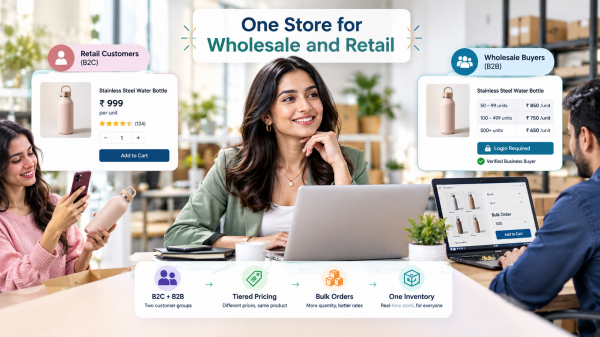
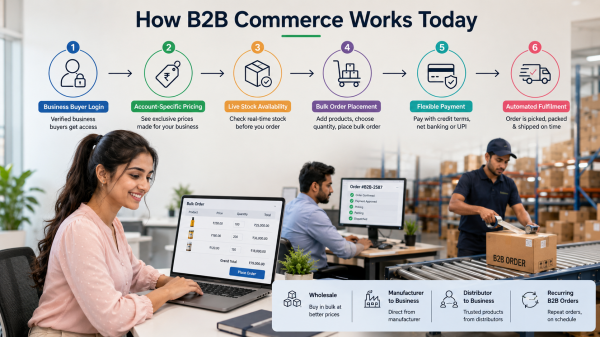
For Wholesalers, managing bulk orders, pricing tiers, and B2B workflows requires robust automation.
For Distributors, multi-warehouse and multi-channel syncing become critical.
Without the right integrations, growth becomes restricted—even if demand exists.
Their Customer Challenging Area: What Today’s Buyers Expect
Customers today shop with more expectations and less patience. They expect online stores to deliver not only products but also convenience, transparency, and consistency.
Some of the key buying expectations include:
- Real-time inventory visibility
- Fast delivery options with accurate timelines
- Frictionless checkout with multiple payment methods
- Personalized offers, product suggestions, and loyalty benefits
- Quick reordering, size/variant clarity, and transparent policies
- Mobile-first experience with accurate event tracking
- Consistent experience across website, mobile app, and social commerce
When systems are not integrated, brands fail to meet these expectations—and customers switch instantly.
Solution: How an Integrated Ecommerce Platform Addresses These Issues
An integrated platform acts as the central nervous system of an online store. Instead of juggling different tools, APIs, and disconnected apps, businesses operate from a single ecosystem that brings everything together.
Platforms like Shopaccino combine:
- Inventory automation
- Multi-warehouse syncing
- Integrated payment gateways
- Shipping API integrations
- Marketing automation
- Loyalty and rewards
- Mobile app connectivity
- Marketplace and ERP integrations
This removes the fragmentation that slows down operations and creates a seamless flow from product listing to order fulfillment.
With integrations, businesses can finally replace guesswork with real-time visibility and manual processes with automation—creating a high-performing online store capable of scaling.
The 10 Essential Integrations for a High-Performing Online Store
Real-Time Inventory Management Integration
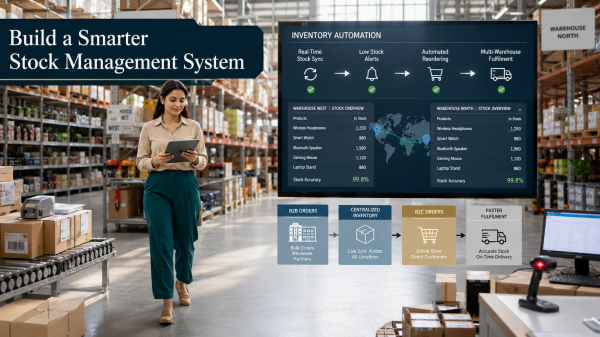
A growing ecommerce brand cannot rely on manual stock updates. Real-time inventory integration ensures all channels—website, mobile app, marketplaces, and POS—are always in sync.
This prevents overselling, maintains transparency, and greatly improves customer trust.
Platforms like Shopaccino also support multi-warehouse inventory syncing, inventory segmentation, and product variant-level management, which is crucial for industries like fashion, footwear, and furniture.
Payment Gateway Integration with Multiple Options
A store with limited payment methods loses customers instantly.
Today’s shoppers expect:
- UPI
- Credit/debit cards
- Wallets
- EMI
- Cash on Delivery
A secure and reliable payment gateway integration improves checkout conversion rates and reduces cart abandonment. It also ensures compliance, fraud checking, and multi-currency acceptance for global shoppers.
Shipping & Logistics API Integration
Logistics is the backbone of ecommerce. Integrating directly with shipping agencies ensures:
- Automated waybill generation
- Real-time tracking
- Delivery status updates
- Faster dispatch and reduced errors
- COD reconciliation
- Pincode-serviceability checks
Brands offering fragile items, customized products, or bulky goods benefit immensely from integrated shipping.
Marketing Automation Integration
Marketing without data is guesswork. Integrations such as:
- Abandoned cart automation
- Email workflows
- WhatsApp automation
- Push notifications
- Personalized product recommendations
help brands stay connected with customers, recover lost sales, and increase lifetime value.
This is where Shopaccino’s automation tools significantly reduce manual marketing effort.
Marketplace Integration
Businesses operating across Amazon, Flipkart, Myntra, Etsy, or other marketplaces often face the nightmare of juggling multiple dashboards.
Marketplace integration brings everything into one panel—inventory, orders, cancellations, and listings—helping teams avoid duplication and reduce operational delays.
ERP / Accounting Software Integration
As businesses grow, accounting, taxation, and bookkeeping become more demanding.
ERP and accounting integrations allow automated syncing of:
- Orders
- Invoices
- Taxes
- Returns
- Stock adjustments
This is particularly beneficial for Exporters, Manufacturers, and Wholesalers who rely heavily on ERPs.
Customer Loyalty & Rewards Integration
A high-performing online store is not built on first-time buyers but returning customers.
A fully integrated loyalty and rewards system helps businesses:
- Increase repeat purchases
- Offer targeted rewards
- Track points and redemption
- Build long-term brand loyalty
Platforms like Shopaccino include a complete reward point program to boost customer retention.
Mobile App Integration
Mobile commerce continues to dominate buying behavior.
A synchronized mobile app with:
- Real-time product sync
- Push notifications
- Deep linking
- In-app event tracking
- Faster checkout
creates a stronger engagement loop, helping brands reach customers where they spend most of their time.
Analytics & Conversion Tracking Integration
Without analytics, optimization is impossible.
Integrations with:
- Google Analytics
- Meta Pixel
- Google Ads Conversion Tracking
- Server-side event tracking
- Heatmaps
provide insights needed to improve product performance, reduce drop-offs, and increase ROI.
This is essential for brands investing in paid advertising or content marketing.
Theme & Customization Integrations
A flexible storefront with editable layouts, custom elements, image galleries, color swatches, and product filters dramatically improves conversions.
Integrations like Shopaccino’s theme customization tools allow businesses to:
- Build unique layouts without coding
- Add slideshows, grids, and lookbooks
- Highlight bestsellers and categories
- Improve visual storytelling
Creative presentation plays a decisive role in conversions for categories like fashion, jewelry, furniture, and home décor.
How to Implement These Integrations (Step-by-Step Guidance)
- Evaluate your business model
Identify whether you're a D2C brand, exporter, manufacturer, wholesaler, or distributor. Each requires a slightly different integration stack. - Choose an ecommerce platform with built-in integrations
Select a platform like Shopaccino, where a majority of integrations are pre-configured and require minimal technical work. - Map your operations workflow
Define how orders move from website → warehouse → shipping → customer. - Enable payment and logistics integrations first
These two form the backbone of operational flow. - Set up marketing and analytics integrations
Link Google Analytics, Meta events, email automation, and retargeting tools. - Test end-to-end operations before launching
Place test orders, validate payment flows, shipping labels, and inventory sync. - Monitor performance and refine regularly
Use analytics insights to optimize category structure, checkout flow, and ad campaigns.
Benefits of Using a Fully Integrated Ecommerce Platform
A synchronized system delivers tangible operational advantages:
- Higher inventory accuracy
- Faster order processing
- Reduced manual workload
- Enhanced personalization
- Better customer journey tracking
- Improved conversion and retention
- Scalability without additional complexity
- Increased profitability through automation
For MSMEs, integrations act as the ultimate growth engine—reducing dependency on manpower while increasing the efficiency of every department.
Conclusion
A high-performing online store is not built on products alone—it is built on a strong integration ecosystem. Every touchpoint, from inventory to checkout to delivery, must function as one unified system. With the right integrations in place, MSMEs can move beyond daily operational challenges and start focusing on brand building, customer experience, and global expansion.
Platforms like Shopaccino simplify this journey by offering pre-integrated, scalable, and MSME-friendly tools designed to help businesses grow without technical complexity. The future of ecommerce belongs to brands that operate with speed, automation, and intelligence—and integrations are at the heart of that transformation.
FAQs
Integrations reduce manual work, synchronize operations, eliminate errors, and improve customer experience. They ensure all systems—inventory, shipping, payment, marketing—work together seamlessly.
Inventory management, payment gateways, shipping APIs, and marketing automation are the core pillars for new ecommerce businesses.
They automate backend processes, reduce workload, and create real-time visibility, allowing businesses to handle higher order volumes without additional staff.
Yes. With event tracking, automation, abandoned cart recovery, and segmentation, brands can improve conversions and customer lifetime value.
On platforms like Shopaccino, most integrations are pre-built, require minimal setup, and reduce long-term operational cost.
Absolutely. They synchronize stock, assign orders to the nearest warehouse, and ensure accurate delivery timelines.
Yes. From pricing tiers to catalog control, integrations support wholesalers, distributors, and manufacturers alongside D2C brands.