
The Complete Guide to Top D2C Brands in India (2026)
The Indian retail landscape has evolved more rapidly in the last five years than in the previous two decades. Consumers are no longer just buying products—they are choosing brands that resonate with their identity, values, lifestyle, and aspirations. This shift has created a massive opportunity for Direct-to-Consumer (D2C) brands.
Instead of relying solely on distributors, marketplaces, or traditional retail channels, D2C brands sell directly to customers through their own ecommerce platform, leveraging digital marketing, first-party data, niche product positioning, and community-driven engagement. From skincare and fashion to fitness nutrition, electronics accessories, and home décor, D2C brands are reshaping modern commerce by owning the entire customer journey.
India is especially fertile ground. With rising smartphone adoption, digital payments, social commerce, and growing trust in online shopping, consumers are eager to buy directly from brands. At the same time, MSMEs and manufacturers are moving beyond wholesale margins and exploring higher profitability through direct selling.
However, launching and scaling a D2C brand requires more than a website—it demands product-market clarity, brand identity, optimized logistics, customer experience, and integrated tech. Platforms like Shopaccino, built for MSMEs and digital-first commerce, help streamline this journey end-to-end without requiring technical expertise.
This guide unpacks everything required to build a successful D2C brand in India—from challenges to solutions to actionable implementation steps.
What is a D2C Brand? Meaning, Full Form & Examples in India
A Direct-to-Consumer (D2C) brand is a business that manufactures or sources its own products and sells them directly to end customers — skipping distributors, wholesalers, and third-party retailers entirely. The brand controls the full customer journey: from product creation and marketing to checkout, delivery, and post-purchase experience.
In three words: no middlemen. More margin, more data, more control. A true D2C brand needs channel ownership — here's why an own website often beats marketplaces for long-term brand building.Every D2C store needs reliable checkout — see our guide to the top payment gateways in India for fees and features.
D2C vs Traditional Retail vs Marketplace — Key Differences
Factor | Traditional Retail | Marketplace | D2C Brand ✓ |
Customer Data | Distributor owns it | Marketplace owns it | Brand owns it |
Profit Margin | Low (distributor cuts) | Medium (platform fees) | High (direct) |
Brand Control | Minimal | Limited | Full control |
Repeat Purchases | Hard to track | Hard to influence | Fully controllable |
Customer Loyalty | Retailer's loyalty | Platform's loyalty | Your brand's loyalty |
Top 20 D2C Brands in India 2026 (With Founders & Success Stories)
India's D2C ecosystem has produced category-defining unicorns and profitable scaleups. Here are the top D2C brands in India, ranked by category impact, brand recall, and customer loyalty:
# |
Brand |
Category |
Founded |
Founders |
Why They Won |
1 |
Mamaearth (Honasa Consumer) |
Beauty & Personal Care |
2016 |
Varun & Ghazal Alagh |
Toxin-free positioning + influencer marketing; listed on NSE/BSE in 2023 |
2 |
boAt (Imagine Marketing) |
Audio & Wearables |
2016 |
Aman Gupta, Sameer Mehta |
Affordable premium + Shark Tank visibility + cricket sponsorships |
3 |
Lenskart |
Eyewear |
2010 |
Peyush Bansal, Amit Chaudhary, Sumeet Kapahi |
Home try-on model + vertical integration + omnichannel scale |
4 |
Nykaa (FSN E-Commerce) |
Beauty & Fashion |
2012 |
Falguni Nayar |
Curated content-led commerce + private labels; listed in 2021 |
5 |
Sugar Cosmetics |
Color Cosmetics |
2015 |
Vineeta Singh, Kaushik Mukherjee |
Gen-Z first branding + Shark Tank India fame + offline expansion |
6 |
Wakefit |
Sleep & Furniture |
2016 |
Ankit Garg, Chaitanya Ramalingegowda |
100-night risk-free trial + factory-direct pricing |
7 |
Licious (Delightful Gourmet) |
Meat & Seafood |
2015 |
Vivek Gupta, Abhay Hanjura |
Owned cold-chain + freshness guarantee + category creation |
8 |
The Souled Store |
Apparel |
2013 |
Vedang Patel, Aditya Sharma, Harsh Lal, Rohin Samtaney |
Pop-culture licensed merchandise + youth-led design |
9 |
Mokobara |
Premium Luggage |
2020 |
Navin Parwal, Sangeet Agrawal |
Premium minimalist design + Instagram-first storytelling |
10 |
Bombay Shaving Company |
Men's Grooming |
2016 |
Shantanu Deshpande |
Subscription model + razor-and-blade positioning + DTC mastery |
11 |
MyGlamm (Good Glamm Group) |
Beauty & Cosmetics |
2017 |
Darpan Sanghvi |
Content-commerce flywheel via POPxo, ScoopWhoop acquisitions |
12 |
WOW Skin Science |
Personal Care |
2014 |
Manish Chowdhary, Karan Chowdhary |
Performance marketing mastery + Amazon-first then own D2C |
13 |
Plum Goodness |
Vegan Skincare |
2014 |
Shankar Prasad |
Clean, vegan beauty + millennial trust + offline retail expansion |
14 |
mCaffeine |
Caffeine-Based Care |
2016 |
Tarun Sharma, Vikas Lachhwani, Vaishali Gupta |
India's first caffeine-personal-care brand + sharp niche positioning |
15 |
The Whole Truth |
Healthy Snacks |
2019 |
Shashank Mehta |
Radical ingredient transparency + founder-led brand voice |
16 |
Bewakoof |
Youth Apparel |
2012 |
Prabhkiran Singh, Siddharth Munot |
Quirky pop-culture designs + Bewakoof Tribe loyalty program |
17 |
Ustraa (Happily Unmarried) |
Men's Grooming |
2015 |
Rahul Anand |
Indian male grooming category creator with desi product names |
18 |
BlueStone |
Online Jewelry |
2011 |
Gaurav Singh Kushwaha |
Try-at-home model + lifetime exchange + design transparency |
19 |
Pee Safe (Redcliffe Hygiene) |
Hygiene Products |
2013 |
Vikas Bagaria, Srijana Bagaria |
Toilet hygiene category innovation + female-founder narrative |
20 |
Slurrp Farm (Wholsum Foods) |
Healthy Kids Food |
2016 |
Meghana Narayan, Shauravi Malik |
Millet-based products for mothers + clean-label storytelling |
Top 7 Challenges of Building a D2C Brand in India
While the D2C model offers higher margins and full customer ownership, the path is rarely straightforward. Most brands struggle because they underestimate operational complexity or rely on disconnected tools that don’t scale.
Here are the core challenges businesses encounter:
Unclear Positioning and Brand Identity
Many products fail not because demand is low but because the brand lacks:
- A compelling narrative
- Value clarity
- Differentiation
- Consistent messaging
Without a strong identity, even good products struggle to gain traction in the crowded market.
Read Also : From ₹1L to ₹1Cr in Ecommerce Sales
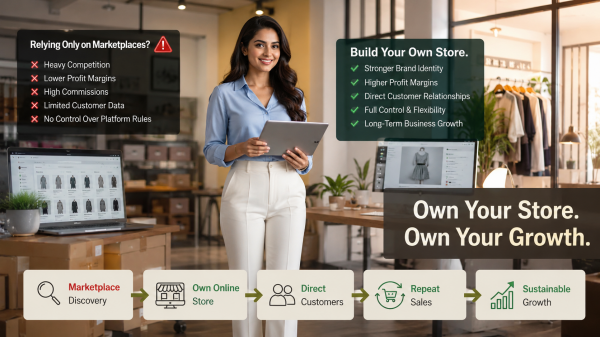
Dependence on Marketplaces and Low Margins
Marketplaces may help early-stage discovery but:
- They charge commissions
- They own customer data
- They control visibility
- They create pricing pressure
This prevents long-term brand loyalty.
A true D2C business needs its own digital store.
Managing Logistics, Fulfillment, and Inventory
As orders grow, brands face complexity across:
- Stock allocation
- Packaging
- Delivery timelines
- Regional distribution
- Returns and replacements
Without automated systems, operations become slow and error-prone.
Scaling Without a Tech Team
Most MSMEs lack:
- Developers
- Design resources
- Technology expertise
Traditional custom development is costly and hard to maintain. This slows growth.
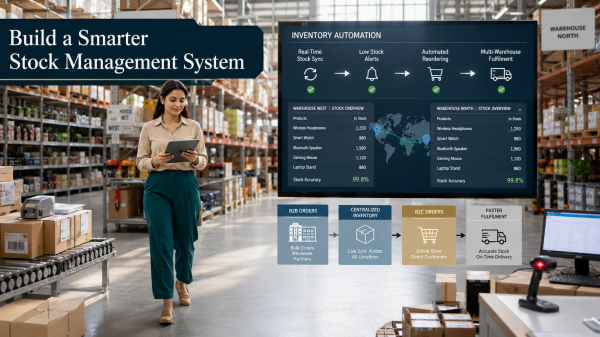
Read Also : Inventory Automation for Scale
Customer Retention Challenges
The biggest barrier in D2C?
Retention.
Brands invest heavily in ads to acquire customers, but poor experiences lead to churn. Without structured digital journeys, repeat purchases remain low.
These challenges highlight why brands need the right strategy and integrated systems—not just a basic website.
What Indian Customers Expect from D2C Brands in 2026
Customers choose D2C brands for authenticity and convenience—but they expect the same experience they receive from large ecommerce platforms.
Fast and Transparent Delivery
Shoppers want estimated delivery time, tracking visibility, and reliable dispatch. Slow fulfillment breaks trust instantly.
Seamless Mobile Shopping Experience
Most Indian consumers shop on mobile. If the website isn’t responsive or navigation isn’t smooth, they abandon the purchase.
Multiple and Trusted Payment Methods
Customers expect:
- UPI
- Cards
- Net banking
- Wallets
- COD
Lack of trusted options directly impacts conversions.
Clear Product Details and Social Proof
Customers expect:
- Detailed descriptions
- Reviews
- Usage instructions
- Authenticity and certification
D2C brands must communicate clarity and credibility.
Personalization and Relevant Offers
Consumers want tailored product suggestions, not generic ads. First-party data allows D2C brands to personalize effectively.
Understanding these expectations ensures brands design experiences aligned with consumer behavior.
Best D2C Ecommerce Platform for Indian Brands (Buyer's Guide)
D2C success depends heavily on digital enablement. Instead of using separate tools for website, orders, marketing, payments, CRM, and logistics, brands need a unified platform that connects everything.
This is where d2c ecommerce software plays a critical role by unifying storefront, payments, order management, marketing, and customer data into a single system.
This is where Shopaccino becomes valuable—it centralizes the ecommerce experience for both brands and customers as a complete d2c ecommerce platform.
Here’s how:
Create a Branded Online Store Without Coding
Shopaccino enables brands to launch:
- A custom storefront
- Product catalog
- Responsive mobile experience
- Secure checkout
—all without technical setup.
Manage Orders, Delivery, and Inventory from One System
Instead of juggling multiple tools, brands can:
- Manage warehouse stock
- Monitor orders
- Assign courier partners
- Handle returns
This boosts efficiency and speed.
Integrated Payments and Checkout Experience
UPI, wallets, cards, COD, and more—activated in a few clicks.
This helps reduce drop-offs.
Marketing and Customer Data Tools Built-In
Brands can:
- Send automated campaigns
- Segment customers
- Track behavior
- Run retention strategies
These capabilities form practical d2c ecommerce solutions that help brands improve lifetime value and retention.
This turns first-purchase customers into recurring buyers.
Scalable for Future Growth
Brands can expand into:
- Multiple warehouses
- Mobile apps
- B2B selling
- Multi-channel distribution
—all within the same ecosystem.
Read Also : Is Your E-commerce Website Killing Your Sales?
How to Start a D2C Brand in India: 7-Step Process
Here is a structured roadmap to follow from launch to scale.
Step 1: Identify Your Market Niche and Brand Position
Answer:
- Who are you serving?
- What pain do you solve?
- Why should customers choose you?
A strong narrative builds loyalty.
Step 2: Launch Your Branded Store
Using platforms like Shopaccino:
- Design your storefront
- Add product categories
- Set pricing and variations
- Enable payment gateways
Go live with a customer-ready site.
Step 3: Build a Smooth Fulfillment Workflow
Plan:
- Shipping partners
- Delivery time standards
- Packaging experience
- Regional warehouse structure
Faster fulfillment improves retention.
Step 4: Create High-Quality Product Pages
Write descriptions that:
- Highlight benefits
- Answer questions
- Show visuals
- Build trust
Strong product content drives conversions.
Step 5: Drive Traffic Through Digital Acquisition Channels
Instead of depending on one channel, diversify:
- Social media
- Search marketing
- Influencers
- Organic content
- Retargeting ads
A layered strategy ensures sustainable growth.
Step 6: Build Retention and Repeat Purchase Loops
Use:
- Order follow-ups
- SMS campaigns
- Personalized recommendations
- Exclusivity for repeat buyers
Retention is where profit lies.
D2C Marketing Strategy India: Retention, LTV & WhatsApp Commerce
The biggest lever in D2C ecommerce is not acquisition — it is retention. Successful D2C brands build owned channel ecosystems that reduce dependence on paid ads and create sustainable, compounding growth over time.
The D2C Owned Channel Stack
1. WhatsApp Commerce
WhatsApp is India's most powerful D2C retention channel. With 500M+ active users in India, brands use it for order updates, abandoned cart nudges, reorder reminders, and flash sale alerts. Open rates exceed 90%, far above email or SMS.
Use WhatsApp Business API to send automated order confirmation and shipping updates.
Send personalized reorder campaigns 7–10 days after purchase for consumable products.
Run exclusive limited-time offers to WhatsApp subscribers before your public audience.
2. Social Selling (Instagram & YouTube)
D2C brands that treat Instagram and YouTube as conversion channels — not just awareness channels — consistently outperform. Product demos, UGC reposts, and shoppable content drive direct purchases without platform commissions or price wars.
3. Email & SMS Automation
Automated post-purchase sequences (welcome → product education → review request → reorder prompt) are among the highest-ROI retention tools. A well-structured 5-email flow can recover 15–25% of at-risk customers cost-effectively.
LTV Calculation: The D2C Metric That Matters Most
Customer Lifetime Value (LTV) tells you how much total revenue a customer generates across their relationship with your brand. Here is the formula:
Metric | Formula / Benchmark |
Average Order Value (AOV) | Total Revenue ÷ Number of Orders |
Purchase Frequency | Orders per customer per year |
Customer Lifespan | Average years a customer remains active |
LTV Formula | AOV × Purchase Frequency × Lifespan |
Healthy LTV:CAC Ratio | 3:1 or higher for D2C profitability |
Example: If your AOV is ₹800, customers buy 4 times per year, and stay active for 2 years — your LTV is ₹6,400. If your Customer Acquisition Cost is ₹1,200, your LTV:CAC is 5.3x, which signals a healthy, scalable D2C business.
Shopaccino's built-in analytics tracks repeat purchase rate, AOV trends, and cohort retention — the core data inputs for LTV calculation — without needing external tools.
Step 7: Analyze, Optimize, Scale
Track:
- Conversion rate
- Repeat purchase rate
- AOV
- CAC vs LTV
- Product performance
Use insights to expand categories and geography.
Benefits of D2C Brands in India (vs Marketplace Selling)
Going direct isn’t just a trend—it offers real business advantages.
Higher Margins and Profit Control
No commissions, no forced discounts—brands retain more revenue.
Complete Customer Ownership
You control:
- Data
- Experience
- Communication
- Loyalty
This builds long-term brand equity.
Faster Feedback Loops
Direct connection with customers allows faster product improvement.
Freedom to Build Brand Identity
Brand storytelling isn’t diluted by marketplace listings.
Scalable Infrastructure
Platforms like Shopaccino allow brands to grow from small stores to full digital ecosystems without changing tech.
Indian D2C Brand Success Stories: Real Results on Shopaccino
The strongest proof of a D2C platform's capability is the brands that have built real businesses on it. Here are D2C brands across categories that have scaled their direct-to-consumer operations using Shopaccino:
Brand Type | Category | D2C Channels Used | Result Achieved |
Fashion Brand | Apparel & Clothing | Website + Mobile App | 3x repeat purchase rate after own app launch |
Wellness Store | Health & Nutrition | Website + WhatsApp | 40% of orders now via WhatsApp reorder campaigns |
Home Décor Label | Furniture & Décor | D2C Website | Marketplace dependency cut from 80% to 35% |
Artisan Foods Brand | Food & Beverages | Website + Subscription | 60% recurring revenue via subscription model |
Skincare Startup | Beauty & Personal Care | Mobile App + Social | 10,000 loyal customers built in first 18 months |
What These Brands Have in Common
They launched on their own storefront first, not a marketplace.
They used owned channels — app, WhatsApp, email — for retention, not just paid ads for acquisition.
They captured customer data from Day 1 and used it to personalize offers and reorder campaigns.
They scaled without switching platforms — Shopaccino grew alongside their business.
Want to be on this list? Thousands of Indian MSMEs and D2C entrepreneurs have launched and scaled on Shopaccino — without a technical team, large capital, or giving up brand control.
→ Start your D2C brand on Shopaccino — Free trial available
Conclusion
India is entering a golden era of direct-to-consumer commerce. As digital adoption accelerates, customers want brands that speak directly to them—not anonymously through intermediaries. For businesses, this model offers ownership, profitability, loyalty, and longevity.
But success in D2C is rooted in building an integrated, experience-driven ecosystem—not just a transactional website. With platforms like Shopaccino, Indian brands can build scalable digital storefronts, manage operations efficiently, and create strong customer relationships without technical complexity.
D2C is not just a business model—it is the future of brand-led commerce in India. The brands that start now will shape that future.
FAQs
The D2C model allows brands to sell directly to customers using their own d2c ecommerce platform, giving them full control over pricing, customer data, brand communication, and long-term loyalty—something marketplaces do not offer.
Yes. Indian MSMEs and manufacturers can successfully adopt D2C by using d2c ecommerce solutions that eliminate the need for large teams or technical expertise while enabling direct customer engagement and higher margins.
Scaling challenges often include fulfillment complexity, customer retention, fragmented tools, and rising acquisition costs. Using integrated d2c ecommerce software helps brands manage growth efficiently without operational bottlenecks.
D2C (Direct-to-Consumer) brands are businesses that manufacture or source their own products and sell them directly to customers through their own website or app, skipping distributors, wholesalers, and marketplaces. This gives them full control over pricing, customer data, and the buying experience
Some of the top D2C brands in India include Mamaearth, boAt, Lenskart, Nykaa, Sugar Cosmetics, Wakefit, and Licious. See the full list of the top 20 D2C brands in India for 2026 below, along with their founders and success stories.