3D Visualization in Furniture Shopping — Future or Fad?
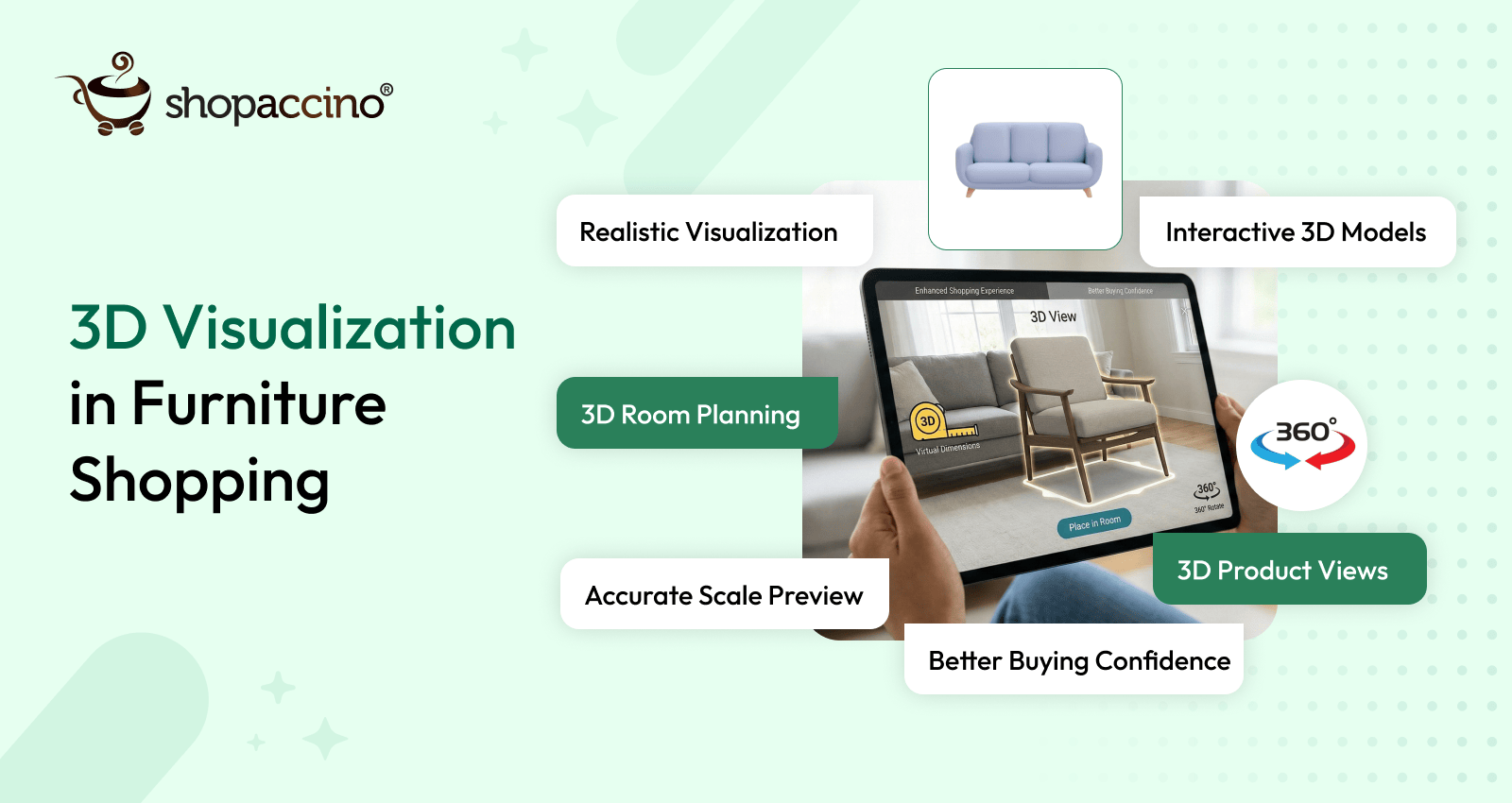
Furniture shopping has traditionally been a sensory, in-store experience. Customers want to touch fabrics, evaluate comfort, understand proportions, and imagine how a piece fits into their living space. But the rise of digital commerce is reshaping this equation. Furniture buyers are increasingly researching, comparing, and even making big-ticket purchases online—driven by better visualization tools, 360° product views, configurable models, and interactive digital catalogs.
What global brands once treated as experimental—such as rotating 3D models, virtual room planners, lifestyle scenes, and configurable product displays—is now shifting into mainstream expectations. As online furniture sales accelerate, brands that help customers “experience” products virtually gain a competitive advantage, especially in absence of physical touchpoints.
The big question remains: Is 3D visualization truly the future of furniture ecommerce, or is it simply a passing trend?
This guide explores industry challenges, evolving customer expectations, and the realistic role of 3D visualization in shaping furniture commerce over the next few years.
Challenging Area: Why Furniture Brands Struggle Online
Furniture is one of the hardest categories to sell digitally—not due to lack of demand, but because of its inherent complexities.
Products look different online vs. in real homes
Lighting, angles, and photography can make colours or finishes appear inconsistent, leading to dissatisfaction post-delivery.
Customers struggle with scale
Most buyers cannot easily imagine whether a sofa will overpower their living room or if a dining set fits their space comfortably.
High return costs
Furniture returns are expensive, time-consuming, and operationally draining for brands.
Dependence on physical showrooms
Many manufacturers and retailers still rely on in-store experiences for closing sales, slowing digital expansion.
Long buying cycle and high consideration
Customers take time to research, compare and seek visual clarity before committing to expensive purchases.
This is why furniture brands are increasingly adopting 3D renders, 360-degree views, virtual room planners, and digital product configurators—not as a luxury, but as a way to reduce uncertainty and increase buyer confidence.
Their Customer Challenging Area: What Buyers Expect Today
Modern furniture shoppers are digitally aware and expect online stores to offer more than static images.
What they want:
Realistic Visualization of Products
Customers want to see how furniture will look from all angles—through 360° rotation, zoomed fabric views, and detailed close-ups.
Better Understanding of Scale & Fit
Shoppers expect dimension clarity, room-size recommendations, and comparison tools that help them judge proportions.
Material & Texture Transparency
High-resolution textures, finish descriptions, and fabric details matter more than ever.
Faster Decision Making
People want to shortlist products quickly—clear lifestyle photography and easy product navigation support this behaviour.
Transparent Delivery & Assembly Info
Because furniture is bulky, customers expect precise shipping timelines and clarity on installation requirements.
Even customers who visit showrooms still depend heavily on online research. This makes digital product visualization an essential part of the hybrid shopping journey.
Solution: How 3D Visualization Improves Online Furniture Commerce
3D visualization tools are gaining momentum—not because they look impressive, but because they solve real customer problems.
Here’s how they transform furniture ecommerce:
Spatial Understanding & Confident Buying
360° views and scaled digital renders help customers understand depth, structure, and proportions—reducing hesitation.
Lower Return Rates
When customers get clear expectations about size, colour, and shape, the chances of “it looked different online” complaints drop significantly.
Enhanced Product Storytelling
One set of 3D assets can be used across:
- Product pages
- Marketing banners
- Ads
- Social posts
- Lifestyle mockups
This makes visual content scalable and consistent.
Better Mobile Experience
Smartphone shoppers often rely on visuals more than text. 360° views and close-up textures increase engagement dramatically.
Higher Conversion Rates
The clearer the visualization, the faster the decision-making process. Customers complete purchases sooner when uncertainty reduces.
While Shopaccino manages storefronts, inventory, checkout, mobile apps, and logistics workflows, 3D visualization tools are typically integrated through third-party plugins, APIs, or lightweight embed modules, making it easier for brands to enrich their digital experience without unnecessary complexity.
How to Implement 3D Visualization Step-by-Step
3D visualization doesn’t need to be expensive or overwhelming. Most brands start small and scale as they see results.
Step 1: Start with Bestselling SKUs
Digitize your top-performing sofas, beds, dining sets, and storage units. These products influence the most revenue.
Step 2: Create Web-Optimized 3D Models
Use compressed, mobile-friendly formats instead of heavy CAD files to ensure smooth performance.
Step 3: Add 360° Viewer to Product Pages
A simple step that dramatically enhances user engagement.
Step 4: Use Lifestyle Renders for Social & Web
Digital room scenes help customers visualize furniture in real homes—even without AR or virtual placement.
Step 5: Offer Room-Based Suggestion Bundles
Help shoppers build spaces by recommending matching items—sofa + center table + rug + lamp.
Step 6: Track Conversions and Bounce Rate Changes
Measure drop-offs before and after adding visualization features to quantify impact.
With Shopaccino managing ecommerce operations and external 3D tools enhancing product display, brands get a balanced, scalable visual commerce ecosystem.
Benefits: Why Visualization Tools Matter Long-Term
Integrating 3D and enhanced product visuals delivers long-lasting value:
Higher Conversion Rates
Customers commit sooner when they understand product proportions and design better.
Reduced Returns & Replacements
Clear visualization helps avoid mismatches in expectations.
Better Customer Trust
Professional imagery elevates perceived quality, making the brand feel premium.
Lower Dependency on Physical Stores
Brands can sell nationwide—even without showrooms in every city.
Stronger Omnichannel Journey
Whether online or in-store, consistent product visuals support cohesive customer experiences.
In short: these tools are not a fad but an advantage for brands looking to scale geographically and digitally.
Conclusion
3D visualization isn’t a futuristic gimmick—it’s a practical solution for one of the biggest challenges in furniture ecommerce: helping buyers visualize large, high-value products without seeing them physically.
For furniture brands shifting from store-dependent sales to digital-first operations, visualization tools act as the bridge between browsing and buying. They reduce uncertainty, increase trust, and make customers more confident in their decisions.
Physical stores may never disappear, but digital visualization will supplement and enhance them—making the furniture shopping experience more hybrid, accessible, and informed than ever before.
The brands that adopt these tools early will lead the next evolution of online furniture retail.
FAQs
Not necessarily—however, it is especially useful for high-value, space-dependent products such as sofas, beds, and modular units.
3D models are interactive, while 360-degree views are a rotating sequence of real photos or renders.
Costs vary, but most brands start with a few hero products. It becomes more cost-effective at scale.
Yes—better clarity reduces mismatched expectations.
Absolutely—web-based 3D viewers work directly in browsers.