How to Manage Multi-Warehouse Stock for Large Furniture Brands
For a large furniture brand, keeping stock in one location doesn’t cut it anymore. With orders coming from across states or even globally, you need a multi-warehouse inventory strategy to serve customers faster, reduce shipping costs, and handle bulky furniture logistics. When warehouses are scattered, stock gets duplicated, transfers become chaotic, and fulfilment slows down. That’s why managing multiple warehouses well is a major competitive advantage for furniture ecommerce. A platform that supports multi-warehouse inventory management for furniture brands is no longer optional — it’s essential to scale, stay profitable, and deliver consistently.
Challenging Area – What Furniture Brands Face
Large furniture brands typically encounter a set of operational hurdles when they expand warehouse networks:
- Inventory imbalances: One warehouse might be out of a popular sofa, while another has excess. Without real-time visibility, you either lose sales or hold costly dead stock.
- Fragmented systems: Different warehouses may run separate spreadsheets or ERPs, making it hard to synchronise stock, transfers and fulfilment rules.
- High shipping and logistics costs: Furniture is bulky and heavy. If you ship from a distant warehouse rather than the one closest to the customer, you waste money and slow delivery.
- Complex serviceable locations: Some furniture brands deliver only in specified zones. Managing which warehouse serves which zone — and keeping that mapping up-to-date — is tough.
- Returns, transfers & warehousing rules: Furniture returns or exchanges require additional stock movement, cross-warehouse transfers, and often secondary warehousing (damaged, refurbish, etc.). That adds hidden cost.
- Scaling pain: As you add more warehouses, the complexity increases, and inefficient processes multiply — unless you have a robust system for furniture brand multi-warehouse management software.
These challenges hit profitability, damage customer experience, and make scaling difficult.
Their Customer Challenging Area – What Your Customers Face
Your customers — furniture buyers — also feel the impact of poor warehouse-stock management:
- Delayed delivery: If you fulfil from a far warehouse, shipping takes longer; customers expect faster delivery these days.
- Unavailable stock: Customers may see a product listed, but it isn’t actually in their nearby warehouse — leading to cancellations or disappointment.
- Confusing delivery zones: Furniture buyers often face hidden costs or delays because the warehouse wasn’t correctly mapped to their area.
- Poor service and returns handling: If a piece is damaged, and a return or exchange must move between warehouses, the process drags. The buyer feels frustrated and the brand suffers.
- Lack of transparency: Buyers want to know if the product is in stock, which warehouse is shipping it, and what serviceable zones apply. Without that clarity, trust erodes.
For a furniture brand to deliver a premium experience, managing the behind-the-scenes warehouse stock is just as important as the frontend store.
Solution – How Shopaccino Solves Multi-Warehouse Stock for Furniture Brands
Enter Shopaccino’s multi-warehouse management system, purpose-built for furniture ecommerce and large brands. Here’s how it helps:
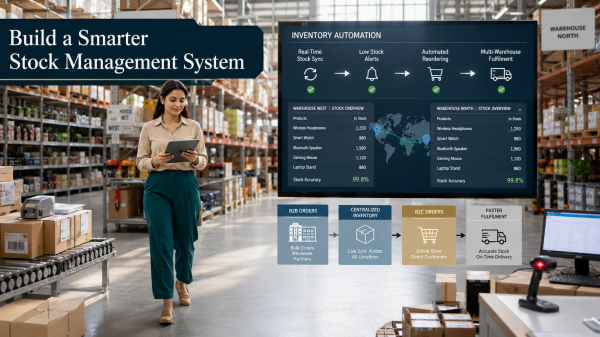
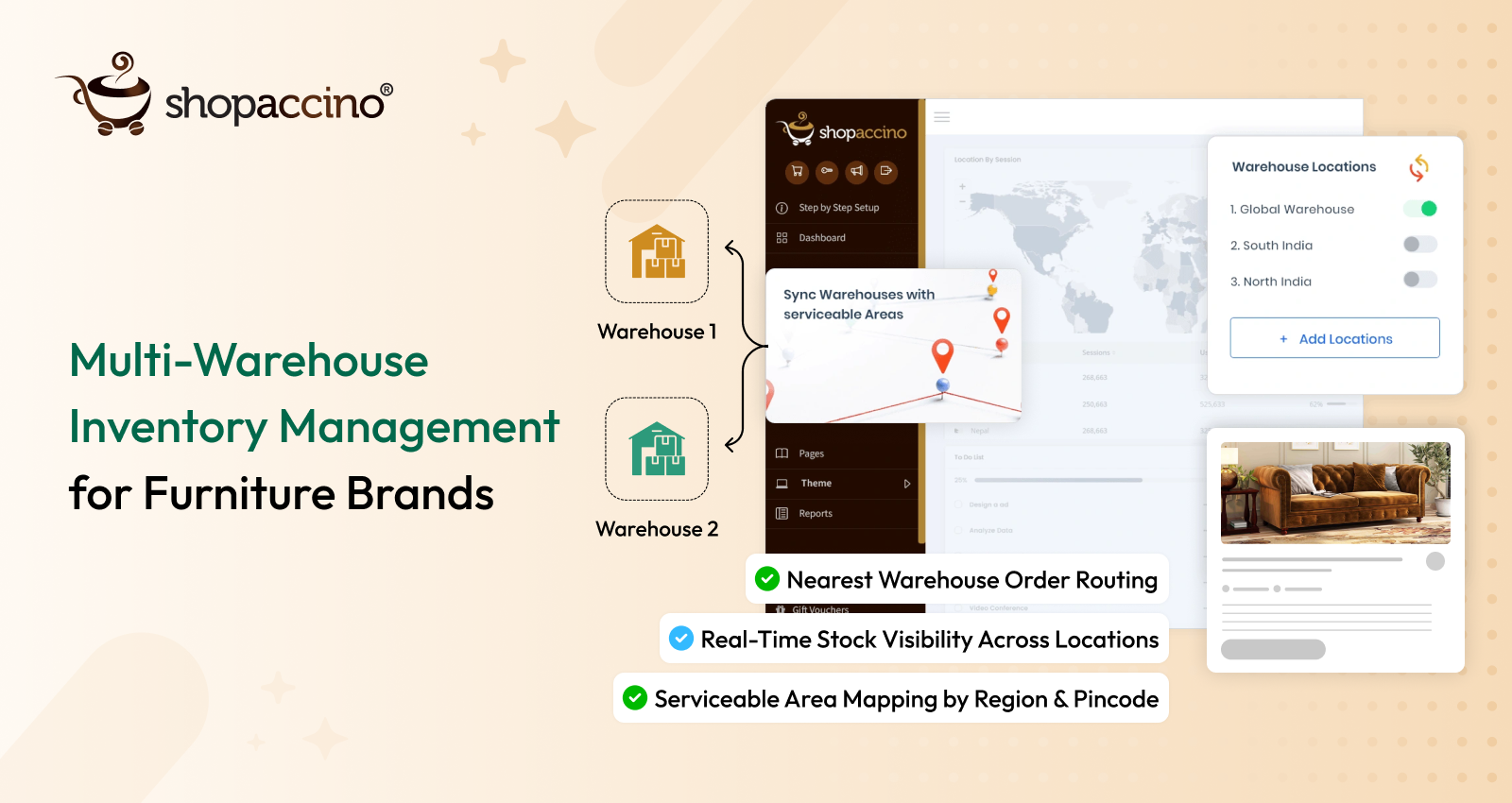
- Centralised dashboard for all warehouses: Manage all your warehouse locations from one platform — add multiple warehouses, set service zones and monitor stock.
- Automatic warehouse selection: When a customer places an order, the system picks the nearest warehouse with available stock — reducing shipping cost and speeding delivery.
- See how Shopaccino's Multi-Warehouse Locations feature handles this automatically.
- Real-time inventory visibility: You gain real-time stock levels across warehouses — avoiding over-stock in one and stock-outs in another.
- Prioritisation rules: Set rules to prioritise certain warehouses (e.g., lowest shipping cost, highest stock, nearest to customer) so fulfillment is smarter.
For large furniture brands, this level of control converts operational chaos into strategic speed, efficiency and scalability.
How to Implement
Here’s a practical roadmap for furniture brands to implement a multi-warehouse strategy with Shopaccino:
- Audit your current warehouse network: List all your existing warehouses, capacities, service zones, shipping cost profiles, and stock turnover metrics.
- Define service zones & rules: Map your delivery zones and assign which warehouse serves which areas. Decide rules: e.g., “Nearest warehouse wins” or “lowest shipping cost first”.
- Add warehouses into the platform: In Shopaccino, add each warehouse location — address, capacity, service area, shipping cost.
- Upload stock & set visibility: Upload SKUs, link them to warehouses, set available stock, and flag slow-moving furniture lines.
- Configure automatic warehouse routing: Set rules so orders automatically pick the right warehouse based on proximity, cost, or stock level.
- Train your operations and fulfilment teams: Ensure warehouse staff know how to use the system, pick orders, pack furniture safely, and process returns/transfers.
- Monitor key metrics & refine: Use dashboards to monitor warehouse-specific performance (stock-out rates, shipping cost per order, transfer frequency) and tweak your network as you scale.
Following these steps ensures you move from siloed warehouse operations to a unified, efficient, multi-warehouse ecosystem.
Benefits
Large furniture brands that manage stock across multiple warehouses well achieve:
- ✅ Faster delivery times: Orders ship from the nearest warehouse, reducing transit time and improving customer satisfaction.
- ✅ Lower shipping cost: Optimised routing and warehouse selection cut transportation and freight cost.
- ✅ Balanced inventory and fewer stock-outs: Real-time visibility prevents over-stock in one location and stock-outs in another.
- ✅ Better scalability: You can add warehouses or service zones without operational chaos — the system adapts.
- ✅ Improved customer trust: When delivery is reliable and reflected in your store, customers feel confident.
- ✅ Operational efficiency: One dashboard, one workflow, one set of rules — less manual correction, fewer errors.
- ✅ Competitive advantage: Furniture brands with poor logistics struggle. With smart multi-warehouse management, you stand out from average players.
In essence, managing multiple warehouses well is not just a behind-the-scenes operation — it becomes a front-line advantage.
Conclusion
Large furniture brands today cannot afford warehouse chaos. Customers demand faster delivery, reliable stock, and transparent service. That means properly managing multiple warehouse locations is no longer optional — it’s a requirement for growth, profitability, and brand reputation. With Shopaccino’s multi-warehouse management system, furniture brands get the tools to plan, execute and scale their warehouse networks smartly. When you combine efficient stock control, warehouse routing logic and service-zone mapping, you transform logistics from a burden into a strategic asset. For a large furniture brand, every warehouse becomes a strength instead of a cost. For a broader look at multi-warehouse strategy, see our guide on how to manage multiple warehouses efficiently using smart eCommerce tools.
FAQs
It’s the ability to manage stock, fulfilment and logistics across multiple warehouses from one system — so you can ship smarter, faster and cheaper.
Use rules: nearest warehouse, lowest shipping cost, highest stock availability or service zone mapping — all configurable in modern warehouse platforms.
Yes. With the right system you simply add a location, assign service zones, upload inventories and the routing logic handles the rest.
Only if you rely on manual systems or separate tools. A unified platform like Shopaccino centralises operations, reduces manual labour and avoids duplicate systems.
Position warehouses near major customer clusters, set service zones accordingly, and configure shipping cost rules so bulky items ship from strategic locations.
Important metrics include: fill rate by warehouse, average shipping cost per order, transfer order volume, stock-out rate, warehouse utilisation and days of inventory on hand.