Ecommerce Software for Furniture Brands to Manage Bulk and Retail Orders Separately
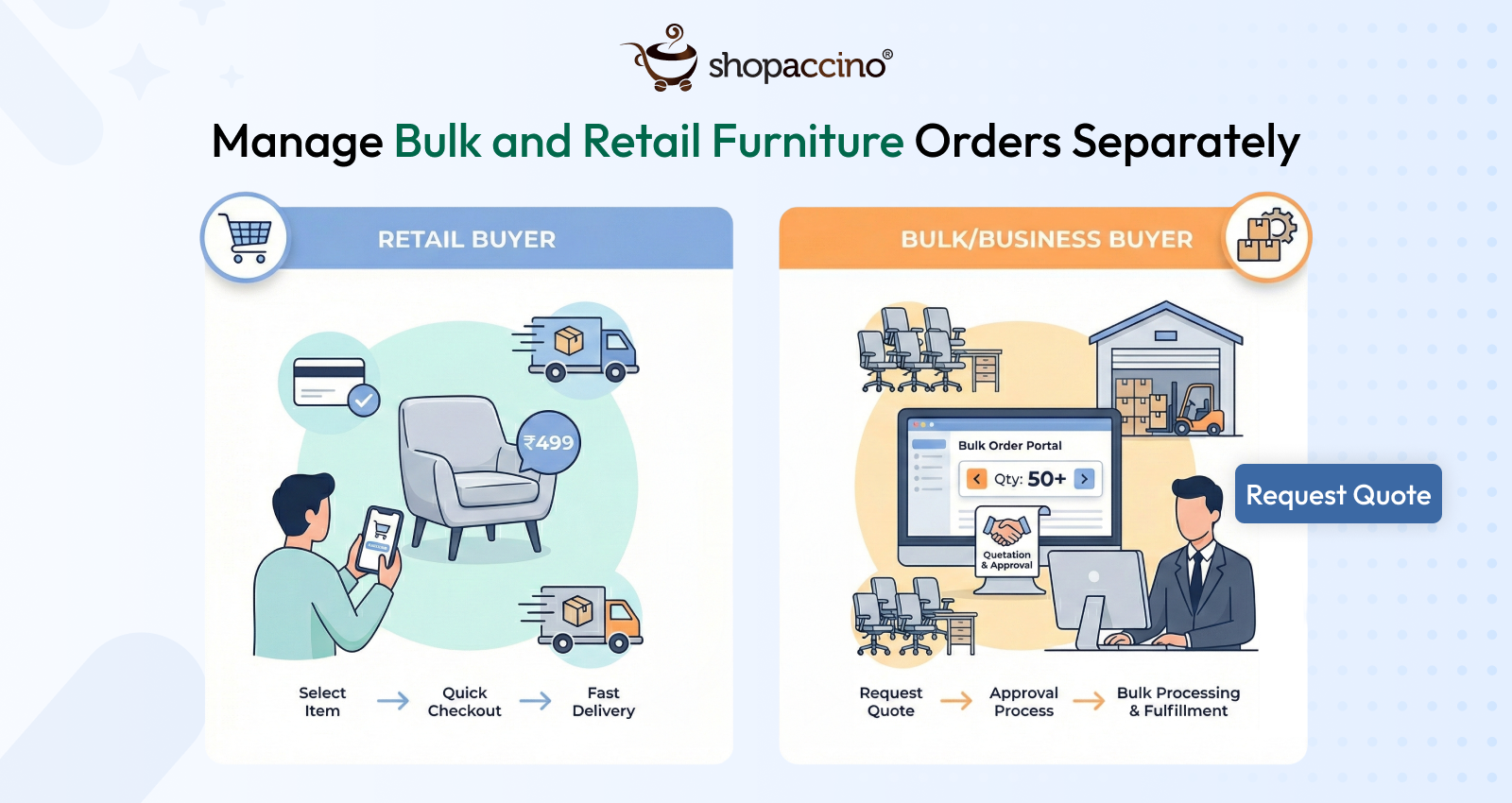
Furniture brands rarely sell to just one kind of customer. A single business may receive a retail order for one sofa in the morning and a bulk enquiry for fifty office chairs by afternoon. On the surface, both are “orders.” In reality, they follow completely different buying logic. Retail customers look for fixed prices, quick checkout, and clear delivery dates. Bulk buyers expect negotiated pricing, approvals, longer timelines, and documentation.
Problems begin when both these customers are pushed through the same ordering flow.
What looks efficient internally often creates confusion externally. Retail customers see prices changing unexpectedly. Bulk buyers face rigid checkout systems not designed for negotiation or approval. Sales teams step in manually, operations teams struggle to keep track, and mistakes creep into pricing, timelines, and fulfilment.
This blog explains why mixing bulk and retail orders creates friction, how buyers experience that friction, and how ecommerce software helps furniture brands manage both models separately—without running two different systems.
Challenging Area: Where Furniture Brands Struggle Internally
Furniture brands usually start with retail-first systems. A standard product price, a checkout flow, and basic order processing. As the business grows, bulk orders quietly enter the picture—via email, WhatsApp, or offline conversations.
Instead of redesigning the system, brands try to force bulk orders into retail workflows. This is where issues begin.
Pricing becomes the first casualty. Bulk buyers receive special rates, but systems still display retail prices. Sales teams override numbers manually. Discounts vary depending on who handles the order. Over time, pricing logic becomes inconsistent and difficult to audit.
Approvals slow everything down. Bulk orders often require internal confirmation—on margins, materials, or timelines. When the system is built for instant checkout, approvals happen outside the platform, breaking visibility.
Operational errors increase. Retail orders and bulk orders are packed, scheduled, and invoiced differently. When both share the same backend flow, teams struggle to distinguish priorities. Delays, wrong quantities, and miscommunication become common.
What started as “one system for everything” quietly becomes a daily operational headache.
Their Customer Challenging Area: How Buyers Experience the Confusion
Customers feel these internal gaps immediately, even if they cannot name them.
Retail customers expect simplicity. They want to select a product, see a final price, and place an order without negotiation. When bulk pricing logic interferes—such as unexpected discounts, approval delays, or unavailable stock messages—it erodes trust.
Bulk buyers face the opposite problem. They do not want a retail-style checkout experience. Architects, builders, and corporate buyers expect:
- Custom Pricing Based on Volume
- Approval-Based Order Confirmation
- Clear Documentation and Timelines
When forced into a retail flow, they feel restricted. They call sales teams, ask for manual intervention, and delay decisions until clarity arrives.
Both customer types feel friction—not because furniture is complex, but because the system is not designed for two buying behaviours.
Solution: How Integrated Ecommerce Software Separates Bulk and Retail Logic
The real solution is not choosing between bulk or retail. It is structuring both inside one platform, with different rules.
Modern ecommerce software allows furniture brands to define customer types and assign them unique ordering logic. Retail customers see fixed prices, instant checkout, and standard delivery rules. Bulk customers access negotiated pricing, quantity-based slabs, approval workflows, and tailored timelines.
This separation happens behind the scenes, but the experience feels natural to buyers.
Using platforms like Shopaccino, furniture brands can:
- Assign Pricing Rules Based on Customer Type
- Control Minimum Order Quantities for Bulk Buyers
- Enable Approval-Based Orders without Email Chains
- Maintain Separate Fulfilment Logic while using one backend
The key is not automation alone, but clarity—each buyer sees only what is relevant to them.
How to Implement: Step-by-Step Guidance for Furniture Brands
Separating bulk and retail orders does not require building two websites. It requires thoughtful configuration.
Step 1: Identify Customer Categories Clearly
Start by defining who qualifies as retail and who qualifies as bulk. This can be based on order quantity, customer profile, or account type.
Step 2: Create Separate Pricing Structures
Retail pricing remains fixed and visible. Bulk pricing follows slabs, negotiated rates, or request-based visibility. This avoids overlap and confusion.
Step 3: Define Different Order Workflows
Retail orders move directly to payment and fulfilment. Bulk orders pass through approval, confirmation, or partial payment stages before processing.
Step 4: Configure Inventory and Fulfilment Logic
Bulk orders may need scheduled production or phased delivery. Retail orders usually ship faster. The system should reflect these realities.
Step 5: Train Teams to Work Inside the System
When sales and operations teams use the same structured platform, manual interventions reduce naturally.
This approach replaces ad-hoc handling with predictable processes.
Benefits of Managing Bulk and Retail Orders Separately
When furniture brands separate ordering logic, the impact is visible across teams and customers.
Key benefits include:
- Clear Pricing Visibility for All Buyers
- Faster Order Processing with Fewer Clarifications
- Reduced Manual Errors in Quantity and Pricing
- Better Customer Experience for Both Retail and Bulk Buyers
- Improved Internal Control and Reporting
Most importantly, teams stop firefighting and start scaling with confidence.
Conclusion
Furniture brands do not struggle because they sell to both retail and bulk customers. They struggle because both are treated the same inside systems that were never designed for dual buying behaviour.
By using ecommerce software that supports separate pricing, workflows, and rules, brands can serve both segments smoothly without operational chaos. Retail customers enjoy speed and simplicity. Bulk buyers receive flexibility and clarity.
The future of furniture ecommerce belongs to brands that design for how customers actually buy, not how systems were originally built.
FAQs
Bulk and retail buyers have different expectations around pricing, approvals, and timelines. Using the same flow causes confusion, delays, and pricing errors.
Not necessarily. Modern ecommerce software allows both models to run within one platform, avoiding the cost of maintaining separate systems.
Yes. Bulk buyers can place orders online with predefined rules such as minimum quantities, approval steps, and negotiated pricing instead of manual emails.
No. Sales teams become more effective by focusing on relationships and negotiations rather than manual order handling.
Yes. Separate workflows help manage production timelines and approvals more clearly for made-to-order bulk and retail furniture.