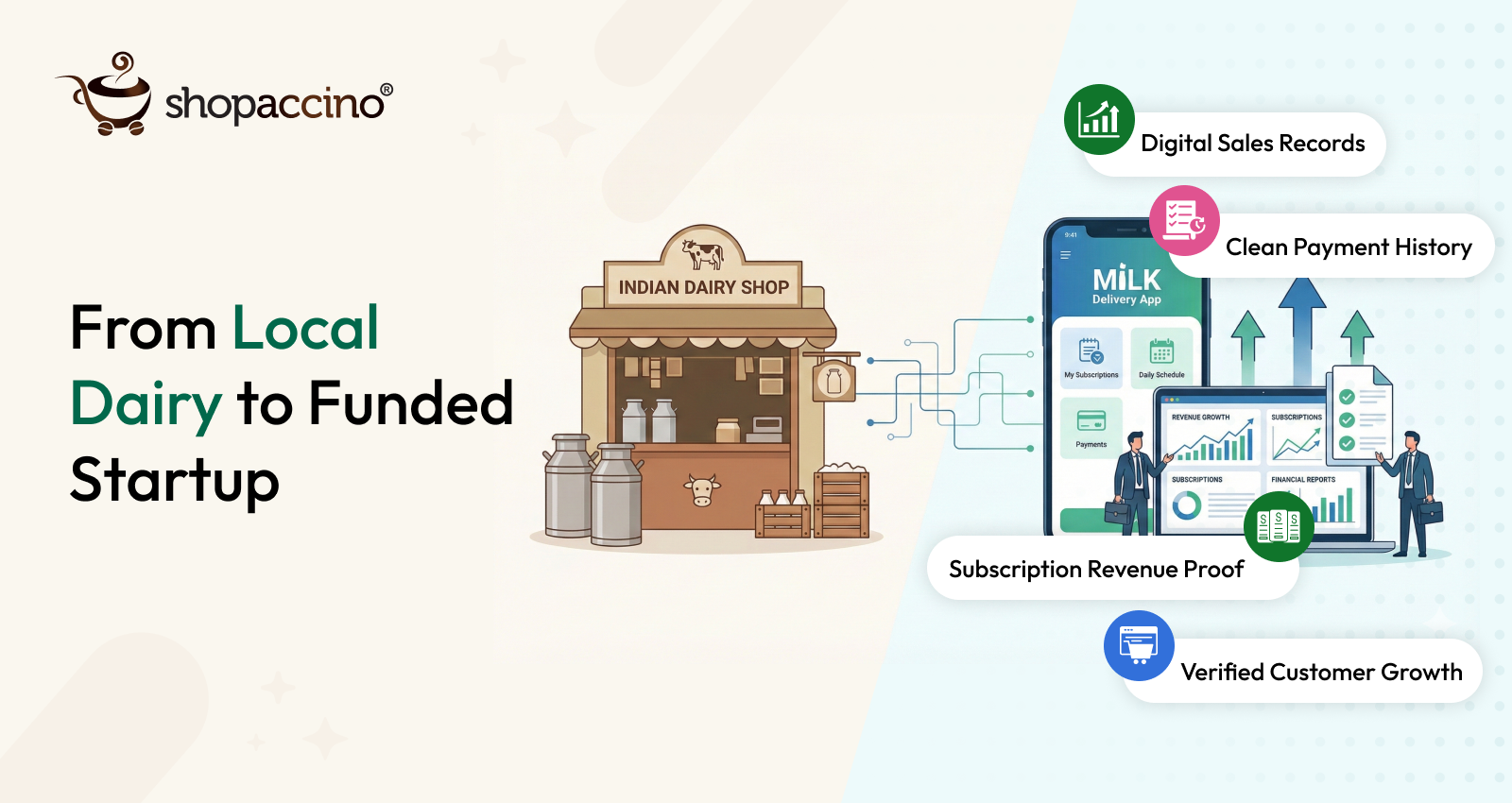
From Local Dairy to Funded Startup: How a Milk Delivery App Helps
The journey from a small local dairy business to a funded, scalable startup is no longer defined only by how much milk is sold every day. Today, growth is measured by how clearly a business can show its progress, consistency, and operational strength.
Many milk businesses run a profitable milk delivery business model, serve loyal customers, and generate steady daily income. Yet, when they approach banks, NBFCs, or potential investors, they often face rejection—not because the business is weak, but because it lacks structured records.
Orders written in notebooks, payments remembered mentally, and customer relationships managed informally may work on the ground, but they fail in funding conversations. Lenders and investors want clarity, proof, and data.
A milk delivery app changes this reality. It quietly turns everyday milk deliveries into verifiable business data—sales records, customer retention, subscriptions, and payment histories. Over time, this data becomes the strongest asset a local dairy can have when seeking funding.
This blog explains how a milk delivery app development helps local dairies move toward becoming fundable startups, the challenges they face without digital records, what lenders expect, and how an integrated system bridges this gap.
Challenging Area: Why Local Dairies Struggle to Get Funding
Most local dairy businesses are profitable in practice but appear weak on paper. This mismatch creates problems when external funding is involved.
Lack of Reliable Sales Records
Daily sales are often tracked manually in notebooks or loose spreadsheets. These records are difficult to verify, easy to lose, and nearly impossible to audit. Lenders hesitate when numbers cannot be trusted.
No Clear Customer Data
Many dairies cannot clearly answer how many active customers they serve, how long those customers stay, or how frequently they order. Without this information, long-term business value is hard to assess.
Unstructured Payment Tracking
Cash and UPI payments may happen daily, but without proper logs, there is no clean financial trail. This creates doubts around revenue stability.
No Visibility Into Growth
Banks and investors want to see trends—steady growth, repeat customers, and predictable income. Manual systems cannot present this story clearly.
Overdependence on the Owner
When operations depend heavily on one person’s memory or presence, the business appears risky. Funders prefer systems that run independently.
Their Customer Challenging Area: What Lenders and Investors Look For
Funding institutions focus on risk, consistency, and scalability. Their expectations are practical and data-driven.
Proof of Revenue Consistency
They want to see daily, weekly, and monthly sales records that are digitally maintained and easy to verify.
Evidence of Customer Retention
Recurring customers and subscriptions indicate stable income and long-term business health.
Operational Transparency
Delivery performance, order fulfillment, and payment collections should be trackable and documented.
Scalability Potential
Funders want confidence that the business can grow beyond one area without operational chaos.
Compliance-Ready Records
Digitally generated invoices, transaction histories, and reports simplify verification and due diligence.
Solution: How a Milk Delivery App Works as a Dairy Distribution Platform for Funding Readiness
A milk delivery app does more than manage orders. It documents the business automatically, without extra effort from the owner.
Platforms like Shopaccino convert daily dairy operations into structured, reliable data that lenders trust.
Digital Order History
Every order placed through the app is recorded with date, quantity, customer, and value. Over time, this becomes a clean sales ledger.
Subscription Revenue Tracking
Milk subscriptions clearly show recurring income, which is highly valued by banks and investors.
Automated Payment Records
Online payments, wallet balances, and collection summaries create a transparent financial trail.
Customer Growth Metrics
The app tracks active customers, new sign-ups, repeat orders, and churn—turning relationships into measurable assets.
Delivery Performance Logs
Consistent delivery data shows operational discipline and reliability.
How to Implement a Milk Delivery App for Funding Readiness
Step 1: Digitise All Orders
Move subscriptions, add-on items, and daily orders into the app to create a single source of truth.
Step 2: Promote Digital Payments
Increasing digital payments improves clarity and strengthens financial reporting.
Step 3: Enable Subscription Models
Subscriptions demonstrate predictable income, making the business more attractive to lenders.
Step 4: Maintain Customer Profiles
Track customer duration, order frequency, and average value to show loyalty and lifetime value.
Step 5: Use Reports Regularly
Weekly and monthly reports help owners understand trends and prepare for funding discussions.
Step 6: Plan Expansion with Data
With clear insights, expanding routes or areas becomes a calculated decision, not a guess.
Benefits: Why Milk Delivery Apps Strengthen Funding Conversations
Higher Financial Credibility
Clear digital records reduce doubts and speed up loan evaluations.
Better Negotiation Power
When numbers are transparent, businesses can negotiate better loan terms.
Lower Risk Perception
Structured systems reduce dependency on individuals and increase trust.
Faster Scale Readiness
Data-backed insights make growth plans more convincing.
Improved Business Valuation
Documented customers and recurring revenue increase long-term value.
Conclusion
Funding decisions are based on clarity, not assumptions. Many local dairies run strong operations but fail to present their strength in a form that banks and investors understand. A milk delivery app quietly solves this problem by converting daily activity into verifiable business data.
With platforms like Shopaccino, milk businesses don’t need to work harder—they simply need to work smarter. Orders become records, customers become assets, and routine discipline turns into financial credibility.
For dairies aiming to scale, formalize operations, or access funding, a milk delivery app is no longer optional. It is a foundation for sustainable growth.
FAQs
Because many dairies lack structured sales, customer, and payment records, making risk assessment difficult.
It provides digital proof of revenue, subscriptions, and customer retention.
Yes. Subscriptions show predictable income and long-term stability.
Absolutely. Even small businesses gain credibility with clean records.
Yes. Consistent fulfillment reflects operational reliability.
No. Traditional dairies also benefit by modernizing operations.