How Manufacturers Can Expand Globally Using a B2B Ecommerce Platform
Global growth has always been an aspiration for manufacturers, but 2026 has opened the doors wider than ever. Technology, logistics innovations, digital payments, and evolving B2B buyer expectations have made international expansion more achievable—even for small and mid-sized manufacturers. Instead of relying solely on trade expos, agent networks, and complex export partnerships, brands today are using digital channels to reach global buyers directly.
But global expansion is not only about reaching new regions—it is about meeting the expectations of overseas buyers who demand clarity, consistency, and a professional purchasing experience. They want accurate information, seamless ordering, real-time visibility, transparent documentation, and reliable fulfilment. Traditional methods like email-based communication, manual catalog sharing, or delayed pricing negotiations simply do not match the pace of modern global trade.
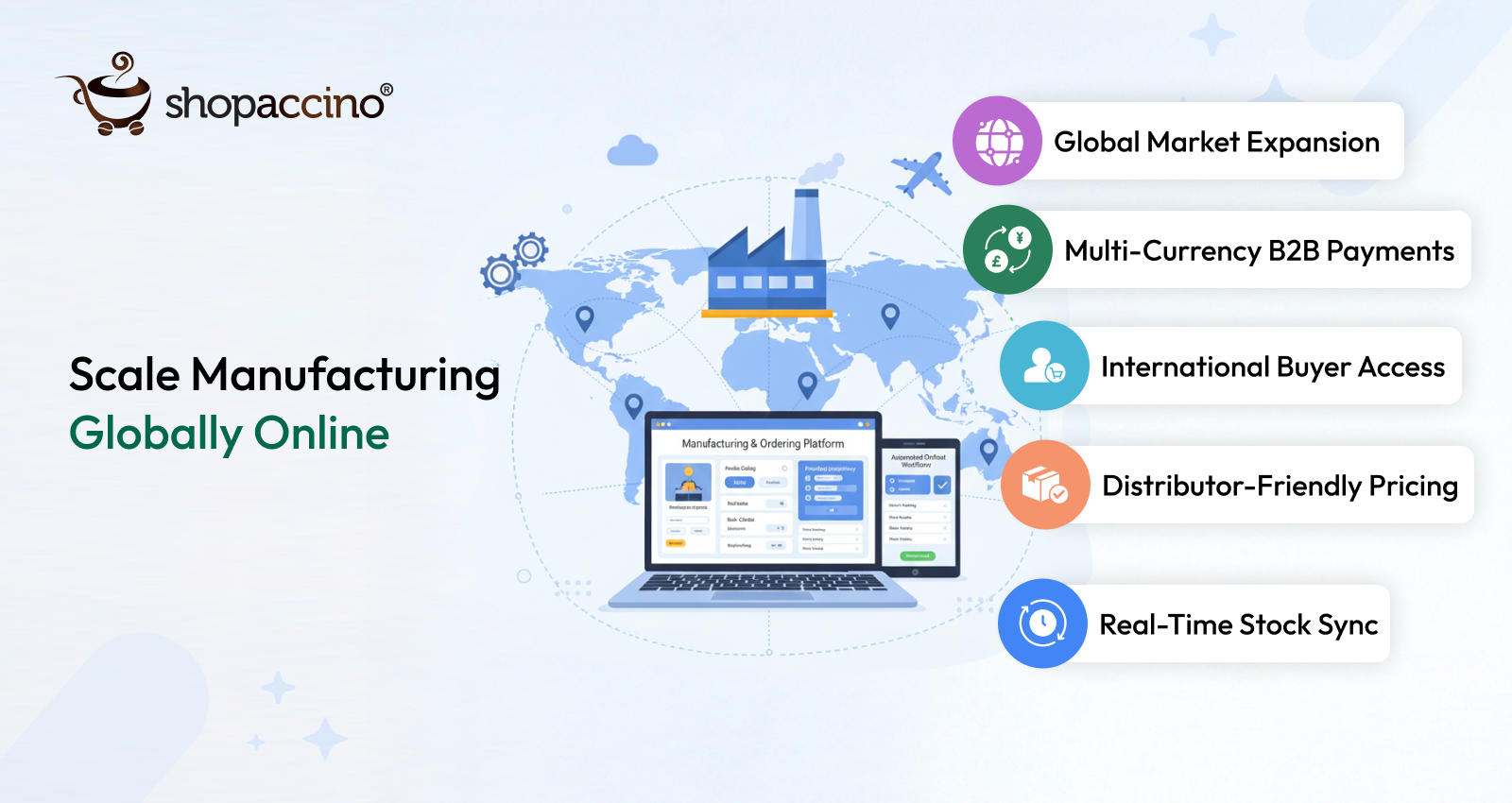
This is where a B2B ecommerce platform becomes a powerful catalyst. It enables manufacturers—whether Established D2C Brands, Exporters, Manufacturers, Wholesalers, or Distributors—to present their catalog professionally, manage customer groups, automate pricing, handle bulk orders, and offer an international-grade buying experience. Solutions like Shopaccino bring global readiness to manufacturers by digitalising the entire B2B order cycle.
In this blog, we’ll explore the challenges of going global, what international buyers expect, how a B2B ecommerce platform solves these needs, and how manufacturers can implement a scalable cross-border strategy step-by-step.
Challenging Area: Why Global Expansion Is Difficult for Manufacturers
Going global is exciting, but the operational complexity behind it often discourages businesses from taking the leap. The challenges are even more intense for MSME manufacturers who manage everything with limited teams and traditional workflows.
Complex Cross-Border Communication
Manufacturers often communicate with potential overseas buyers through:
- Email exchanges
- Spreadsheets
- PDFs
- Trade messages
- Documents with multiple revisions
This creates delays, confusion, and misinterpretation—especially when time zones differ.
Manual Catalog Sharing and Pricing Negotiation
Manufacturers frequently send:
- Old catalog files
- Outdated pricing lists
- Incorrect product specifications
Global buyers quickly lose trust when updates are inconsistent.
Difficulty Managing Multiple Customer Groups
Export buyers, wholesalers, regional distributors, and retail chains all need:
- Different pricing
- Different documentation
- Different payment terms
- Different minimum order quantities
Managing all of this manually is exhausting and error-prone.
Slow Bulk Order Processing
International buyers often place large, detailed orders that require:
- Bulk pricing
- Variant selection
- Volume checks
- Availability confirmation
Manual handling slows down fulfilment and increases mistakes.
Lack of Real-Time Inventory Visibility
When buyers must wait hours or days to check stock availability, they move to faster suppliers.
Compliance and Documentation Challenges
Global shipping requires:
- Invoices
- Certificates
- Packing lists
- Custom declarations
Managing these manually creates delays and inconsistencies.
7. No Professional, Always-Available Buying Experience
Global buyers expect digital convenience. Manufacturers relying on traditional communication cannot match the expectations of modern procurement teams.
Their Customer Challenging Area: What Global B2B Buyers Expect in 2026
International buyers are more digital compared to domestic customers. They look for structured, reliable, and transparent systems that minimise uncertainty.
They Expect a Professional B2B Ordering Experience
Buyers prefer platforms where they can view catalogues, check availability, and place orders without waiting for email replies.
They Expect Real-Time Pricing and Stock
Buyers want:
- Updated pricing
- Currency-specific rates
- Regional costing
- Accurate stock visibility
They Expect Clear Documentation
Even before placing an order, buyers want clarity on:
- Purchase requirements
- Shipping constraints
- Export documents
- Compliance standards
They Expect Speed and Predictability
Long response times or unclear processes immediately reduce credibility.
They Expect Customisation and Bulk Support
Global orders are usually bulk and customised. Buyers expect flexible pricing, volume-based discounts, and easy reordering options.
They Expect Transparency Across Time Zones
Because communication happens across continents, buyers demand systems—not waiting for business hours to resume.
Manufacturers can only meet these expectations with a digital-first approach.
Solution: How a B2B Ecommerce Platform Enables Global Manufacturing Growth
A B2B ecommerce platform transforms how manufacturers present their products, handle orders, engage with global buyers, and scale cross-border operations.
Platforms like Shopaccino give manufacturers the tools they need to compete globally with efficiency, accuracy, and professionalism.
Here’s how it solves the challenges:
Digital Catalog With Accurate and Updated Information
Manufacturers can upload:
- Product photos
- Technical specifications
- Pricing tiers
- Bulk prices
- Packaging details
This gives buyers instant clarity.
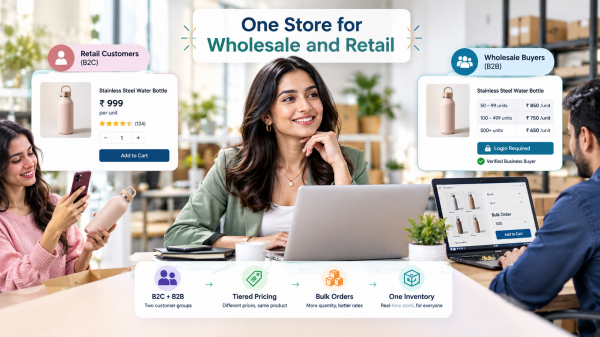
Customer Groups With Region-Specific Pricing
Manufacturers can assign buyers into segments:
- Exporters
- Overseas wholesalers
- Channel partners
- Bulk retailers
Each buyer can see customised pricing in their own currency.
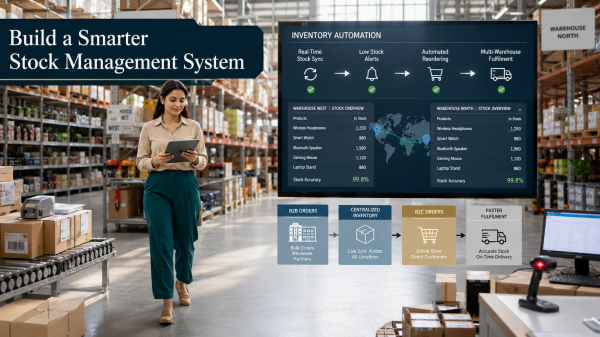
Real-Time Inventory Visibility Across Warehouses
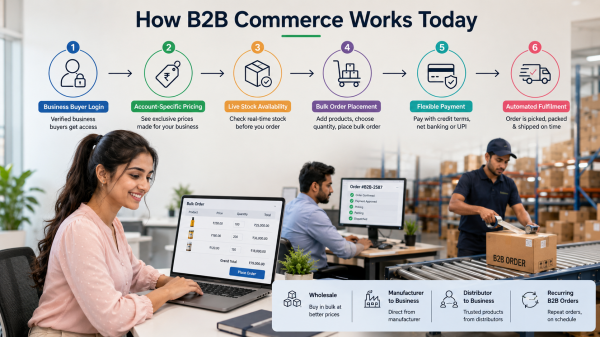
The platform shows buyers real-time stock availability—reducing back-and-forth communication and speeding up decision-making.
24×7 Self-Serve Ordering Experience
Buyers can:
- Browse
- Choose variants
- Place bulk orders
- View pricing
…all without waiting for manual assistance.
Automated Documentation and Order Visibility
Global buyers receive:
- Order confirmations
- Dispatch details
- Invoices
- Export documents
This builds trust and eliminates confusion.
Multi-Warehouse and Multi-Country Support
Manufacturers can route orders from the correct warehouse or export hub, ensuring faster delivery and reduced cost.
7. Data Insights for Global Strategy
Manufacturers can track:
- High-demand regions
- Buyer behaviour
- Export frequency
- Top-selling international SKUs
This data helps refine pricing, inventory distribution, and export planning.
How to Implement a B2B Ecommerce Platform for Global Manufacturing (Step-by-Step)
Below is a simple, easy-to-follow blueprint for manufacturers expanding globally.
Step 1: Build a Digitised, Export-Ready Catalog
Prepare high-quality product pages with:
- Professional images
- Dimensions
- Material specifications
- Certifications
- Packaging information
Step 2: Create Buyer Segments and Pricing Structures
Group international customers into:
- Distributors
- Importers
- Wholesalers
- Retail chains
Assign custom pricing, currency options, and rules.
Step 3: Enable Self-Serve Ordering Access
Invite buyers to the B2B portal for:
- Smooth browsing
- Custom pricing
- Quick ordering
- Bulk selection
Step 4: Sync Inventory and Set Up Fulfilment Rules
Ensure your warehouses:
- Update stock in real time
- Follow clear packing procedures
- Comply with export guidelines
Step 5: Automate Documentation Workflows
Upload templates for:
- Proforma invoices
- Commercial invoices
- Shipping labels
- Export compliance documents
Step 6: Offer Transparent Tracking and Updates
Keep buyers informed through:
- Order updates
- Dispatch notifications
- Delivery timelines
Step 7: Analyse International Sales Patterns
Use analytics to identify:
- High-potential markets
- Reorder patterns
- Seasonal demand
- Pricing competitiveness
This helps refine global expansion strategy.
Benefits: Why B2B Ecommerce Is the Global Growth Engine for Manufacturers
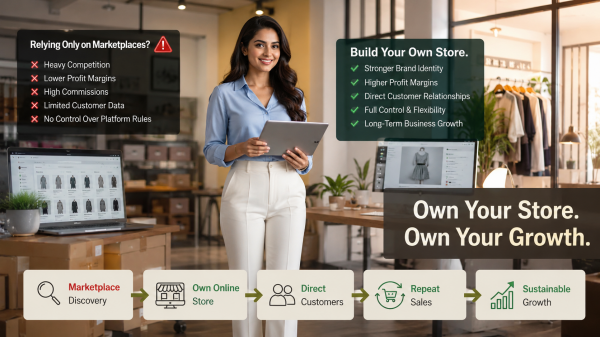
Access to Global Buyers Without Middlemen
Manufacturers can showcase products directly to buyers across multiple countries.
Faster Communication With Time Zone-Independent Ordering
A self-serve system works 24×7, removing communication delays.
Professional, Export-Grade Presentation
Buyers view products, pricing, and specifications in a structured environment.
Streamlined Bulk and Repeat Ordering
Buyers enjoy faster reordering with saved lists and previous order history.
Greater Transparency and Trust
Digital documentation and order visibility build stronger buyer relationships.
Better Pricing Control
Manufacturers can manage region-wise pricing without manual errors.
Scalable and Cost-Efficient Global Operations
Digitalisation reduces workload, speeds up fulfilment, and supports expansion into multiple countries.
Conclusion
Global expansion is no longer limited to large enterprises. With the right digital foundation, even small and mid-sized manufacturers can reach international buyers, manage complex pricing, process bulk orders efficiently, and build long-lasting global partnerships.
A B2B ecommerce platform provides the structure, automation, and visibility required to operate globally with confidence. Platforms like Shopaccino help manufacturers move beyond traditional limitations and transform their business into a global-ready, digitally empowered brand.
In 2026, the manufacturers who embrace digital B2B selling will not only survive global competition—they will lead it.
FAQs
Because it provides a professional, structured buying experience that international buyers expect, while simplifying internal operations.
It allows manufacturers to create region-wise or customer-specific pricing lists that update automatically.
Yes, B2B portals support bulk selection, variant-level ordering, and custom pricing for international buyers.
Absolutely. Self-serve ordering eliminates time zone issues and gives buyers immediate access to catalogs and pricing.
Yes, MSMEs benefit the most because it reduces manual workload and helps them compete with global brands.
Many platforms support automated invoices, packing lists, and compliance documents essential for export shipments.
Clear information, accurate pricing, consistent updates, and transparent visibility build long-term buyer confidence.