How Manufacturers Can Manage B2B Customer Groups and Custom Pricing
For manufacturers, pricing is more than just a number on a product label—it is a strategic tool that shapes relationships, influences trust, and determines long-term business growth. Unlike B2C, where pricing is usually straightforward, B2B pricing is deeply layered. Every reseller, distributor, wholesaler, dealer, or institutional buyer may have different expectations, credit terms, discount structures, and minimum order quantities.
As manufacturers grow and expand across regions, managing B2B customer groups becomes increasingly complicated. A single mistake in pricing can impact long-standing relationships or cause disputes that affect order flow. But in 2026, buyers expect speed, accuracy, and complete transparency, which makes manual price management nearly impossible.
This is where digital B2B ecommerce platforms bring clarity. With structured customer groups, predefined pricing rules, and automated discounts, manufacturers can deliver a more predictable and trustworthy buying experience. Platforms like Shopaccino help manufacturers build scalable pricing frameworks that suit different types of B2B customers—without increasing internal workload.
This blog explores the challenges manufacturers face, how customer expectations have evolved, and how a modern ecommerce platform can centralise, simplify, and automate custom pricing for all B2B customer groups.
Challenging Area: Why Manufacturers Struggle With Customer Groups and Custom Pricing
Manufacturers sell to various types of customers across different regions and volumes. This customer diversity brings complexity that can quickly overwhelm internal teams.
Below are the most common challenges faced by Manufacturers, Exporters, Established D2C Brands, Wholesalers, and Distributors.
Every Customer Has Unique Pricing Needs
Retailers, channel partners, corporate buyers, and distributors each expect:
- Special rates
- Quantity-based discounts
- Region-specific pricing
- Negotiated terms
Tracking this manually leads to confusion and errors.
Frequent Price Updates Across Channels
Manufacturers often revise:
- Raw material cost-based pricing
- Seasonal rates
- Product-specific discounts
- Volume-based offers
Updating multiple spreadsheets or sending updated lists through WhatsApp is slow and inconsistent.
Misaligned Communication Between Teams
Sales, accounts, and warehouse teams often work with different versions of the price list.
This leads to:
- Wrong price commitments
- Confusing final invoices
- Customer disputes
Difficulty Handling Multi-Region and Multi-Partner Pricing
A large manufacturer may have:
- Western region distributors
- City-wise dealers
- Export partners
- Institutional buyers
Each group requires different pricing structures and unique rules.
Ordering Errors Due to Manual Price Sharing
When buyers place orders through:
- Messages
- Phone calls
- Emails
Pricing often needs reconfirmation, creating delays and operational bottlenecks.
Lack of Transparency for Customers
When dealers and distributors must ask for pricing every time, they lose confidence and feel dependent on sales representatives.
Manufacturers need a smarter, structured way to manage pricing across their entire B2B ecosystem.
Their Customer Challenging Area: What B2B Buyers Expect Today
Today’s B2B buyers behave like modern digital consumers. They want clarity, speed, and self-reliance.
They Want Instant Price Visibility
Buyers don’t want to wait for sales representatives or check old PDFs. They expect updated pricing instantly.
They Want Transparency Without Negotiation Repetition
When prices change, customers expect a clear explanation and updated visibility.
They Expect Custom Pricing Without Errors
Incorrect price entries or mismatches immediately reduce trust.
They Expect Ordering Independence
B2B buyers want to place orders directly through a portal and expect all pricing rules to apply automatically.
They Want Consistency Across Regions and Sales Channels
A dealer in one city should not see a conflict with a dealer in another region.
They Want Easy Reordering Based on Their Own Price List
B2B buying often involves repeat orders; customers expect the system to remember their pricing preferences.
These expectations can only be met with a structured digital pricing system.
Solution: How an Integrated Ecommerce Platform Solves Custom Pricing Challenges
A modern B2B ecommerce platform brings order to the complexity of customer segmentation and pricing.
It centralises rules, automates calculations, and ensures every customer sees the correct price every time.
Platforms like Shopaccino are built specifically for B2B manufacturers who need precision, flexibility, and scalability.
Here’s how an ecommerce platform solves pricing challenges:
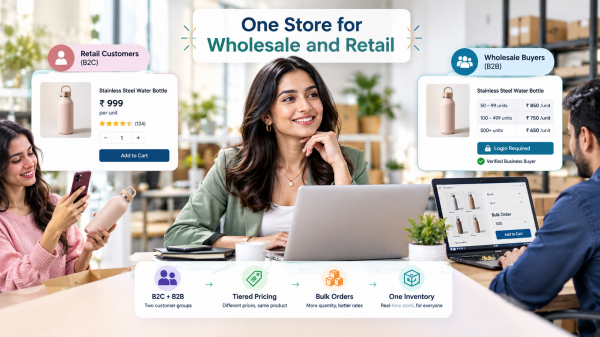
Customer Groups Become Easy to Manage
Manufacturers can divide customers into structured groups such as:
- Distributors
- Wholesalers
- Retail chains
- Export partners
- Institutional buyers
Each group gets its own pricing logic.
Automated Price Lists for Every Customer Type
Manufacturers can create:
- Region-wise price lists
- Quantity-based discounts
- Special rates for high-volume buyers
- Different prices for online vs. offline orders
The system handles everything automatically.
Real-Time Pricing Updates
Manufacturers can update pricing once, and the system instantly synchronises it across:
- Ecommerce portal
- Mobile app
No outdated spreadsheets.
Clear Visibility for All Stakeholders
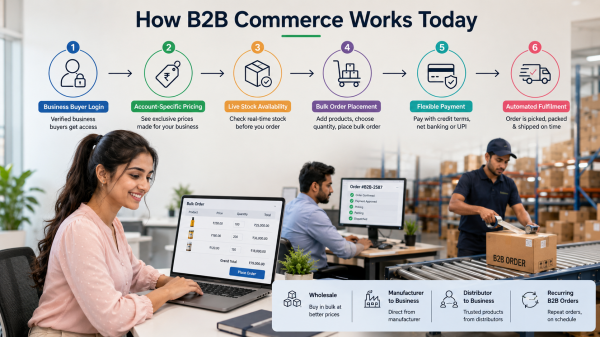
Customers see their custom pricing instantly when they log in.
Sales teams see the exact pricing rules set by management.
Automated Discount Rules
The platform applies:
- Bulk discounts
- Tiered pricing
- Product-based offers
- Cart-level deals
This eliminates manual calculation entirely.
Accurate Invoicing and Dispatch
Because pricing comes from the system automatically, invoicing remains consistent across warehouses and team members.
Manufacturers finally get a clean, consistent pricing structure without chaos.
How to Implement Customer Groups and Custom Pricing (Step-by-Step)
Here’s a simple, easy-to-understand implementation plan designed for growing B2B manufacturers.
Step 1: Categorise Your Customers
Divide customers based on:
- Business type
- Order size
- Geography
- Discount expectations
- Credit history
This gives a clear base for custom pricing.
Step 2: Create Group-Wise Price Lists
For each customer group, define:
- Base pricing
- Valid discounts
- Minimum order quantity
- Regional variations
A structured list avoids confusion.
Step 3: Digitise Your Product Catalogue
Upload:
- Product names
- SKUs
- Variants
- Pack sizes
- Images
Pair your pricing with accurate product data.
Step 4: Enable B2B Portal Access
Invite customers to access their customised price list digitally.
They will see only their assigned pricing.
Step 5: Automate Discount Rules
Set predefined rules for:
- Bulk purchases
- Seasonal offers
- High-volume customers
- Bundle pricing
Let the system do the calculations.
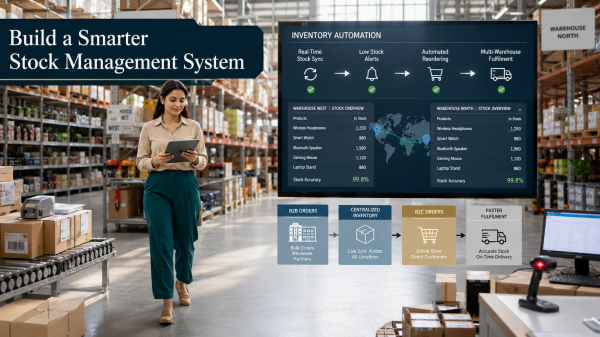
Step 6: Sync Inventory for Accurate Ordering
Customers need real-time stock data to make pricing decisions confidently.
Step 7: Train Your Sales and Accounts Team
Show them how customer groups work so there are no manual overrides.
Step 8: Use Analytics to Improve Pricing Strategy
Track:
- High-value customers
- Frequent buyers
- Price-sensitive segments
- Products with margin leakage
This helps refine pricing over time.
Benefits: Why Digital Pricing Management Transforms Manufacturing Sales
Zero Pricing Errors
Every buyer sees accurate pricing.
No miscommunication. No disputes.
Faster Order Placement
Buyers order instantly using their assigned rates.
Stronger Channel Relationships
Trust increases when pricing is transparent and consistent.
Reduced Workload for Sales Teams
No need to share updated lists or explain pricing repeatedly.
Higher Repeat Orders
Customers enjoy independence and clarity, leading to loyalty.
Consistent Pricing Across All Regions
A centralised system ensures alignment with no internal mismatches.
Better Profit Control
Brands set rules once and ensure margins remain stable.
Conclusion
Managing B2B customer groups and custom pricing is one of the most complex responsibilities for manufacturers.
Traditional methods — spreadsheets, WhatsApp messages, manual approvals, or verbally communicated prices — simply cannot handle the speed and volume of modern B2B sales.
A structured ecommerce system provides the clarity and automation required to manage customer types, pricing levels, discount structures, and ordering independence. Digital platforms like Shopaccino help manufacturers eliminate errors, create pricing consistency, and build stronger relationships with customers across every region.
By adopting a B2B ecommerce portal, manufacturers can finally create a pricing framework that supports scale, transparency, and long-term growth.
FAQs
Because different customers have different buying patterns, volumes, and expectations. Group-wise pricing keeps things clear and personalised.
Yes. Modern B2B platforms automatically apply special rates, discounts, and regional pricing without any manual steps.
Yes. Each customer logs in to view pricing assigned specifically to their group or profile.
Absolutely. Even small MSME manufacturers benefit because it reduces errors and makes the business more professional.
Yes. Exporters can create unique price lists with specific currency and volume rules.
The system standardises rules and ensures all teams and customers see the same updated pricing.
Yes, it removes repetitive tasks, leaving more time for customer support and strategic selling.