How Quick Reorder Features Increase Grocery Repeat Orders by 40%+
Grocery ecommerce is not about discovery. It is about routine. People do not wake up excited to explore new rice brands or compare five types of salt every week. They shop for groceries because they have to, not because they want to. This simple truth is where many grocery apps fail—and where the biggest opportunity lies.
In recent years, grocery brands have invested heavily in acquisition. Ads bring users in, discounts trigger the first order, and installs look impressive on dashboards. But behind the numbers, a quiet problem keeps growing: most users never come back. The moment grocery shopping feels slow, repetitive, or frustrating, customers abandon the app and move on.
By 2026, successful grocery ecommerce brands are no longer obsessed with traffic. They are obsessed with repeat behaviour. And one of the strongest drivers of repeat orders is not pricing or promotions—it is quick reorder experience.
This blog explores why grocery buying is deeply habitual, why customers reorder the same items again and again, how poor user experience kills retention, and how quick reorder features can increase grocery repeat orders by 40% or more when implemented correctly.
Challenging Area: Why Grocery Apps Lose Repeat Buyers
Most grocery apps are built like grocery ecommerce platforms. They prioritise product search, category browsing, and endless listings. While this works for first-time users, it creates friction for repeat buyers.
Manual Product Search Wastes Time
Returning customers are forced to search for the same items again and again. Milk, bread, oil, vegetables—items they bought last week are buried under categories and filters. What should take seconds ends up taking minutes.
Too Many Steps Kill Momentum
From opening the app to placing an order, customers are often required to:
- Search each product
- Select variants again
- Adjust quantities
- Reconfirm delivery details
This repetition feels unnecessary and exhausting for a task that is already routine.
Cognitive Fatigue Leads to Drop-Off
Grocery shopping is often done in a hurry—between work calls, family responsibilities, or late at night. When apps demand too much attention, users postpone orders or abandon them entirely.
Apps Focus on New Users, Not Returning Ones
Many grocery platforms optimise onboarding flows but ignore repeat journeys. Once the first order is done, the app experience remains unchanged, offering no shortcuts for loyal customers.
Low Convenience Drives App Abandonment
Customers do not complain. They simply stop opening the app. And every abandoned user increases acquisition cost pressure, pushing brands into a cycle of discounts and losses.
Their Customer Challenging Area: How Grocery Buyers Actually Behave
To design better reorder experiences, brands must understand grocery psychology—not assumptions.
Grocery Buying Is Habitual, Not Emotional
Customers buy the same staples every week or month. Their list rarely changes. The goal is not exploration but completion—getting essentials done quickly.
Familiarity Feels Safer Than Choice
People trust what worked last time. If a product was fresh, delivered on time, and priced fairly, they prefer repeating it instead of taking risks.
Speed Matters More Than Design
For repeat grocery buyers, speed beats aesthetics. A plain interface that allows quick action is preferred over a beautiful one that slows them down.
Reduced Effort Equals Loyalty
The less effort an app demands, the more likely customers are to stick with it. Convenience builds loyalty silently.
Confidence Comes From Past Experience
Seeing past orders reassures buyers. They know what to expect—no surprises, no mistakes, no wasted time.
Understanding this mindset shifts grocery ecommerce from selling to serving.
Solution: How Quick Reorder Features Transform Grocery Retention
Quick reorder is not a single feature. It is a design philosophy that respects customers' time and habits.
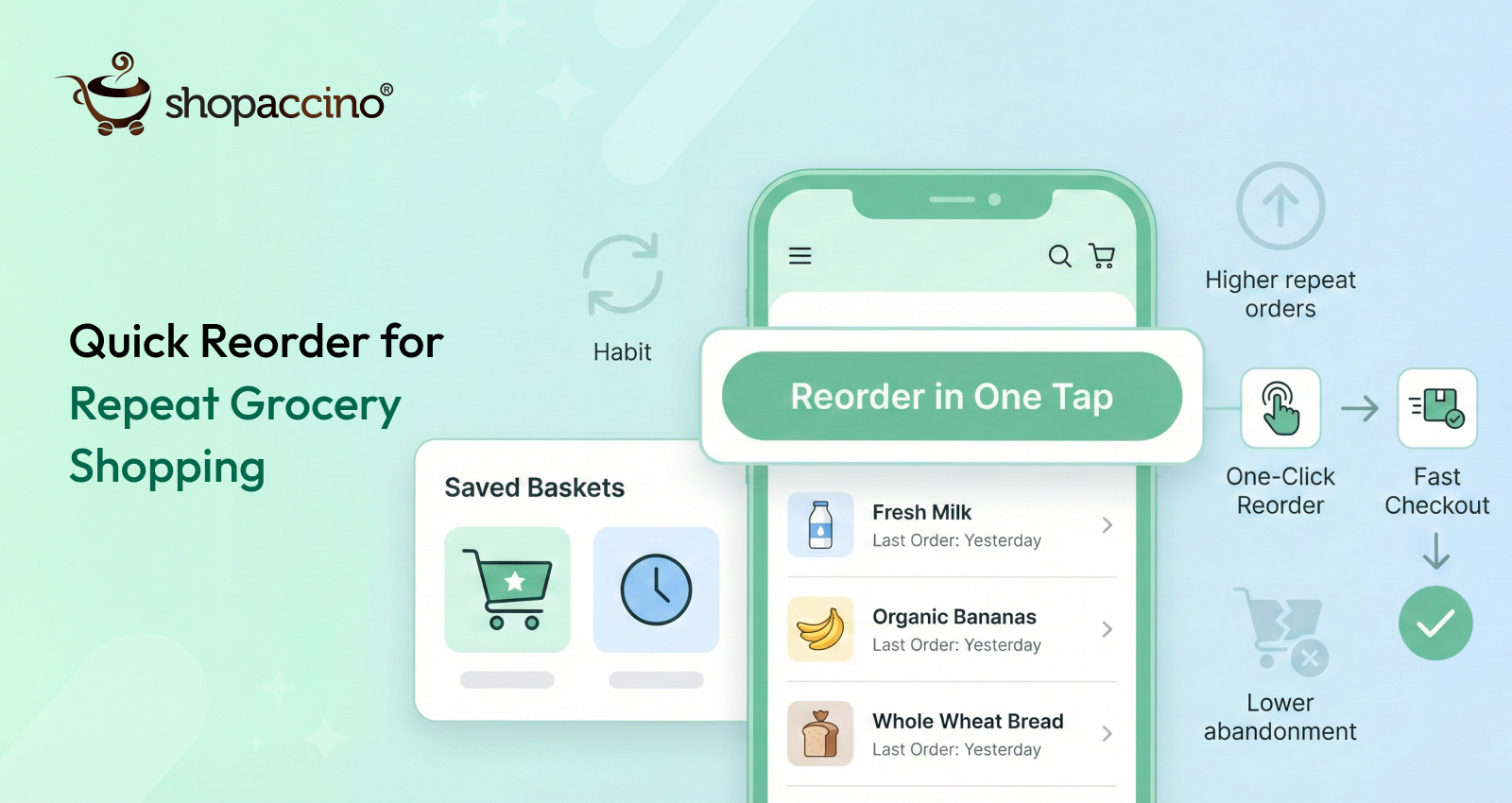
One-Click Reorder From Past Purchases
Instead of starting from scratch, customers can reorder their previous basket instantly. This removes search, selection, and decision-making altogether.
Saved Baskets for Common Needs
Many households follow patterns—weekly vegetables, monthly staples, and festival shopping. Saved baskets allow customers to reorder based on occasions or routines.
Faster Checkout Experience
When products, addresses, and preferences are already known, checkout becomes frictionless. Fewer steps mean fewer drop-offs.
Reduced Errors and Regret
Reordering known items reduces wrong selections, quantity mistakes, and dissatisfaction. Customers feel confident clicking “order” quickly.
Habit Loop Creation
Every smooth reorder reinforces a habit. Over time, customers stop comparing apps and return instinctively.
Platforms like Shopaccino enable grocery brands to design these quick reorder flows, turning grocery shopping into a 2–3 tap experience instead of a long task.
How to Implement Quick Reorder Features (Step-by-Step)
Quick reorder success depends on execution, not just intent.
Step 1: Make Order History the Starting Point
Do not hide order history in menus. Surface it on the home screen. Treat it as the main navigation for returning users.
Step 2: Enable One-Tap Basket Reorder
Allow customers to reorder full past baskets or select items from them. The fewer clicks required, the better.
Step 3: Create Saved Lists Automatically
Detect frequently ordered items and suggest saved baskets. Let customers rename and manage them easily.
Step 4: Simplify Quantity Adjustments
Most reorder changes are small. Make quantity editing quick and visible without opening product pages.
Step 5: Optimise Checkout for Speed
Auto-fill addresses, delivery slots, and payment preferences. Remove unnecessary confirmations.
Step 6: Test and Refine Based on Behaviour
Track how many taps it takes to reorder. Reduce steps continuously. Speed is the key metric here.
Benefits of Quick Reorder Features for Grocery Brands
Significant Increase in Repeat Orders
Reducing friction encourages frequent reordering. Many grocery brands see 40% or higher repeat order growth when reordering is simplified.
Higher Customer Lifetime Value
Frequent, consistent orders increase long-term revenue without increasing marketing spend.
Lower Customer Acquisition Cost Pressure
When customers return organically, dependency on paid ads decreases.
Better Demand Predictability
Repeat orders make inventory planning and delivery scheduling easier.
Stronger Customer Trust
Consistency builds trust. Customers return to what feels reliable and effortless.
Sustainable Growth Without Discounts
Quick reorder focuses on convenience, not price wars—improving margins over time.
Conclusion
Grocery ecommerce does not win by being louder, cheaper, or flashier. It wins by being easier. Customers do not want to “shop” for groceries repeatedly—they want to get it done.
Quick reorder features respect how people actually buy groceries. They remove friction, reduce effort, and build habits naturally. When customers can place orders in a few taps, they stop comparing alternatives and start returning instinctively.
In 2026, grocery brands that prioritise quick reorder experiences will see higher retention, better margins, and sustainable growth. Platforms like Shopaccino help brands move beyond transactional thinking and design grocery journeys that feel effortless, familiar, and reliable.
FAQs
They reduce effort and time. Customers can reorder familiar items instantly without searching, which encourages frequent usage and habit formation.
Yes. Most households follow consistent buying patterns for staples and essentials, making reorder-based experiences highly effective.
Absolutely. Small brands benefit even more because higher retention reduces marketing spend and stabilises demand.
Ideally, 2–3 taps from app open to order confirmation. Anything more increases drop-off risk.
They serve different needs. Saved baskets offer flexibility, while subscriptions suit fixed recurring items. Both support repeat behaviour.
Yes. Reordering familiar items reduces selection errors and dissatisfaction, improving overall customer experience.