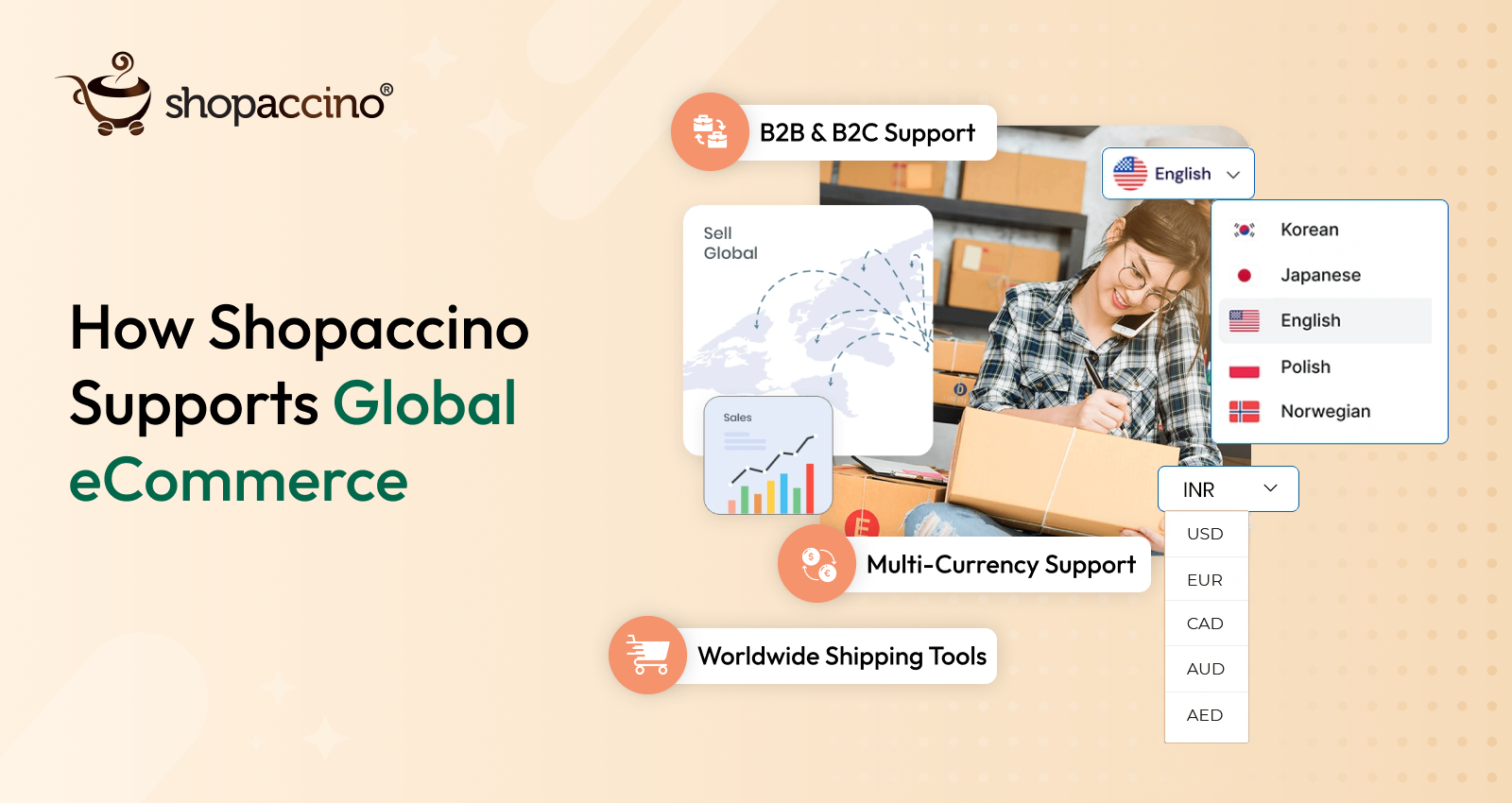
How Shopaccino Is Powering Global eCommerce Growth
Ecommerce is no longer limited by geography. Businesses that once served only local markets are now reaching customers across countries and continents. The rapid growth of digital commerce has made it possible for brands to sell products internationally without opening physical stores in every region.
However, expanding globally requires the right technology infrastructure. Businesses must manage multiple currencies, international shipping, taxation rules, and customer experiences across different markets. This is where a reliable global ecommerce platform becomes essential.
Platforms designed for international commerce help businesses overcome these challenges and build scalable online stores. Shopaccino is one such platform helping brands expand their reach and operate in global markets more efficiently.
As a global ecommerce solution provider, Shopaccino enables businesses to manage international sales while maintaining operational control through a unified system.
The Rise of Global Ecommerce
Over the past decade, global ecommerce has grown significantly. Consumers are increasingly comfortable purchasing products from international brands, especially when online stores provide clear pricing, secure payment systems, and reliable delivery.
This shift has encouraged many businesses to explore cross-border opportunities.
Companies that previously served only domestic markets are now looking for ways to expand internationally and access new customer segments. However, entering global markets involves more than simply launching a website.
Businesses must address several challenges when selling internationally:
• Managing pricing in multiple currencies
• Handling international shipping and logistics
• Providing localized shopping experiences
• Ensuring smooth payment processing
A modern global ecommerce platform simplifies these challenges by integrating the tools businesses need to operate across borders.
Why Businesses Need Cross-Border Ecommerce Infrastructure
International ecommerce requires systems that can support global transactions without creating operational complexity. Businesses must ensure that customers from different countries can browse products, understand pricing, and complete purchases smoothly.
This is where cross border ecommerce solutions play an important role.
A strong cross-border ecommerce infrastructure typically supports:
- Multi-currency pricing for international customers
- Secure global payment options
- Real-time order and inventory management
- Scalable product catalog management
These capabilities allow businesses to sell products internationally while maintaining operational efficiency.
By using advanced global ecommerce software, businesses can manage international orders and customers without creating fragmented systems.
The Importance of Multi-Currency Ecommerce
One of the biggest challenges in international ecommerce is currency management. Customers prefer to view prices in their local currency because it makes purchasing decisions easier and more transparent.
A store that supports multi currency ecommerce allows customers from different countries to see accurate pricing without manually converting exchange rates.
Multi-currency capabilities help businesses:
- Improve customer experience for international buyers
- Increase trust by displaying transparent pricing
- Reduce confusion during the checkout process
- Support cross-border transactions more effectively
These features are essential for businesses that want to scale globally using a reliable global ecommerce platform.
How Shopaccino Supports Global Ecommerce Expansion
Shopaccino provides infrastructure designed to support businesses that want to operate in international markets. By combining store management tools, order management systems, and currency support, the platform helps brands manage global operations efficiently.
As a global ecommerce solution provider, Shopaccino enables businesses to build ecommerce stores that support international customers while maintaining centralized operational control.
Businesses using Shopaccino benefit from:
- Flexible store management capabilities
- Support for multi currency ecommerce
- Structured product catalog management
- Integrated order and inventory tracking
These features make Shopaccino a reliable global e-commerce software solution for brands planning international expansion.
Understanding the Global Ecommerce Framework
A simplified framework for global ecommerce operations may look like this:
Ecommerce Layer | Function |
Ecommerce Platform | Manages store infrastructure |
Multi-Currency System | Displays pricing for global customers |
Order Management | Processes international orders |
Inventory Control | Tracks product availability |
A platform that integrates these components becomes a powerful global ecommerce platform capable of supporting cross-border growth.
Key Capabilities That Enable Global Ecommerce Growth
When businesses expand beyond domestic markets, they need systems that support international transactions without increasing operational complexity. Managing customers from multiple countries requires flexible technology that can handle currency differences, product catalogs, order processing, and inventory management in one place.
A strong global ecommerce platform helps businesses simplify these processes while maintaining a consistent shopping experience for customers across different regions.
Shopaccino provides infrastructure designed to support brands that want to grow internationally. As a global ecommerce solution provider, the platform offers tools that allow businesses to manage their ecommerce operations efficiently while expanding into new markets.
These capabilities help brands implement effective cross border ecommerce solutions without creating fragmented systems.
Multi-Currency Support for Global Customers
One of the most important requirements for international ecommerce is the ability to display product prices in different currencies. Customers are more comfortable purchasing products when they can clearly understand the price in their local currency.
Shopaccino supports multi currency ecommerce, allowing businesses to display accurate pricing for international buyers.
This capability helps businesses:
- Improve transparency for global customers
- Reduce confusion during checkout
- Provide localized shopping experiences
- Support international transactions smoothly
With multi currency ecommerce, businesses can attract customers from different countries while maintaining consistent pricing management.
Centralized Store Management for International Sales
Operating an ecommerce business across multiple markets can become complex if store operations are not centralized. Businesses must manage product catalogs, orders, and inventory efficiently to maintain smooth operations.
Shopaccino provides a centralized environment where businesses can control various aspects of their online store through a unified dashboard.
Using this global ecommerce software, businesses can manage:
- Product listings across international markets
- Customer orders from different regions
- Inventory levels for global sales
- Performance analytics for international operations
Centralized management helps businesses scale their ecommerce operations without increasing operational workload.
Cross-Border Order and Inventory Management
International ecommerce involves managing orders from customers located in different countries. These orders may involve different currencies, shipping methods, and delivery timelines.
Effective cross border ecommerce solutions require systems that track orders accurately and maintain inventory visibility.
Shopaccino helps businesses manage these processes by integrating order and inventory management within the platform.
Businesses can benefit from:
- Real-time order tracking
- Inventory updates after every purchase
- Centralized visibility of product availability
- Efficient order processing workflows
These capabilities ensure that businesses can sell globally without facing operational confusion.
Supporting Global Product Catalogs
Businesses expanding internationally often manage large product catalogs that must be accessible to buyers in different markets. An organized catalog structure helps customers browse products easily and make purchasing decisions.
A reliable global ecommerce platform allows businesses to present their product collections clearly while maintaining consistent information across all markets.
Shopaccino supports structured product catalog management by enabling businesses to:
- Organize products into clear categories
- Display product specifications and images
- Maintain consistent product data across regions
- Update product information efficiently
This structured approach improves the customer experience while supporting international sales growth.
Key Capabilities Overview
The core capabilities that enable global ecommerce growth through Shopaccino can be summarized below:
Capability | Business Benefit |
Multi-Currency Support | Localized pricing for global buyers |
Centralized Store Management | Unified control of ecommerce operations |
Cross-Border Order Management | Efficient international order processing |
Inventory Tracking | Real-time stock visibility |
Product Catalog Management | Structured product presentation |
These integrated tools make Shopaccino a powerful global ecommerce software solution for businesses expanding into international markets.
How Businesses Scale Internationally With Shopaccino
After building the technical foundation for global ecommerce, the next step for businesses is scaling their international operations. Expanding into global markets requires more than simply enabling international shipping. Brands must create a consistent buying experience for customers from different regions while maintaining operational efficiency.
This is where a reliable global ecommerce platform plays a critical role. By integrating store management, product catalogs, and order processing into a unified system, businesses can manage global operations without unnecessary complexity.
Shopaccino helps brands simplify this process by providing the infrastructure needed to support international commerce. As a global ecommerce solution provider, the platform allows businesses to manage multiple aspects of their ecommerce operations while serving customers worldwide.
Expanding Market Reach Through Digital Commerce
Ecommerce platforms enable brands to reach customers beyond their domestic markets. Instead of opening physical stores in different countries, businesses can operate global online stores that attract customers from multiple regions.
Companies that sell internationally often focus on strategies such as:
- Promoting products through global digital marketing campaigns
- Building partnerships with international distributors
- Creating localized shopping experiences for different regions
- Offering clear pricing through multi currency ecommerce
These strategies help businesses expand their customer base while maintaining operational control through a single global ecommerce platform.
Enhancing Customer Experience for Global Buyers
Customers shopping internationally expect the same level of convenience they receive from local ecommerce stores. A seamless buying experience plays a major role in converting international visitors into customers.
A well-designed ecommerce store built with advanced global ecommerce software ensures that customers can easily browse products, understand pricing, and complete purchases without confusion.
Key factors that improve global customer experience include:
- Clear product information and high-quality images
- Transparent pricing with multi currency ecommerce support
- Secure payment processing for international transactions
- Smooth checkout experience for cross-border orders
By focusing on these elements, businesses can create a reliable environment for international buyers.
Operational Efficiency for Global Commerce
Managing global ecommerce operations involves coordinating inventory, orders, and customer accounts across different markets. Without the right tools, these processes can quickly become difficult to manage.
Shopaccino helps businesses simplify these operations through integrated cross border ecommerce solutions.
With the platform, businesses can manage:
- International orders from a centralized dashboard
- Product inventory across different markets
- Customer data for global buyers
- Store performance metrics and reporting
This centralized approach ensures that businesses maintain visibility across their operations while scaling globally.
The Global Ecommerce Growth Model
Businesses expanding internationally often follow a structured growth model that allows them to scale gradually while maintaining operational stability.
A simplified model of global ecommerce growth can be seen below:
Growth Stage | Focus Area |
Domestic Launch | Establish local ecommerce presence |
Regional Expansion | Reach customers in nearby markets |
Global Market Entry | Enable multi currency ecommerce and cross-border sales |
Global Scaling | Optimize operations through global ecommerce software |
This structured approach allows brands to expand their reach while using reliable cross border ecommerce solutions.
Why Shopaccino Supports Global Ecommerce Success
Shopaccino is designed to support businesses that want to operate beyond their domestic markets. By combining store management, product catalog tools, and international commerce capabilities, the platform helps businesses build scalable ecommerce operations.
As a global ecommerce solution provider, Shopaccino enables brands to:
- Launch and manage international ecommerce stores
- Support multi currency ecommerce for global buyers
- Implement efficient cross border ecommerce solutions
- Maintain centralized operational control
These capabilities make Shopaccino a powerful global ecommerce platform for businesses aiming to grow internationally.
Final Thoughts
Global ecommerce is reshaping the way businesses expand and reach customers. Companies that adopt digital commerce strategies can access new markets and build stronger international customer bases.
Using a reliable global ecommerce platform allows businesses to manage international operations efficiently while maintaining a seamless customer experience.
Shopaccino helps brands implement scalable cross border ecommerce solutions, enabling them to support multi currency ecommerce, manage global product catalogs, and process international orders effectively.
As a trusted global ecommerce solution provider, Shopaccino empowers businesses with the global ecommerce software they need to grow beyond borders and build sustainable ecommerce operations.
FAQs
Start with multi-currency checkout, international payment gateways, and clear cross-border shipping rules. Use an integrated platform to automate operations.
Most global customers trust PayPal, Stripe, and international cards for secure payments.
Yes. Showing prices in local currency increases conversions by removing confusion and improving trust.
Use platform-based tax automation for country-wise settings. This ensures compliance without manual calculation.
A mobile app improves repeat purchases and simplifies communication through push notifications.
Shopaccino helps exporters manage warehouses, create country-specific catalogs, automate taxes, and handle international payments smoothly.
Yes. With integrated tools, automation, and structured global workflows, MSMEs can scale steadily without high overhead.