How to Launch Your Branded Shopping App Without Coding
The rise of mobile commerce has transformed how people shop. Customers no longer wait to reach a laptop to browse products—they explore, compare, and buy directly from their phones. This shift has made branded shopping apps a key growth engine for eCommerce businesses. What once felt like a luxury reserved for large enterprises has now become achievable for MSMEs, D2C brands, and wholesalers, thanks to no-code app-building technology.
Today, brands across fashion, grocery, beauty, furniture, electronics, handicrafts, and even B2B sectors use mobile apps to deliver faster loading speeds, smoother checkout experiences, and direct communication with customers. With no-code platforms, creating your own shopping app no longer requires hiring developers, managing servers, or investing in expensive technology.
This guide explains why a branded app matters, the challenges businesses face, what customers expect, and how no-code platforms—such as the mobile app builder offered by Shopaccino—help brands go live quickly without technical skills.
The New Reality: Why Every Brand Needs a Shopping App
Mobile users dominate online shopping. Studies from global eCommerce research platforms show that over 60% of online purchases take place on mobile devices. But browsing on a mobile browser is not the same as browsing on a dedicated app. Apps load faster, feel personal, and give direct access to the brand without relying on third-party channels.
For fast-growing MSMEs and D2C brands, an app becomes a private shopping space where customers shop again and again. It builds loyalty, improves repeat purchases, and helps brands collect accurate customer behaviour data.
This is why no-code app creation has become a breakthrough. Businesses can launch their own Android and iOS apps in days—not months—and manage everything from product listing to order tracking from a single dashboard.
Challenging Area: Why Brands Struggle to Launch Mobile Apps
Even though the benefits are clear, most MSMEs and mid-size businesses face common barriers when trying to launch a branded app.
High Development Cost
Hiring a developer or agency can cost lakhs of rupees. Updates, bug fixes, and ongoing maintenance add even more expense.
Technical Complexity
Building an app requires knowledge of coding languages, app architecture, UI/UX design, and backend systems. Most smaller businesses cannot manage this.
App Store Approval Challenges
Submitting apps to Google Play and Apple App stores involves strict guidelines and repeated testing—something many MSMEs find overwhelming.
Difficulty Keeping Web and App Synced
If products, orders, or prices are updated on the website, they must also be updated inside the app. Without automation, this requires double work.
Managing Notifications and Communication
Brands want to send offers, updates, and reminders through push notifications, but many do not know how to implement or manage these systems.
These challenges stop many brands from taking the next step, even when they know a mobile app could double their customer engagement.
Their Customer Challenging Area: What Shoppers Expect From a Mobile App
Customers have become more demanding. They compare your app to major platforms like Amazon, Myntra, Nykaa, and Flipkart. Even small brands are expected to offer:
Fast Loading Speed
Shoppers expect every page—home, category, product, cart—to load instantly.
A Clean and Simple Interface
Customers want an app that feels easy, child-like to browse, with no confusing buttons or distractions.
Secure Checkout
They expect safe digital payment options, COD (if applicable), and quick order confirmation.
Instant Updates Through Notifications
Shoppers want alerts for:
- Price drops
- Order status
- Restocked items
- Festive discounts
- New launches
A Personalized Shopping Experience
Recommendations, wishlists, saved searches, and recently viewed items all build trust and comfort.
If a brand’s online app lacks these expectations, customers abandon it quickly and return to competitors who offer a smoother mobile experience.
Solution: How No-Code App Platforms Simplify the Entire Process
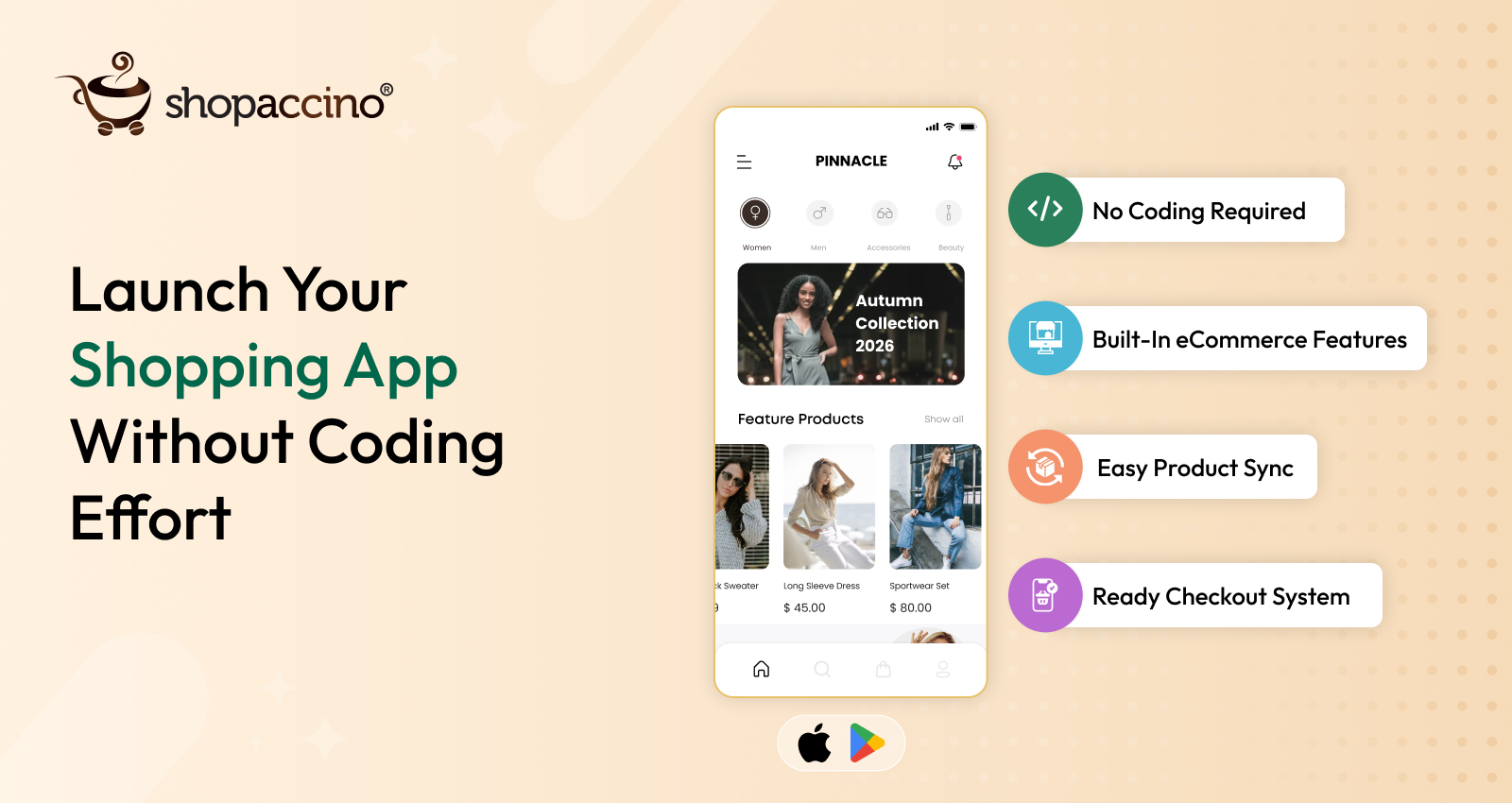
A no-code mobile app builder gives businesses everything needed to create, publish, and run a fully functional branded app—without writing a single line of code.
Platforms like Shopaccino offer an end-to-end solution where brands can:
✔ Build an app using drag-and-drop layouts
✔ Sync product catalog, orders, categories, and customers automatically
✔ Manage app and website from one dashboard
✔ Send unlimited push notifications
✔ Give customers native app features like deep linking and instant reordering
✔ Provide a smooth mobile shopping experience with fewer bugs
This removes the dependency on developers and makes mobile app ownership extremely practical even for businesses with small teams.
How to Launch a Branded Shopping App Without Coding (Step-by-Step)
Building an app becomes an easy, guided journey when using an integrated eCommerce platform. Here is the simple step-by-step process.
Step 1: Prepare Your Brand Assets
Before you begin, collect essential brand elements:
- App logo
- Splash screen design
- Category structure
- High-quality product images
- Payment and shipping settings
These assets will help you design a professional-looking app.
Step 2: Set Up Your Catalog on the Platform
Upload your products, categories, variants, descriptions, and pricing on the eCommerce dashboard. With systems like Shopaccino, everything syncs automatically with your app.
Step 3: Choose Your App Layout and Theme
No-code builders come with ready-to-use templates. Select:
- Home banner style
- Category display
- Grid layout
- Fonts and colors
You don’t need design skills—everything is visual and customizable.
Step 4: Connect Your Payment & Shipping
Turn on the payment methods you want:
- Credit/debit cards
- UPI
- Wallets
- COD
Add your shipping partners so customers can track orders smoothly.
Step 5: Set Up Push Notifications
Push notifications are one of the biggest advantages of having your own app. You can send:
- Flash sale alerts
- Restock notifications
- Order updates
- Personalized reminders
Platforms like Shopaccino allow unlimited push notifications without extra charges.
Step 6: Publish on Play Store & App Store
No-code platforms guide you through the publishing process:
- App package creation
- Technical compliance
- App Store submission
- Version updates
This removes the stress of dealing directly with app-store technical requirements.
Step 7: Promote Your App
Once live, promote your app through:
- Website banners
- Social media
- QR codes
- Email marketing
Encourage existing customers to switch to your app for smoother and faster shopping.
Benefits of Launching Your Own No-Code Mobile Shopping App
Higher Conversions
Mobile apps convert better than mobile websites because they load faster, feel smoother, and provide a distraction-free environment.
Better Repeat Purchases
With wishlists, order history, and notifications, customers come back more often.
Direct Customer Access
You don’t rely on marketplaces or ads to reach your audience.
Improved Brand Loyalty
A branded app becomes a private space where customers spend more time.
Faster Browsing and Checkout
Native apps give customers a friction-free experience from browsing to order tracking.
Centralized Management
Platforms like Shopaccino sync app + website + dashboard, making management effortless.
Cost-Effective and Easy to Maintain
No coding, no developers, no long-term maintenance bills.
Conclusion
Launching a branded mobile shopping app used to be expensive and complicated. Today, no-code platforms have changed everything. MSMEs, D2C brands, exporters, wholesalers, and B2B sellers can now build a professional, fast, intuitive mobile app without technical knowledge.
Whether you’re selling fashion, electronics, furniture, groceries, beauty, or handicrafts, customers prefer shopping through apps. A no-code mobile app builder—like the one offered by Shopaccino—helps you launch quickly, deliver a premium mobile experience, and grow repeat sales effortlessly.
A branded app is no longer optional. It is one of the most powerful tools for long-term eCommerce growth.
FAQs
No. With no-code platforms, everything is visual and guided. You can launch an app without writing code.
Most apps can be built in a few days once your catalog and brand assets are ready.
Yes, integrated platforms sync products, inventory, customers, and orders in real time.
Absolutely. You can send unlimited notifications for offers, reminders, and order updates.
Yes. No-code builders support both Play Store and App Store publishing.
Yes. Apps offer faster loading, better performance, and a personalized shopping experience.
Yes, especially if your B2B clients place frequent repeat orders.