The Complete Guide to Building a D2C Brand in India and Beyond
The D2C wave in India has moved far beyond trend status—it has become a structural shift in how brands are created, positioned, and scaled. Over the past decade, Indian consumers have moved from buying mass-market products from retail chains to actively seeking niche, purpose-driven, founder-led brands that offer authenticity, quality, and transparency. This shift has created space for new brands that do not rely solely on distributors or multilayer retail structures but build direct relationships with buyers through digital channels.
Brands across beauty, apparel, wellness, accessories, electronics accessories, home décor, and gourmet foods are increasingly bypassing intermediaries to own the entire customer journey—from product design to sale to repeat purchase. And while the D2C movement in India began with urban metros and smartphone adoption, it is evolving into a model where Indian brands aim for domestic dominance first, and then look towards global customers seeking Indian-origin products.
However, building a D2C brand is not the same as launching a website. It demands control, consistency, strong operations, and the ability to scale without losing identity or profitability.
Platforms like Shopaccino offer businesses the ability to launch branded ecommerce stores and run integrated operations, allowing founders to focus on brand building rather than assembling scattered tools. But global expansion requires a broader strategic approach involving compliance, product-market fit, and distribution readiness.
This guide breaks down the full journey—from establishing a D2C brand in India to expanding demand beyond national borders.
Challenging Area – The Roadblocks Brands Face When Building D2C
Many brands underestimate the complexity of going direct-to-consumer. Launching online is easy; establishing a functioning D2C business is far more demanding.
One major challenge is end-to-end ownership of operations. Without intermediaries, brands must handle catalog creation, pricing, inventory, delivery, customer support, and returns themselves. These responsibilities create friction, especially for early-stage teams.
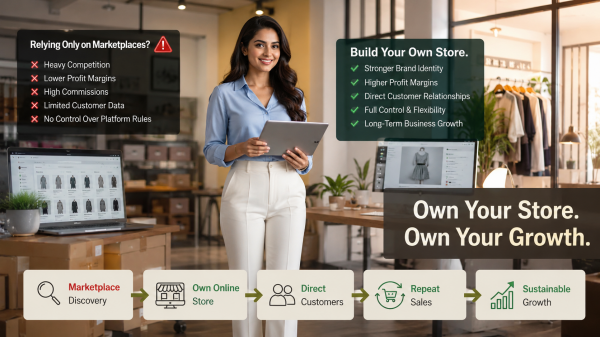
Technology is another barrier. Many brands begin with social media and marketplaces, which offer visibility but lack control. When they attempt to transition to a dedicated online store, they struggle with platform selection, integration, payments, hosting, analytics, and performance—realizing that tools built for beginners break when scale arrives.
Cost planning also becomes difficult. Brands that start with budget tools often realize later that they require advanced systems for inventory management, shipping, automation, and analytics. Every upgrade creates additional costs and rework.
Finally, the absence of data-driven decision making limits growth. Without accurate insights into repeat purchase behavior, product demand, geography-wise performance, and customer cohorts, marketing budgets get wasted and retention weakens.
These challenges create delays, missed opportunities, and inconsistent customer experience—exactly what a D2C brand must avoid.
Their Customer Challenging Area – What D2C Buyers Expect Today
D2C attracts customers because it promises authenticity and connection. But with rising expectations, buyers compare every independent brand with established ecommerce experiences.
They expect fast, frictionless browsing, clear product discovery, and transparent availability. A slow or poorly structured storefront makes customers abandon the purchase even if the product appeals to them.
They also expect multiple payment choices—UPI, wallets, cards, COD—and seamless checkout. Digital shoppers are driven by convenience; complexity leads to cart abandonment.
Trust is another defining factor. Customers want detailed product information, real images, policies, and accessible support. A lack of transparency feels risky, especially for newer brands.
Post-purchase experience matters equally. Customers expect real-time updates, reliable delivery, easy returns where applicable, and direct communication from the brand—not generic transactional messages.
These demands require a stable ecommerce foundation—not just visibility on Instagram.
Solution – How Integrated Platforms Enable D2C Growth
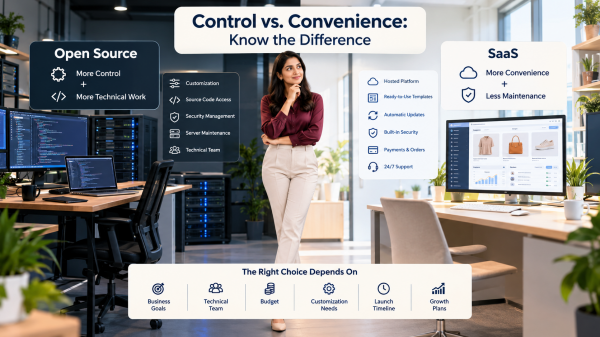
Building a D2C brand requires control across storefront, catalog, inventory, payment workflows, customer data, and fulfilment. Using disconnected tools increases cost and complexity, while custom development strains budgets.
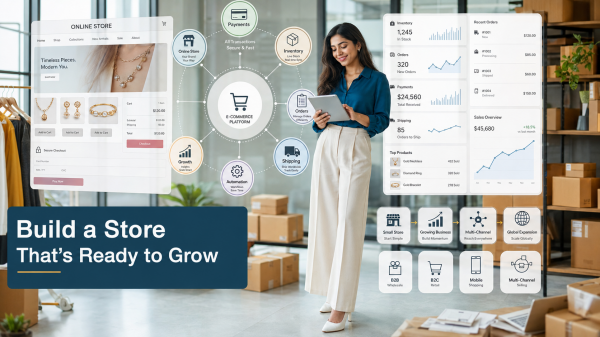
This is where integrated platforms like Shopaccino help by offering an all-in-one system designed for brands that want to operate professionally without coding. Instead of assembling plugins and multiple vendor tools, businesses can:
- Manage catalog, orders, stock, and logistics centrally
- Enable multiple payment methods without manual integrations
- Use automated customer journeys and segmentation
- Build branded stores with mobile-responsive design
- Scale into multiple channels without rebuilding from scratch
This approach reduces cost, improves efficiency, and allows founders to focus on growth rather than technical maintenance.
For brands with international demand, the platform serves as a strong domestic foundation before expanding to export-driven workflows independently through logistics partners, marketplace programs, or cross-border channels—while still retaining brand identity.
How to Implement – A Step-by-Step D2C Launch & Expansion Roadmap
A D2C brand should not begin with advertisements or website selection—it begins with positioning, product development, and operational readiness.
Step 1: Define Brand Narrative and Category Positioning
A strong D2C brand has a clear purpose, product philosophy, and niche audience. The brand story becomes a marketing asset.
Step 2: Build a Branded Ecommerce Store, Not Just Social Presence
Social platforms help discovery, but ownership comes from a dedicated store. Platforms like Shopaccino allow brands to launch quickly without developers, while maintaining design and operational control.
Step 3: Enable Omni-Channel Fulfilment
Centralized inventory, courier integrations, and dispatch workflows help avoid operational bottlenecks when volumes rise.
Step 4: Collect and Use Customer Data
Email, SMS, repeat purchase triggers, segmentation, and review collection foster retention. Owning customer data is the essence of D2C.
Step 5: Expand Beyond India Strategically
Global expansion should start with:
- Identifying export-fit products
- Understanding compliance for target countries
- Partnering with international logistics providers
- Aligning pricing with duties and FX impact
- Leveraging global marketplaces for initial traction
The platform remains central for brand consistency, while cross-border execution uses external operational layers.
Benefits of Building a D2C Brand
A well-structured D2C model offers long-term strategic advantages, not just channel diversification.
Higher Profit Margins
No middlemen means better unit economics.
Brand Ownership
Direct control over pricing, identity, packaging, and messaging.
Customer Loyalty & Repeat Revenue
Retention strategies replace dependency on paid acquisition.
Faster Innovation Cycles
Brands can launch new products directly without retail negotiation.
Global Opportunities
Niche Indian products can reach international buyers through digital distribution.
Conclusion
India’s consumer market is evolving rapidly, rewarding brands that build direct relationships rather than relying on intermediaries. A D2C model is not simply an online store—it's a strategic shift toward owning demand, communication, fulfilment, and long-term brand equity.
Platforms like Shopaccino offer the infrastructure to run a professional, scalable online brand without development complexity, enabling businesses to focus on product quality, storytelling, and expansion. For global aspirations, brands can layer export logistics, regional marketplace programs, and compliance workflows onto a strong domestic digital foundation.
A well-built D2C brand doesn’t just sell products—it creates a durable, loyal customer ecosystem that grows across geographies and time.
FAQs
Brands with unique products, strong storytelling, and repeat-purchase potential excel in D2C.
Yes, to own branding and customer relationships; social and marketplaces alone are insufficient.
Yes—integrated platforms reduce development costs and setup time.
Marketplaces drive visibility; D2C builds direct ownership, margins, and loyalty.
Not necessarily—platforms like Shopaccino enable operations without coding expertise.
Yes, once product-market fit is proven in India; export logistics and compliance are separate layers.
No—electronics, food, FMCG, accessories, and manufacturing products all fit the model.