Hyperlocal Delivery Guide: How to Start & Scale Local Ecommerce
Local commerce has always been the heartbeat of every neighborhood—familiar shopkeepers, quick deliveries, trusted interactions, and products sourced within a few kilometers. For decades, hyperlocal retail served communities efficiently and personally. But digital transformation has shifted how customers expect to shop and how businesses need to operate.
Customers now demand convenience without compromising the speed and familiarity they’ve always received from their neighborhood stores. They want the efficiency of ecommerce combined with the immediacy of local delivery. This expectation has given rise to hyperlocal delivery—a model where brands deliver products within a specific radius, often within 30 to 120 minutes.
From groceries and dairy to medicines, bakery items, gifting essentials, and everyday household needs, hyperlocal delivery is becoming the backbone of urban shopping behavior. MSMEs and local brands that once depended heavily on walk-ins and phone orders are now discovering new growth opportunities through digital ordering and real-time delivery.
But for many small retailers, adopting hyperlocal delivery feels overwhelming. They worry about technology, logistics, customer management, and the complexity of running digital operations. Modern ecommerce platforms like Shopaccino, however, have made hyperlocal commerce accessible, manageable, and scalable—allowing local businesses to compete effectively in the digital-first economy.
This guide explores the major challenges local retailers face, buyer expectations, how integrated platforms simplify hyperlocal delivery, and the steps required to build a successful digital-first local commerce model.
Common Challenges in Hyperlocal Delivery
Hyperlocal delivery sounds simple, but behind the scenes lies a complex web of operations. Many MSMEs face hurdles that slow down adoption and limit growth. These challenges often revolve around speed, coordination, technology, and capacity.
Lack of Real-Time Order Management
Local stores traditionally manage orders through:
- Phone calls
- Messaging apps
- Walk-ins
But when multiple orders arrive within minutes, tracking becomes chaotic. Without a proper system, businesses struggle with:
- Wrong orders
- Missed orders
- Delayed delivery
- Poorly managed peak hours
A lack of real-time order visibility restricts growth.
Inventory Confusion and Stockouts
Hyperlocal retail depends heavily on fresh stock. If inventory is not updated digitally, customers often order items that are:
- Out of stock
- Not updated
- Mispriced
This leads to cancellations and reduces trust.
Unorganized Delivery Operations
Many stores don’t have structured delivery workflows. This results in:
- Inconsistent delivery timings
- Untrained staff
- No route optimization
- High delivery cost per order
Delivery inefficiency is one of the biggest barriers to scaling hyperlocal commerce.
No Digital Presence Beyond the Local Area
Many local stores still rely on offline visibility. Without a digital storefront, customers nearby have no way to discover the brand. Competing with large delivery apps becomes nearly impossible.
Dependency on Third-Party Marketplaces
Retailers often sign up on large food, grocery, or pharmacy marketplaces. But these platforms:
- Charge high commissions
- Control customer data
- Impact brand visibility
- Create price competition
Marketplace dependency limits long-term brand growth.
Difficulty Managing Repeated Orders
Categories like dairy, bakery, groceries, and household essentials require frequent orders. Without digital systems, stores spend hours manually taking repeat orders through calls and WhatsApp.
These challenges slow hyperlocal growth, but customer expectations continue to rise—creating a widening gap that only digital solutions can fill.
What Customers Expect From Hyperlocal Shopping
The rise of delivery apps has reshaped customer expectations. Even when buying from local stores, customers expect a digital-first experience—smooth, fast, and transparent.
Fast Delivery Within Their Neighborhood
Buyers expect:
- 30-minute delivery
- Same-hour delivery
- Scheduled delivery slots
Speed is crucial for essentials and perishables.
Accurate Real-Time Availability
Customers lose trust when they:
- Add products to cart
- Proceed to checkout
- Discover they are unavailable
They want live stock updates, not assumptions.
Seamless Ordering Experience
Shoppers want:
- A simple app or website
- Quick product search
- Easy navigation
- Smooth checkout
They don’t want to repeat their address or payment details every time.
Multiple Payment Options
Customers prefer the convenience of:
- UPI
- Wallets
- Cards
- Cash on delivery
A brand without digital payment flexibility loses sales.
Transparent Delivery Tracking
Buyers want clarity on:
- Who is delivering
- How much time it will take
- Updates if the order is delayed
This transparency improves customer satisfaction.
Consistent Quality and Reliability
Customers expect the same precision and reliability they receive from large ecommerce platforms—even when ordering locally.
These expectations show why every hyperlocal business needs a structured digital presence powered by smart technology.
How a Hyperlocal Ecommerce Platform Solves These Challenges
Hyperlocal success depends on the right technology foundation. A platform like Shopaccino gives businesses the digital infrastructure they need to manage orders, stock, delivery, and customer engagement efficiently.
Here’s how an integrated system transforms the hyperlocal model:
Real-Time Order Management Dashboard
Businesses receive orders instantly and can:
- Accept
- Reject
- Update status
- Assign delivery agents
This reduces errors and speeds up operations.
Live Inventory Sync
Stock automatically updates as customers order online.
No manual corrections.
No mismatch.
No disappointed customers.
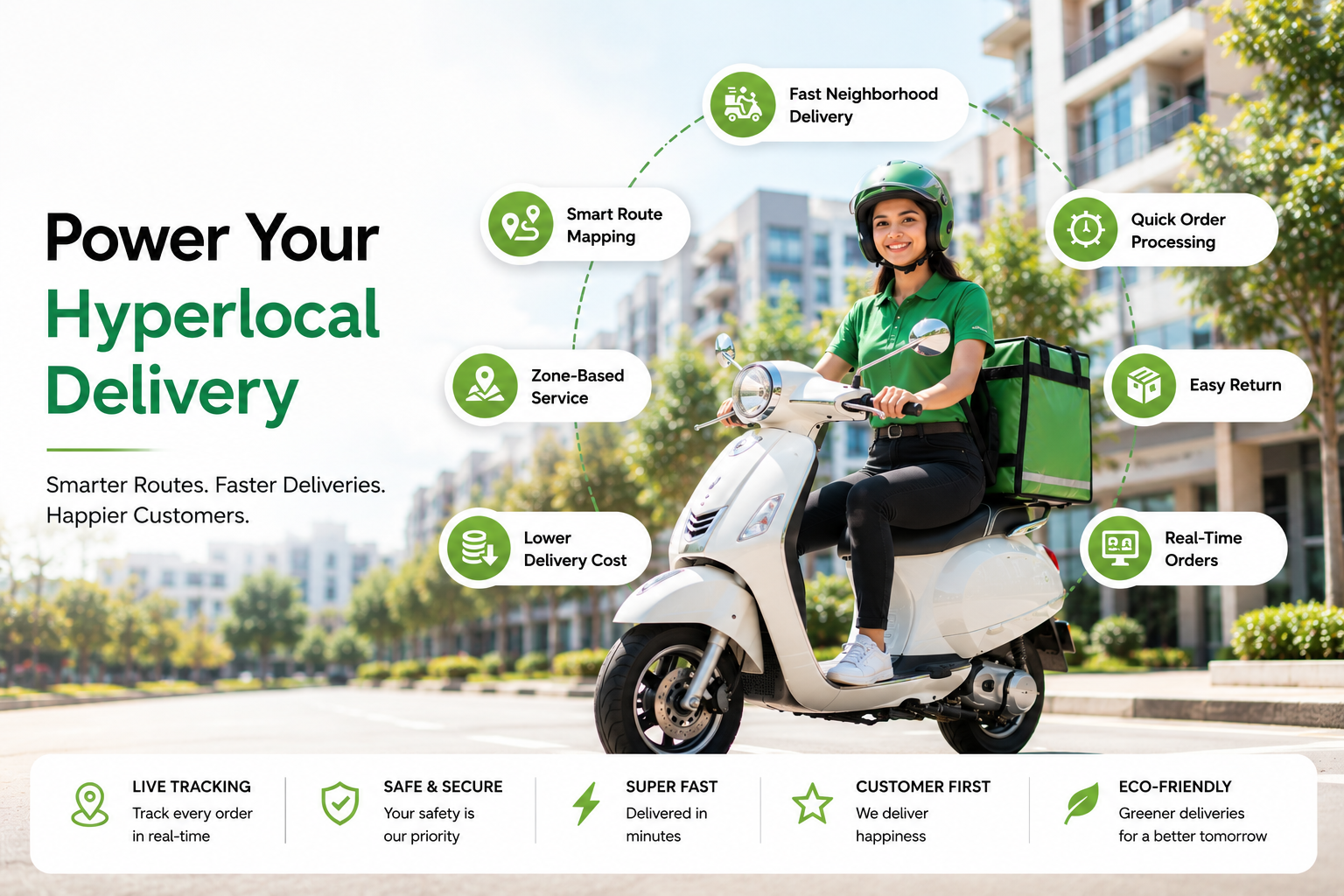
Pin-Code and Zone-Based Delivery Controls
Businesses can define:
- Serviceable areas
- Delivery fees
- Minimum order values
- Time-based availability
This allows stores to control delivery costs while offering convenience.
Multiple Payment Integrations
From UPI to wallets to COD, customers can choose their preferred payment mode—making checkout frictionless.
Delivery Workforce Management
The platform helps assign delivery partners, track deliveries, and maintain status updates.
This creates a smoother last-mile experience.
Subscription and Repeat Order Features
Categories like milk, grocery, tiffin, and bakery rely heavily on repeat orders.
Shopaccino helps businesses automate recurring deliveries to improve loyalty.
Integrated Marketing Tools
Push notifications, SMS campaigns, and email reminders help local stores retain customers digitally—without relying on marketplaces.
In short, integrated ecommerce platforms provide local businesses with the technology needed to scale hyperlocal delivery without complexity.
How to Implement Hyperlocal Delivery – Step-by-Step Guide
To succeed in hyperlocal commerce, businesses must follow a structured approach. Here is a practical roadmap.
Step 1: Define Your Delivery Radius
Start by selecting your service areas.
Typical ranges include:
- 2 km
- 5 km
- 10 km
This helps plan delivery resources effectively.
Step 2: Set Up a Digital Storefront
Build a mobile-friendly website or app where customers can:
- Browse products
- View stock availability
- Place orders
- Pay securely
Platforms like Shopaccino provide templates built specifically for hyperlocal needs.
Step 3: Organize Your Inventory Digitally
Classify products into clear categories.
Maintain up-to-date stock and pricing.
Step 4: Create a Delivery Workflow
Decide how to manage:
- Delivery personnel
- Order routing
- Packaging
- Peak-hour planning
A structured workflow reduces delays and costs.
Step 5: Offer Multiple Payment Options
Enable UPI, cards, wallets, and COD to increase conversions.
Step 6: Promote Your Hyperlocal Store
Use:
- Local social media pages
- WhatsApp broadcasts
- Flyers and posters
- QR codes for app installs
- Referral incentives
Hyperlocal marketing works best when digital and offline efforts combine.
Step 7: Collect Feedback and Optimize
Review:
- Delivery speed
- Customer satisfaction
- Repeat purchase behavior
- Order completion rates
Continuous improvement ensures long-term success.
Benefits of Hyperlocal Delivery for Digital Commerce
Hyperlocal delivery unlocks a wide range of advantages for both businesses and customers.
Faster Delivery, Higher Satisfaction
Quick delivery strengthens trust and boosts repeat orders.
Lower Delivery Cost
Shorter distances mean:
- Lower courier expenses
- Reduced fuel costs
- Better margins
Higher Customer Retention
Hyperlocal orders often come from loyal, nearby customers—leading to repeat sales.
Better Inventory Planning
Businesses can track demand easily across nearby neighborhoods.
Opportunity to Compete with Large Platforms
Local businesses can offer faster delivery than national ecommerce players.
Improved Personalization and Local Engagement
Hyperlocal stores understand community needs better than big brands—and can serve them more accurately.
Conclusion
Hyperlocal delivery is no longer an optional convenience—it is the new foundation of modern local commerce. As customer expectations shift towards speed, transparency, and digital-first shopping, businesses that embrace hyperlocal delivery early will grow faster and build stronger customer relationships.
Platforms like Shopaccino make hyperlocal commerce practical and scalable by enabling real-time order management, delivery control, inventory sync, and automated customer engagement. With the right digital tools and a structured operational plan, MSMEs and local retailers can serve their community more efficiently while expanding their reach.
Hyperlocal delivery is shaping the future of neighborhood commerce—and the brands that act now will lead that future with confidence.
FAQs
It refers to delivering products within a small geographic radius—often within 2–10 km—typically in under an hour.
Grocery stores, dairy brands, pharmacies, restaurants, bakeries, and daily-needs stores benefit significantly.
A mobile app improves customer experience but is not mandatory. A mobile-friendly ecommerce site works well too.
Platforms like Shopaccino automate orders, manage inventory, sync payments, and track deliveries.
Yes. With digital systems, even small stores can operate efficiently with limited staff.
Extremely important. It prevents cancellations and improves customer trust.
Yes—shorter delivery distances reduce cost, and repeat orders increase revenue.