Managing Taxes and Currencies for International eCommerce
Expanding into international markets is one of the most powerful ways for eCommerce brands to grow. Whether you’re an established D2C brand, a manufacturer entering cross-border retail, an exporter, or a wholesaler exploring global buyers—international eCommerce opens new revenue opportunities. Yet, the moment a business steps beyond domestic borders, it enters a world shaped by complex tax structures, fluctuating currencies, compliance obligations and buyer expectations.
For many MSMEs, the challenge is not finding customers abroad—it is managing the operational realities of selling internationally. Taxes differ by country. Currency values shift daily. Regulations change frequently. And buyers expect full transparency before they trust your store.
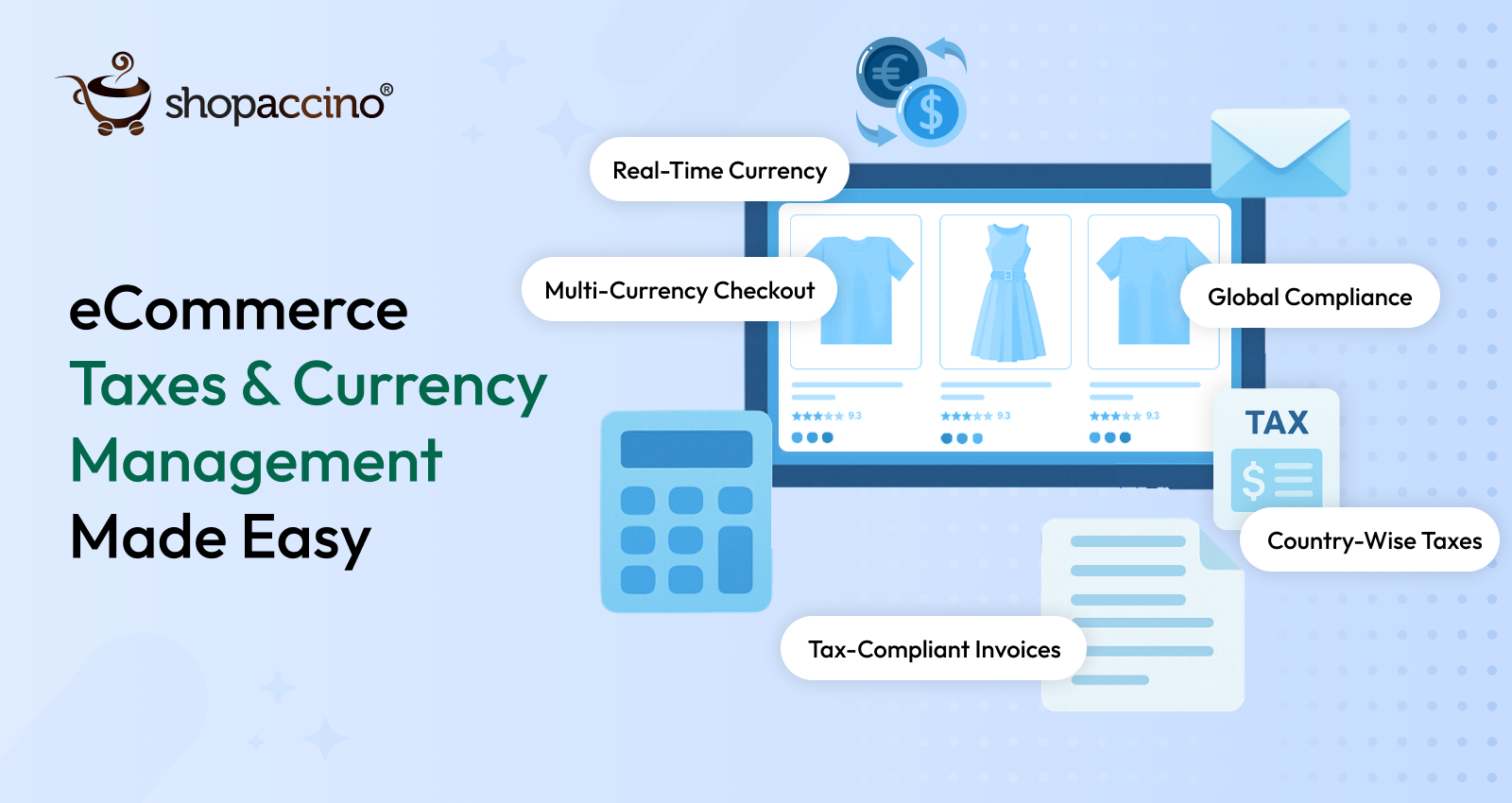
This is where a structured approach to tax and currency management becomes critical for cross-border growth. In this article, we explore the challenges, customer expectations, and how integrated eCommerce platforms simplify global selling with real-time multi-currency pricing, automated tax rules and centralised compliance systems. Tax and currency handling sits inside a wider process covered in our complete guide to international selling.
Challenging Area: Why Global eCommerce Feels Complicated for MSMEs
Going international often looks straightforward—until businesses begin dealing with the operational details. The most common roadblocks include:
Understanding International Tax Laws
Each market has its own tax ecosystem:
- VAT in the EU
- GST in Australia
- Sales Tax across US states
- Import duties based on HS codes
For a domestic brand, this fragmented structure can feel overwhelming. Sellers must also stay compliant with home-country obligations — including proper income tax return filing — to avoid penalties during cross-border audits. Manual handling leads to errors, penalties or delayed fulfilment.
Currency Conversion Fluctuations
Exchange rates shift daily. Without real-time currency conversion:
- Prices become inaccurate
- Profit margins shrink
- Customers lose trust due to inconsistency
Many MSMEs struggle to maintain stable pricing across multiple markets.
Country-Specific Rules and Thresholds
Countries often impose value thresholds that determine:
- Tax obligation
- Registration requirement
- Import duty applicability
Missing these thresholds can cause unexpected costs or shipment delays.
Manual Calculations Cause Delays
Without automation, businesses find themselves:
- Manually updating prices
- Manually adjusting tax rates
- Handling errors due to miscalculation
This slows down operations and affects customer experience.
Lack of Payment Gateway Support
Not all gateways support multi-currency settlement, leading to:
- Conversion losses
- Payment declines
- Trust gaps with customers
These challenges discourage many MSMEs from scaling internationally—even when demand exists.
Their Customer Challenging Area: What Global Buyers Expect
Cross-border shoppers have become far more informed and demanding. They expect professionalism, transparency and convenience before placing an order.
Transparent, Localized Pricing
Customers want prices displayed in:
- Their local currency
- Inclusive or exclusive taxes
- Clear final payable amount
Unclear pricing decreases trust and increases cart abandonment.
Clarity on Duties and Taxes
Global customers want to know:
- Who pays customs duties
- Whether taxes are included
- Any extra charges at delivery
Unpleasant surprises lead to a poor experience and bad reviews.
Fast, Familiar Payment Options
International buyers expect:
- Local payment methods
- Currency auto-selection
- No hidden conversion fees
If the checkout experience feels foreign, they abandon the purchase.
Compliance with International Standards
Shoppers prefer stores that:
- Display tax information clearly
- Offer compliant invoices
- Follow international trade guidelines
Any deviation signals risk.
Modern buyers compare stores instantly. Brands that provide clarity move ahead—those that don’t lose trust quickly.
Solution: How an Integrated eCommerce Platform Simplifies Global Taxes & Multi-Currency Operations
A successful international store is built on automation, accuracy and localized customer experience. Integrated eCommerce platforms like Shopaccino help MSMEs achieve this through smart tools that streamline global operations.
Automated Tax Configuration
Instead of manually calculating taxes, businesses can:
- Set country-wise tax rules
- Automatically apply GST, VAT or Sales Tax
- Define product-specific tax percentages
- Generate compliant tax invoices
This reduces human error and ensures regulatory accuracy.
Real-Time Multi-Currency Pricing
With automated multi-currency systems:
- Customer location is detected
- Prices auto-convert in real-time
- Currency is displayed based on IP detection
- Pricing remains consistent and transparent
This builds trust and increases conversion rates.
Country-Based Checkout Rules
Integrated platforms allow brands to define:
- Shipping restrictions
- Product availability
- Country-wise tax rules
- Payment gateway availability
This ensures the right customers see the right products with the correct pricing.
Built-In Compliance Support
Platforms simplify compliance with:
- Standard invoice formats
- Correct tax breakdown
- Export documentation support
- Proper calculation logic
This makes international operations smooth and audit-friendly.
Support for Multi-Currency Payment Gateways
Brands can integrate:
- PayPal
- Stripe
- PayU
- 2Checkout
- Razorpay (where applicable)
This ensures payments are processed securely and without conversion issues.
Automation saves time, minimizes mistakes and ensures global buyers experience local-level simplicity.
How to Implement a Tax & Currency System for International eCommerce
To run an efficient global store, brands must follow a structured implementation path.
Step 1: Identify Your Target Countries
Start with a clear list of international markets. Study:
- Tax regimes
- Import/export rules
- Customer expectations
- Local competition
Step 2: Configure Country-Wise Taxes
Inside your platform:
- Add each country’s tax percentage
- Apply tax rules on product categories
- Set location-specific tax exceptions
- Enable tax-inclusive or exclusive pricing
Make sure invoices reflect accurate tax labels.
Step 3: Enable Multi-Currency Support
Turn on automatic conversion and IP-based currency detection so that:
- USD, EUR, GBP, AUD, AED and others appear automatically
- Customers see the amount they will pay
- Checkout remains consistent
Keep rounding rules predictable for financial clarity.
Step 4: Link Multi-Currency Payment Gateways
Choose gateways that:
- Accept international cards
- Support settlement in your home currency
- Avoid hidden conversion charges
Test checkout on mobile, web and international locations.
Step 5: Define Shipping, Duties & Delivery Policies
Mention clearly:
- Who pays import duties (Delivered Duty Unpaid or Prepaid)
- Delivery timelines by country
- Return eligibility
This transparency reduces disputes and return rate.
Step 6: Test International Orders Before You Go Live
Test for:
- Tax accuracy
- Currency conversion
- Checkout speed
- Payment acceptance
- Invoice formatting
A thorough test ensures smooth global launch.
Benefits of Smart Tax and Currency Management
When implemented correctly, global-ready systems unlock powerful advantages.
Higher Global Conversions
Localized pricing and currency visibility reduce friction and increase trust.
Accurate Margins
Automatic tax and exchange rate updates protect profits.
Lower Operational Errors
Automation eliminates manual mistakes that often lead to financial losses or shipment delays.
Compliance Confidence
Brands stay aligned with international tax rules—crucial for exporters, manufacturers and wholesalers.
Better Buyer Experience
When customers see clear taxes, accurate currency and familiar payment options, they convert faster and return more often.
Scalability Across Markets
Once the system is in place, adding new markets becomes seamless.
Conclusion
Managing taxes and currencies is one of the biggest operational hurdles in international eCommerce. But with the right systems, automation and multi-currency tools, global selling becomes not only possible—but scalable, predictable and profitable.
Modern buyers expect clarity in pricing, transparency in taxes and ease in payment. Integrated eCommerce platforms like Shopaccino allow MSMEs, D2C brands, wholesalers, exporters and manufacturers to deliver a global-standard experience without complicated manual processes.
When tax rules, currency conversion, pricing logic and compliant invoicing operate flawlessly in the background, businesses can focus on what truly matters: expanding their global footprint and building stronger customer relationships worldwide.
FAQs
Because customers prefer paying in their local currency. It builds trust, improves transparency and increases conversions.
Not always. Some countries have thresholds for tax registration. You must check whether your sales exceed those limits
They use API-based exchange rate feeds that refresh multiple times a day, ensuring accurate pricing.
PayPal, Stripe, 2Checkout and some regional gateways support multi-currency transactions.
Yes, depending on your strategy. Some regions prefer tax-inclusive pricing, while others expect it added at checkout.
Many B2B buyers may be eligible for tax exemptions. A proper system helps manage exemptions automatically
Yes. Transparent communication reduces disputes and ensures a frictionless delivery experience.