Missed Milk Deliveries Are the Biggest Reason Customers Stop Subscriptions
Milk delivery is one of the most routine-based businesses in India. Customers don’t order milk for excitement or variety—they order it for certainty. Every morning, at a fixed time, they expect the same thing: fresh milk at their doorstep. When that routine breaks, even once or twice, trust starts breaking too.
Many milk delivery businesses lose customers not because of price, quality, or competition—but because of missed or late deliveries that are not communicated properly. A customer wakes up, finds no milk outside the door, checks their phone, sees no message, and feels ignored. That single moment of frustration often leads to paused subscriptions, complaints, or permanent cancellation.
This is where many dairy businesses struggle. They rely on manual delivery tracking, verbal confirmations, or WhatsApp updates that are easy to forget during busy mornings. As delivery areas expand and customer counts increase, these gaps grow wider.
This blog explains why missed deliveries silently destroy subscriptions, what customers truly expect from a milk service, and how a structured milk delivery app development solution helps businesses track deliveries, update customers daily, and protect long-term revenue.
Challenging Area: Business Problems Behind Missed Milk Deliveries
Missed deliveries rarely happen because businesses don’t care. They happen because systems are weak.
Manual Route Planning Creates Blind Spots
Most milk businesses still plan routes mentally or on paper. Delivery boys decide paths based on memory or habit. If a rider is absent, delayed, or overloaded, there is no clear backup plan. One skipped lane can mean ten missed homes. For a complete step-by-step framework to build this from scratch, see how to start a milk delivery business with an app.
No Real-Time Delivery Tracking
Once milk leaves the shop, owners have no visibility. They don’t know:
- Which houses are delivered
- Which customers are pending
- Where delays are happening
By the time complaints arrive, the damage is already done.
Dependence on Verbal Communication
Many businesses rely on delivery staff to "inform customers" if milk is running late or missed. In reality, during early morning rush hours, communication is the first thing that gets skipped.
Growing Routes Increase Complexity
As customer numbers grow, so do routes, areas, and delivery staff. Without a system, managing this scale becomes guesswork, not planning.
Customer Complaints Arrive Too Late
When delivery issues are reported only after customers complain, businesses lose the chance to fix the problem early. Reactive service always feels careless to customers.
Their Customer Challenging Area: What Milk Subscribers Expect Daily
Milk customers are not asking for innovation. They are asking for reliability.
They Expect Consistency
Milk is not an occasional product. Customers expect the same experience every day, without reminders or follow-ups.
They Want Clear Delivery Confirmation
If milk is delivered, they want to know. If it’s delayed, they want to be informed before stepping outside.
They Need Transparency, Not Excuses
Customers are understanding when informed early. They are angry when left guessing.
They Want Peace of Mind in the Morning
Morning routines are busy. When milk is missing, it disrupts cooking, tea, school schedules, and work preparation.
They Expect the Business to Be in Control
Customers trust services that look organised. Silence during problems makes the business look unreliable—even if the issue was temporary.
Solution: How a Milk Delivery App Prevents Missed Deliveries
A milk delivery app turns delivery from a memory-based process into a system-based operation.
Instead of guessing what happened, businesses see exactly what is happening.
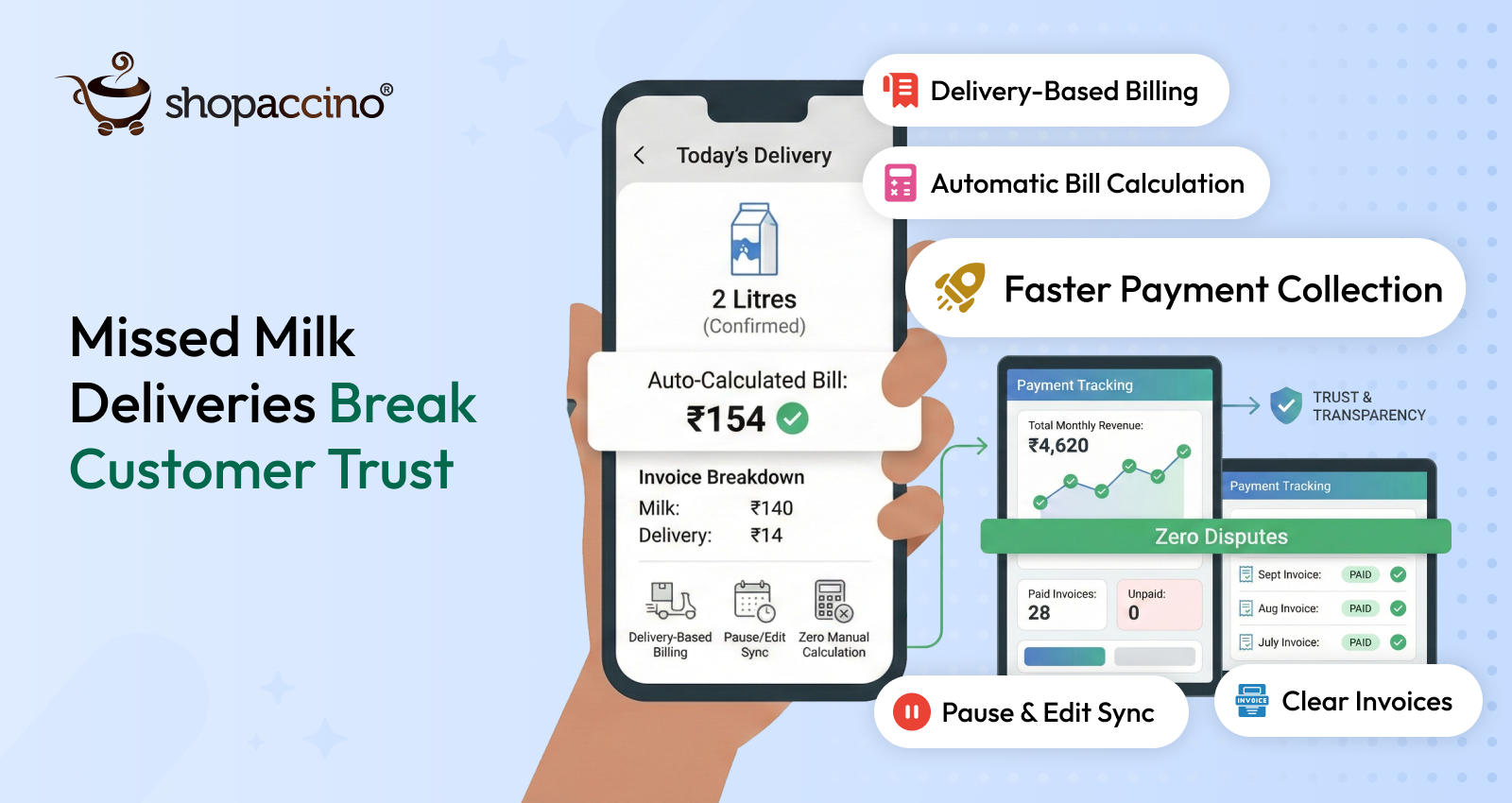
Delivery Status Is Digitally Recorded
Each delivery is marked as completed, skipped, or delayed in the app. This creates real accountability and clarity.
Customers Get Automatic Updates
Customers receive notifications such as:
Milk delivered
Delivery delayed
Delivery skipped with reason
No manual calling. No forgotten messages.
Routes Are Clearly Defined
Delivery routes are assigned inside the system. If a rider changes or a route shifts, updates are reflected immediately.
Missed Deliveries Are Identified Early
If a delivery is not completed by a certain time, the system flags it. Owners can act before customers complain.
Trust Is Built Through Visibility
When customers see consistent updates, they feel in control—even when problems happen.
Shopaccino enables milk delivery businesses to manage deliveries digitally, helping them track each drop, communicate clearly, and reduce customer frustration.
How to Implement a Reliable Milk Delivery System (Step-by-Step)
Step 1: Digitise Customer Subscriptions
List all customers with their daily quantity, address, and delivery preferences in one system.
Step 2: Assign Delivery Routes Clearly
Create delivery routes area-wise and assign them to specific delivery staff.
Step 3: Enable Delivery Status Updates
Allow delivery staff to mark deliveries as completed or missed directly in the app.
Step 4: Activate Customer Notifications
Set automatic alerts for delivery confirmation or delays so customers are never left guessing.
Step 5: Monitor Delivery Performance Daily
Track which routes face frequent delays and fix operational gaps early.
Step 6: Use Data to Improve Planning
Analyse missed deliveries to improve staffing, routes, and timings.
Benefits: Why Clear Delivery Tracking Saves Subscriptions
Fewer Customer Complaints
Customers complain less when they are informed early and clearly.
Higher Subscription Retention
Reliable communication prevents customers from cancelling after small issues.
Improved Delivery Discipline
Delivery staff perform better when deliveries are tracked digitally.
Faster Issue Resolution
Problems are identified before they escalate into disputes.
Stronger Brand Trust
Customers trust services that communicate proactively.
Scalable Operations
As delivery areas grow, the system grows without confusion.
Conclusion
Missed milk deliveries are not just operational errors—they are trust breakers. In a subscription-based business, trust is everything. Customers don’t leave because milk was missed once; they leave because they felt ignored when it happened.
A milk delivery app helps businesses move from reactive damage control to proactive service management. By tracking deliveries, updating customers daily, and creating transparency, dairy businesses protect their most valuable asset: long-term subscribers.
With tools like Shopaccino, milk delivery businesses can ensure that even when challenges occur, customers stay informed, confident, and loyal.
FAQs
Because milk is a daily necessity, even one missed delivery disrupts routines. When customers are not informed clearly, frustration builds quickly, leading to subscription cancellation.
Clear updates reduce anxiety. When customers know what’s happening, they feel respected and are more forgiving of occasional delays.
Yes. Delivery apps allow staff to mark each delivery, giving owners and customers real-time visibility.
Absolutely. When deliveries are tracked digitally, mistakes are identified early and corrected faster.
Yes. Even small dairies benefit because clarity and communication matter more than business size.
Shopaccino provides structured delivery tracking, customer notifications, and subscription management to improve reliability and retention.