Multi-Region Selling Challenges Faced by Wholesale Businesses
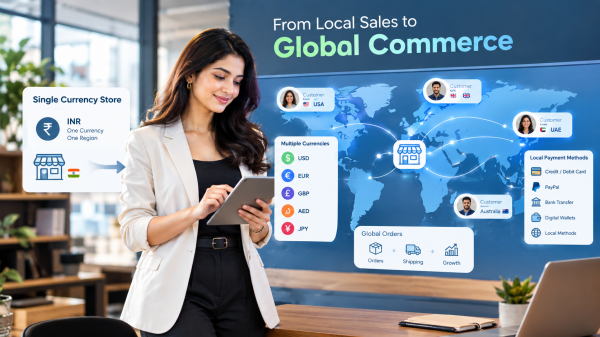
For wholesale businesses, growth often begins with expanding into new regions. A wholesaler who once served a single city slowly starts supplying nearby towns, then multiple states, and sometimes even cross-border markets. On paper, multi-region selling looks like the perfect growth story—more buyers, higher order volumes, and stronger market presence.
However, the reality is far more complex. Selling across regions is not just about moving products farther; it is about managing differences. Every region behaves differently. Prices change, delivery timelines vary, tax rules shift, and buyer expectations evolve. What works smoothly in one region may completely fail in another.
In 2026, wholesale buyers are more informed, digitally aware, and time-sensitive than ever. They expect the same accuracy, speed, and transparency regardless of where they are located. For wholesalers relying on manual processes, spreadsheets, phone calls, or WhatsApp-based ordering, managing this complexity becomes overwhelming.
This blog explores the deeper challenges wholesale businesses face when selling across multiple regions, explains what buyers truly expect today, and shows how an integrated ecommerce system helps wholesalers regain control and scale confidently.
Challenging Area: Business Challenges in Multi-Region Wholesale Selling
Multi-region selling introduces layers of complexity that grow silently over time. Many wholesalers only realise the problem when delays, disputes, and customer dissatisfaction start affecting revenue.
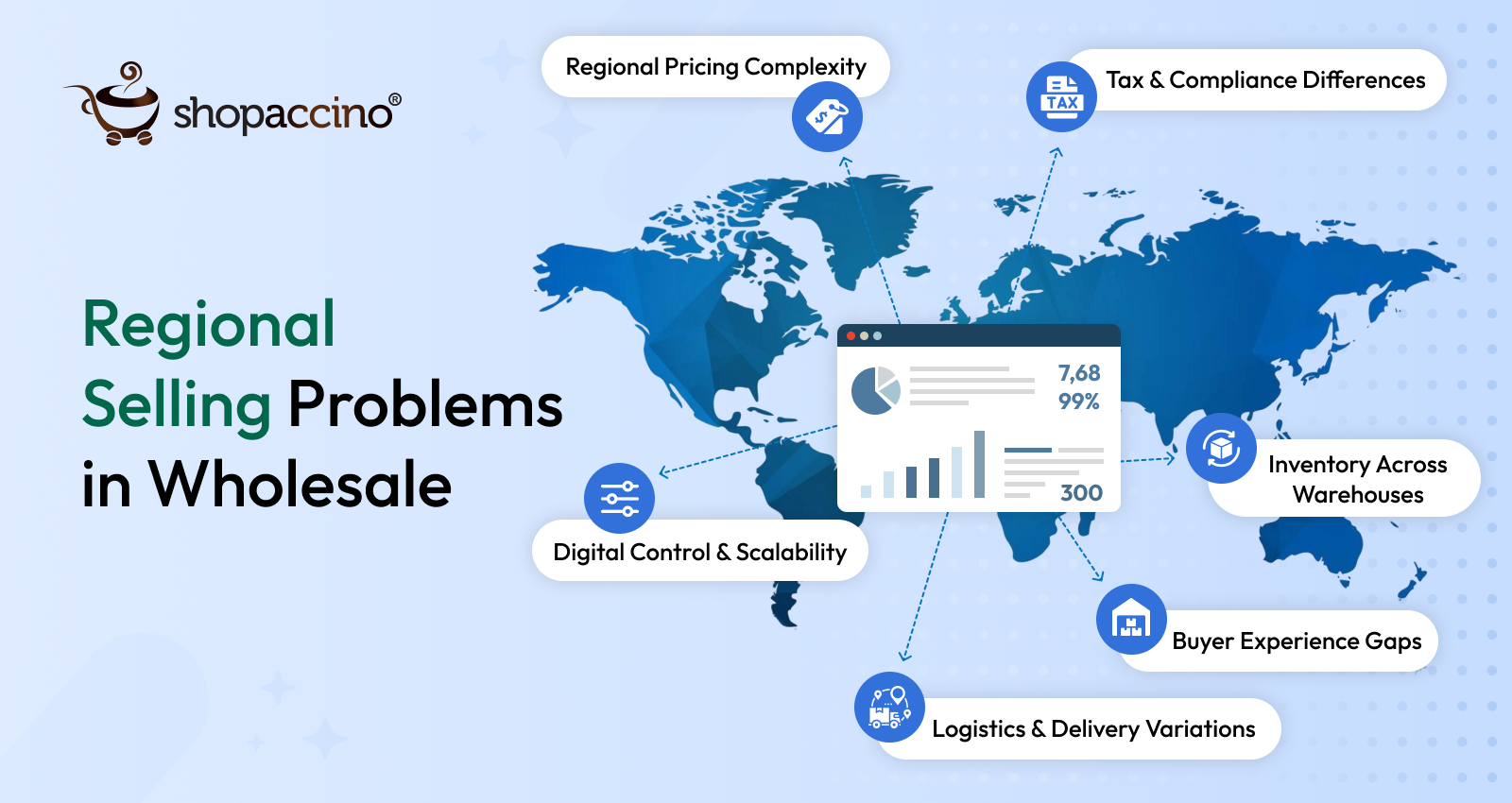
Pricing Becomes Difficult to Control Across Regions
Wholesale pricing is rarely uniform. Different regions require different pricing because of:
- Transportation costs
- Local competition
- Tax impact
- Demand patterns
When pricing is managed manually, sales teams often share outdated or incorrect price lists. This leads to situations where two buyers from different regions compare prices and question fairness. Over time, this damages trust and creates negotiation fatigue for sales teams.
Inventory Visibility Breaks Down Across Locations
As wholesalers expand, inventory is often stored in multiple warehouses or regional hubs. Without a central system, teams struggle to answer basic questions:
- Which warehouse has stock?
- How much is actually available?
- Can the order be fulfilled immediately?
This lack of visibility causes overselling in some regions and stockpile-ups in others, leading to missed sales opportunities.
Tax and Compliance Complexity Increases
Different regions may fall under different GST slabs, invoicing rules, or compliance requirements. When handled manually, errors become common:
- Wrong tax calculations
- Incorrect invoice formats
- Delayed accounting reconciliation
These issues slow down payments and expose businesses to compliance risks.
Delivery Promises Become Hard to Maintain
Logistics performance varies widely by region. Delivery timelines that work in metro cities may not apply in remote or semi-urban locations. Without structured shipping workflows, sales teams often commit to unrealistic delivery timelines, putting pressure on operations teams.
Sales and Operations Work in Silos
In multi-region selling, sales teams are often closer to buyers, while operations teams handle fulfilment centrally. Without shared visibility, commitments made by sales teams may not align with actual stock or logistics capacity.
Manual Order Processing Slows Everything Down
Orders coming from different regions through different channels require repeated data entry. As volume grows, processing time increases and error rates rise.
No Clear Data for Regional Decision-Making
Without region-wise insights, wholesalers cannot easily identify:
- High-performing regions
- Slow-moving markets
- Regional demand trends
This leads to guesswork rather than strategy.
Their Customer Challenging Area: What Regional Wholesale Buyers Expect
Wholesale buyers face their own challenges and pressures. Their expectations have evolved with digital commerce.
Buyers Expect Region-Appropriate Pricing
Buyers understand that prices may vary by region, but they expect transparency. They want to see the correct price immediately, without repeated negotiation.
Buyers Want Accurate Stock Information
Buyers plan their own sales and inventory based on supplier availability. Unclear or inaccurate stock information disrupts their operations.
Buyers Expect Reliable Delivery Commitments
Missed or delayed deliveries directly affect retailers and distributors. Buyers expect realistic timelines, not optimistic promises.
Buyers Want Easy Reordering Across Locations
Many buyers operate multiple outlets across regions. They want one unified system to place and track orders for all locations.
Buyers Expect Correct Documentation
Incorrect invoices or tax details create accounting headaches. Buyers prefer suppliers who get documentation right the first time.
Buyers Prefer Self-Serve Digital Ordering
Modern buyers prefer placing orders online instead of depending on calls or messages.
Solution: How an Integrated Ecommerce Platform Solves Multi-Region Challenges
An integrated ecommerce platform acts as a single source of truth for pricing, inventory, orders, and logistics.
Platforms like Shopaccino help wholesalers simplify multi-region operations without losing flexibility.
Region-Wise Pricing Automation
Wholesalers can define pricing rules for each region. Buyers automatically see prices relevant to their location, eliminating confusion and disputes.
Centralised Inventory Management
All warehouses are connected to one system. Inventory updates in real time, helping teams make accurate commitments.
Automated Tax Calculation and Invoicing
The platform applies correct tax rules based on buyer location and generates compliant invoices automatically.
Structured Digital Order Capture
Orders flow through one system regardless of region. This removes manual data entry and improves accuracy.
Integrated Logistics and Tracking
Shipping partners are integrated into the system, providing tracking updates to both sellers and buyers.
Unified Buyer Experience
Buyers across regions experience the same professional ordering process, building confidence and loyalty.
How to Implement Multi-Region Wholesale Selling Digitally
Step 1: Segment Buyers by Region and Role
Classify customers such as Wholesalers, Distributors, Exporters, Manufacturers, and Established D2C Brands based on geography and buying patterns.
Step 2: Define Regional Pricing and Policies
Set pricing and discounts tailored to each region.
Step 3: Digitise the Product Catalogue
Ensure all products have accurate SKUs, variants, and packaging details.
Step 4: Connect Inventory Across Warehouses
Sync all stock locations into one real-time system.
Step 5: Enable Self-Serve Ordering
Allow buyers to place and repeat orders independently.
Step 6: Automate Tax and Shipping Rules
Apply correct tax and delivery logic based on buyer location.
Step 7: Track Regional Performance
Use data to understand demand, delivery efficiency, and buyer behaviour.
Benefits of Solving Multi-Region Selling Challenges
Pricing Consistency and Trust
Clear pricing builds buyer confidence.
Faster Fulfilment
Automated allocation reduces delays.
Lower Error Rates
Digital workflows reduce mistakes.
Better Inventory Planning
Region-wise data improves stock distribution.
Higher Buyer Satisfaction
Transparency strengthens relationships.
Scalable Expansion
New regions can be added without chaos.
Conclusion
Multi-region selling is essential for wholesale growth, but managing it manually leads to errors, delays, and frustrated buyers. As expectations rise in 2026, wholesalers must move beyond fragmented systems.
Integrated ecommerce platforms provide the structure needed to manage pricing, inventory, logistics, and buyer experience across regions. With solutions like Shopaccino, wholesalers can centralise operations while staying flexible enough to serve regional needs.
The wholesalers who master multi-region selling digitally will lead the next phase of B2B commerce.
FAQs
Because it involves managing different pricing, inventory, logistics, and tax rules simultaneously.
It automates price visibility based on buyer location.
Yes, through real-time warehouse integration.
Yes, automated routing and tracking improve accuracy.
Yes, digital systems reduce workload and improve scalability.
Yes, unified portals support multi-location ordering.