Omnichannel Retail for Fashion Brands: Why It Matters
The fashion industry has always been built around experience—discovery, touch, trial, and personal style expression. While ecommerce has expanded reach, offline stores still hold power in influencing purchase decisions and shaping brand identity. Today’s customers move fluidly across both worlds, browsing online, checking availability in-store, completing purchases on mobile, and returning or exchanging through physical outlets.
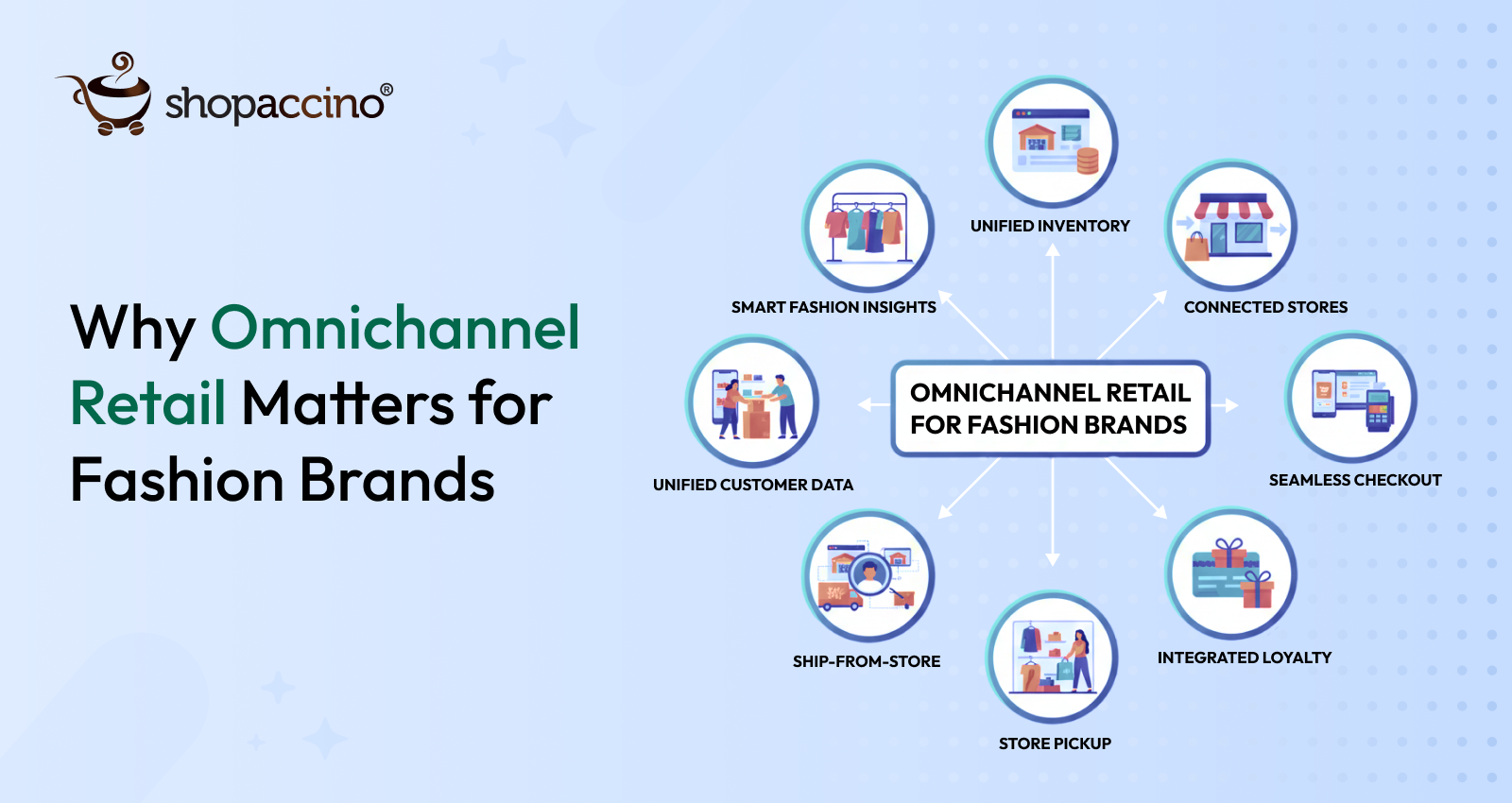
This blend of channels has given rise to omnichannel retail, where brands don’t treat offline and online commerce as separate operations, but as one continuous customer journey. By 2026, omnichannel retail is expected to be the default expectation in fashion, especially in India where shoppers often research online before visiting stores and expect digital convenience in physical spaces.
For growing brands, the challenge isn’t opening multiple channels—it’s synchronising them. Platforms like Shopaccino help fashion retailers run a single integrated system where online stores, in-store POS, inventory visibility, customer data, pricing, and communication are connected.
Omnichannel is no longer a luxury for large brands—it’s a growth strategy for emerging fashion labels.
Challenging Area – Why Fashion Brands Struggle to Manage Multiple Channels
Running both offline and online sales sounds simple, but in reality, most brands operate them as separate silos. This creates complexity across:
- Separate stock pools for online vs store
- Different pricing rules
- Disconnected customer records
- Inconsistent offers and product availability
- Duplicate manual work across teams
A store might show a product available, while the website displays it as out of stock, causing lost sales and frustrated customers. Teams may manage orders through spreadsheets, phone confirmations, or WhatsApp messages, leading to dependency on manual effort.
Even marketing becomes fragmented. Brands run ads online but cannot track how many customers eventually buy in-store; or they offer loyalty benefits offline that can’t be redeemed online. Without unified systems, scaling becomes harder, not easier.
The ability to grow as a brand depends not just on selling across channels, but on connecting them into a seamless engine.
Their Customer Challenging Area – What Modern Shoppers Expect
Today's fashion consumers do not think in terms of channels—they expect continuity. A buyer might:
- Discover a dress on Instagram
- Check availability on the website
- Pick it up from a nearby store
- Exchange it in another outlet
- Reorder online later using saved preferences
For them, the experience should feel like "one brand, many touchpoints", not separate purchase journeys.
Here’s what customers now expect:
End-to-end Shopping Continuity
They want to start shopping digitally and finish offline or vice versa without repeating steps.
Real-Time Stock Visibility
Customers expect websites to show which store has stock before visiting.
Flexible Delivery & Pickup Options
Click-and-collect, home delivery, store fulfilment, and same-day dispatch options boost convenience.
Unified Loyalty
Rewards earned in-store should be usable online without separate accounts.
Fast Exchanges & Returns
Shoppers want flexibility to exchange online orders at physical stores.
These expectations push retailers to adopt integrated store systems rather than running commerce in isolation.
Solution – How an Integrated Platform Enables Omnichannel Fashion Retail
To execute omnichannel successfully, brands need systems that unify:
- Store-level POS
- Ecommerce storefront
- Centralised product catalog
- Customer profiles
- Stock availability
- Return & exchange workflows
- Marketing & loyalty programs
Platforms like Shopaccino empower fashion retailers to bring all channels into one system, enabling:
Centralised Inventory Across Online & Offline Stores
Stock updates automatically regardless of where orders are placed, reducing errors and overselling.
Click-and-Collect & Ship-from-Store Workflows
Orders placed online can be fulfilled from the nearest store for faster delivery and lower logistics cost.
Unified POS & Ecommerce Data
In-store and online transactions sync into one system, giving brands complete visibility.
Customer Data Continuity
A shopper who buys online and later purchases offline retains a single profile, enabling personalised offers.
Unified Offers & Pricing
Brands maintain consistent pricing across channels to prevent confusion and maintain trust.
This creates a connected ecosystem where every sale strengthens customer relationships rather than fragmenting them.
How to Implement Omnichannel Retail – A Practical Roadmap
Here’s a structured plan for fashion brands adopting omnichannel operations
Step 1: Start With a Unified Catalog
Your online store and physical outlets should pull product data from the same source, not separate systems. This ensures:
- Same product naming
- Same variant structure
- Same pricing and tax rules
- Same SKU codes across channels
This alignment is the foundation of smooth retail execution.
Step 2: Sync Inventory Across All Sales Points
Avoid maintaining separate stock lists. Instead, enable real-time inventory sync where:
- Online orders reduce store stock if fulfilled from store
- Store POS updates reflect instantly online
- Low stock alerts trigger replenishment early
This prevents lost sales and stock conflicts.
Step 3: Offer Flexible Fulfilment Options
Customers purchase based on convenience, not channel. Enable:
- Buy Online, Pickup in Store (BOPIS)
- Online orders fulfilled from nearest store
- Store-level delivery for local shipments
- Easy returns from website to retail stores
This boosts speed while reducing fulfilment cost.
Step 4: Build a Unified Loyalty & Customer Profile System
Customers should earn and redeem benefits regardless of purchase mode. Sync:
- Order history
- Reward points
- Preferences
- Communication channel permissions
Platforms like Shopaccino help maintain unified customer records instead of fragmented databases.
Step 5: Track Performance Holistically
Analyse:
- Which channels drive first purchase
- Which channels drive repeat purchases
- Which stores fulfil most orders
- Refund & exchange trends
This lets brands invest strategically rather than guessing.
Benefits of Omnichannel Retail for Fashion Brands
Fashion brands benefit significantly when offline and online work together instead of competing.
Higher Conversion Rates
Customers can check size/stock availability before purchase, reducing hesitation.
Reduced Return Costs
Store trials and local pickup reduce incorrect orders and logistical expenses.
Lower Marketing Spend
Unified data helps retarget buyers across channels, reducing acquisition cost.
Better Customer Loyalty
When buying becomes effortless, repeat orders increase naturally.
Faster Fulfilment
Store-based dispatch reduces delivery time and improves satisfaction.
Omnichannel strengthens both top-line growth and operational efficiency.
Conclusion
Fashion retail today is no longer about choosing between online or offline—it is about blending both into a single experience. Customers want discovery online, engagement through social platforms, instant pickup from nearby stores, and seamless returns across any channel. The brands that succeed will not be those with the most outlets or the most followers, but those with connected operations and consistent customer journeys.
Integrated platforms like Shopaccino enable fashion retailers to unify inventory, streamline fulfilment, synchronize customer data, and run both online and offline commerce under a single system. This gives emerging brands the structure and agility needed to compete with larger players while preserving brand-owned relationships.
Omnichannel isn’t a trend—it is the future of fashion commerce.
FAQs
Multichannel means selling on multiple platforms; omnichannel means connecting them into one integrated journey.
It reduces returns, increases convenience, and supports hybrid shopping behaviour.
Not necessarily—brands can start with one store and scale digitally.
Yes, when systems are unified and return workflows support store-based processing.
Yes—local store fulfilment often reduces shipping time and expense.
They may not start with it, but adopting early helps scale faster.
Not all—brands should choose platforms that integrate POS, online store, and inventory systems.