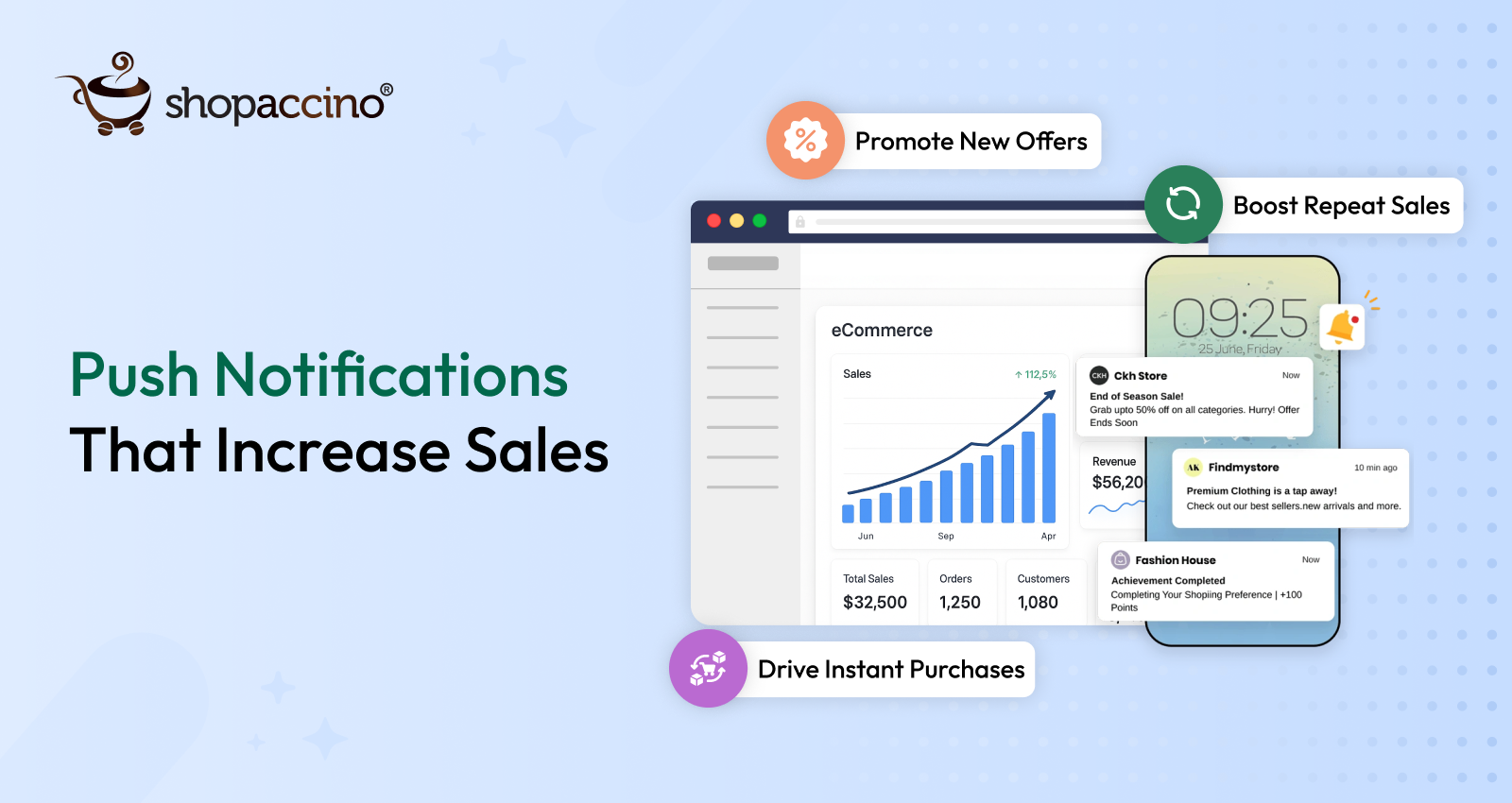
Push Notifications That Drive Sales — Best Practices for eCommerce Apps
Mobile commerce is growing faster than ever, and one feature that consistently stands out as a sales booster is push notifications. For many brands, the journey from a customer downloading their app to becoming a repeat buyer depends heavily on how effectively the brand uses this powerful communication tool.
Push notifications travel instantly from your app to a customer
r's phone screen. They do not wait for inbox sorting, spam filters, or algorithm changes. They capture attention exactly where your customers spend most of their time—on their mobile devices. And when used correctly, they feel personal, timely, and genuinely helpful.
In 2026, every eCommerce business—whether fashion, beauty, grocery, furniture, electronics, footwear, or B2B—needs a strong push notification strategy. This is no longer an optional marketing feature. It is a growth engine.
Challenging Area: What Makes Push Notifications Difficult for Brands
Push notifications may look simple, but their effectiveness depends on strategy, timing, and relevance. Many brands struggle to get them right, leading to poor results or even user dissatisfaction.
Sending Too Many Notifications
Some businesses send frequent alerts that feel overwhelming. Instead of driving sales, they cause users to mute notifications or uninstall the app.
Sending Irrelevant Messages
Promoting random products or unrelated categories weakens customer trust. Without proper segmentation and behavioural understanding, notifications feel disconnected.
Poor Timing
Sending offers at odd hours or during busy times reduces open rates. Timing mistakes are one of the biggest reasons users ignore notifications.
No Personalisation
Generic messages like “Buy Now!” or “Flat 10% Off!” fail to create interest. Personalised recommendations based on browsing history or past purchases perform much better.
Lack of Automation
Manually crafting and sending every notification is difficult, especially for brands with large catalogs. Without automation tools, businesses miss important opportunities—such as abandoned cart reminders or restock alerts.
Not Measuring Performance
Many businesses send notifications without tracking open rates, click-through rates, or conversions. Without data, they cannot improve strategy.
These challenges show that push notifications are more than a marketing task—they require planning, understanding customer psychology, and using an integrated system to execute effectively.
Their Customer Challenging Area: What Today’s Shoppers Expect
Modern mobile shoppers have become selective about the notifications they allow. They want updates that feel meaningful, timely, and connected to their personal shopping habits.
Real-Time and Relevant Alerts
Customers expect notifications that match their interests—such as price drops, order updates, product availability, or category-specific offers.
Simple Language
Most customers prefer easy, clear messages they can understand instantly.
Quick Action
If a notification recommends a product, customers expect the link to take them directly to that page inside the app.
Personal Value
Customers want notifications that genuinely help them save money, discover something useful, or remind them about something important.
Non-Intrusive Messages
Shoppers dislike notifications that feel pushy or unrelated to their needs.
When brands meet these expectations, notifications become a trusted communication channel—not a disturbance.
Solution: How Integrated eCommerce Platforms Improve Push Notification Success
Businesses benefit greatly from using an integrated platform that combines app management, notifications, catalog syncing, inventory, checkout, and user data. Platforms like Shopaccino make it easy for brands to manage push notifications directly from the same dashboard where they manage orders, products, and marketing.
This means:
- Notifications trigger automatically based on user behaviour
- Messages reach customers instantly
- Categories, brands, and products can be linked directly inside the app
- No coding or technical setup is needed
- Real-time data ensures accuracy
Integrated systems make push notifications more powerful because they connect every part of the customer journey—from browsing to checkout.
Push Notification Best Practices That Drive Real Sales
Below are the techniques and principles top-performing eCommerce brands use to increase conversions through push notifications.
Use Behaviour-Based Notifications
Notifications must match a shopper’s activity. For example:
- If someone left items in the cart
- If a customer viewed a product multiple times
- If a category was browsed repeatedly
- If a product just came back in stock
Behavioural alerts feel natural and personal. They increase conversions without pressure.
Personalise Every Message
Personalisation drastically increases engagement.
Instead of:
“New collection launched!”
Try:
“New kurtas in your size are now available—check them out before they sell out.”
Simple, direct personalisation creates trust and encourages action.
Use the Right Timing
The best-performing time windows for eCommerce are usually:
- Morning (8–11 AM)
- Afternoon (1–4 PM)
- Evening (7–9 PM)
Avoid late-night or early-morning notifications unless they relate to urgent order updates.
Send Category-Specific Offers
Instead of promoting everything to everyone:
- Send beauty offers to beauty shoppers
- Send footwear alerts to footwear shoppers
- Send appliance deals to customers who browse electronics
Relevance is key.
Keep Messages Short and Actionable
Push notifications appear on limited screen space. The message must be simple and direct.
Examples:
- “Your favourite item is back in stock.”
- “Flat 20% off on your wishlist items today.”
- “Order now to get delivery by tomorrow.”
Customers respond more to messages they can understand in a second.
Use Notifications for More Than Discounts
Push notifications are not only for promotions. They are useful for:
- Order updates
- Shipment tracking
- Payment reminders
- Subscription renewals
- Reorder suggestions
- New arrivals
- Festive collections
- Loyalty point reminders
Informational alerts build trust and keep customers engaged.
Automate High-Impact Alerts
Automation improves consistency and ensures no opportunity is missed.
Examples of automated flows:
- Cart abandonment reminders
- Browse abandonment
- Restock notifications
- Price drop alerts
- Subscription reminders
- Repeat order prompts
Automation saves time and boosts revenue without manual work.
How to Implement Push Notifications in Your Business (Step-by-Step)
Even if you are new to push notifications, this process makes implementation simple and effective.
Step 1: Activate Push Notification Features in Your App
If your platform supports it, enable push notifications from your admin dashboard.
Step 2: Decide Which Notifications You Need
Start with essentials:
- Order updates
- Abandoned cart reminders
- New arrivals
- Offers and deals
- Back-in-stock alerts
Step 3: Segment Your Audience
Grouping users helps you send more accurate messages.
Examples:
- New customers
- High-value customers
- Discount shoppers
- Category-specific shoppers
- Inactive users
Step 4: Create Simple and Clear Messages
Avoid technical terms or long sentences. Keep it as simple as possible.
Step 5: Set Timing Rules
Use behaviour-based triggers or scheduled timings for promotional alerts.
Step 6: Track Performance
Monitor:
- Open rate
- Click-through rate
- Revenue from notifications
- Unsubscribe/removal rate
This helps refine your strategy.
Benefits of Using Push Notifications for eCommerce Apps
Higher Repeat Purchases
Customers return more often when they receive relevant reminders and offers.
Faster Conversions
Instant notifications encourage quick decisions, especially during limited-time deals.
Improved Customer Engagement
Push notifications keep your app active on the customer’s device.
Lower Marketing Cost
Push notifications are free and deliver a stronger impact than paid ads.
Better Personalisation
Platforms like Shopaccino allow you to target based on browsing activity, categories, wishlists, and past orders.
Higher App Retention Rate
Useful notifications motivate customers to keep the app installed.
Real-Time Communication
Customers receive instant updates, building trust and transparency.
Conclusion
Push notifications are one of the most powerful tools for mobile commerce. When used thoughtfully, they bridge the communication gap between brands and shoppers, simplify user journeys, and significantly increase conversions. By blending behavioural triggers, personalisation, clear messaging, and automation, any eCommerce app can turn push notifications into a steady source of sales.
With integrated systems like Shopaccino, businesses can manage notifications smoothly from a single dashboard—ensuring customers always receive the right message at the right moment.
In a mobile-first world, push notifications are not just a feature—they are a growth strategy.
FAQs
Yes. When personalised and timed correctly, they bring customers back to the app and encourage faster buying decisions.
Most brands send 1–2 promotional messages per day and unlimited order-related updates, but frequency should match customer behaviour.
Behaviour-based alerts like cart abandonment, price drops, restocks, and personalised deals perform best.
Push notifications are faster, free, and more interactive, and they lead directly into the app.
Yes—if they are too frequent or irrelevant. Proper segmentation prevents this.
Automation ensures timely messages and reduces manual workload, especially for large catalogs.
Absolutely. They help with reorders, stock updates, payment reminders, and catalogue launches.